Cockroaches in South Dakota: Species, Season, and Prevention
Quick Answer: Cockroaches are rare in South Dakota, with only 7 verified GBIF sightings on record. The German cockroach (Blattella germanica) and the Pennsylvanian wood cockroach (Parcoblatta pennsylvanica) are the recorded species. Both are nuisance pests, and records peak in May and June.
When Cockroaches Are Most Active in South Dakota
Now (November): Moderate ActivityVerified South Dakota Counties, Species & US Range
Counties with Verified Observations
- Lincoln
- Pennington
- Davison
- Minnehaha
- Brookings
Species Recorded in South Dakota
| Species | Scientific Name | GBIF Records |
|---|---|---|
| German Cockroach | Blattella germanica | 1 |
| Pennsylvanian wood cockroach | Parcoblatta pennsylvanica | 1 |
| Termite | Incisitermes minor | 1 |
How South Dakota Compares to Neighboring States
Note: Wildlife does not follow state or county lines. GBIF totals reflect verified citizen and museum records, so low counts in a neighboring county do not guarantee absence.
How to Identify Cockroaches
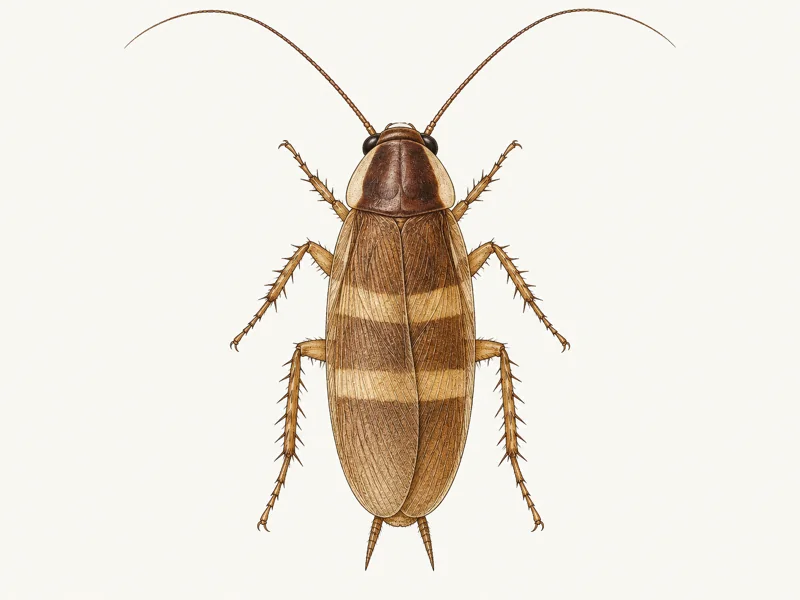
Annotated Anatomy Key (Cockroach)
- Long whip antennae: Thread-like filiform feelers sweeping wider than the entire body length.
- Pale-edged pronotum: Dark mahogany shield with translucent margins (lacks German roach's twin bars).
- Two pale wing bands: Unmistakable pair of light golden-tan bands crossing the tawny-brown folded wings.
- Spiny legs & cerci: Six bristled running legs and twin rear sensory cerci; prefers warm dry upper cabinets.
Cockroaches Field Checklist
- Flattened oval body with a shield-like pronotum partly covering the head
- Very long, whip-like antennae and spiny legs built for rapid running
- Two tail-like cerci protruding from the rear of the abdomen
- Nocturnal scavengers that trigger indoor asthma and contaminate food surfaces
Side-by-Side Look-Alike Comparisons
- Cockroach vs Water Bug
- Cockroach vs Palmetto Bug
- Bed Bug vs Cockroach
- Cockroach vs Earwig
- Cockroach vs Termite
- Cockroach vs Honey Bee
- Centipede vs Cockroach
- Cockroach vs Silverfish
- Cockroach vs German Cockroach
- Cockroach vs Wasp
- Cockroach vs Flea
- Camel Cricket vs Cockroach
- Carpet Beetle vs Cockroach
- American Cockroach vs Cockroach
- Cockroach vs Hornet
- Cockroach vs Tick
- Cockroach vs House Centipede
Cockroaches Size at True Relative Scale
Quick Answer: Cockroaches are rare in South Dakota, with only 7 verified GBIF sightings on record. The German cockroach (Blattella germanica) and the Pennsylvanian wood cockroach (Parcoblatta pennsylvanica) are the recorded species. Both are nuisance pests, and records peak in May and June.
Where Cockroaches Live in South Dakota
So, are there cockroaches in South Dakota? Yes, but they are uncommon. The few verified records cluster in Lincoln, Pennington, Davison, Minnehaha, and Brookings counties, which include some of the state's larger towns and cities.
The state has a continental plains climate with hot summers and cold, windy winters (USDA zones 4a to 5b). Few cockroach species can survive those winters outdoors, so indoor sites are the main concern.
Species on record
- German cockroach (Blattella germanica): A small, tan indoor species with two dark stripes behind the head. It lives in kitchens and bathrooms, near warmth, food, and water.
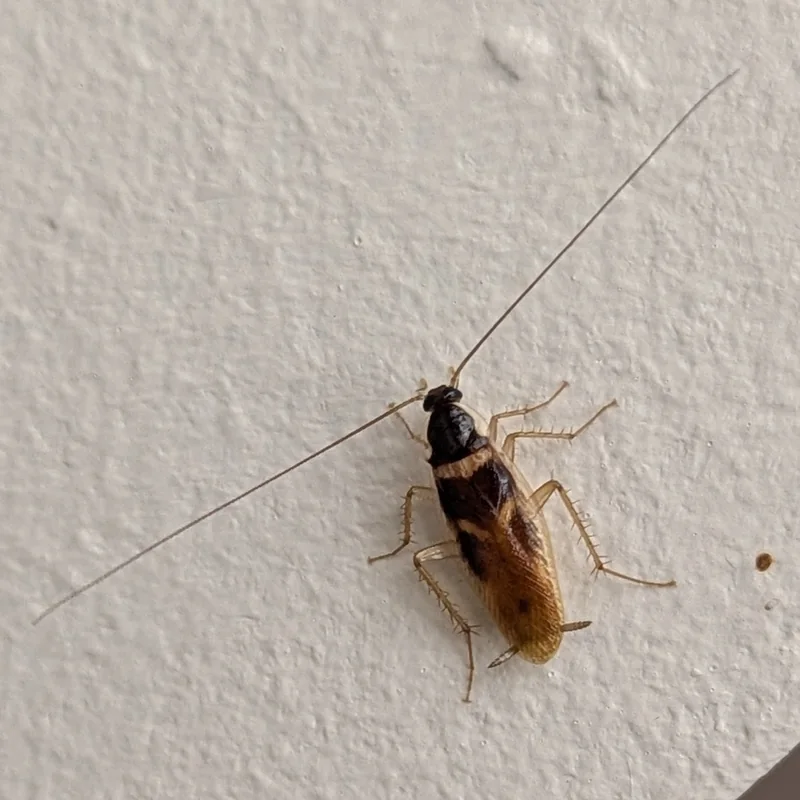
- Pennsylvanian wood cockroach (Parcoblatta pennsylvanica): A native species that lives outdoors in woodpiles, bark, and leaf litter. Males are attracted to lights and may wander indoors, but they do not infest homes.
The GBIF records also include a termite (Incisitermes minor). Termites belong to the same order, Blattodea, but they are not cockroaches in the everyday sense, so they are not a cockroach sighting for homeowners.
When Cockroaches Are Most Active in South Dakota
There is no true South Dakota cockroach season in the way there is for mosquitoes or ticks. The few records peak in May and June, when wood cockroaches become active and adult males fly toward porch lights.
German cockroaches are different. They live indoors, so they can stay active year-round wherever heat, food, and moisture are available. A winter sighting inside a home is more likely a German cockroach than a wood cockroach.
Look-Alikes Frequently Mistaken for Cockroaches
South Dakota cockroach identification starts with ruling out similar insects. Several common look-alikes are present in the state.
- Water bugs: This name is often used loosely for large, dark insects found near water or around basements. Many people use it for Oriental cockroaches, so check the body shape and where the insect was found.
- Oriental cockroaches: Glossy, dark brown to black, and slow-moving. They prefer cool, damp areas such as basements, crawl spaces, and floor drains.
- German cockroaches: Light brown with two dark stripes on the shield behind the head. They are about half an inch long and favor kitchens and bathrooms.
Note that Oriental cockroaches are a look-alike here, not one of the 7 verified GBIF records. If you find a suspect insect, trap it in a jar or on sticky tape and compare it with an extension identification guide. Your county extension office can often help confirm it.
How to Keep Cockroaches Out of Your South Dakota Home
Knowing how to prevent cockroaches in South Dakota comes down to Integrated Pest Management (IPM): remove what they need before reaching for any chemical.
Non-chemical steps first
- Sanitation: Wipe up crumbs and grease, wash dishes nightly, and empty trash often. Store pet food in sealed containers and do not leave bowls out overnight.
- Moisture control: Fix leaking pipes and drains, run a dehumidifier in damp basements, and dry sinks before bed.
- Exclusion: Seal gaps around pipes, door sweeps, and foundation cracks. Fit tight screens on vents and windows.
- Yard care: Stack firewood away from the house and off the ground. Clear leaf litter and debris from the foundation.
- Check incoming items: German cockroaches often arrive in cardboard boxes, grocery bags, used appliances, and secondhand furniture. Inspect before bringing these inside.
- Monitor: Place sticky traps under sinks and behind appliances to learn where activity is concentrated.
Using products safely
If sanitation and exclusion are not enough, use baits or gels labeled for cockroaches. Always follow the EPA-registered product label for placement, rates, and safety around children and pets.
When to call a licensed South Dakota pest professional
- You see cockroaches during the day, which often signals a larger population.
- Multiple life stages appear, including tiny nymphs and egg cases.
- Sightings continue after a few weeks of cleaning, sealing, and baiting.
- The problem is in an apartment or shared building where neighbors may also be affected.
- You cannot identify the insect and need a confirmed diagnosis before treating.
Cockroaches are a nuisance rather than a dangerous pest, but they can contaminate food and trigger allergies in some people. For questions about a possible poisoning from a pesticide product, call US Poison Control at 1-800-222-1222. See a doctor for any health concerns.
IPM Prevention Checklist for South Dakota Homes
- Store all pantry foods in airtight glass/plastic containers and never leave dirty dishes overnight
- Fix leaking under-sink traps and dry wet counters/pet bowls before bed
- Seal gaps around plumbing pipes, baseboards, and exterior door sweeps
 EXCLUSION BLUEPRINT
Inspect eaves, screens, door sweeps, foundation cracks, and utility penetrations around South Dakota homes before peak season.
Cockroaches in South Dakota: Frequently Asked Questions
Are there cockroaches in South Dakota?
Yes, but they are rare. GBIF lists 7 verified sightings, mainly in Lincoln, Pennington, Davison, Minnehaha, and Brookings counties.
Which cockroach species have been recorded in South Dakota?
The recorded cockroaches are the German cockroach and the Pennsylvanian wood cockroach. A termite also appears in the same order's records, but it is not a cockroach.
Are wood cockroaches a household infestation risk?
Not usually. They live outdoors in wood and leaf litter, and the occasional one that enters in late spring typically does not breed indoors.
Do South Dakota winters kill cockroaches?
Cold winters limit outdoor survival, but German cockroaches survive in heated buildings. That is why indoor sanitation and exclusion matter more than the weather.
Sources & Verification
Data refreshed · Editorial & GBIF Methodology