Cockroach vs Carpet Beetle: How to Tell Them Apart Fast
Quick ID Verdict: A carpet beetle is a tiny, round insect just 2-4 mm long, often mottled in white, brown, and yellow scales. A cockroach is far larger at 12-50 mm, with a flattened oval body and a shield-like pronotum that partly covers its head. If the bug is smaller than a grain of rice and rounded, it's almost certainly a carpet beetle.
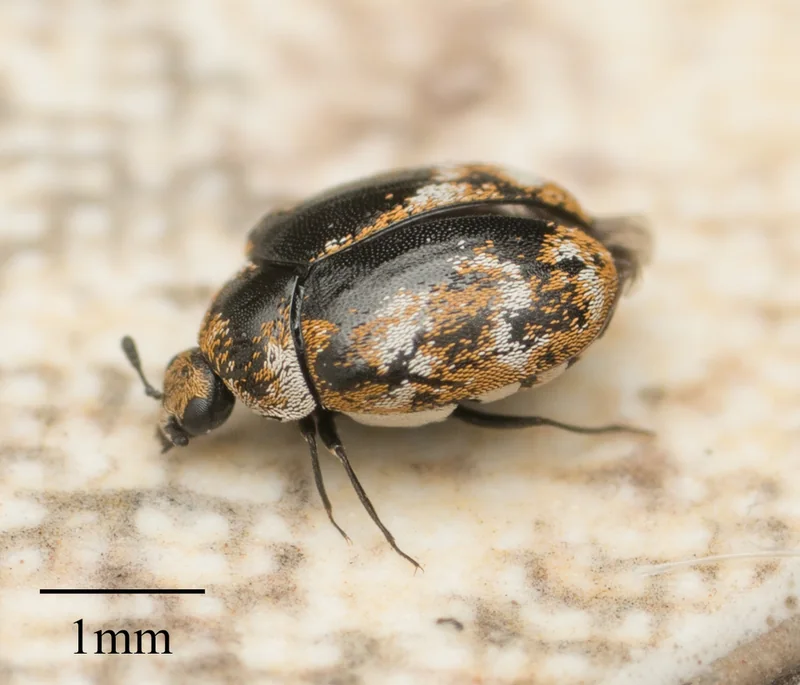
Carpet Beetle
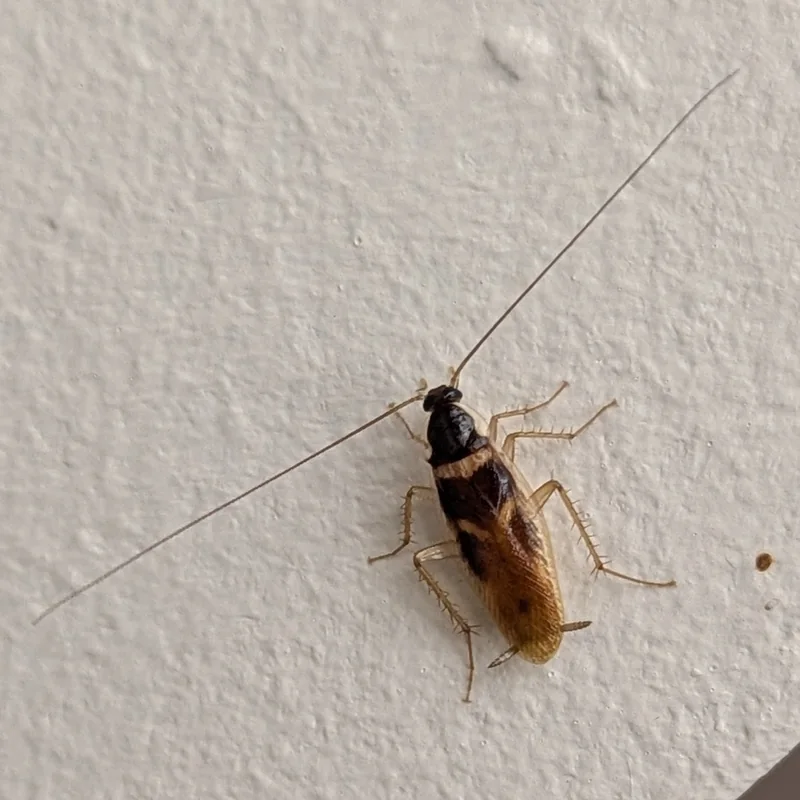
Cockroach
Side-by-Side Comparison Table
| Trait | Carpet Beetle | Cockroach |
|---|---|---|
| Scientific Group | Anthrenus verbasci | Blattodea |
| Category | Insect | Insect |
| Typical Size | 2–4 mm | 12–50 mm |
| Danger Level | Nuisance | Nuisance |
| Bites or Stings? | No | No |
| Peak US Months | March, April, May | May, June, July, September |
| Key ID Trait | Tiny round beetle mottled in white, brown, and yellow scales (varied carpet beetle) | Flattened oval body with a shield-like pronotum partly covering the head |
Carpet Beetle vs. Cockroach: True Size Comparison
Side-by-Side Anatomy Blueprint
Compare body segments, antennae, leg count, and key markings directly before treating or removing either species.
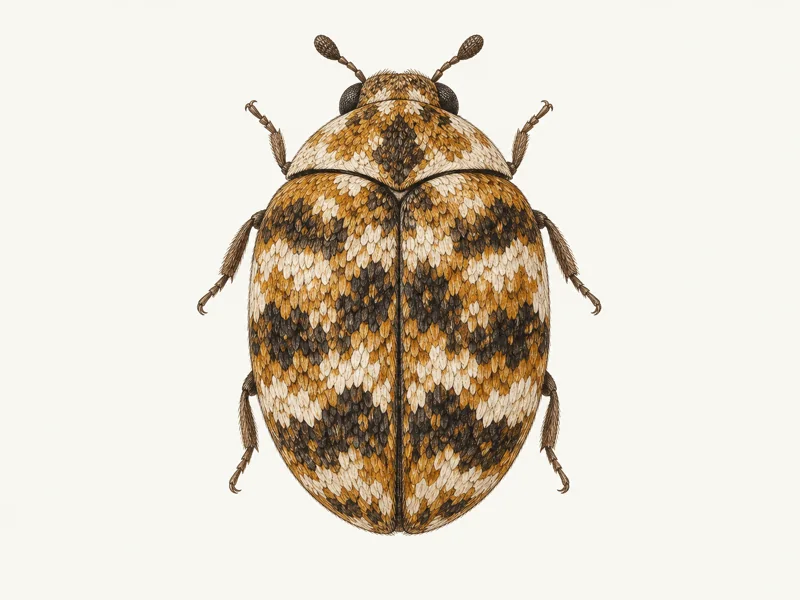
- Short clubbed antennae: Tiny tucked head and short clubbed feelers—completely different from bed bugs.
- Rounded oval dome: Plump ladybug-like 2–3.5 mm silhouette; adults fly to windowsills for pollen.
- Six short tucked legs: Delicate brownish legs pull tightly beneath the armored body when disturbed.
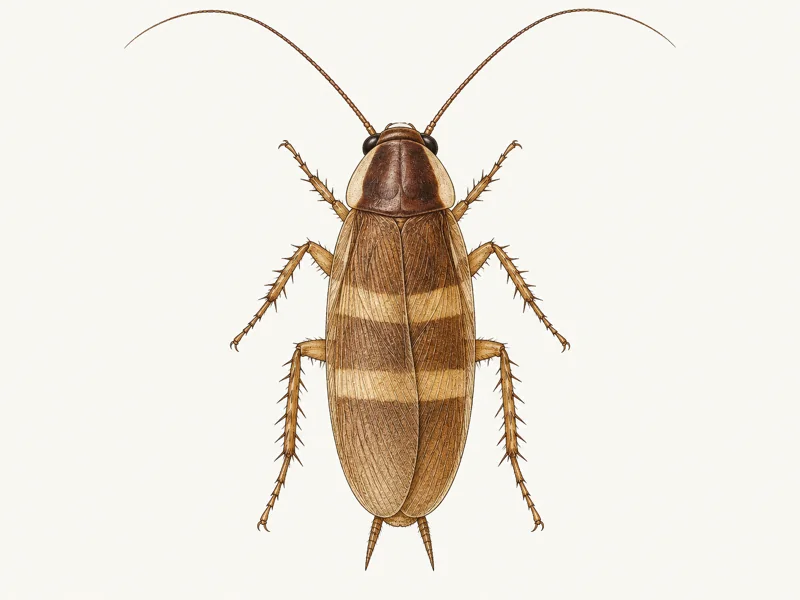
- Long whip antennae: Thread-like filiform feelers sweeping wider than the entire body length.
- Pale-edged pronotum: Dark mahogany shield with translucent margins (lacks German roach's twin bars).
- Two pale wing bands: Unmistakable pair of light golden-tan bands crossing the tawny-brown folded wings.
Quick Answer: A carpet beetle is a tiny, round insect just 2-4 mm long, often mottled in white, brown, and yellow scales. A cockroach is far larger at 12-50 mm, with a flattened oval body and a shield-like pronotum that partly covers its head. If the bug is smaller than a grain of rice and rounded, it's almost certainly a carpet beetle. If it's flat, fast, and long-legged, it's a cockroach.
Both pests show up in American homes year-round, and both are classified as nuisance pests rather than dangerous ones. Still, they cause very different problems. This guide covers the difference between carpet beetle and cockroach appearance, behavior, and damage, so homeowners can respond with the right plan.
Key Visual & Physical Differences
Size alone settles most cases. The varied carpet beetle (Anthrenus verbasci) measures only 2-4 mm, about the size of a pinhead or sesame seed. Cockroaches (order Blattodea) range from 12 to 50 mm, so even a small adult roach dwarfs the largest carpet beetle.
Carpet Beetle Features
- Shape: Round to slightly oval, domed like a tiny ladybug.
- Color: Mottled pattern of white, brown, and yellow scales on the varied carpet beetle.
- Antennae: Short and clubbed, often tucked out of sight.
- Movement: Slow walker; adults fly readily toward windows and light.
- Larvae: Fuzzy, carrot-shaped, and banded with bristly hairs. These "woolly bears" are often found before the adults.
Cockroach Features
- Shape: Flattened oval body built for squeezing into cracks.
- Head: Partly hidden under a shield-like pronotum when viewed from above.
- Antennae: Long and threadlike, often as long as the body or longer.
- Legs: Long, spiny, and fast. Roaches sprint for cover when lights come on.
- Nymphs: Smaller, wingless versions of adults, never fuzzy.
For carpet beetle vs cockroach identification, a quick look from above is helpful. A visible, rounded beetle with patterned scales points to a carpet beetle. A flat body with the head tucked under a plate points to a roach.
Behavior, Habitat & Danger Comparison
These insects want different things from a home. Carpet beetle larvae feed on animal-based fibers and debris, while cockroaches hunt for food scraps, moisture, and warm hiding spots.
Where Each Pest Lives
- Carpet beetles: Closets, under furniture edges, along baseboards, in stored wool, silk, feathers, furs, and pet hair. Adults often gather on sunny windowsills because they feed on flower pollen outdoors.
- Cockroaches: Kitchens, bathrooms, under sinks, behind appliances, and inside wall voids near plumbing and warmth.
Activity Patterns
Cockroaches are mainly nocturnal and avoid light, so a roach seen in daylight can signal a heavy population. Carpet beetle adults are active in daylight and drawn to light. The larvae stay hidden in dark, undisturbed fabric.
Danger Level
Both are rated nuisance pests, and neither stings. Carpet beetles damage rugs, clothing, upholstery, and natural-fiber collections. Some people notice skin irritation from contact with larval hairs. Cockroaches can contaminate food and surfaces and shed allergens linked to indoor air quality concerns. Anyone with persistent skin or breathing symptoms should see a doctor rather than self-diagnose.
Which One Is Worse for Homeowners?
It depends on what's at risk. Carpet beetles threaten belongings, quietly chewing holes in wool sweaters, heirloom rugs, and taxidermy. Cockroaches are a sanitation and allergen issue, and they reproduce quickly, so they usually call for faster action.
Non-Chemical IPM First
- Carpet beetles: Vacuum carpets, baseboards, and closet floors often. Launder or dry-clean natural fabrics, store them in sealed containers, and remove old bird or wasp nests near the house.
- Cockroaches: Remove food and grease, fix leaky pipes, take out trash nightly, and seal gaps around plumbing, doors, and baseboards.
- Both: Reduce clutter, install door sweeps, and use sticky traps to monitor activity.
If sanitation and exclusion don't solve the problem, targeted products like roach gel baits or labeled fabric-pest treatments may help. Always follow EPA product labels exactly, and consider a licensed pest professional for large or recurring infestations.
Frequently Asked Questions
How can I tell if I have a carpet beetle or cockroach?
Check the size and shape. A 2-4 mm round, speckled bug is a carpet beetle, while a 12-50 mm flat, fast insect with long antennae is a cockroach.
Can a baby cockroach look like a carpet beetle?
Small roach nymphs are still flat, long-legged, and quick, with long antennae. Carpet beetles are rounded and domed with short antennae, so the body shape tells them apart.
Do carpet beetles bite like cockroaches?
Neither insect bites people in any meaningful way. Carpet beetle larvae have bristly hairs that may irritate some people's skin, so a doctor should evaluate any ongoing rash.
Why do I find carpet beetles on windowsills?
Adult carpet beetles are drawn to light and try to reach flowers outdoors to feed on pollen. Finding them at windows often means larvae are developing somewhere inside the home.