Cockroaches in Tennessee: Identification, Season and Prevention
Quick Answer: Yes, cockroaches are common in Tennessee, with 932 verified GBIF sightings concentrated in Knox, Hamilton, Shelby, Anderson, and Rutherford counties. Activity peaks in June and July, when warm, humid summers favor species like the American cockroach and the native pale-bordered field cockroach.
When Cockroaches Are Most Active in Tennessee
Now (November): Lower Outdoor ActivityVerified Tennessee Counties, Species & US Range
Counties with Verified Observations
- Knox
- Hamilton
- Shelby
- Anderson
- Rutherford
- Davidson
- Monroe
- Sevier
- Blount
- Unicoi
Species Recorded in Tennessee
| Species | Scientific Name | GBIF Records |
|---|---|---|
| pale-bordered field cockroach | Pseudomops septentrionalis | 206 |
| American Cockroach | Periplaneta americana | 123 |
| Eastern Subterranean Termite | Reticulitermes flavipes | 119 |
How Tennessee Compares to Neighboring States
Note: Wildlife does not follow state or county lines. GBIF totals reflect verified citizen and museum records, so low counts in a neighboring county do not guarantee absence.
How to Identify Cockroaches
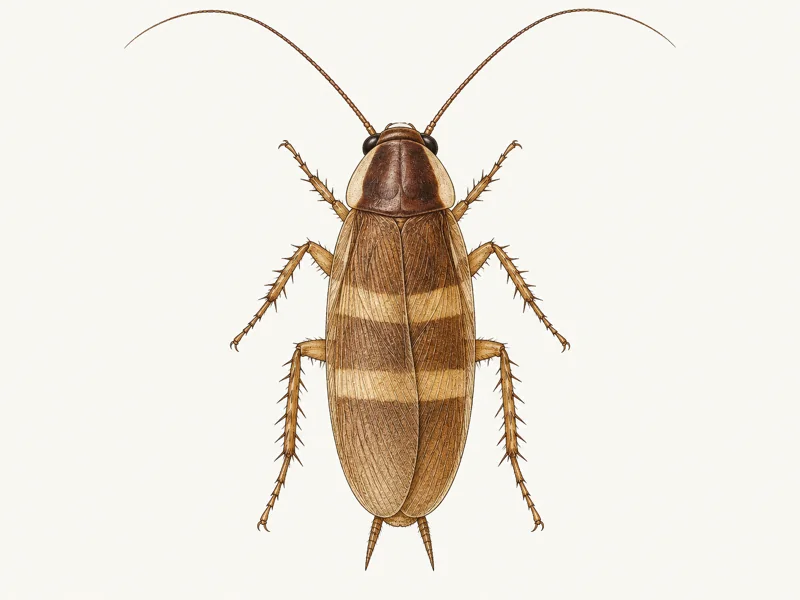
Annotated Anatomy Key (Cockroach)
- Long whip antennae: Thread-like filiform feelers sweeping wider than the entire body length.
- Pale-edged pronotum: Dark mahogany shield with translucent margins (lacks German roach's twin bars).
- Two pale wing bands: Unmistakable pair of light golden-tan bands crossing the tawny-brown folded wings.
- Spiny legs & cerci: Six bristled running legs and twin rear sensory cerci; prefers warm dry upper cabinets.
Cockroaches Field Checklist
- Flattened oval body with a shield-like pronotum partly covering the head
- Very long, whip-like antennae and spiny legs built for rapid running
- Two tail-like cerci protruding from the rear of the abdomen
- Nocturnal scavengers that trigger indoor asthma and contaminate food surfaces
Side-by-Side Look-Alike Comparisons
- Cockroach vs Water Bug
- Cockroach vs Palmetto Bug
- Bed Bug vs Cockroach
- Cockroach vs Earwig
- Cockroach vs Termite
- Cockroach vs Honey Bee
- Centipede vs Cockroach
- Cockroach vs Silverfish
- Cockroach vs German Cockroach
- Cockroach vs Wasp
- Cockroach vs Flea
- Camel Cricket vs Cockroach
- Carpet Beetle vs Cockroach
- American Cockroach vs Cockroach
- Cockroach vs Hornet
- Cockroach vs Tick
- Cockroach vs House Centipede
Cockroaches Size at True Relative Scale
Quick Answer: Yes, cockroaches are common in Tennessee, with 932 verified GBIF sightings concentrated in Knox, Hamilton, Shelby, Anderson, and Rutherford counties. Activity peaks in June and July, when warm, humid summers favor species like the American cockroach and the native pale-bordered field cockroach. They are a nuisance rather than a dangerous pest, and sanitation, moisture control, and sealing entry points prevent most problems.
Where Cockroaches Live in Tennessee
Anyone asking whether there are cockroaches in Tennessee will find the GBIF records answer clearly. The state's humid subtropical climate, which runs from the warm Mississippi River lowlands to the cooler mountain areas of East Tennessee (USDA zones 6a-8a), supports cockroaches both outdoors and inside buildings. The highest numbers of verified records come from these counties:
- Knox County, including Knoxville and surrounding suburbs
- Hamilton County, centered on Chattanooga
- Shelby County, home to Memphis and its warmer, humid lowlands
- Anderson County, just northwest of Knoxville
- Rutherford County, including Murfreesboro in Middle Tennessee
Higher sighting counts in these areas partly reflect population density and observer activity, so cockroaches are likely present statewide. Two cockroach species appear in the verified Tennessee records:
American Cockroach (Periplaneta americana)
This large, reddish-brown cockroach reaches about 1.5 inches long and has a pale, figure-eight-shaped band behind its head. It favors sewers, storm drains, crawl spaces, basements, and mulch beds. It often wanders indoors during hot or wet weather.
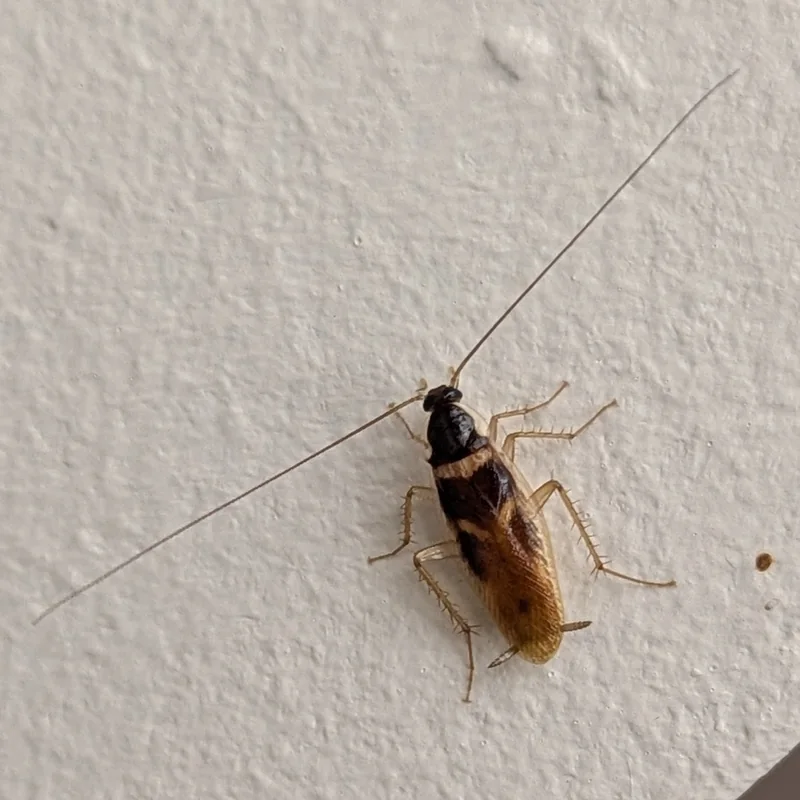
Pale-Bordered Field Cockroach (Pseudomops septentrionalis)
This small, native outdoor species is dark with pale yellowish edges along its body. It lives in leaf litter, grasses, and garden vegetation and is active during the day. It rarely establishes indoors, so a single one inside is usually an accidental visitor.
A Note on Termites
The eastern subterranean termite (Reticulitermes flavipes) also appears in GBIF records grouped under Blattodea, because modern taxonomy places termites within the cockroach order. Termites are not cockroaches in the household sense, but they can cause structural damage. Swarming winged termites in spring warrant a separate professional inspection.
When Cockroaches Are Most Active in Tennessee
Tennessee cockroach season peaks in June and July, according to verified GBIF sighting data. Heat and humidity speed up development and push outdoor species like the American cockroach to seek shelter, moisture, or cooler spaces indoors. Heavy summer storms can also flush them out of drains and sewers.
Outdoor activity slows during cooler months, especially in the eastern mountain counties. Indoor populations, however, can stay active year-round in heated buildings. A winter sighting indoors often signals an established population rather than a stray visitor.
Look-Alikes Frequently Mistaken for Cockroaches
Accurate Tennessee cockroach identification makes control far easier, because each species calls for a slightly different approach. These insects are commonly confused in Tennessee homes:
- Water bugs: True water bugs are aquatic insects with grasping front legs and piercing mouthparts. Many people also use "water bug" as a nickname for large cockroaches, especially American and Oriental cockroaches found near drains.
- German cockroaches: These are small (about half an inch), tan, and marked with two dark stripes behind the head. They live almost entirely indoors in kitchens and bathrooms and reproduce quickly.
- American cockroaches: Much larger and reddish-brown, these are often mistaken for beetles or water bugs when found in basements.
- Oriental cockroaches: These are shiny, very dark brown to black, and about an inch long, with short wings. They prefer cool, damp areas such as crawl spaces and floor drains.
Beetles have hard wing covers that meet in a straight line down the back, while cockroaches have flattened bodies, long antennae, and spiny legs. A clear photo of the insect helps a professional confirm the species.
How to Keep Cockroaches Out of Your Tennessee Home
Integrated Pest Management (IPM), the approach recommended by university cooperative extension programs, starts with non-chemical steps. For anyone wondering how to prevent cockroaches in Tennessee, these measures address the food, water, and shelter roaches need.
Exclusion
- Seal gaps around pipes, utility lines, and vents with caulk or copper mesh.
- Install door sweeps and repair torn window screens.
- Fit drains with covers or keep traps filled with water.
Sanitation
- Store food, including pet food, in sealed containers.
- Wipe up crumbs and grease, and avoid leaving dishes overnight.
- Remove cardboard clutter, which offers shelter and egg-laying sites.
Moisture Control
- Fix leaky faucets and pipes promptly.
- Run a dehumidifier in damp basements and ventilate crawl spaces.
- Pull mulch and leaf litter a foot or more away from the foundation.
If these steps are not enough, gel baits and sticky monitoring traps are low-risk options. Always read and follow the EPA-registered product label exactly, and keep products away from children and pets.
When to Call a Licensed Tennessee Pest Professional
- Cockroaches are seen during the day, which often means a large infestation.
- German cockroaches are present, since they spread quickly and resist many products.
- Droppings, egg cases, or a musty odor keep appearing after cleanup.
- Termite swarmers or mud tubes are found near the foundation.
IPM Prevention Checklist for Tennessee Homes
- Store all pantry foods in airtight glass/plastic containers and never leave dirty dishes overnight
- Fix leaking under-sink traps and dry wet counters/pet bowls before bed
- Seal gaps around plumbing pipes, baseboards, and exterior door sweeps
 EXCLUSION BLUEPRINT
Inspect eaves, screens, door sweeps, foundation cracks, and utility penetrations around Tennessee homes before peak season.
Cockroaches in Tennessee: Frequently Asked Questions
Are cockroaches common in Tennessee?
Yes. Tennessee has 932 verified GBIF sightings, with the most records from Knox, Hamilton, Shelby, Anderson, and Rutherford counties.
What month are cockroaches worst in Tennessee?
June and July are peak months, when summer heat and humidity drive the most activity and indoor sightings.
Are Tennessee cockroaches dangerous?
They are classified as a nuisance pest. They do not bite or sting in a medically significant way, but they can contaminate food surfaces and trigger allergies in some people.
Why do I see big cockroaches after rain in Tennessee?
Heavy rain floods drains, sewers, and mulch beds, pushing American cockroaches to seek dry shelter, often inside homes.
Sources & Verification
Data refreshed · Editorial & GBIF Methodology