Bee vs Cockroach: How to Tell Them Apart Fast
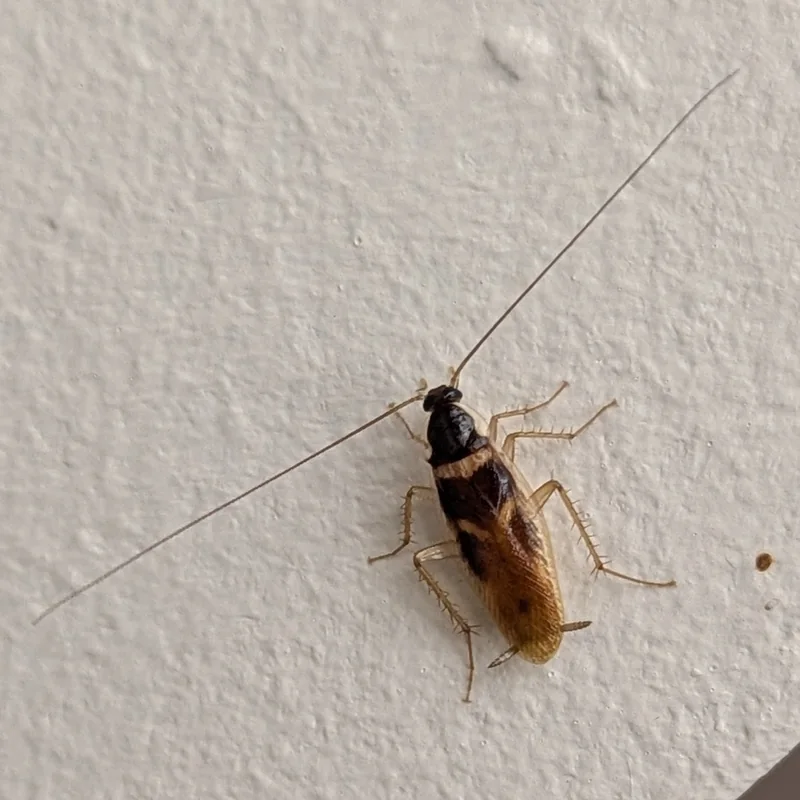
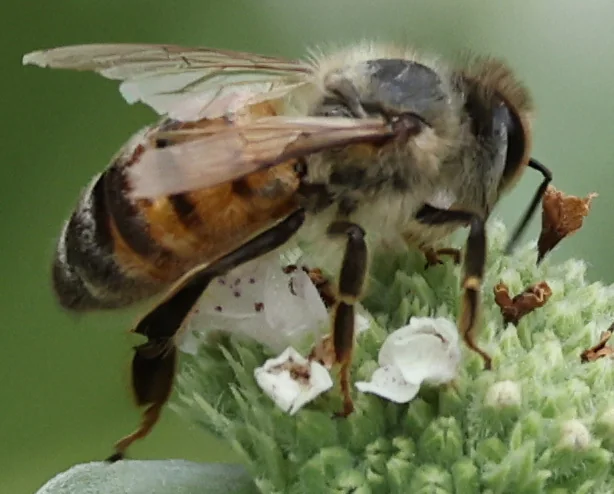
Quick ID Verdict: A cockroach has a flattened oval body with a shield-like pronotum that partly covers its head, while a honey bee has a fuzzy golden-tan thorax and a striped, golden-amber to dark brown abdomen. If the insect looks flat, glossy, and shielded, it's a cockroach. If it looks fuzzy and banded, it's a honey bee.
Cockroach
Honey Bee
Side-by-Side Comparison Table
| Trait | Cockroach | Honey Bee |
|---|---|---|
| Scientific Group | Blattodea | Apis mellifera |
| Category | Insect | Insect |
| Typical Size | 12–50 mm | 12–16 mm |
| Danger Level | Nuisance | Nuisance |
| Bites or Stings? | No | Yes |
| Peak US Months | May, June, July, September | April, July, August, September |
| Key ID Trait | Flattened oval body with a shield-like pronotum partly covering the head | Golden-amber to dark brown striped abdomen with fuzzy golden-tan thorax |
Cockroach vs. Honey Bee: True Size Comparison
Side-by-Side Anatomy Blueprint
Compare body segments, antennae, leg count, and key markings directly before treating or removing either species.
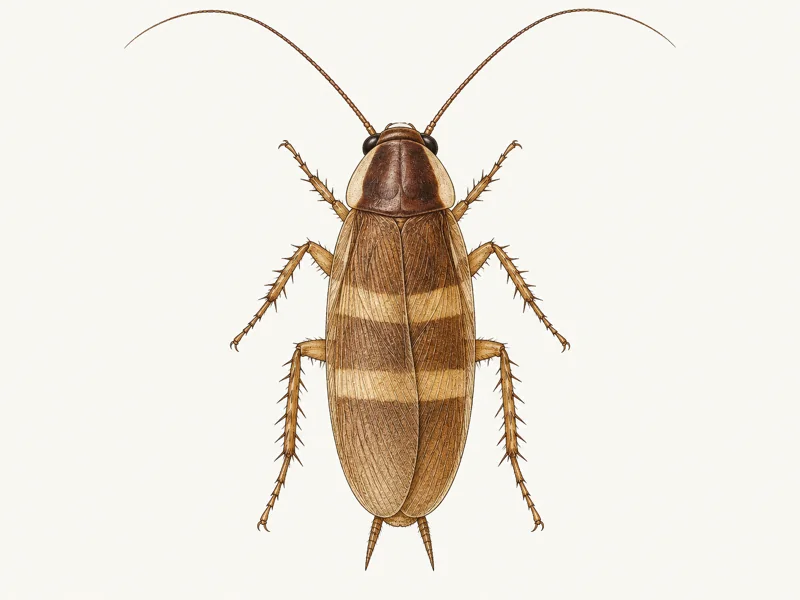
- Long whip antennae: Thread-like filiform feelers sweeping wider than the entire body length.
- Pale-edged pronotum: Dark mahogany shield with translucent margins (lacks German roach's twin bars).
- Two pale wing bands: Unmistakable pair of light golden-tan bands crossing the tawny-brown folded wings.
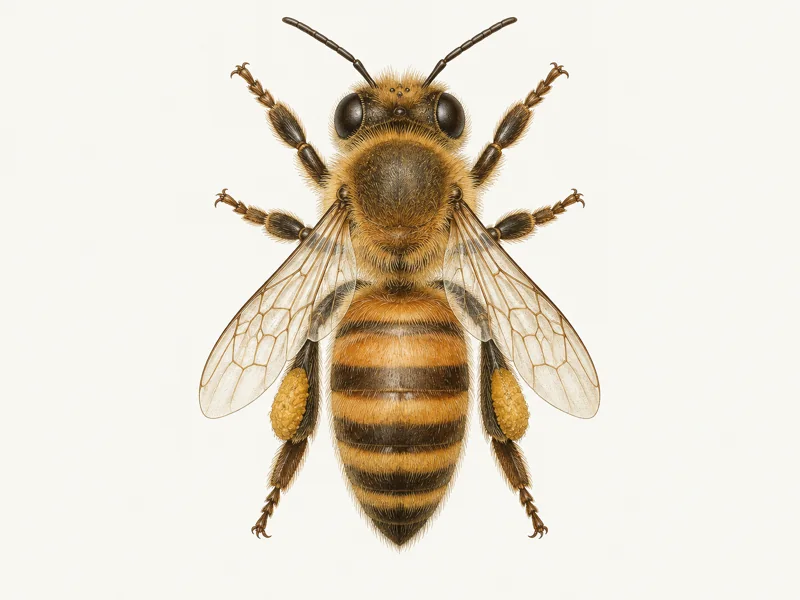
- Fuzzy golden thorax: Dense soft tawny-gold hairs trap pollen grains—wasps are smooth and hairless.
- Delicate clear wings: Two pairs of clear veined wings held flat over the back at rest.
- Pollen-basket legs: Broadened flattened hind legs carry golden pollen pellets back to the hive.
Quick Answer: A cockroach has a flattened oval body with a shield-like pronotum that partly covers its head, while a honey bee has a fuzzy golden-tan thorax and a striped, golden-amber to dark brown abdomen. If the insect looks flat, glossy, and shielded, it's a cockroach. If it looks fuzzy and banded, it's a honey bee.
The bee vs cockroach question comes up more often than you might expect, especially when a brownish insect flies through an open door or is spotted near a light. Both can be similar in length, but their bodies, habits, and the problems they cause indoors are very different. This guide breaks down the key differences so homeowners can identify the insect and respond the right way.
Key Visual & Physical Differences
The fastest cockroach vs honey bee identification check is body shape. Cockroaches (order Blattodea) are built low and flat for squeezing into cracks, while honey bees (Apis mellifera) have a rounded, segmented body made for flying and carrying pollen.
Cockroaches (Blattodea)
- Size: 12-50 mm, depending on species and life stage.
- Body shape: Flattened oval, often shiny or glossy.
- Head: Partly hidden beneath a shield-like pronotum.
- Antennae: Very long and threadlike, often as long as the body or longer.
- Legs: Spiny and built for fast running.
- Wings: Leathery, folded flat over the back when present.
Honey Bees (Apis mellifera)
- Size: 12-16 mm.
- Thorax: Fuzzy and golden-tan.
- Abdomen: Striped in golden-amber to dark brown bands.
- Head: Fully visible, with large eyes and short, elbowed antennae.
- Waist: A distinct narrowing between the thorax and abdomen.
- Wings: Two pairs of clear, membranous wings.
In short, the difference between cockroach and honey bee comes down to flat and shielded versus fuzzy and banded. Long, whip-like antennae point to a cockroach every time.
Behavior, Habitat & Danger Comparison
Both insects are rated as a nuisance in our verified data, but they become a nuisance in very different ways. Their behavior is often the second clue when deciding whether an insect is a cockroach or honey bee.
Cockroach Behavior and Habitat
Cockroaches are mostly nocturnal and avoid light, scattering quickly when a light is switched on. They favor warm, damp, sheltered spaces such as under sinks, behind appliances, inside wall voids, and near drains. Indoors, they feed on crumbs, grease, pet food, and other organic debris.
Honey Bee Behavior and Habitat
Honey bees are active during the day and spend their time visiting flowers for nectar and pollen. They live in colonies, usually in managed hives or natural cavities such as hollow trees. Occasionally a swarm may settle in a wall void, attic, or chimney, which is when they become a household concern.
Danger Comparison
- Cockroaches: Do not sting. Their main issue is contamination of food and surfaces, and their droppings and shed skins can be unpleasant indoors.
- Honey bees: Can sting when defending their colony, but they are generally not aggressive while foraging.
If someone is stung and has a strong or unusual reaction, call US Poison Control at 1-800-222-1222 and contact a doctor or emergency services right away. Do not rely on home remedies for sting reactions.
Which One Is Worse for Homeowners?
For most homeowners, cockroaches are the bigger indoor problem. They hide, reproduce in sheltered spaces, and contaminate kitchens and pantries, so an infestation can persist without steady control. Honey bees are beneficial pollinators and typically only cause trouble when a colony moves into a structure.
Non-Chemical IPM for Cockroaches
- Sanitation: Wipe up crumbs and grease, store food in sealed containers, and avoid leaving pet food out overnight.
- Moisture control: Fix leaky pipes and faucets, and reduce humidity under sinks and in basements.
- Exclusion: Seal cracks, gaps around pipes, and spaces behind baseboards with caulk.
- Monitoring: Place sticky traps in kitchens and bathrooms to track activity.
If baits or other products are needed, choose ones registered for cockroach control and always follow the EPA product label exactly.
Handling Honey Bees Responsibly
Because honey bees are valuable pollinators, avoid spraying them. If a swarm or colony settles on or inside a home, contact a local beekeeper or bee removal specialist, who can often relocate it alive. Sealing gaps in siding, soffits, and vents helps prevent future colonies from moving in.
Frequently Asked Questions
Can cockroaches fly like bees?
Some cockroach species can fly or glide short distances, but they mostly run. Honey bees are strong, steady fliers that travel between flowers all day.
What is the quickest way to tell a cockroach from a honey bee?
Look at the body and antennae. A flat, glossy body with long, threadlike antennae means cockroach, while a fuzzy, striped body with short antennae means honey bee.
Do cockroaches sting or bite like bees?
Cockroaches do not sting. Honey bees can sting when defending their hive, so give any colony plenty of space.
Should I kill honey bees found near my home?
It's better not to. Honey bees are important pollinators, so contact a local beekeeper or removal specialist to relocate a swarm or colony safely.