Camel Cricket vs Cockroach: How to Tell Them Apart Fast
Quick ID Verdict: A camel cricket is a wingless, humpbacked tan-to-brown insect with very long antennae and spider-like hind legs that let it jump. A cockroach has a flattened oval body with a shield-like pronotum partly covering its head, and it runs rather than jumps. If the insect hops when startled, it's a camel cricket. If it scurries flat into a crack, it's a cockroach.
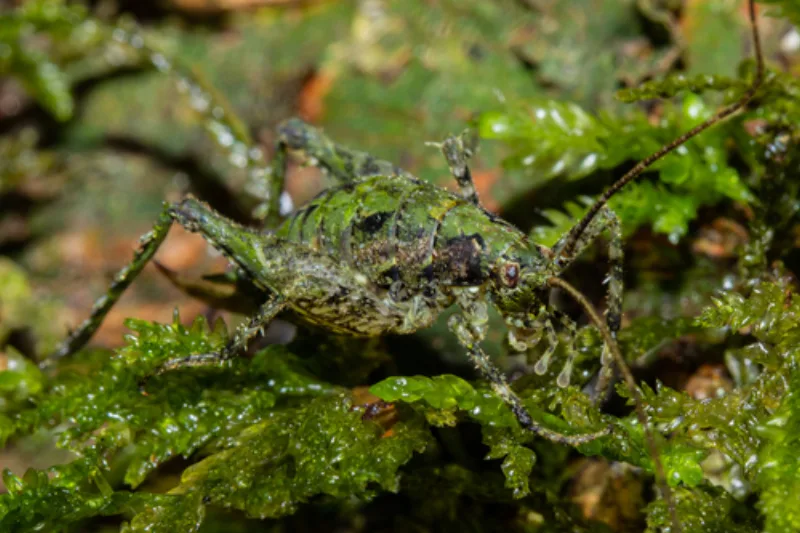
Camel Cricket
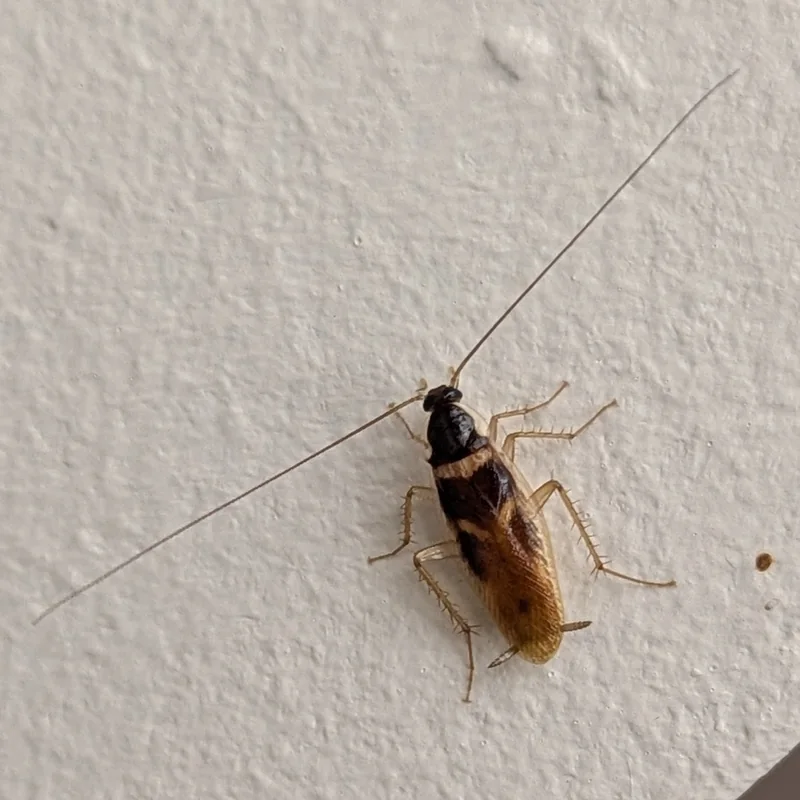
Cockroach
Side-by-Side Comparison Table
| Trait | Camel Cricket | Cockroach |
|---|---|---|
| Scientific Group | Rhaphidophoridae | Blattodea |
| Category | Insect | Insect |
| Typical Size | 13–30 mm | 12–50 mm |
| Danger Level | Nuisance | Nuisance |
| Bites or Stings? | No | No |
| Peak US Months | July, August, September, October | May, June, July, September |
| Key ID Trait | Wingless humpbacked tan-to-brown cricket with very long antennae and spider-like hind legs | Flattened oval body with a shield-like pronotum partly covering the head |
Camel Cricket vs. Cockroach: True Size Comparison
Side-by-Side Anatomy Blueprint
Compare body segments, antennae, leg count, and key markings directly before treating or removing either species.
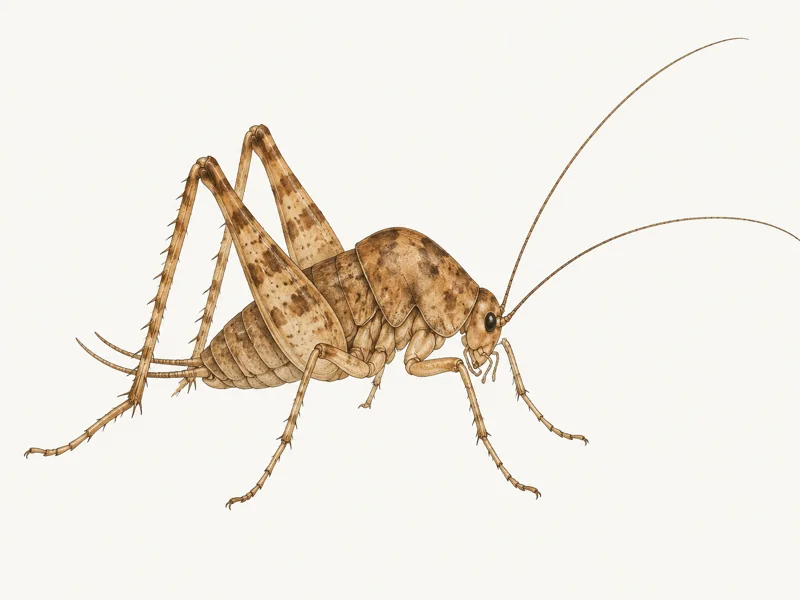
- Jumping hind legs: Powerfully enlarged, banded hind femora angled high above the body for sudden leaps.
- Long whip antennae: Extraordinarily long, thin sensory antennae sweeping far ahead of the head in dark basements.
- Rear cerci: Paired slender sensory feelers projecting from the back of the mottled abdomen.
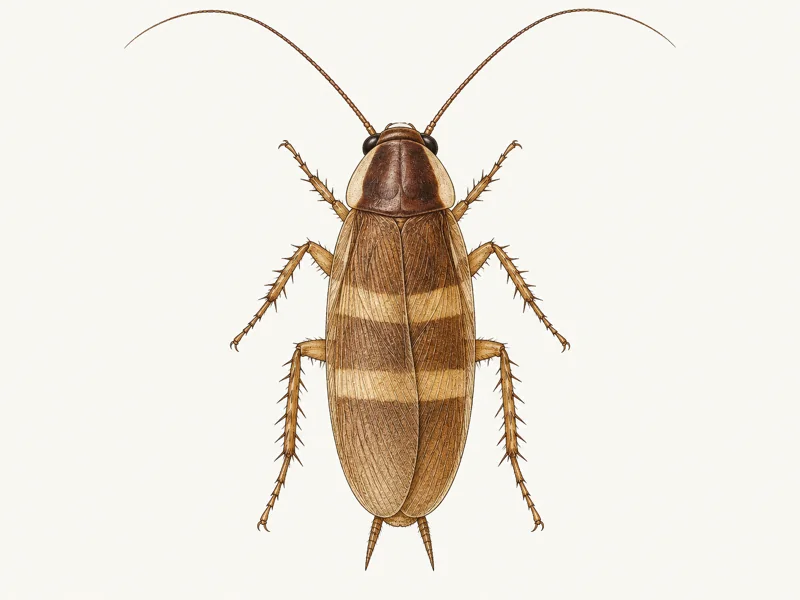
- Long whip antennae: Thread-like filiform feelers sweeping wider than the entire body length.
- Pale-edged pronotum: Dark mahogany shield with translucent margins (lacks German roach's twin bars).
- Two pale wing bands: Unmistakable pair of light golden-tan bands crossing the tawny-brown folded wings.
Quick Answer: A camel cricket is a wingless, humpbacked tan-to-brown insect with very long antennae and spider-like hind legs that let it jump. A cockroach has a flattened oval body with a shield-like pronotum partly covering its head, and it runs rather than jumps. If the insect hops when startled, it's a camel cricket. If it scurries flat into a crack, it's a cockroach.
Key Visual & Physical Differences
The difference between camel cricket and cockroach comes down to body shape and posture. Camel crickets (family Rhaphidophoridae), also called spider crickets, have an arched, hunched back. Cockroaches (order Blattodea) are built low and flat, which lets them squeeze into tight gaps.
Body Shape and Head
- Camel cricket: Humpbacked, rounded profile with the head fully visible and angled downward.
- Cockroach: Flattened oval body. A shield-like plate called the pronotum partly covers the head, so it can be hard to see from above.
Legs and Antennae
- Camel cricket: Very long antennae and oversized, spider-like hind legs built for jumping.
- Cockroach: Long antennae too, but the legs are spiny and similar in size, built for fast running.
Wings and Size
- Camel cricket: Always wingless. Adults measure about 13-30 mm.
- Cockroach: Many adults have wings that lie flat over the back, though some species and all nymphs lack full wings. Sizes range widely, from about 12-50 mm depending on species.
Color
Camel crickets are typically tan to brown, often with mottled or banded markings. Cockroaches vary from light brown to reddish-brown to nearly black, usually with a glossy finish. Color alone is unreliable, so use shape and movement for camel cricket vs cockroach identification.
Behavior, Habitat & Danger Comparison
These two insects favor dark, damp spaces, which is why homeowners often confuse them. Their habits, though, point to different problems inside the home.
Movement and Activity
Camel crickets jump when disturbed, sometimes toward the threat, which can startle people. Cockroaches dart quickly away from light and hide in cracks. Both are mainly active at night.
Preferred Habitat
- Camel crickets: Basements, crawl spaces, garages, window wells, and under stones or woodpiles outdoors. They need high humidity and rarely breed in dry living areas.
- Cockroaches: Kitchens, bathrooms, behind appliances, and inside cabinets. Indoor species can live and reproduce entirely within a home if food and water are available.
Danger Level
Both insects are rated as nuisance pests. Neither bites people in a meaningful way or carries venom. Camel crickets may chew on stored fabrics, cardboard, or paper in damp storage areas. Cockroaches can contaminate food and surfaces, and their droppings and shed skins are known allergens that may aggravate asthma in sensitive people. Anyone with health concerns should talk to a doctor.
Which One Is Worse for Homeowners?
In most homes, cockroaches are the bigger problem. They live close to food, reproduce indoors, and can build large hidden populations. Camel crickets are mostly a sign of excess moisture and tend to stay in basements and crawl spaces.
Whether you're dealing with a camel cricket or cockroach, start with non-chemical Integrated Pest Management (IPM):
- Control moisture: Run a dehumidifier in basements, fix leaks, and improve crawl space ventilation.
- Exclude entry points: Seal gaps around doors, pipes, vents, and foundation cracks. Add door sweeps and repair screens.
- Sanitize: Store food in sealed containers, clean crumbs and grease, and take out trash often.
- Reduce clutter: Swap cardboard boxes for plastic bins and clear debris and woodpiles away from the foundation.
- Monitor: Place sticky traps along walls and in corners to confirm which pest you have and where it's active.
If problems persist, gel baits work well for cockroaches, while perimeter treatments may help with camel crickets. Always read and follow the EPA product label exactly. For heavy or recurring cockroach activity, a licensed pest professional is often the most effective option.
Frequently Asked Questions
Can camel crickets fly like cockroaches?
No. Camel crickets are always wingless and move by jumping. Some cockroach species have wings and can glide or fly short distances.
Do camel crickets or cockroaches bite?
Neither is considered a biting pest. Both are classified as nuisance insects, though cockroaches can contaminate food and trigger allergies.
Why do I find camel crickets in my basement?
Camel crickets seek cool, damp, dark spaces. Lowering humidity and sealing foundation gaps usually reduces their numbers sharply.
Does seeing a cockroach mean an infestation?
Not always, but cockroaches hide well, so one sighting can signal more. Use sticky traps to monitor activity and contact a professional if counts keep rising.