Cockroaches in Montana: Rare Sightings, ID, and Prevention
Quick Answer: Cockroaches in Montana are rare, but they do occur. GBIF has only 7 verified sightings in the state, and the recorded cockroach species are the German cockroach (Blattella germanica) and the Virginia wood cockroach (Parcoblatta virginica). They are a nuisance pest, not a danger, and good sanitation and exclusion usually keep them out.
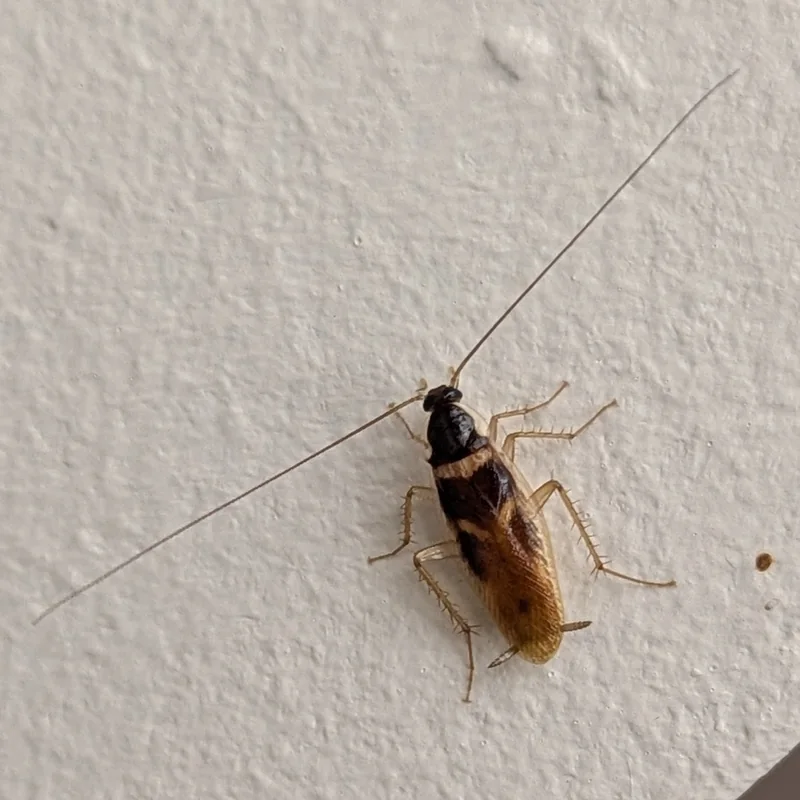
When Cockroaches Are Most Active in Montana
Now (November): Lower Outdoor ActivityVerified Montana Counties, Species & US Range
Counties with Verified Observations
- Missoula
- Fergus
- Roosevelt
- Yellowstone
- Mineral
Species Recorded in Montana
| Species | Scientific Name | GBIF Records |
|---|---|---|
| German Cockroach | Blattella germanica | 2 |
| Nevada Dampwood Termite | Zootermopsis nevadensis | 2 |
| Virginia wood cockroach | Parcoblatta virginica | 1 |
How Montana Compares to Neighboring States
Note: Wildlife does not follow state or county lines. GBIF totals reflect verified citizen and museum records, so low counts in a neighboring county do not guarantee absence.
How to Identify Cockroaches
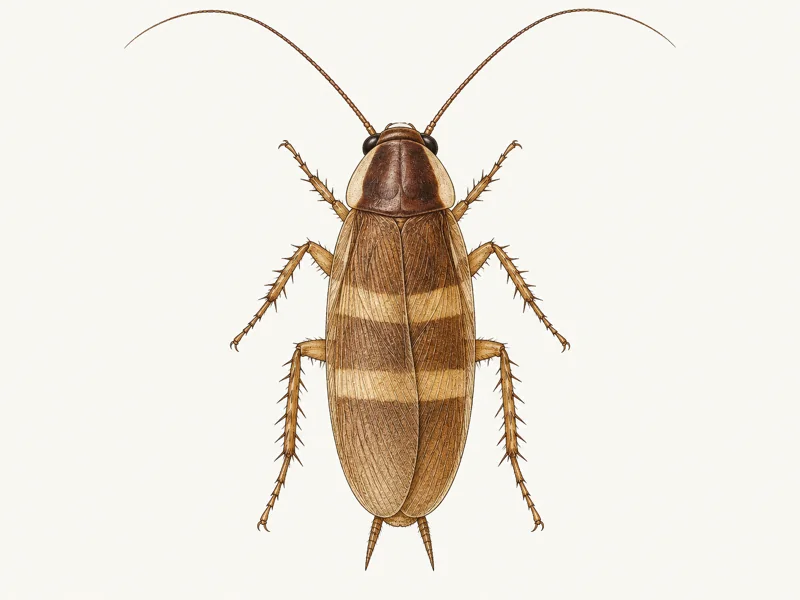
Annotated Anatomy Key (Cockroach)
- Long whip antennae: Thread-like filiform feelers sweeping wider than the entire body length.
- Pale-edged pronotum: Dark mahogany shield with translucent margins (lacks German roach's twin bars).
- Two pale wing bands: Unmistakable pair of light golden-tan bands crossing the tawny-brown folded wings.
- Spiny legs & cerci: Six bristled running legs and twin rear sensory cerci; prefers warm dry upper cabinets.
Cockroaches Field Checklist
- Flattened oval body with a shield-like pronotum partly covering the head
- Very long, whip-like antennae and spiny legs built for rapid running
- Two tail-like cerci protruding from the rear of the abdomen
- Nocturnal scavengers that trigger indoor asthma and contaminate food surfaces
Side-by-Side Look-Alike Comparisons
- Cockroach vs Water Bug
- Cockroach vs Palmetto Bug
- Bed Bug vs Cockroach
- Cockroach vs Earwig
- Cockroach vs Termite
- Cockroach vs Honey Bee
- Centipede vs Cockroach
- Cockroach vs Silverfish
- Cockroach vs German Cockroach
- Cockroach vs Wasp
- Cockroach vs Flea
- Camel Cricket vs Cockroach
- Carpet Beetle vs Cockroach
- American Cockroach vs Cockroach
- Cockroach vs Hornet
- Cockroach vs Tick
- Cockroach vs House Centipede
Cockroaches Size at True Relative Scale
Where Cockroaches Live in Montana
Montana's cold winters (USDA zones 3a-6a), semi-arid plains, and alpine mountains do not favor cockroaches outdoors. Most records are tied to people and buildings. So, are there cockroaches in Montana? Yes, but only a handful have been documented.
The verified GBIF records cluster in these counties:
- Missoula
- Fergus
- Roosevelt
- Yellowstone
- Mineral
The German cockroach is an indoor species. It lives in kitchens, bathrooms, and other warm, humid spots, and it spreads mainly by hitchhiking in boxes, grocery bags, used appliances, and luggage.
The Virginia wood cockroach is a native-type woodland species that lives outdoors under bark, in woodpiles, and in leaf litter. It may wander indoors occasionally, but it does not infest homes the way German cockroaches do.
When Cockroaches Are Most Active in Montana
Records in the state peak in June and August. That fits the short warm summer, when outdoor species move around and people travel, shop, and move goods that can carry insects.
Montana cockroach season is therefore mostly a summer matter outdoors. Indoors, German cockroaches stay active year-round wherever heat, water, and food are available, so a heated home in January is no barrier to them.
Montana Cockroach Identification
Correct identification matters because most small brown insects in Montana are not cockroaches. Look for these features:
- German cockroach: about 1/2 inch long, light tan to brown, with two dark parallel stripes behind the head. Adults have wings but rarely fly.
- Virginia wood cockroach: a woodland species, generally brown and found outdoors. Males have fully developed wings and may fly to lights at night.
Other signs of German cockroaches include small dark specks resembling pepper or coffee grounds, a musty odor in heavy infestations, and brown egg capsules. Seeing them in daylight often means the population is large.
If you are unsure, capture a specimen in a jar and take it to your county Extension office or Montana State University Extension for identification.
Look-Alikes Frequently Mistaken for Cockroaches
Two look-alikes are present in Montana and often cause false alarms.
Water Bugs
Large aquatic insects sometimes called water bugs (giant water bugs and similar species) are often confused with cockroaches. They live in ponds and slow water, are drawn to outdoor lights, and do not breed in homes. Finding one near a porch light does not signal an infestation.
Other Cockroach Species
Native wood cockroaches are also mistaken for the German cockroach. A single large brown roach found outdoors or by a door in summer is more likely a wood roach than a household pest. Check for the two stripes behind the head to tell a German cockroach.
The GBIF records also include a Nevada dampwood termite, which is not a cockroach. Termites have straight antennae, a thick waist, and pale bodies, while roaches have long, thin antennae and flattened oval bodies.
How to Keep Cockroaches Out of Your Montana Home
For anyone wondering how to prevent cockroaches in Montana, start with non-chemical Integrated Pest Management (IPM). It works better than spraying and costs less.
- Inspect incoming items: check cardboard boxes, secondhand appliances, and luggage before bringing them in.
- Cut off food: wash dishes nightly, wipe counters, sweep crumbs, and store food and pet food in sealed containers.
- Fix moisture: repair leaky pipes and faucets, and dry sinks before bed.
- Seal entry points: caulk gaps around pipes, baseboards, and cabinets, and add door sweeps and screens.
- Reduce clutter: remove stacked cardboard and paper where roaches hide.
- Manage outdoors: keep firewood off the ground and away from the house, and clear leaf litter near the foundation.
Sticky monitoring traps placed under sinks and behind appliances help confirm whether you have a problem and where it is. If you use any baits or insecticides, follow the EPA-registered product label exactly.
When to Call a Licensed Montana Pest Professional
- You see live roaches in daylight or find them repeatedly after cleaning.
- Traps catch many nymphs of different sizes, which suggests breeding.
- You find egg capsules or droppings in several rooms.
- You live in an apartment or duplex, where neighbors can share the infestation.
- DIY efforts have failed after several weeks.
Cockroaches are not considered dangerous, but heavy infestations can aggravate allergies and asthma. If someone has a health reaction, contact a doctor, or call US Poison Control at 1-800-222-1222 about any suspected exposure to pest products.
IPM Prevention Checklist for Montana Homes
- Store all pantry foods in airtight glass/plastic containers and never leave dirty dishes overnight
- Fix leaking under-sink traps and dry wet counters/pet bowls before bed
- Seal gaps around plumbing pipes, baseboards, and exterior door sweeps
 EXCLUSION BLUEPRINT
Inspect eaves, screens, door sweeps, foundation cracks, and utility penetrations around Montana homes before peak season.
Cockroaches in Montana: Frequently Asked Questions
Are there cockroaches in Montana?
Yes, but they are rare. GBIF lists 7 verified sightings, including the German cockroach and the Virginia wood cockroach.
Which Montana counties have recorded cockroaches?
Top counties in the records are Missoula, Fergus, Roosevelt, Yellowstone, and Mineral.
When are cockroaches most likely to be seen in Montana?
Recorded sightings peak in June and August. Indoor German cockroaches can be active all year in heated buildings.
Are Montana cockroaches dangerous?
They are a nuisance pest. Large infestations may worsen allergies or asthma, so see a doctor for health concerns.
Sources & Verification
Data refreshed · Editorial & GBIF Methodology