Termite vs Cockroach: How to Tell Them Apart Fast
Quick ID Verdict: A cockroach has a flattened oval body measuring 12-50 mm, with a shield-like pronotum that partly covers its head. A termite is much smaller at 4-12 mm and has straight, bead-like antennae rather than the elbowed antennae of ants. Size, body shape, and antennae will separate the two in about three seconds.
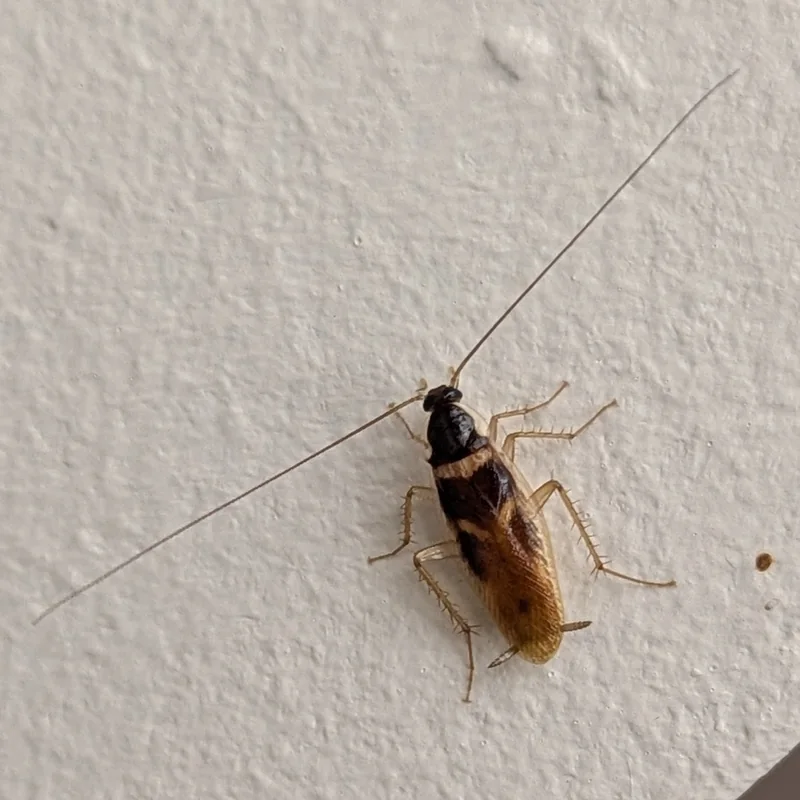
Cockroach
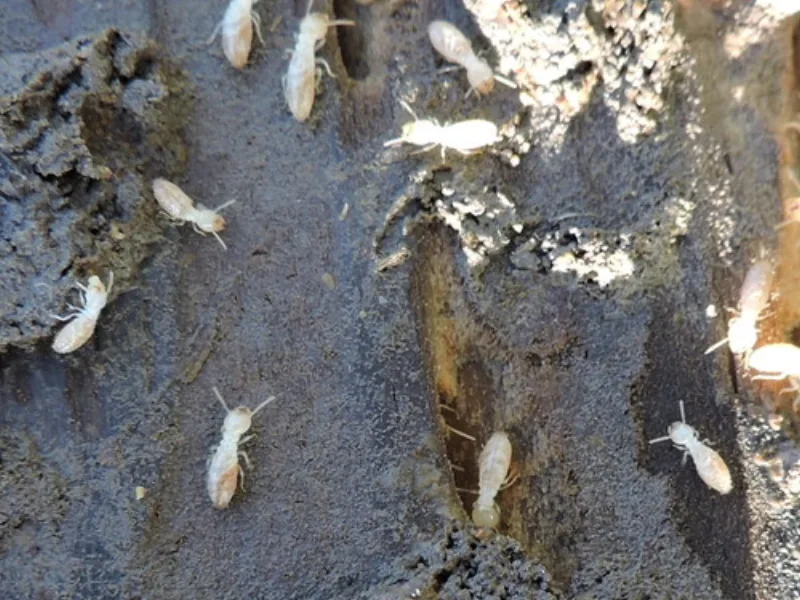
Termite
Side-by-Side Comparison Table
| Trait | Cockroach | Termite |
|---|---|---|
| Scientific Group | Blattodea | Blattodea (Isoptera) |
| Category | Insect | Insect |
| Typical Size | 12–50 mm | 4–12 mm |
| Danger Level | Nuisance | Structural |
| Bites or Stings? | No | No |
| Peak US Months | May, June, July, September | April, May |
| Key ID Trait | Flattened oval body with a shield-like pronotum partly covering the head | Straight, bead-like antennae (unlike the elbowed antennae of ants) |
Cockroach vs. Termite: True Size Comparison
Side-by-Side Anatomy Blueprint
Compare body segments, antennae, leg count, and key markings directly before treating or removing either species.
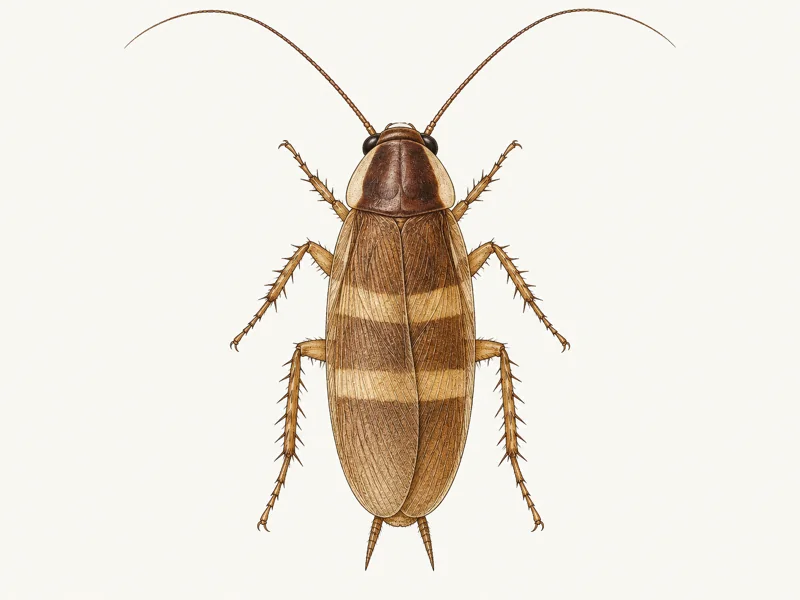
- Long whip antennae: Thread-like filiform feelers sweeping wider than the entire body length.
- Pale-edged pronotum: Dark mahogany shield with translucent margins (lacks German roach's twin bars).
- Two pale wing bands: Unmistakable pair of light golden-tan bands crossing the tawny-brown folded wings.
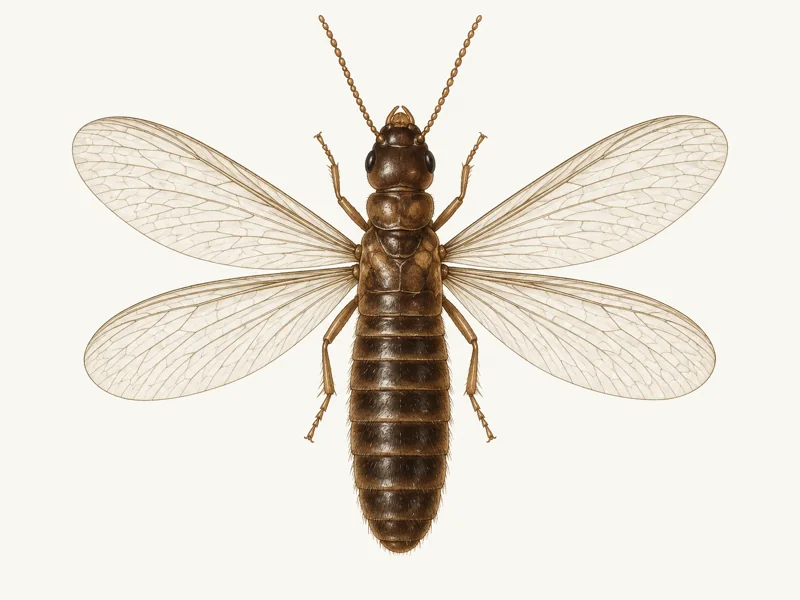
- Straight antennae: Straight, bead-like (moniliform) antennae—never sharply bent like ant antennae.
- Four equal wings: Two pairs of equal-length translucent veined wings extending far past the abdomen (shed easily).
- Six insect legs: Three pairs of slender crawling legs beneath the pale translucent wings.
Quick ID verdict: A cockroach has a flattened oval body measuring 12-50 mm, with a shield-like pronotum that partly covers its head. A termite is much smaller at 4-12 mm and has straight, bead-like antennae rather than the elbowed antennae of ants. Size, body shape, and antennae will separate the two in about three seconds.
Both insects belong to the order Blattodea, and termites are often listed there as Isoptera, so the two are close evolutionary relatives. That relationship does not make them equal threats. Knowing the difference between a cockroach and a termite tells a homeowner whether the problem is a sanitation nuisance or damage to the structure itself.
Key Visual & Physical Differences
Cockroach vs termite identification starts with size and silhouette. Cockroaches are larger, wide, and flat, which lets them squeeze into cracks. Termites are small and soft-bodied, and their bodies look straight-sided rather than oval.
Cockroach Identification Traits
- Size: 12-50 mm, depending on species and life stage.
- Body shape: Flattened and oval, built for hiding in tight gaps.
- Head: Partly hidden under a shield-like pronotum when viewed from above.
- Antennae: Long, thin, and whip-like, often as long as the body or longer.
- Legs: Spiny and fast-moving. Cockroaches scatter quickly when exposed to light.
Termite Identification Traits
- Size: 4-12 mm, which is noticeably smaller than most cockroaches.
- Antennae: Straight and bead-like. This is the trait that separates them from ants, which have elbowed antennae.
- Body: Soft, often pale or creamy in workers, with no pinched waist.
- Wings (swarmers): Two pairs of equal-length wings that shed easily and often pile up near windowsills.
If someone is unsure whether they found a cockroach or a termite, the antennae are the most reliable clue. Long whip-like antennae point to a cockroach. Short, straight, bead-like antennae point to a termite.
Behavior, Habitat & Danger Comparison
These insects live very different lives inside a home. Cockroaches roam in search of food, water, and shelter. Termites stay hidden and feed on cellulose found in wood and other plant-based materials.
Cockroach Behavior and Habitat
- Active mostly at night and usually seen running across floors or counters.
- Gather in warm, humid spots such as kitchens, bathrooms, basements, and areas behind appliances.
- Leave droppings that look like pepper specks, along with egg cases and a musty odor.
- Danger level: Nuisance. They contaminate food surfaces and can aggravate indoor allergens, but they do not damage the structure of a house.
Termite Behavior and Habitat
- Rarely seen in the open because workers stay inside wood, soil, or mud tubes.
- Subterranean species build pencil-width mud tubes along foundations.
- Signs include discarded wings, hollow-sounding wood, blistered paint, and tiny pellets.
- Danger level: Structural. Colonies can quietly weaken framing, flooring, and trim over time.
Which One Is Worse for Homeowners?
Termites are the more serious threat to a property because their danger is structural. Cockroaches are unpleasant and unsanitary, but they rank as a nuisance pest. A cockroach infestation affects comfort and cleanliness, while a termite infestation can affect the house itself.
For either pest, Integrated Pest Management (IPM) should come first:
- Moisture control: Fix leaks, improve ventilation in crawl spaces, and direct gutter runoff away from the foundation.
- Exclusion: Seal cracks, gaps around pipes, and door sweeps. Keep wood-to-soil contact off the foundation.
- Sanitation: Store food in sealed containers, clean crumbs daily, and remove clutter and cardboard.
- Wood management: Move firewood and mulch away from exterior walls.
If treatment becomes necessary, homeowners should choose baits or products registered for the target pest and follow the EPA product label exactly. Suspected termite activity calls for a licensed pest professional, since colonies are hidden and hard to assess without an inspection.
Frequently Asked Questions
Are termites and cockroaches related?
Yes. Both belong to the order Blattodea, and termites are often grouped there as Isoptera. Despite that relationship, they look and behave very differently in homes.
What is the fastest way to tell a cockroach from a termite?
Check size and antennae. Cockroaches are 12-50 mm with long whip-like antennae and a shield-like pronotum, while termites are 4-12 mm with straight, bead-like antennae.
Do cockroaches damage wood like termites?
No. Cockroaches are a nuisance pest that contaminates surfaces, but they do not cause structural damage. Termites feed on cellulose and can harm wood framing.
Should a homeowner call a professional for termites?
Yes. Because termites hide inside wood and soil, a licensed inspector can confirm activity and recommend treatment. Cockroach problems often respond well to sanitation, exclusion, and label-directed baits.