Cockroaches in Mississippi: Species, Season, and Prevention Guide
Quick Answer: Yes, cockroaches are common in Mississippi. GBIF records show 573 verified sightings, led by the American cockroach, the pale-bordered field cockroach, and the Cuban cockroach. They are a nuisance rather than a medical danger, and moisture control and exclusion are the best first steps.
When Cockroaches Are Most Active in Mississippi
Now (November): Moderate ActivityVerified Mississippi Counties, Species & US Range
Counties with Verified Observations
- Forrest
- Oktibbeha
- Hancock
- Harrison
- Coahoma
- Rankin
- Desoto
- Hinds
- Stone
- Yalobusha
Species Recorded in Mississippi
| Species | Scientific Name | GBIF Records |
|---|---|---|
| American Cockroach | Periplaneta americana | 110 |
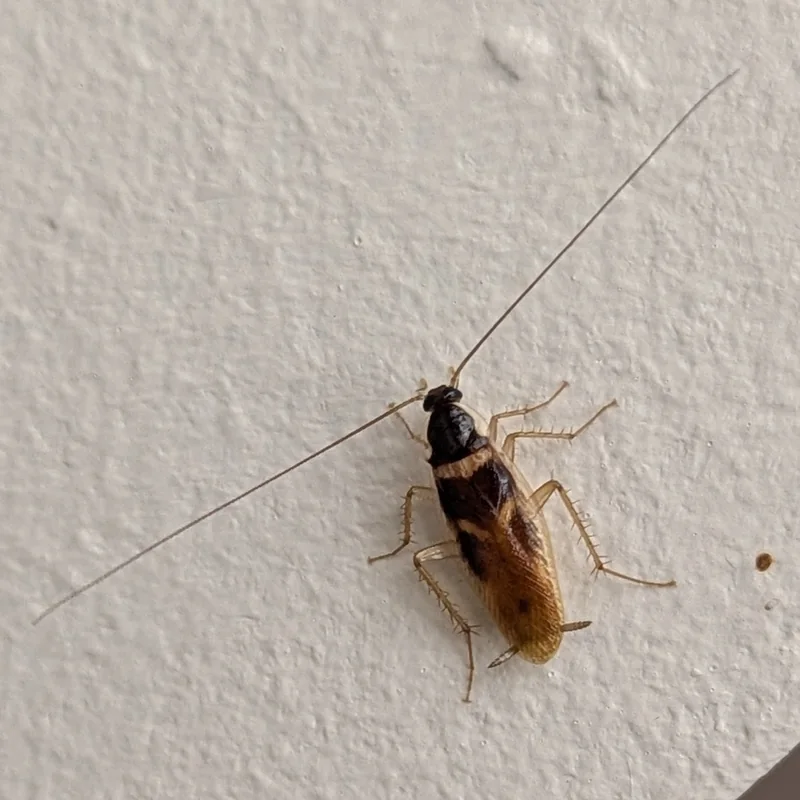
| pale-bordered field cockroach | Pseudomops septentrionalis | 97 |
| Cuban cockroach | Panchlora nivea | 53 |
How Mississippi Compares to Neighboring States
Note: Wildlife does not follow state or county lines. GBIF totals reflect verified citizen and museum records, so low counts in a neighboring county do not guarantee absence.
How to Identify Cockroaches
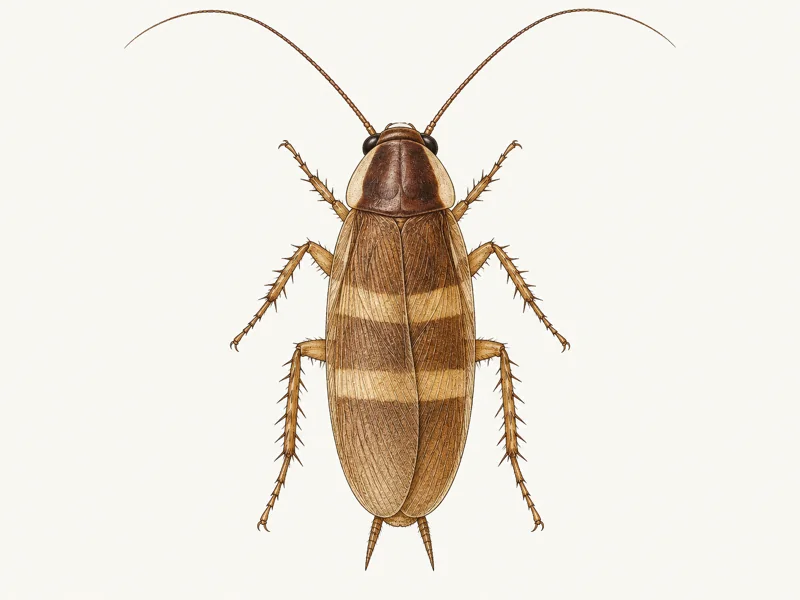
Annotated Anatomy Key (Cockroach)
- Long whip antennae: Thread-like filiform feelers sweeping wider than the entire body length.
- Pale-edged pronotum: Dark mahogany shield with translucent margins (lacks German roach's twin bars).
- Two pale wing bands: Unmistakable pair of light golden-tan bands crossing the tawny-brown folded wings.
- Spiny legs & cerci: Six bristled running legs and twin rear sensory cerci; prefers warm dry upper cabinets.
Cockroaches Field Checklist
- Flattened oval body with a shield-like pronotum partly covering the head
- Very long, whip-like antennae and spiny legs built for rapid running
- Two tail-like cerci protruding from the rear of the abdomen
- Nocturnal scavengers that trigger indoor asthma and contaminate food surfaces
Side-by-Side Look-Alike Comparisons
- Cockroach vs Water Bug
- Cockroach vs Palmetto Bug
- Bed Bug vs Cockroach
- Cockroach vs Earwig
- Cockroach vs Termite
- Cockroach vs Honey Bee
- Centipede vs Cockroach
- Cockroach vs Silverfish
- Cockroach vs German Cockroach
- Cockroach vs Wasp
- Cockroach vs Flea
- Camel Cricket vs Cockroach
- Carpet Beetle vs Cockroach
- American Cockroach vs Cockroach
- Cockroach vs Hornet
- Cockroach vs Tick
- Cockroach vs House Centipede
Cockroaches Size at True Relative Scale
Quick Answer: Yes, cockroaches are common in Mississippi. GBIF records show 573 verified sightings, led by the American cockroach, the pale-bordered field cockroach, and the Cuban cockroach. They are a nuisance rather than a medical danger, and moisture control and exclusion are the best first steps.
Where Cockroaches Live in Mississippi
Mississippi's humid subtropical climate (USDA zones 7b-9a) suits cockroaches well. Long, steamy summers, heavy rainfall, and mild winters let them stay active for much of the year. The top counties for verified sightings are Forrest, Oktibbeha, Hancock, Harrison, and Coahoma.
Three species appear in the GBIF records for the state:
- American cockroach (Periplaneta americana): A large, reddish-brown species found in sewers, crawl spaces, mulch beds, and damp basements. It often wanders indoors from outside.
- Pale-bordered field cockroach (Pseudomops septentrionalis): A smaller outdoor species that lives in vegetation and leaf litter. It is attracted to porch lights and may stray inside.
- Cuban cockroach (Panchlora nivea): A pale green, flying species that lives outdoors in warm, humid areas and is drawn to lights at night.
Indoors, roaches look for warmth, water, and food. Kitchens, bathrooms, laundry rooms, and spaces under sinks are the usual spots.
When Cockroaches Are Most Active in Mississippi
People often ask about a Mississippi cockroach season. Sightings in the GBIF records peak in May, June, July, and September. Warm, wet weather drives that pattern, because outdoor roaches move around more and are more likely to enter homes.
Heavy rain can push American cockroaches out of sewers and drainage areas. Hot, dry spells can also send them looking for moisture indoors. In heated homes, indoor populations can persist through winter.
Look-Alikes Frequently Mistaken for Cockroaches
Correct Mississippi cockroach identification matters because the right control step depends on the species. Several common names overlap, and some are not separate insects at all.
- Palmetto bugs: This is a regional nickname, usually for the American cockroach. It is not a distinct species.
- Water bugs: A common label for large cockroaches, especially Oriental cockroaches, found in damp areas. True aquatic water bugs are a different group of insects that live in ponds.
- American cockroaches: Up to about 1.5 to 2 inches long, reddish-brown, with a pale yellowish band behind the head.
- Oriental cockroaches: Dark brown to black and glossy, often found in cool, damp spots such as drains and crawl spaces.
- German cockroaches: Small, tan, and about half an inch long, with two dark stripes behind the head. They live almost entirely indoors, mainly in kitchens and bathrooms.
Size, color, and head markings are the quickest clues. If you cannot tell which one you have, collect a specimen in a sealed container and take it to a licensed professional or your local Extension office.
How to Keep Cockroaches Out of Your Mississippi Home
Anyone wondering how to prevent cockroaches in Mississippi should start with non-chemical Integrated Pest Management (IPM). University extension guidance consistently points to exclusion, sanitation, and moisture control.
Exclusion
- Seal gaps around pipes, utility lines, and foundation cracks with caulk or steel wool.
- Install door sweeps and repair damaged window screens.
- Cover or screen floor drains and crawl space vents.
Sanitation
- Wipe up crumbs and grease, and wash dishes promptly.
- Store food, including pet food, in airtight containers.
- Use trash cans with tight lids and take garbage out regularly.
Moisture and Yard Control
- Fix leaky pipes and faucets, and run a dehumidifier in damp areas.
- Keep mulch, firewood, and leaf piles away from the foundation.
- Clean gutters and make sure water drains away from the house.
- Switch to yellow bulbs near entrances to draw fewer flying roaches.
Sticky traps help you monitor where roaches are active. If you use any baits or insecticides, read the label and follow it exactly, since the EPA label is the law. Keep products away from children and pets.
When to Call a Licensed Mississippi Pest Professional
- You see roaches during the day, which often means a large population.
- You find German cockroaches, which reproduce quickly and are hard to clear alone.
- Roaches return after you have cleaned and sealed entry points.
- You find egg cases, droppings resembling coffee grounds, or a musty odor.
- Someone in the home has asthma or allergies that seem to worsen with roach activity.
Cockroaches are not considered dangerous in the way venomous pests are. Still, their droppings and shed skins can aggravate allergies and asthma. If you have a health concern, contact a doctor, or call US Poison Control at 1-800-222-1222 if someone swallows pest control products.
IPM Prevention Checklist for Mississippi Homes
- Store all pantry foods in airtight glass/plastic containers and never leave dirty dishes overnight
- Fix leaking under-sink traps and dry wet counters/pet bowls before bed
- Seal gaps around plumbing pipes, baseboards, and exterior door sweeps
 EXCLUSION BLUEPRINT
Inspect eaves, screens, door sweeps, foundation cracks, and utility penetrations around Mississippi homes before peak season.
Cockroaches in Mississippi: Frequently Asked Questions
Are there cockroaches in Mississippi?
Yes. Cockroaches are common statewide, with 573 verified GBIF sightings. Forrest, Oktibbeha, Hancock, Harrison, and Coahoma counties lead the records.
What cockroach species are recorded in Mississippi?
GBIF records include the American cockroach, the pale-bordered field cockroach, and the Cuban cockroach. German and Oriental cockroaches are also familiar household pests in the state.
Is a palmetto bug the same as a cockroach?
Yes. Palmetto bug is a regional nickname, usually for the American cockroach. It is not a separate species.
When are cockroaches worst in Mississippi?
Sightings peak in May, June, July, and September, when conditions are warm and humid. Indoor species like the German cockroach can stay active year-round.
Sources & Verification
Data refreshed · Editorial & GBIF Methodology