Flea vs Cockroach: How to Tell Them Apart Fast
Quick ID Verdict: A cockroach is a large, flattened oval insect (12-50 mm) with a shield-like pronotum partly covering its head. A flea is a tiny (1-3 mm), wingless, dark reddish-brown insect compressed side-to-side that jumps rather than runs. If it scurries across the floor, it's a cockroach; if it leaps off a pet or carpet, it's a flea.
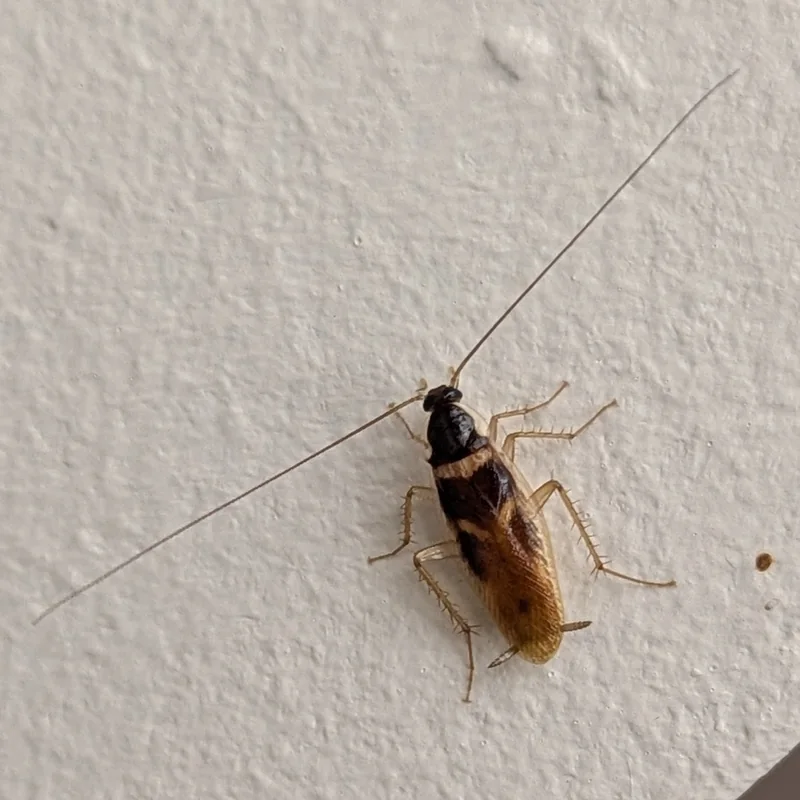
Cockroach
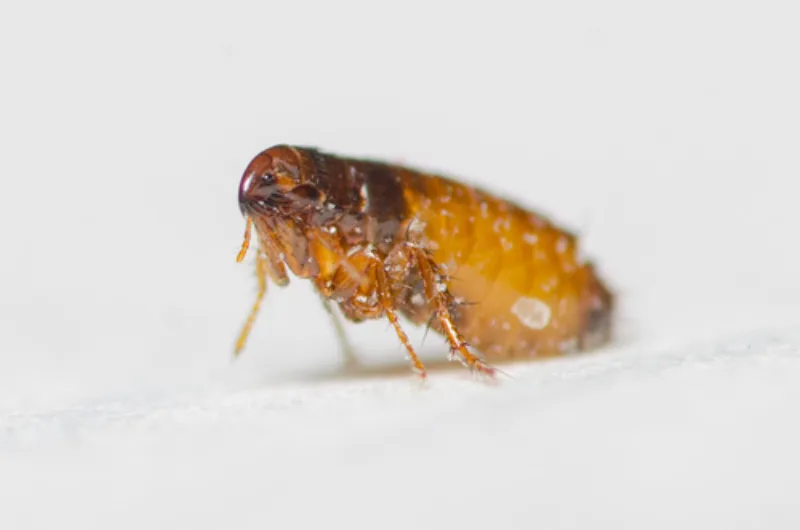
Flea
Side-by-Side Comparison Table
| Trait | Cockroach | Flea |
|---|---|---|
| Scientific Group | Blattodea | Siphonaptera |
| Category | Insect | Insect |
| Typical Size | 12–50 mm | 1–3 mm |
| Danger Level | Nuisance | Nuisance |
| Bites or Stings? | No | Yes |
| Peak US Months | May, June, July, September | June, July, August, September |
| Key ID Trait | Flattened oval body with a shield-like pronotum partly covering the head | Tiny, wingless, dark reddish-brown insect compressed side-to-side |
Cockroach vs. Flea: True Size Comparison
Side-by-Side Anatomy Blueprint
Compare body segments, antennae, leg count, and key markings directly before treating or removing either species.
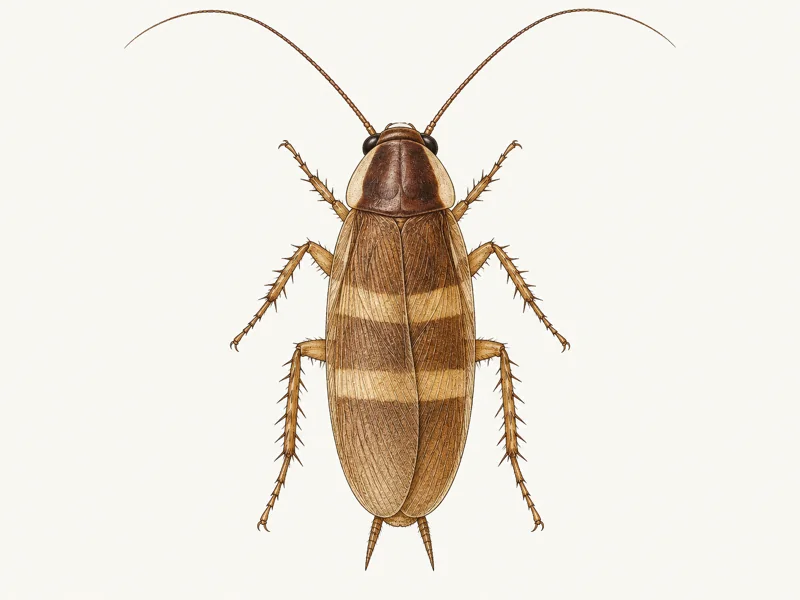
- Long whip antennae: Thread-like filiform feelers sweeping wider than the entire body length.
- Pale-edged pronotum: Dark mahogany shield with translucent margins (lacks German roach's twin bars).
- Two pale wing bands: Unmistakable pair of light golden-tan bands crossing the tawny-brown folded wings.
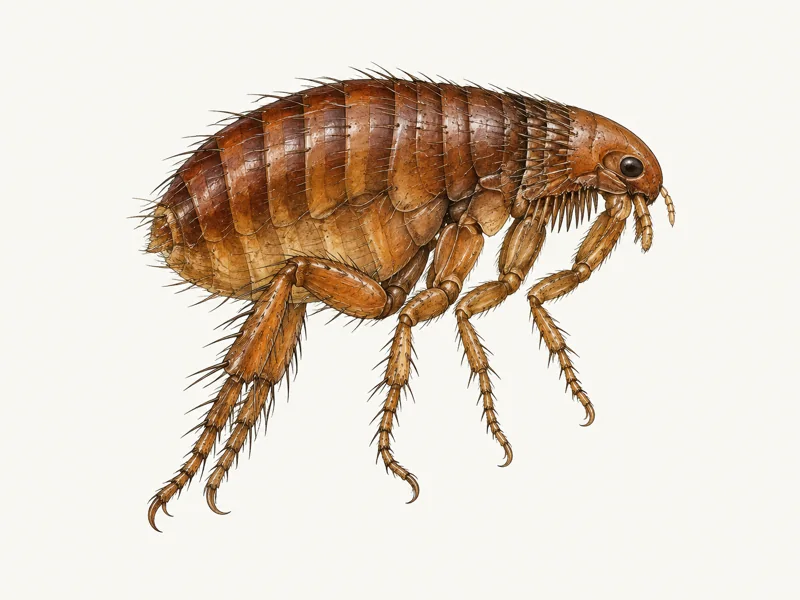
- Flattened armored plates: Laterally compressed wingless 1.5–3 mm glossy mahogany body glides effortlessly through fur.
- Head comb (ctenidia): Tiny eye, tucked antennae, and backward-pointing bristle comb anchor tightly in pet hair.
- Massive hind jumping legs: Powerfully enlarged muscular hind legs launch fleas up to 150× their body length.
Quick Answer: A cockroach is a large, flattened oval insect (12-50 mm) with a shield-like pronotum partly covering its head. A flea is a tiny (1-3 mm), wingless, dark reddish-brown insect compressed side-to-side that jumps rather than runs. If it scurries across the floor, it's a cockroach; if it leaps off a pet or carpet, it's a flea.
Quick ID Verdict: Cockroach or Flea in 3 Seconds
Check size and movement first. Cockroaches are big enough to see detail from across a room and sprint for cover when lights come on, while fleas are about the size of a pinhead and vanish in a sudden jump.
Next, look at body shape. A cockroach is flat from top to bottom, built for squeezing into cracks, while a flea is flat from side to side, built for slipping through animal fur.
Key Visual & Physical Differences
These two insects belong to entirely different orders. Cockroaches are in Blattodea, and fleas are in Siphonaptera, so their anatomy reflects very different lifestyles.
Size
- Cockroaches: 12-50 mm long, easy to see without magnification.
- Fleas: 1-3 mm long, often mistaken for specks of dirt until they jump.
Body Shape and Head
- Cockroaches: Flattened oval body with a shield-like pronotum that partly covers the head when viewed from above.
- Fleas: Narrow body compressed side-to-side, giving a thin, blade-like profile from the front.
Wings, Legs, and Antennae
- Cockroaches: Many adults have wings, and all have long, thread-like antennae and spiny legs built for running.
- Fleas: Completely wingless, with short antennae and powerful hind legs designed for jumping.
Color
Fleas are consistently dark reddish-brown. Cockroaches range from light tan to brown to nearly black depending on species, so color alone is less useful for them than body shape and size.
Behavior, Habitat & Danger Comparison
The difference between cockroach and flea behavior is as clear as their appearance. One is a free-roaming scavenger, and the other is a blood-feeding parasite tied to animal hosts.
Cockroach Behavior and Habitat
Cockroaches are mostly nocturnal scavengers that hide in warm, dark, moist spots. Look for them under sinks, behind refrigerators, inside cabinet gaps, and near drains. Signs include pepper-like droppings, egg cases, shed skins, and a musty odor in heavy infestations.
Flea Behavior and Habitat
Adult fleas live on hosts such as dogs, cats, and wildlife, feeding on blood. Their eggs, larvae, and pupae develop in carpets, pet bedding, upholstered furniture, and shaded outdoor areas. Common signs include pets scratching, tiny black "flea dirt" in fur, and small itchy bites around people's ankles.
Danger Level
Both insects are classified as nuisance pests. Cockroaches can contaminate food surfaces and their debris may aggravate allergies, while flea bites cause itching for people and pets. If anyone has a severe reaction to bites, contact a doctor, and call US Poison Control at 1-800-222-1222 with concerns about pesticide exposure.
Which One Is Worse for Homeowners?
Neither pest is dangerous in the medical sense, but each causes a different kind of headache. Cockroaches signal sanitation or moisture problems and can be stubborn in apartments and kitchens. Fleas are usually easier to trace to a source, since they almost always arrive on pets or wildlife.
For most households, cockroaches are the tougher long-term problem because they breed in wall voids and shared plumbing. Fleas can explode in number quickly but respond well to consistent pet treatment and cleaning.
Non-Chemical IPM for Cockroaches
- Seal cracks, gaps around pipes, and openings behind appliances.
- Fix leaks and reduce moisture under sinks.
- Store food in sealed containers and clean crumbs and grease daily.
- Use sticky traps to monitor activity and locate hot spots.
Non-Chemical IPM for Fleas
- Vacuum carpets, furniture, and pet areas daily, then empty the vacuum outside.
- Wash pet bedding in hot water weekly.
- Ask a veterinarian about flea prevention for every pet in the home.
- Discourage wildlife from nesting under decks and crawl spaces.
If baits, growth regulators, or other products are needed, always read and follow the EPA product label exactly. A licensed pest professional can help with persistent infestations.
Frequently Asked Questions
Can a baby cockroach be mistaken for a flea?
Yes, young cockroach nymphs can look small, but they still have a flat, oval body and long antennae. They run instead of jumping, which separates them from fleas.
Do cockroaches bite people like fleas do?
Cockroaches are scavengers and rarely bite people. Fleas feed on blood and commonly bite pets and humans, especially around the ankles.
Can you have fleas without pets?
Yes. Fleas can arrive on wildlife, from a previous owner's pets, or on clothing, and their pupae can survive in carpets for some time before hatching.
What is the fastest way to confirm cockroach vs flea identification?
Watch how it moves and check its shape. A fast-running, flat oval insect is a cockroach, while a tiny reddish-brown insect that jumps is a flea.