Cockroach vs Silverfish: How to Tell These Household Pests Apart
Quick ID Verdict: A cockroach has a flattened oval body with a shield-like pronotum partly covering its head, while a silverfish is wingless, carrot-shaped, and covered in fine metallic silver-gray scales. If the insect looks like a shiny tapered teardrop that wiggles like a fish, it's a silverfish. If it's broad, brown, and scuttles on long legs, it's a cockroach.
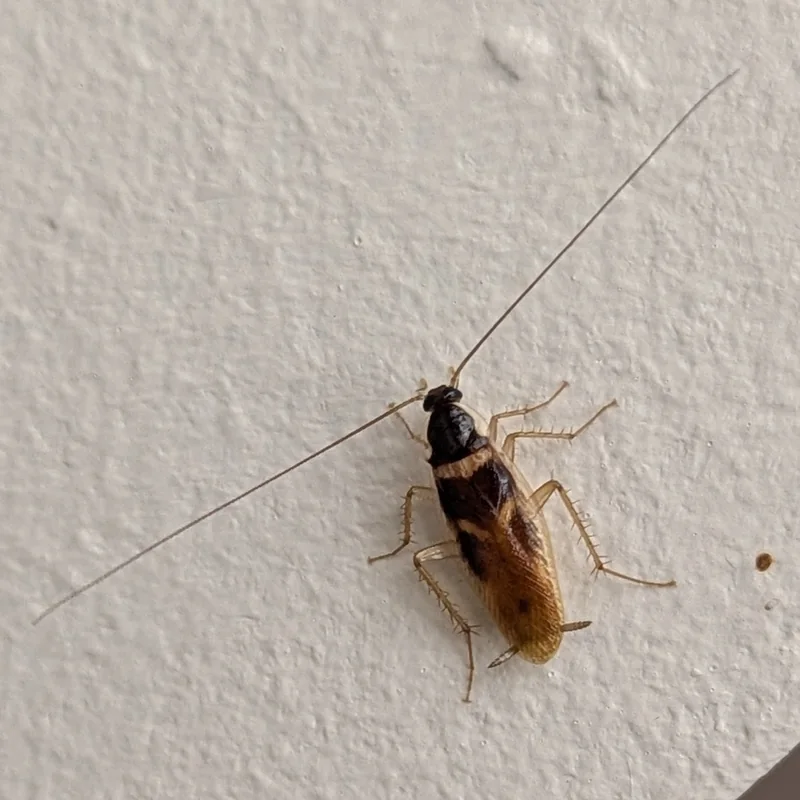
Cockroach
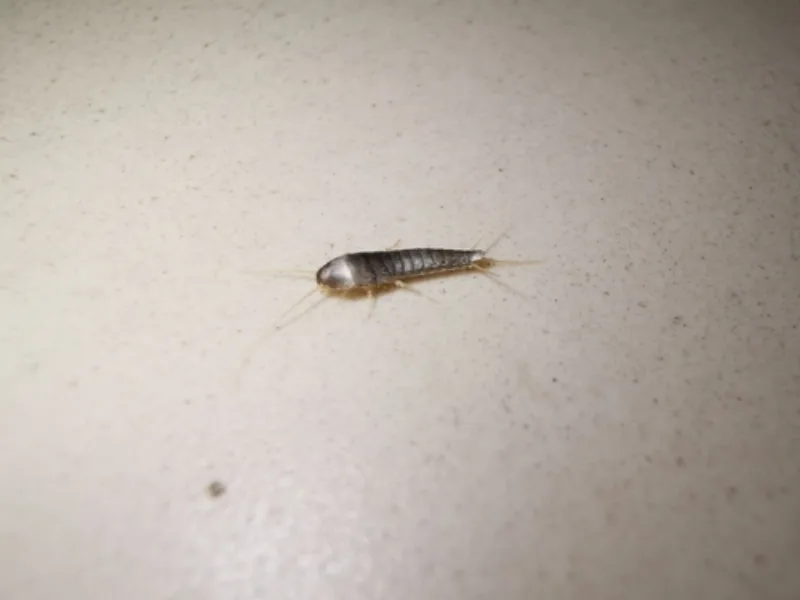
Silverfish
Side-by-Side Comparison Table
| Trait | Cockroach | Silverfish |
|---|---|---|
| Scientific Group | Blattodea | Lepisma saccharinum |
| Category | Insect | Insect |
| Typical Size | 12–50 mm | 10–19 mm |
| Danger Level | Nuisance | Nuisance |
| Bites or Stings? | No | No |
| Peak US Months | May, June, July, September | March, April, May, July |
| Key ID Trait | Flattened oval body with a shield-like pronotum partly covering the head | Wingless, carrot-shaped metallic silver-gray body covered in fine scales |
Cockroach vs. Silverfish: True Size Comparison
Side-by-Side Anatomy Blueprint
Compare body segments, antennae, leg count, and key markings directly before treating or removing either species.
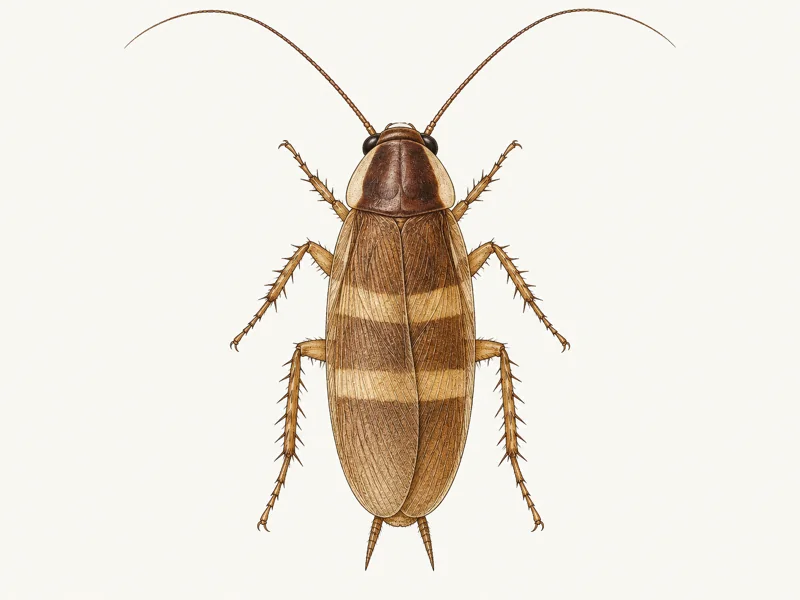
- Long whip antennae: Thread-like filiform feelers sweeping wider than the entire body length.
- Pale-edged pronotum: Dark mahogany shield with translucent margins (lacks German roach's twin bars).
- Two pale wing bands: Unmistakable pair of light golden-tan bands crossing the tawny-brown folded wings.
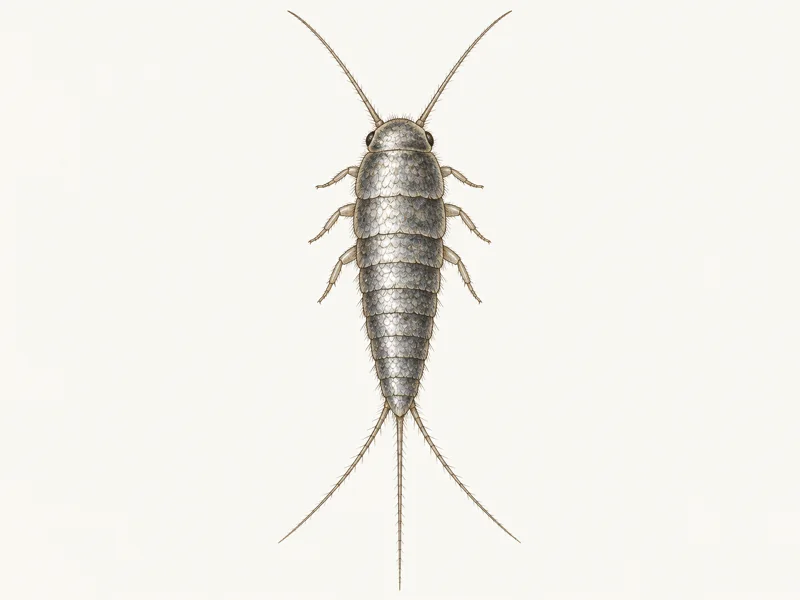
- Long thin antennae: Sweeping thread-like feelers guiding nocturnal foraging in damp paper and baths.
- Carrot-shaped body: Flat, wingless teardrop profile broad at the head and tapering smoothly backward.
- Metallic silver scales: Shimmering pewter-silver scales give a fluid, fish-like wriggling crawl.
Quick Answer: A cockroach has a flattened oval body with a shield-like pronotum partly covering its head, while a silverfish is wingless, carrot-shaped, and covered in fine metallic silver-gray scales. If the insect looks like a shiny tapered teardrop that wiggles like a fish, it's a silverfish. If it's broad, brown, and scuttles on long legs, it's a cockroach.
Key Visual & Physical Differences
Size and shape settle most questions of cockroach vs silverfish identification. Cockroaches (order Blattodea) range from 12-50 mm long, so large species can be several times bigger than any silverfish. Silverfish (Lepisma saccharinum) stay small at 10-19 mm.
Cockroach Features
- Body: Flattened and oval, built to slip into tight cracks.
- Pronotum: A shield-like plate that partly covers the head, visible from above.
- Color: Usually tan, reddish-brown, or dark brown to nearly black.
- Wings: Many adults have wings folded flat over the back, though some species have short or reduced wings.
- Legs: Long, spiny legs made for fast running.
Silverfish Features
- Body: Carrot-shaped, wide at the head and tapering toward the tail.
- Surface: Covered in fine scales with a metallic silver-gray sheen.
- Wings: None at any life stage.
- Tail: Three long, bristle-like tail filaments.
- Movement: A quick, side-to-side wiggle that resembles a swimming fish.
The fastest single clue is the tail end. Silverfish taper to a point with three trailing filaments, while cockroaches end in a broad, rounded abdomen with two short cerci.
Behavior, Habitat & Danger Comparison
Both insects are nocturnal and avoid light, which is why homeowners often spot them after flipping on a bathroom or kitchen light. Beyond that, their habits differ in ways that affect control.
Where They Live
Cockroaches cluster near food, water, and warmth. Kitchens, behind refrigerators, under sinks, and inside cabinet voids are common hiding spots. Silverfish prefer cool, damp, undisturbed areas such as basements, bathrooms, laundry rooms, attics, and storage boxes.
What They Eat
Cockroaches are general scavengers that feed on crumbs, grease, pet food, garbage, and organic debris. Silverfish target starches and sugars found in paper, book bindings, wallpaper paste, cardboard, cereal, and some fabrics. Damage from silverfish often appears as irregular holes or surface grazing on paper goods.
Danger Level
Both cockroaches and silverfish are classified as nuisance pests. Neither is known for biting people in normal household settings, and neither is venomous. Cockroaches can, however, contaminate food surfaces as they move between waste and kitchens, and their droppings and shed skins can aggravate allergies in some people. Anyone with ongoing respiratory symptoms should talk with a doctor rather than self-diagnose.
Which One Is Worse for Homeowners?
When deciding between a cockroach or silverfish problem, most pest professionals consider cockroaches the more serious concern. They reproduce quickly, spread through shared walls and plumbing, and raise sanitation issues around food. Silverfish are slower to build large populations and mainly threaten paper, books, and stored goods.
That said, a silverfish infestation still signals excess humidity, which can invite other moisture-loving pests. Either insect deserves prompt attention.
Non-Chemical Control First
Integrated Pest Management (IPM) works well for both pests because each depends on moisture and shelter:
- Moisture control: Fix leaks, run a dehumidifier, and vent bathrooms and dryers. Aim for indoor humidity below 50 percent.
- Sanitation: Wipe up crumbs and grease, store food in sealed containers, and empty trash nightly.
- Exclusion: Caulk cracks along baseboards, pipes, and cabinets, and repair torn screens.
- Declutter: Replace cardboard storage boxes with sealed plastic bins and remove stacks of old paper.
- Monitoring: Place sticky traps in corners and under sinks to confirm which pest is present and track activity.
When Products Are Needed
If IPM steps don't solve the problem, gel baits and bait stations are often effective against cockroaches, while targeted dusts in wall voids can help with silverfish. Always read and follow the EPA-registered product label exactly, keep products away from children and pets, and consider a licensed pest control professional for persistent infestations.
Frequently Asked Questions
What is the easiest difference between cockroach and silverfish?
Look at the shape and color. Cockroaches are brown, flattened ovals with a shield over the head, while silverfish are silver-gray, scaly, and carrot-shaped with three tail filaments.
Can silverfish turn into cockroaches?
No. They are entirely different insects. Silverfish belong to their own primitive group, while cockroaches belong to the order Blattodea, and neither changes into the other.
Do cockroaches or silverfish bite people?
Both are considered nuisance pests and do not typically bite humans. Cockroaches pose more concern through food contamination and allergens than through bites.
Does seeing silverfish mean I have a moisture problem?
Often, yes. Silverfish thrive in humid, damp spaces, so regular sightings usually point to leaks, poor ventilation, or high humidity worth correcting.