Cockroach vs German Cockroach: How to Tell Them Apart
Quick ID Verdict: The German cockroach is one species within the much larger cockroach order, Blattodea. To tell them apart in three seconds, look behind the head: two dark parallel stripes on a small light-tan to amber body (11-16 mm) mean German cockroach. A bigger roach with a plain or differently marked shield-like pronotum is likely another species.
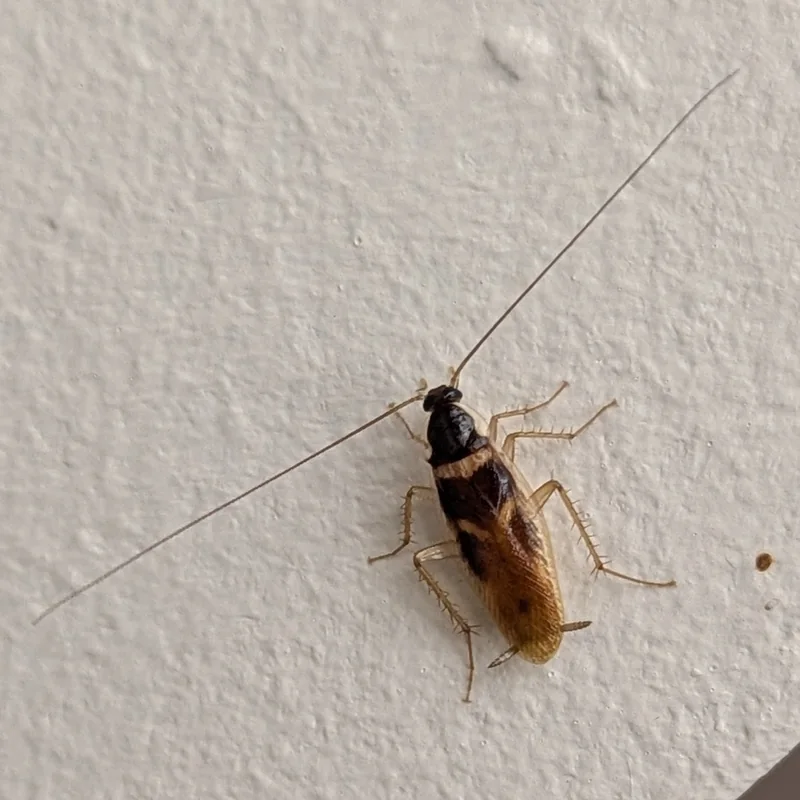
Cockroach
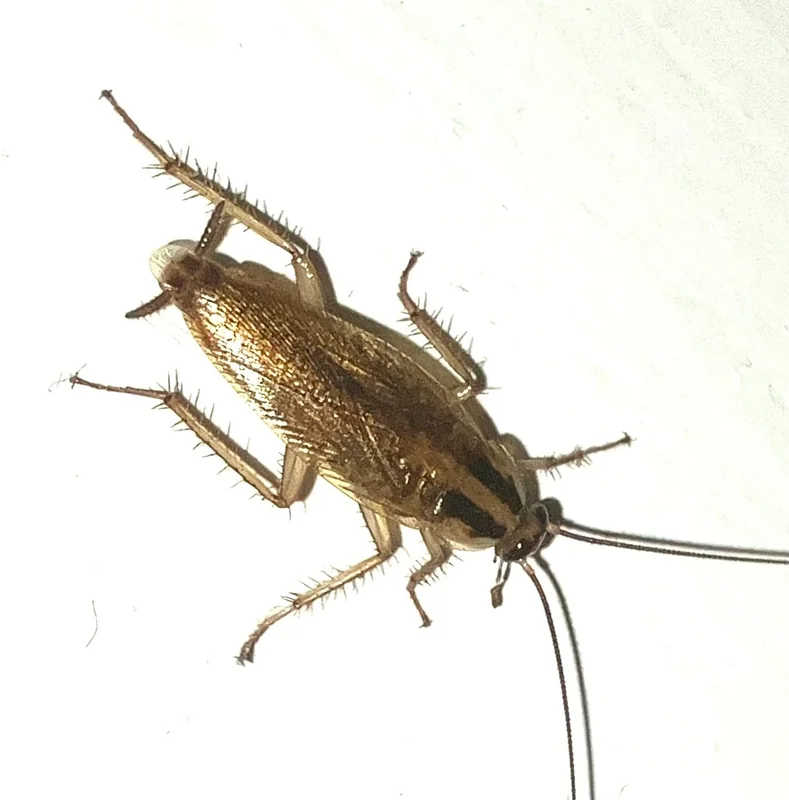
German Cockroach
Side-by-Side Comparison Table
| Trait | Cockroach | German Cockroach |
|---|---|---|
| Scientific Group | Blattodea | Blattella germanica |
| Category | Insect | Insect |
| Typical Size | 12–50 mm | 11–16 mm |
| Danger Level | Nuisance | Nuisance |
| Bites or Stings? | No | No |
| Peak US Months | May, June, July, September | July, September, October, November |
| Key ID Trait | Flattened oval body with a shield-like pronotum partly covering the head | Small light-tan to amber cockroach with two unmistakable dark parallel lengthwise stripes behind the head |
Cockroach vs. German Cockroach: True Size Comparison
Side-by-Side Anatomy Blueprint
Compare body segments, antennae, leg count, and key markings directly before treating or removing either species.
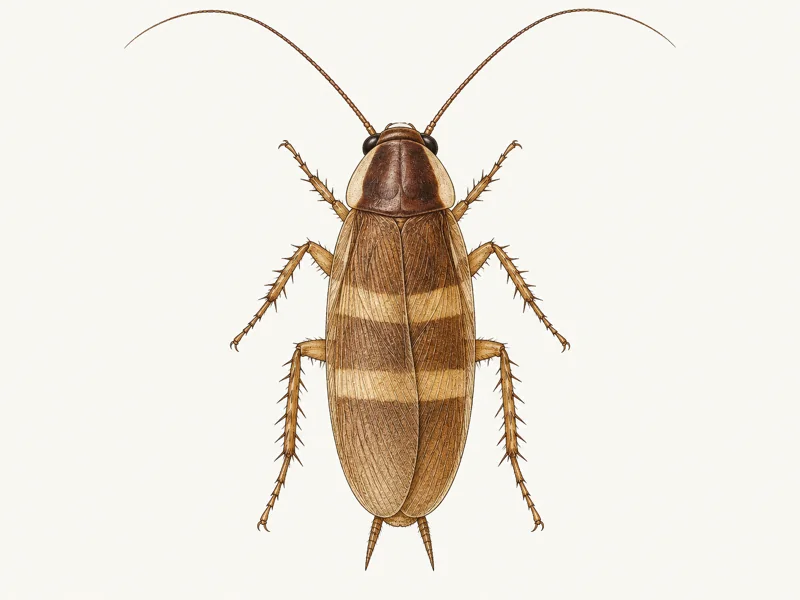
- Long whip antennae: Thread-like filiform feelers sweeping wider than the entire body length.
- Pale-edged pronotum: Dark mahogany shield with translucent margins (lacks German roach's twin bars).
- Two pale wing bands: Unmistakable pair of light golden-tan bands crossing the tawny-brown folded wings.
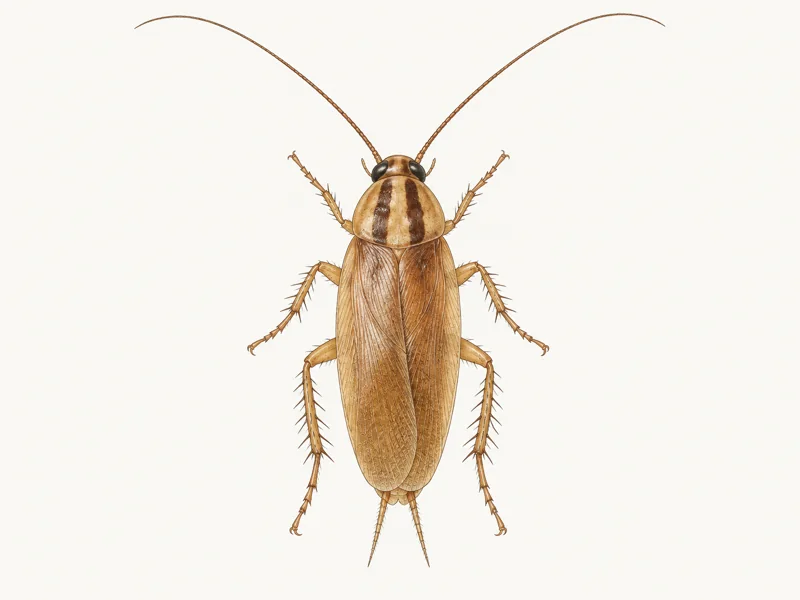
- Whip-like antennae: Very long, delicate filiform antennae sweeping forward to detect air currents and food.
- Two dark stripes: Unmistakable pair of dark parallel lengthwise bars on the tan shield (pronotum) behind the head.
- Spiny running legs: Six bristle-lined legs built for rapid sprinting into cabinet hinges and appliance voids.
Key Visual & Physical Differences
The main difference between a cockroach and a German cockroach is scope. "Cockroach" covers the whole Blattodea group, which ranges widely in size and color. Blattella germanica is one small, distinctive member of that group.
General Cockroaches (Blattodea)
- Size: 12-50 mm, depending on species.
- Body shape: Flattened oval body built for squeezing into cracks.
- Key ID feature: A shield-like pronotum that partly covers the head.
- Color: Varies by species, from reddish-brown to nearly black.
German Cockroaches (Blattella germanica)
- Size: 11-16 mm, at the small end of the cockroach range.
- Color: Light tan to amber.
- Key ID feature: Two dark, parallel, lengthwise stripes on the pronotum behind the head.
- Body shape: The same flattened oval form shared by all cockroaches.
For quick identification, size and stripes do most of the work. A roach longer than about 16 mm is not a German cockroach. A small tan roach without the two stripes deserves a closer look, since several small species can be mistaken for it.
Behavior, Habitat & Danger Comparison
Both groups are classified as nuisance pests. Neither bites people in any meaningful way, but both can contaminate food and surfaces and leave droppings, shed skins, and odor behind. Their habits differ in ways that matter for control.
Habitat Preferences
- Cockroaches in general: Many species live outdoors in mulch, leaf litter, sewers, or tree bark and wander inside occasionally. Some prefer damp basements, drains, or crawl spaces.
- German cockroaches: Strongly tied to indoor spaces with warmth, moisture, and food. Kitchens and bathrooms are favorites, especially behind appliances, under sinks, and inside cabinet hinges.
Activity Patterns
Most cockroaches are nocturnal and scatter when lights come on. Seeing German cockroaches during the day often signals a heavy infestation, because crowding pushes them out of hiding. Larger outdoor species seen indoors are more often lone visitors than an established colony.
Health Concerns
Cockroach droppings and body parts can trigger allergies and worsen asthma in sensitive people. Anyone with ongoing respiratory symptoms should talk with a doctor rather than relying on home remedies. If a child or pet swallows a pest-control product, call US Poison Control at 1-800-222-1222.
Which One Is Worse for Homeowners?
When a homeowner asks whether they have a cockroach or a German cockroach problem, the answer usually points to how hard control will be. German cockroaches are generally the tougher pest. They live almost entirely indoors, hide in tiny gaps, and can build large populations quickly in a single kitchen.
Many larger cockroach species are occasional invaders. Sealing entry points and fixing moisture problems often keeps them out. German cockroaches need a sustained, room-by-room plan.
Non-Chemical IPM First
- Sanitation: Wipe crumbs and grease daily, store food in sealed containers, and take out trash every night.
- Moisture control: Repair leaky faucets and pipes, dry sinks overnight, and run dehumidifiers in damp areas.
- Exclusion: Caulk cracks around baseboards, plumbing, and cabinets. Add door sweeps and repair torn screens.
- Clutter reduction: Remove cardboard boxes and paper piles, which offer hiding spots.
- Monitoring: Place sticky traps under sinks and behind appliances to find hot spots and track progress.
When Products Are Needed
If sanitation and exclusion aren't enough, gel baits and bait stations placed in cracks are commonly used for German cockroaches. Always read and follow the EPA product label exactly, keep products away from children and pets, and avoid spraying repellents near baits. For persistent infestations, a licensed pest control professional can assess the problem and recommend targeted treatment.
Frequently Asked Questions
Is a German cockroach a different insect from a regular cockroach?
No. The German cockroach (Blattella germanica) is one species within the cockroach order Blattodea. It is distinguished by its small size and two dark stripes behind the head.
How big do German cockroaches get compared to other cockroaches?
German cockroaches measure 11-16 mm. Cockroaches as a group range from 12 to 50 mm, so many other species are noticeably larger.
Are German cockroaches dangerous?
They are classified as nuisance pests. They can contaminate food and trigger allergies or asthma, so consult a doctor about ongoing symptoms.
Why are German cockroaches harder to get rid of?
They live almost entirely indoors near food and water and hide in tight cracks. Consistent sanitation, moisture control, sealing, and label-directed baiting work best together.