Hornet vs Cockroach: How to Tell Them Apart and Which Is Worse
Quick ID Verdict: A cockroach has a flattened oval body with a shield-like pronotum partly covering its head and usually runs along the floor. A hornet is a stout, narrow-waisted stinging wasp that flies, and it is notably larger and stouter than typical yellow jackets or paper wasps. Cockroaches are a nuisance pest, while hornets are medically significant because of their stings.
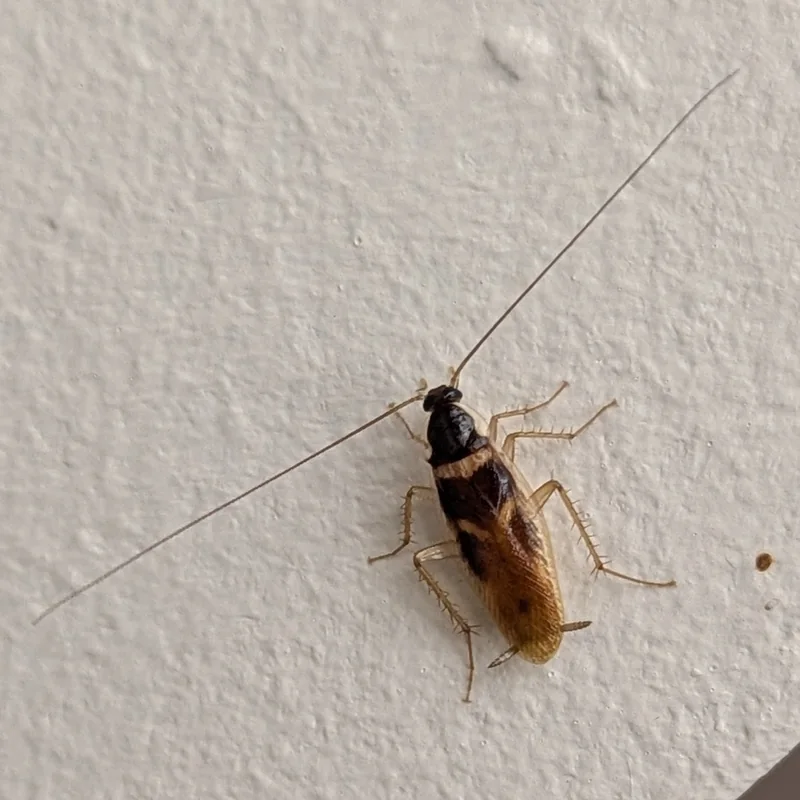
Cockroach
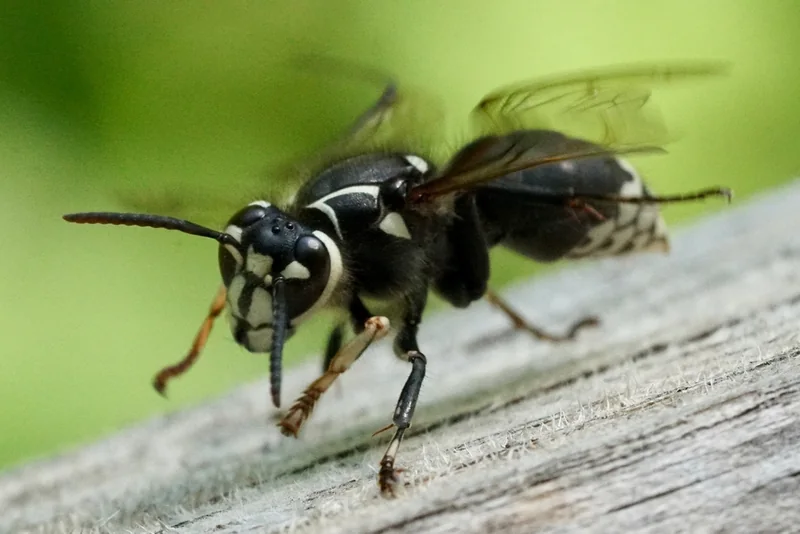
Hornet
Side-by-Side Comparison Table
| Trait | Cockroach | Hornet |
|---|---|---|
| Scientific Group | Blattodea | Vespa & Dolichovespula maculata |
| Category | Insect | Insect |
| Typical Size | 12–50 mm | 18–35 mm |
| Danger Level | Nuisance | Medically Significant |
| Bites or Stings? | No | Yes |
| Peak US Months | May, June, July, September | August, September, October |
| Key ID Trait | Flattened oval body with a shield-like pronotum partly covering the head | Notably larger and stouter than typical yellow jackets or paper wasps |
Cockroach vs. Hornet: True Size Comparison
Side-by-Side Anatomy Blueprint
Compare body segments, antennae, leg count, and key markings directly before treating or removing either species.
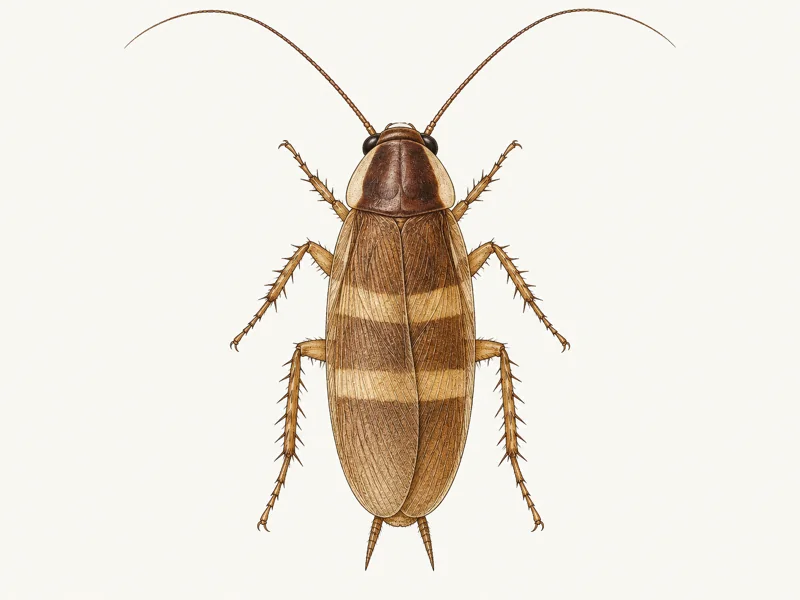
- Long whip antennae: Thread-like filiform feelers sweeping wider than the entire body length.
- Pale-edged pronotum: Dark mahogany shield with translucent margins (lacks German roach's twin bars).
- Two pale wing bands: Unmistakable pair of light golden-tan bands crossing the tawny-brown folded wings.
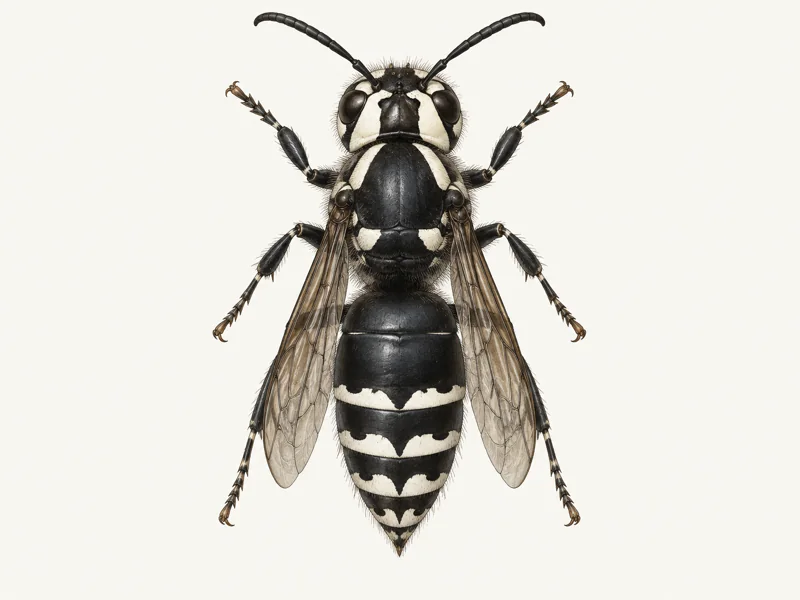
- Ivory-white face: Bold creamy-white face and thorax-side markings distinguish it from yellow jackets.
- Stout black thorax: Heavy-bodied glossy jet-black aerial wasp measuring 15–20 mm.
- Smoky veined wings: Dark-veined translucent wings powering rapid defense around aerial paper nests.
Quick Answer: A cockroach has a flattened oval body with a shield-like pronotum partly covering its head and usually runs along the floor. A hornet is a stout, narrow-waisted stinging wasp that flies, and it is notably larger and stouter than typical yellow jackets or paper wasps. Cockroaches are a nuisance pest, while hornets are medically significant because of their stings.
3-second ID verdict: If it is flat, oval, and scurrying with its head tucked under a shield, it is a cockroach. If it has a pinched wasp waist, a thick body, and buzzes through the air, it is a hornet. Treat it with caution.
Key Visual & Physical Differences
The difference between a cockroach and a hornet is clearest in body shape. Cockroaches (order Blattodea) are built low and flat for squeezing into cracks. Hornets (genus Vespa, plus the bald-faced hornet, Dolichovespula maculata) have the classic wasp build of a distinct head, thorax, and abdomen joined by a narrow waist.
Cockroaches (Blattodea)
- Size: 12-50 mm, depending on species.
- Body: Flattened oval shape with a shield-like pronotum partly covering the head.
- Color: Typically tan, reddish-brown, or dark brown to black.
- Antennae: Long and thread-like, often as long as the body or longer.
- Wings: Leathery wings lie flat over the back. Many species rarely fly.
- Legs: Spiny legs built for fast running.
Hornets (Vespa and Dolichovespula maculata)
- Size: 18-35 mm.
- Body: Notably larger and stouter than typical yellow jackets or paper wasps, with a narrow waist.
- Color: Bold patterns, such as yellow-brown banding in Vespa or the black-and-white markings of the bald-faced hornet.
- Antennae: Short and elbowed.
- Wings: Two pairs of clear or smoky membranous wings. Hornets fly strongly.
- Stinger: Females carry a smooth stinger and can sting more than once.
For quick cockroach vs hornet identification, look at the head. A cockroach's head hides under its pronotum, while a hornet's head is fully exposed, with large eyes and strong jaws.
Behavior, Habitat & Danger Comparison
These two pests live very different lives. Cockroaches are mostly nocturnal scavengers that hide in warm, damp spaces. Hornets are social insects that defend a shared nest during the active season.
Cockroach Behavior and Habitat
Cockroaches shelter in kitchens, bathrooms, basements, drains, and wall voids. They feed on crumbs, grease, paper, and organic debris, and they scatter when lights come on. Seeing one during the day can point to a heavy infestation.
Hornet Behavior and Habitat
Hornets build paper nests in trees, shrubs, under eaves, or inside wall voids and attics. The bald-faced hornet is known for large, gray, football-shaped aerial nests. Workers hunt other insects and defend the nest aggressively when disturbed.
Danger Level
- Cockroaches: Rated a nuisance. They do not bite or sting people in any meaningful way, but they can contaminate food surfaces and their droppings and shed skins can aggravate allergies and asthma.
- Hornets: Rated medically significant. Stings are painful, and multiple stings or an allergic reaction can become a medical emergency.
If someone is stung and shows swelling of the face or throat, trouble breathing, dizziness, or hives, call 911 right away. For guidance on a sting, contact US Poison Control at 1-800-222-1222 and follow up with a doctor. Do not rely on home remedies for venom reactions.
Which One Is Worse for Homeowners?
When deciding whether a cockroach or a hornet poses the bigger problem, it depends on the type of risk. Hornets carry the greater immediate safety threat because of their stings. Cockroaches are the harder long-term problem because indoor populations grow fast and spread through a home.
Managing Cockroaches with IPM
- Sanitation: Wipe up crumbs and grease, store food in sealed containers, and take out trash nightly.
- Moisture control: Fix leaky pipes, dry sinks overnight, and run a dehumidifier in damp areas.
- Exclusion: Seal cracks, gaps around pipes, and spaces behind baseboards with caulk.
- Monitoring: Place sticky traps to find hot spots.
- Targeted products: If needed, use baits or gels and always follow the EPA product label.
Managing Hornets with IPM
- Keep your distance: Never swat at hornets or disturb a nest.
- Exclusion: Seal gaps in soffits, siding, and vents before spring to block nest sites.
- Reduce attractants: Cover trash cans and clean up fallen fruit and sugary drinks outdoors.
- Call a professional: Large nests, wall-void nests, or nests near doors are best handled by a licensed pest control operator.
- Products: If any treatment is used, follow the EPA product label exactly and wear protective gear.
Frequently Asked Questions
Can a cockroach sting like a hornet?
No. Cockroaches have no stinger and are considered a nuisance pest. Hornets have a stinger and are medically significant.
Do cockroaches fly like hornets?
Some cockroaches can fly or glide short distances, but most prefer to run. Hornets are strong, agile fliers that travel to and from their nests all day.
What is the fastest way to tell a hornet vs cockroach?
Check the body shape. A flat oval body with a shield over the head means cockroach, while a stout body with a narrow waist means hornet.
Should homeowners remove a hornet nest themselves?
It is safer to hire a licensed professional, especially for large or hidden nests. Anyone allergic to stings should never attempt removal.