Wolf Spiders in South Dakota: Identification, Season, and Prevention
Quick Answer: Yes, wolf spiders in South Dakota are common, with 146 verified GBIF sightings statewide. They are ground-dwelling hunters rated as a nuisance, most active from June through September. Sealing gaps, reducing clutter, and managing outdoor lighting and moisture keep most out of the house.
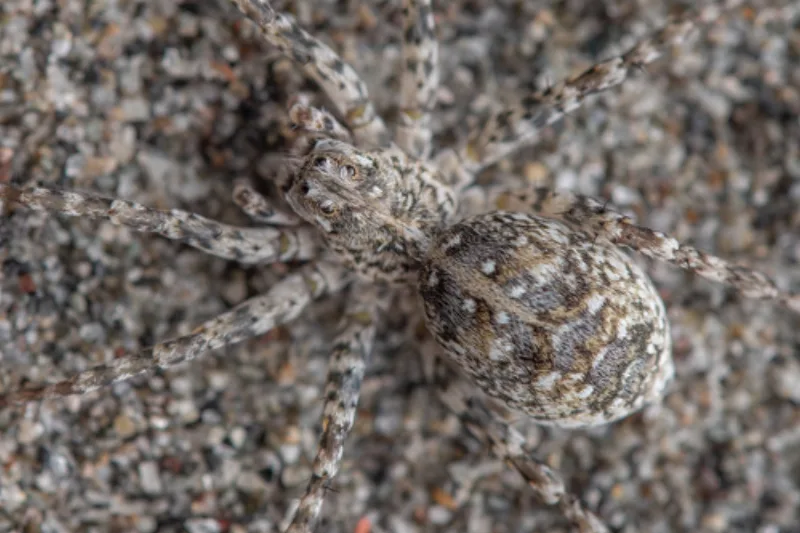
When Wolf Spiders Are Most Active in South Dakota
Now (November): Lower Outdoor ActivityVerified South Dakota Counties, Species & US Range
Counties with Verified Observations
- Jackson
- Pennington
- Custer
- Davison
- Lincoln
- Union
- Sanborn
- Lyman
- Yankton
- Jones
Species Recorded in South Dakota
| Species | Scientific Name | GBIF Records |
|---|---|---|
| Tigrosa grandis | Tigrosa grandis | 50 |
| Carolina Wolf Spider | Hogna carolinensis | 16 |
| Wolf Spiders | Arctosa littoralis | 13 |
How South Dakota Compares to Neighboring States
Note: Wildlife does not follow state or county lines. GBIF totals reflect verified citizen and museum records, so low counts in a neighboring county do not guarantee absence.
How to Identify Wolf Spiders
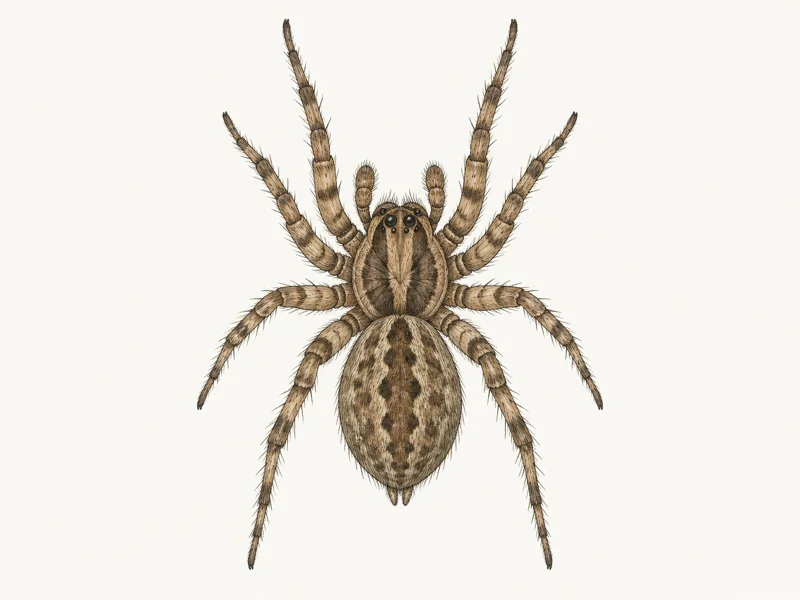
Annotated Anatomy Key (Wolf Spider)
- Large front eyes: Eight eyes in 3 distinct rows (two very large middle eyes reflect flashlight beams at night).
- Striped cephalothorax: Robust front carapace marked with twin dark lengthwise stripes—no recluse violin mark.
- Eight stout hairy legs: Four pairs of strong, spiny, mottled hunting legs built for chasing prey without webs.
- Mottled oval abdomen: Patterned brown-and-tan abdomen; females carry round egg sacs attached to spinnerets.
Wolf Spiders Field Checklist
- Stout, hairy brown-and-gray striped spider with prominent spiny legs
- Two notably large forward-facing eyes above a row of four tiny eyes (reflects flashlight beams at night)
- Hunts actively on the ground without spinning prey-catching webs
- Females uniquely carry round silk egg sacs on their spinnerets and piggyback spiderlings
Wolf Spiders Size at True Relative Scale
Quick Answer: Yes, wolf spiders in South Dakota are common, with 146 verified GBIF sightings statewide. They are ground-dwelling hunters rated as a nuisance, most active from June through September. Sealing gaps, reducing clutter, and managing outdoor lighting and moisture keep most out of the house.
Where Wolf Spiders Live in South Dakota
People often ask whether there are wolf spiders in South Dakota. There are, and GBIF records show them across the state's plains. The most frequently reported counties are Jackson, Pennington, Custer, Davison, and Lincoln.
Recorded species include Tigrosa grandis, the Carolina wolf spider (Hogna carolinensis), and Arctosa littoralis. The state's continental climate brings hot summers and cold, windy winters (USDA zones 4a to 5b), and these spiders shelter accordingly.
- Grasslands, lawns, and field edges
- Leaf litter, mulch, and wood piles
- Sandy or open ground near water (Arctosa littoralis favors shorelines)
- Garages, basements, window wells, and door thresholds
Wolf spiders do not spin webs to catch prey. They hunt on the ground, and females carry a round egg sac attached to their spinnerets. Spiderlings later ride on her abdomen.
When Wolf Spiders Are Most Active in South Dakota
The South Dakota wolf spider season peaks in June, July, August, and September, matching the pattern in GBIF sighting records. Warm nights increase hunting and wandering, and males roam more in late summer and early fall while searching for mates.
As nights cool in autumn, spiders look for sheltered spots, which is when more of them appear in garages, basements, and ground-floor rooms. In winter, many overwinter in leaf litter, under stones, or in protected crevices, and a few may be seen indoors in heated spaces.
Identifying Wolf Spiders and Look-Alikes
South Dakota wolf spider identification starts with body shape and eye pattern. Wolf spiders are stocky, hairy, and typically brown or gray with darker markings. Most adults range from about half an inch to over an inch in body length.
- Eyes: eight eyes in three rows, with two large eyes facing forward on top and a row of four small eyes below
- Stripe: many have a pale stripe down the middle of the carapace
- Behavior: fast runners that hunt at ground level rather than sitting in webs
Look-Alikes Frequently Mistaken for Wolf Spiders
Several other spiders found in South Dakota resemble wolf spiders at a glance. Check eye arrangement and behavior to tell them apart.
- Nursery web and fishing spiders: larger and long-legged, often near water, with a different eye layout
- Funnel weavers: build sheet webs with a funnel retreat, which wolf spiders do not
- Jumping spiders: smaller and compact, with one very large pair of front eyes
Wolf spiders are generally considered nuisance pests. A bite is uncommon and typically occurs only when a spider is pressed against skin. If someone has a severe reaction, call US Poison Control at 1-800-222-1222 and contact a doctor.
How to Keep Wolf Spiders Out of Your South Dakota Home
For anyone wondering how to prevent wolf spiders in South Dakota, start with non-chemical steps. These address the insects wolf spiders feed on and the gaps they use to get in.
- Seal cracks in the foundation, and fit door sweeps and tight weatherstripping
- Repair torn window and vent screens
- Move firewood, mulch, and debris at least a foot from the foundation
- Keep grass trimmed and clear leaf litter near the house
- Switch outdoor lights to yellow or warm LEDs, or turn them off, to attract fewer insects
- Fix leaks and run a dehumidifier in damp basements
- Declutter garages and storage areas, and vacuum spiders and egg sacs
- Use sticky traps along baseboards to monitor activity
If you use any insecticide, choose a product labeled for spiders and follow the EPA-approved label exactly.
When to call a licensed South Dakota pest professional
- You find many spiders indoors week after week
- You see repeated egg sacs or spiderlings inside
- You cannot identify the spider and suspect a medically significant species
- Sealing and sanitation have not reduced activity
IPM Prevention Checklist for South Dakota Homes
- Install tight door sweeps and seal foundation gaps
- Keep firewood and thick mulch pulled back from siding
 EXCLUSION BLUEPRINT
Inspect eaves, screens, door sweeps, foundation cracks, and utility penetrations around South Dakota homes before peak season.
Wolf Spiders in South Dakota: Frequently Asked Questions
Are wolf spiders in South Dakota dangerous?
They are considered a nuisance. They are not aggressive and bite only when handled or trapped. For a severe reaction, call Poison Control at 1-800-222-1222 and see a doctor.
Which wolf spider species are recorded in South Dakota?
GBIF records include Tigrosa grandis, the Carolina wolf spider (Hogna carolinensis), and Arctosa littoralis.
Why do wolf spiders come inside in fall?
Cooling nights push them to seek shelter, and wandering males are active in late summer. Gaps around doors and foundations let them in.
Do wolf spiders build webs?
No. They hunt on the ground and use silk mainly for egg sacs and shelter lining. A spider in a funnel-shaped web is likely another type.
Sources & Verification
Data refreshed · Editorial & GBIF Methodology