Cockroach vs House Centipede: How to Tell Them Apart Fast
Quick ID Verdict: A cockroach has a flattened oval body, six legs, and a shield-like pronotum that partly covers its head. A house centipede (Scutigera coleoptrata) is a yellowish-gray, fast-moving creature with three dark lengthwise stripes and up to 15 pairs of very long legs. Count the legs and look for the stripes, and the ID takes about three seconds.
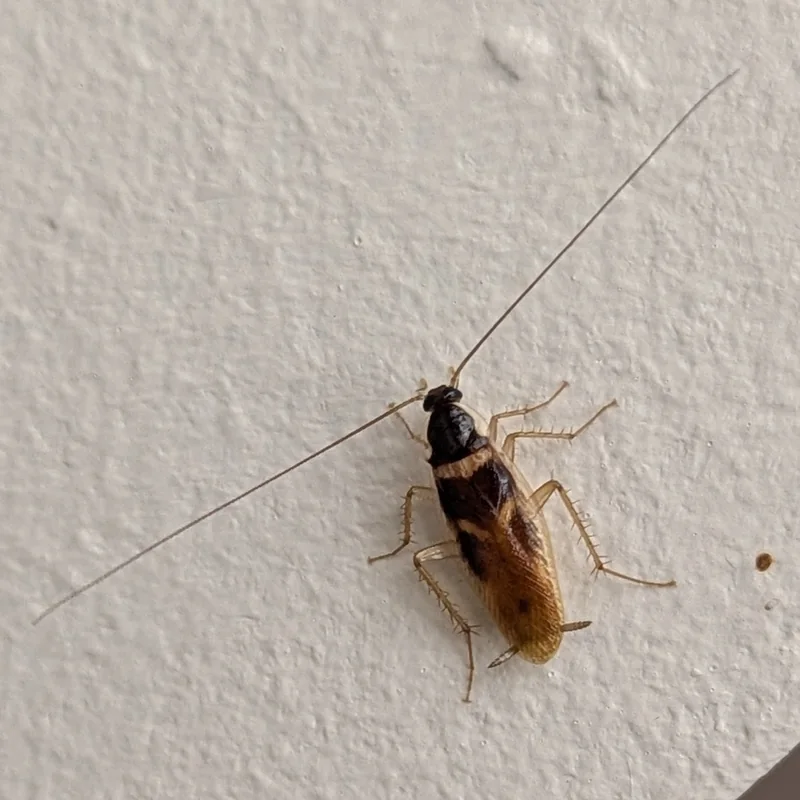
Cockroach
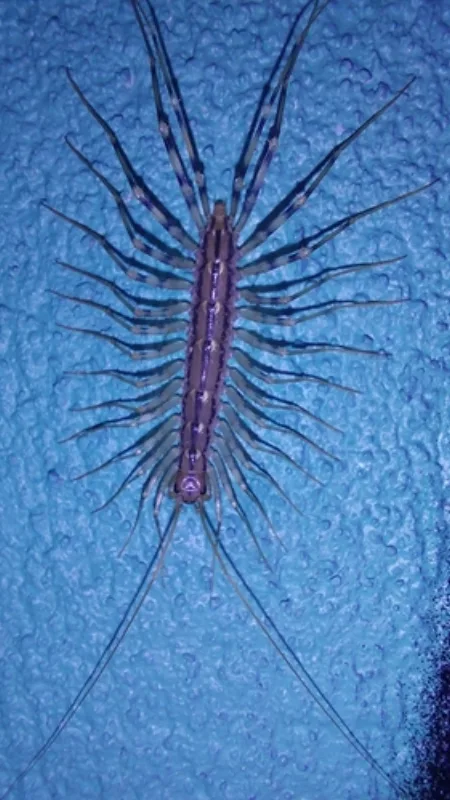
House Centipede
Side-by-Side Comparison Table
| Trait | Cockroach | House Centipede |
|---|---|---|
| Scientific Group | Blattodea | Scutigera coleoptrata |
| Category | Insect | Myriapod |
| Typical Size | 12–50 mm | 25–40 mm |
| Danger Level | Nuisance | None |
| Bites or Stings? | No | No |
| Peak US Months | May, June, July, September | May, July, September, October |
| Key ID Trait | Flattened oval body with a shield-like pronotum partly covering the head | Yellowish-gray body with three dark lengthwise stripes |
Cockroach vs. House Centipede: True Size Comparison
Side-by-Side Anatomy Blueprint
Compare body segments, antennae, leg count, and key markings directly before treating or removing either species.
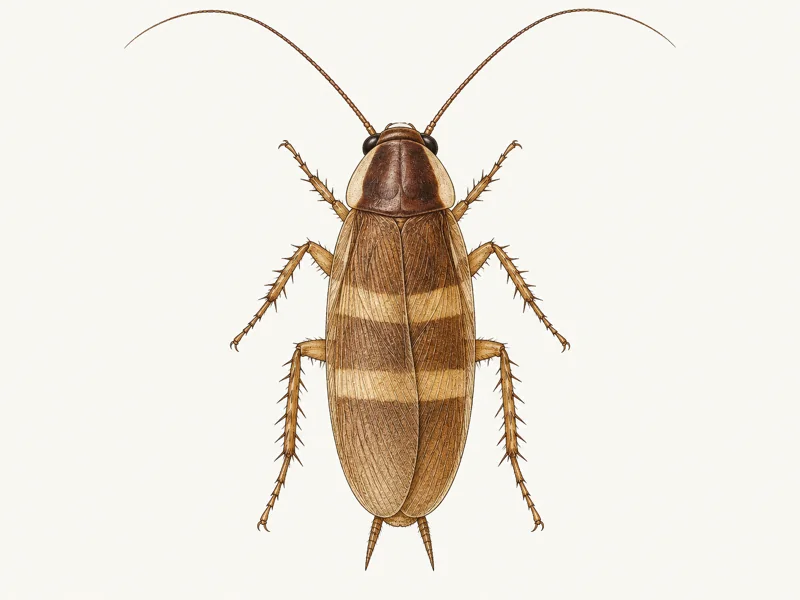
- Long whip antennae: Thread-like filiform feelers sweeping wider than the entire body length.
- Pale-edged pronotum: Dark mahogany shield with translucent margins (lacks German roach's twin bars).
- Two pale wing bands: Unmistakable pair of light golden-tan bands crossing the tawny-brown folded wings.
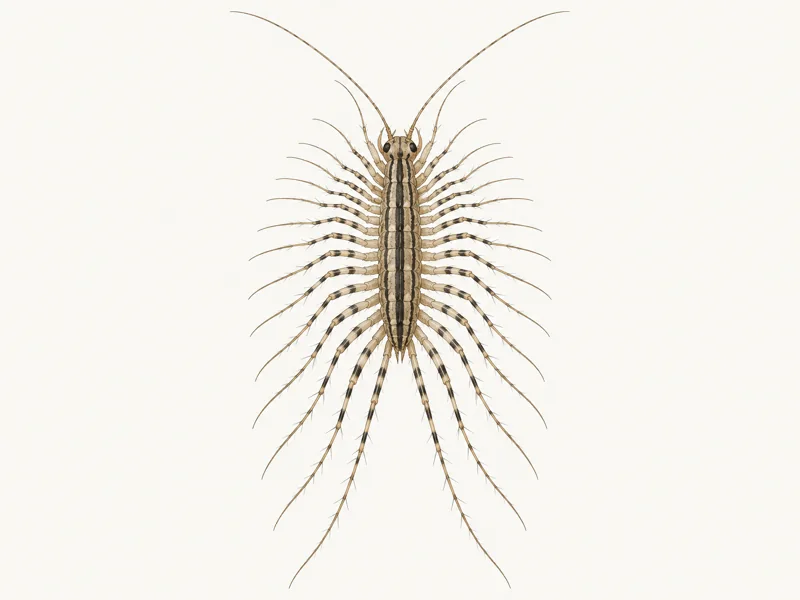
- Sweeping front antennae: Extraordinarily long hair-thin antennae detect silverfish, roaches, and spiders.
- Three dark dorsal stripes: Compact yellowish-gray 25–38 mm trunk striped lengthwise in three dark bands.
- 15 pairs of wispy legs: Delicate, banded, spider-like legs fan symmetrically outward for lightning speed.
Quick Answer: A cockroach has a flattened oval body, six legs, and a shield-like pronotum that partly covers its head. A house centipede (Scutigera coleoptrata) is a yellowish-gray, fast-moving creature with three dark lengthwise stripes and up to 15 pairs of very long legs. Count the legs and look for the stripes, and the ID takes about three seconds.
Key Visual & Physical Differences
The difference between a cockroach and a house centipede is obvious once you know what to look for. Cockroaches are insects in the order Blattodea. House centipedes are not insects at all; they belong to a separate group of arthropods called centipedes.
Cockroaches (Blattodea)
- Size: 12-50 mm, depending on species.
- Body shape: Flattened oval, built for squeezing into cracks.
- Key ID feature: A shield-like pronotum that partly covers the head when viewed from above.
- Legs: Six spiny legs.
- Other features: Long, thread-like antennae; most adults have wings folded flat over the back.
- Color: Usually brown, reddish-brown, or nearly black.
House Centipedes (Scutigera coleoptrata)
- Size: 25-40 mm body length, though the legs make it look much larger.
- Body shape: Slender and segmented, with no wings.
- Key ID feature: A yellowish-gray body with three dark lengthwise stripes.
- Legs: Many long, banded legs (up to 15 pairs on adults).
- Other features: Very long antennae, plus long rear legs that can look like a second set of antennae.
For quick cockroach vs house centipede identification, remember this rule: six legs and a shield over the head means cockroach. Dozens of legs and striped yellowish-gray coloring means house centipede.
Behavior, Habitat & Danger Comparison
Both pests are nocturnal and favor dark, damp spaces. Their reasons for being in your home are very different, though.
Cockroach Behavior and Habitat
Cockroaches are scavengers. They feed on crumbs, grease, pet food, paper, and garbage, and they gather near food and water in kitchens, bathrooms, and behind appliances. When a light comes on, they scatter for cover and hide in cracks, cabinet hinges, and wall voids.
Signs of cockroaches include pepper-like droppings, egg cases, shed skins, and a musty odor in heavy infestations. Their danger level is rated as a nuisance. They do not bite people in typical situations, but they contaminate surfaces and food and are a common indoor allergen.
House Centipede Behavior and Habitat
House centipedes are predators. They hunt spiders, silverfish, small insects, and even young cockroaches. They live in basements, crawl spaces, bathrooms, and laundry rooms, where humidity stays high.
They are startlingly fast and often run across floors or walls at night. Their danger level is none for most people. They rarely bite and avoid humans whenever possible. If someone has a sting or bite reaction they are concerned about from any pest, they should call US Poison Control at 1-800-222-1222 or contact a doctor.
Which One Is Worse for Homeowners?
If you're unsure whether you have a cockroach or a house centipede, the answer affects your next steps. In most cases, cockroaches are the bigger problem. They breed indoors, contaminate food areas, and can trigger allergies. A house centipede is mostly an unsettling sight, and it may even be eating other pests.
That said, frequent house centipede sightings are a clue. They usually point to excess moisture and a steady supply of prey insects, which sometimes includes cockroaches.
Non-Chemical Control First (IPM)
- Moisture control: Run a dehumidifier in basements, fix leaky pipes, and improve bathroom ventilation.
- Sanitation: Store food in sealed containers, clean up grease and crumbs, and empty trash nightly.
- Exclusion: Caulk cracks, seal gaps around pipes, and add door sweeps and weatherstripping.
- Clutter removal: Clear cardboard boxes, stacked paper, and debris that offer hiding spots.
- Monitoring: Place sticky traps along baseboards to track activity and confirm identification.
If pests persist, targeted baits or treatments may help. Always read and follow EPA product labels exactly, and consider a licensed pest professional for heavy cockroach infestations.
Frequently Asked Questions
Do house centipedes eat cockroaches?
Yes. House centipedes are predators and will hunt small or young cockroaches, along with spiders, silverfish, and other insects.
Is a house centipede a sign of cockroaches?
Not always, but it can be. House centipedes go where prey and moisture are plentiful, so frequent sightings are worth investigating for other pests.
Which is more dangerous, a cockroach or a house centipede?
Neither is considered highly dangerous. Cockroaches rank as a nuisance because they contaminate food and surfaces, while house centipedes pose essentially no danger to people.
What is the fastest way to tell them apart?
Count the legs. A cockroach has six legs and a flat oval body, while a house centipede has many long legs and a yellowish-gray body with three dark stripes.