Cockroach vs Centipede: How to Tell Them Apart Fast
Quick ID Verdict: To settle cockroach vs centipede in three seconds, count the legs and check the body shape. A centipede has a long, flattened, segmented body with exactly one pair of legs per segment, while a cockroach has a flattened oval body, only six legs, and a shield-like pronotum partly covering its head.
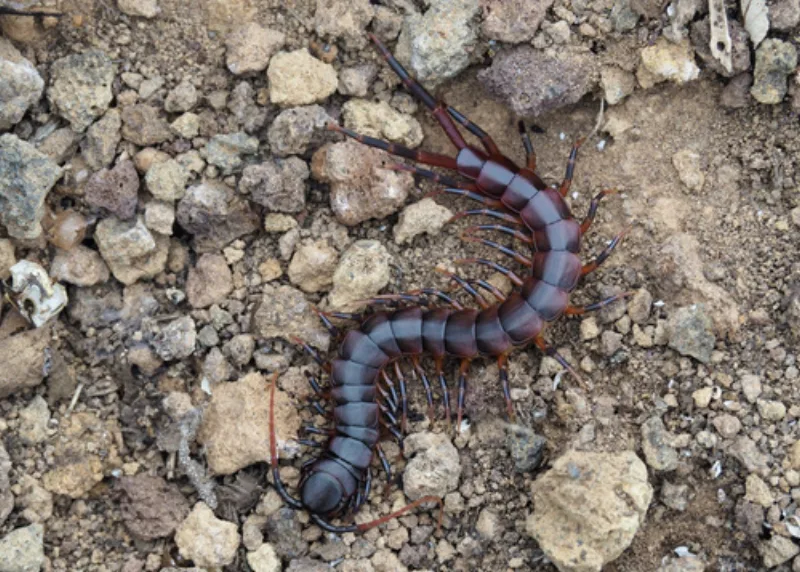
Centipede
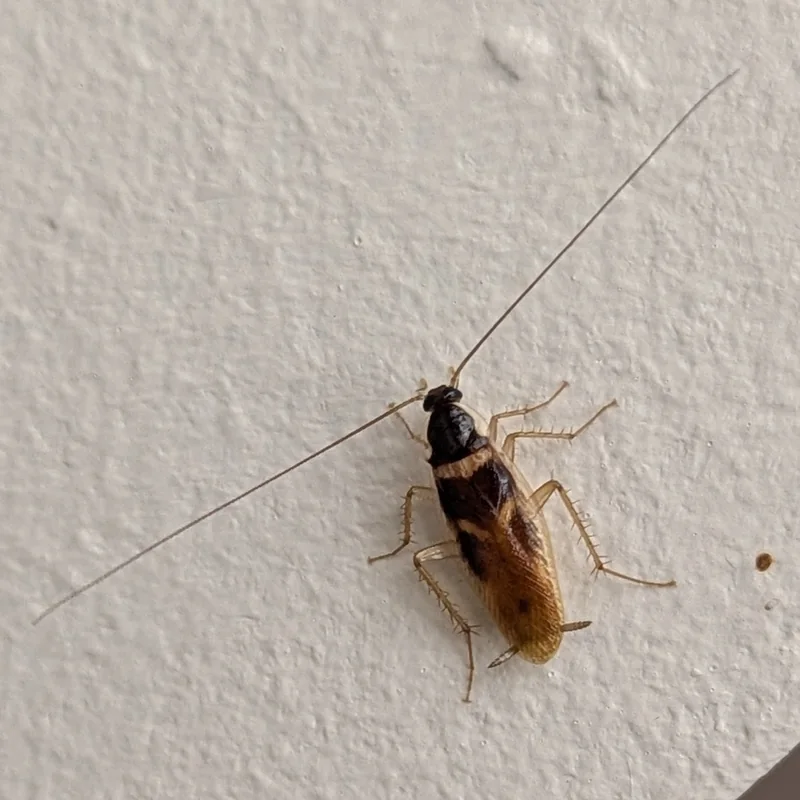
Cockroach
Side-by-Side Comparison Table
| Trait | Centipede | Cockroach |
|---|---|---|
| Scientific Group | Chilopoda | Blattodea |
| Category | Myriapod | Insect |
| Typical Size | 25–180 mm | 12–50 mm |
| Danger Level | Nuisance | Nuisance |
| Bites or Stings? | Yes | No |
| Peak US Months | April, May, June, October | May, June, July, September |
| Key ID Trait | Flattened, elongated segmented body with exactly ONE pair of legs per body segment | Flattened oval body with a shield-like pronotum partly covering the head |
Centipede vs. Cockroach: True Size Comparison
Side-by-Side Anatomy Blueprint
Compare body segments, antennae, leg count, and key markings directly before treating or removing either species.
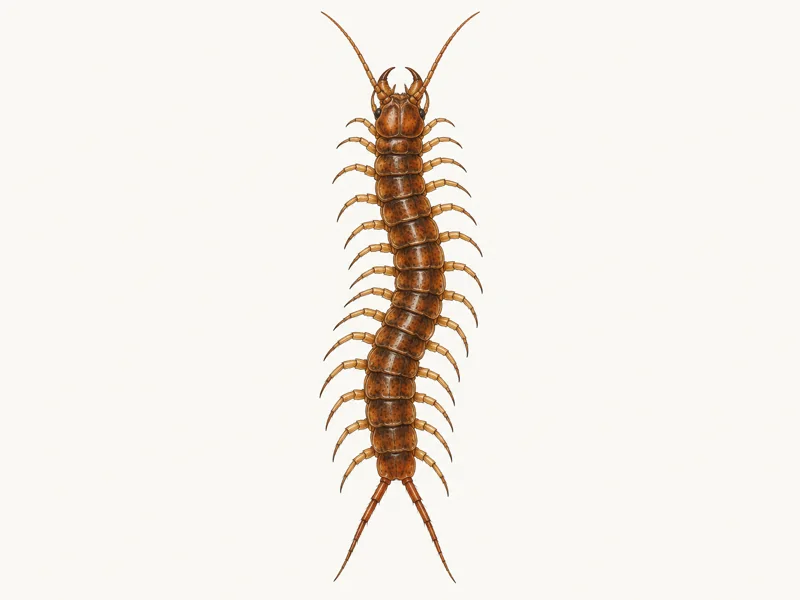
- Antennae & forcipules: Long segmented antennae and modified front venom claws (forcipules) behind the head.
- Flattened segments: Flat, flexible segmented trunk built for fast sprinting—never coils into a tight spiral.
- 1 leg pair / segment: EXACTLY ONE pair of legs extending outward per body segment (millipedes have two pairs).
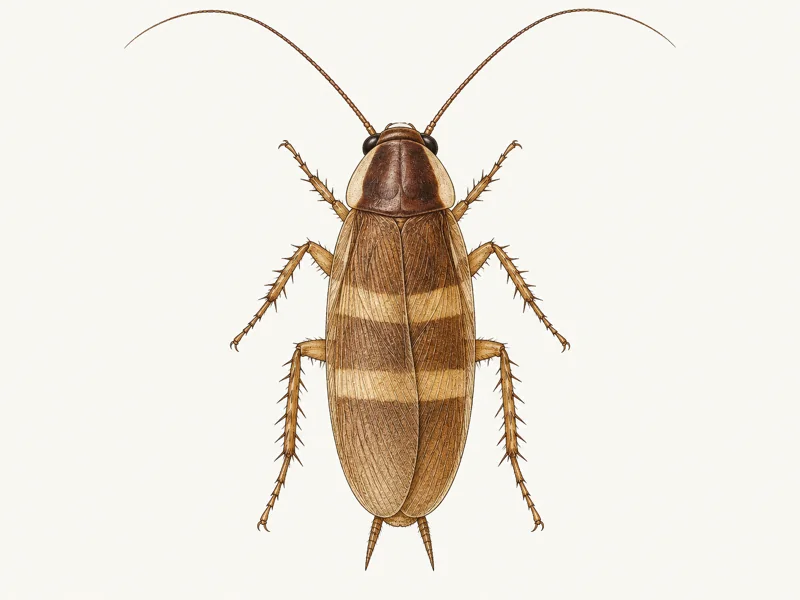
- Long whip antennae: Thread-like filiform feelers sweeping wider than the entire body length.
- Pale-edged pronotum: Dark mahogany shield with translucent margins (lacks German roach's twin bars).
- Two pale wing bands: Unmistakable pair of light golden-tan bands crossing the tawny-brown folded wings.
Quick Answer: To settle cockroach vs centipede in three seconds, count the legs and check the body shape. A centipede has a long, flattened, segmented body with exactly one pair of legs per segment, while a cockroach has a flattened oval body, only six legs, and a shield-like pronotum partly covering its head. Both are rated as nuisance pests, but a cockroach problem usually signals a bigger sanitation issue indoors.
Key Visual and Physical Differences
The difference between centipede and cockroach anatomy is obvious once you know where to look. They belong to entirely different groups: centipedes are in the class Chilopoda, and cockroaches are insects in the order Blattodea.
Centipedes (Chilopoda)
- Size: 25-180 mm long, depending on species.
- Body: Flattened and elongated, divided into many visible segments.
- Legs: Exactly one pair of legs per body segment, often giving them dozens of legs.
- Head: Long antennae and a pair of venom-bearing claws (forcipules) just behind the head.
- Movement: Fast, rippling, wave-like running.
Cockroaches (Blattodea)
- Size: 12-50 mm long.
- Body: Flattened oval shape with no long chain of segments.
- Pronotum: A shield-like plate that partly covers the head when viewed from above.
- Legs: Six spiny legs, like all insects.
- Extras: Long, whip-like antennae and, in many species, wings folded flat over the back.
For quick centipede vs cockroach identification, remember this: many legs and a worm-like body point to a centipede, while six legs and a wide oval body point to a cockroach.
Behavior, Habitat and Danger Comparison
Both pests prefer dark, sheltered spots, but they show up indoors for different reasons. Understanding those reasons is the key to controlling each one.
Behavior and Diet
Centipedes are predators that hunt spiders, silverfish, small insects, and even young cockroaches. They are mostly active at night and rarely feed on human food or garbage. Cockroaches are scavengers that eat crumbs, grease, pet food, paper, and almost any organic debris, which is why they cluster around kitchens.
Habitat
- Centipedes: Damp basements, crawl spaces, bathrooms, floor drains, leaf litter, and mulch beds.
- Cockroaches: Kitchens, behind appliances, under sinks, inside cabinets, and in wall voids near warmth and water.
Danger Level
Both are classified as nuisance pests. Centipedes can bite if handled, which may cause local pain and swelling similar to a bee sting. Cockroaches don't bite people in normal situations, but they can contaminate food surfaces and their droppings and shed skins may aggravate allergies or asthma.
If someone has a severe reaction to a centipede bite, such as spreading swelling or trouble breathing, contact US Poison Control at 1-800-222-1222 or see a doctor. Do not rely on home remedies for venom reactions.
Which One Is Worse for Homeowners?
For most households, cockroaches are the bigger problem. They reproduce quickly, hide deep in structures, and spread contamination across food prep areas. A single sighting often means more are hiding nearby.
Centipedes are more of a warning sign than a threat. Seeing one usually means the home has excess moisture and a supply of other insects for them to eat. In a sense, a centipede indoors can hint that a cockroach or silverfish problem already exists.
Non-Chemical Control First
Integrated Pest Management (IPM) works well for both pests. Start with these steps before considering any product:
- Moisture control: Run dehumidifiers in basements, fix leaky pipes, and improve crawl space ventilation.
- Sanitation: Wipe up crumbs and grease, store food in sealed containers, and don't leave pet food out overnight.
- Exclusion: Seal cracks, gaps around pipes, and door sweeps with caulk or weatherstripping.
- Outdoor cleanup: Pull mulch, leaf litter, and firewood away from the foundation.
- Monitoring: Place sticky traps along walls to track activity and confirm whether you're dealing with a centipede or cockroach.
When Products Are Needed
Cockroach baits and insect growth regulators are often effective for persistent infestations. Always read and follow the EPA product label exactly, keep products away from children and pets, and consider a licensed pest professional for heavy or recurring activity.
Frequently Asked Questions
Do centipedes eat cockroaches?
Yes. Centipedes are predators and will hunt cockroaches, especially smaller nymphs. However, they won't eliminate an established cockroach infestation on their own.
Is a centipede or cockroach more likely to bite?
A centipede is far more likely to bite, usually only when handled or trapped against skin. Cockroaches rarely bite people.
Why do I see centipedes in my bathroom?
Bathrooms offer the humidity centipedes need and often attract the small insects they eat. Reducing moisture and sealing drain gaps typically cuts down sightings.
How big can these pests get?
Centipedes range from 25 to 180 mm long, while cockroaches range from 12 to 50 mm. Body shape and leg count are more reliable identifiers than size alone.