Cockroach vs Water Bug: How to Tell Them Apart and What to Do Next
Quick ID Verdict: A dark, shiny insect darts across the basement floor, and the first question is always the same: cockroach or water bug? Many homeowners use the two names interchangeably, but they describe very different insects with very different lives.
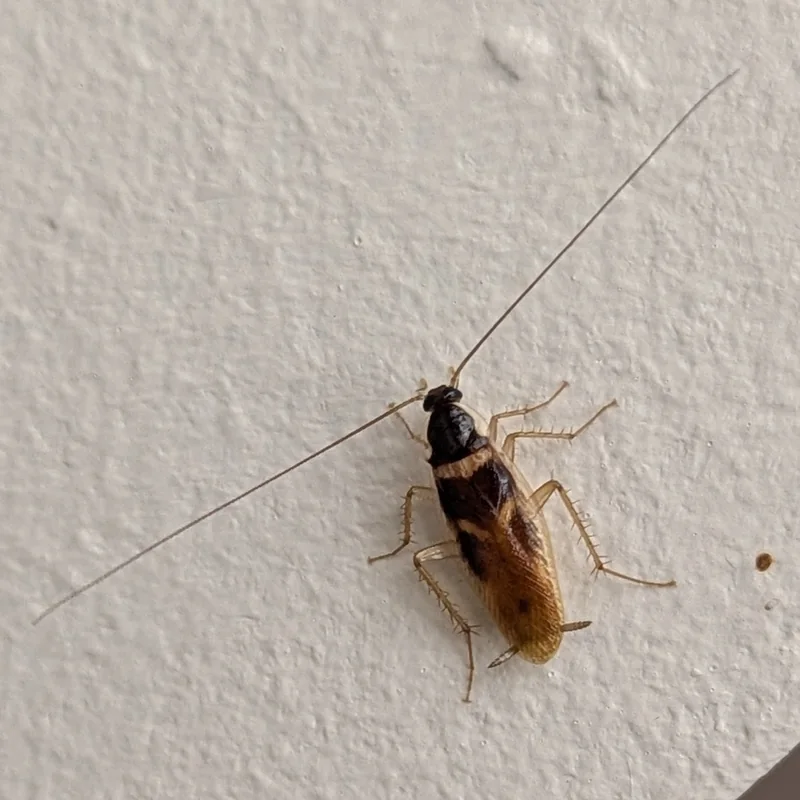
Cockroach
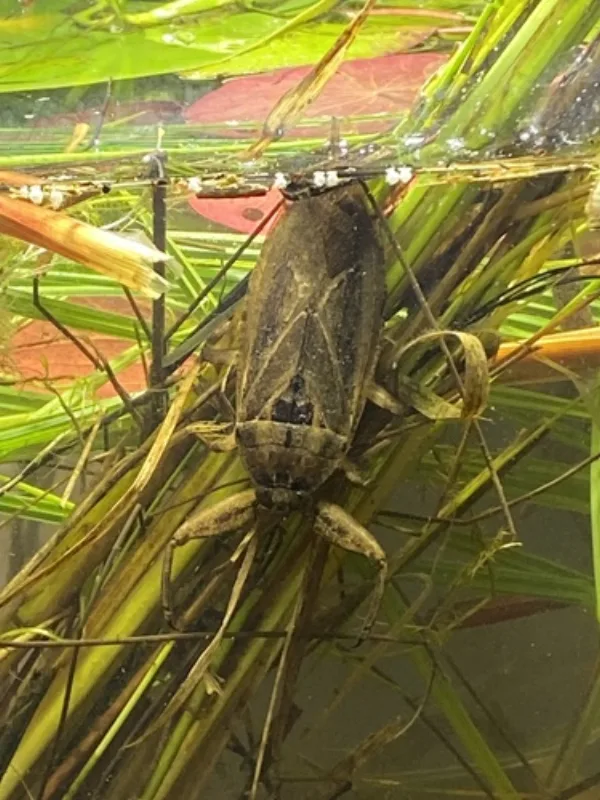
Water Bug
Side-by-Side Comparison Table
| Trait | Cockroach | Water Bug |
|---|---|---|
| Scientific Group | Blattodea | Belostomatidae |
| Category | Insect | Insect |
| Typical Size | 12–50 mm | 20–65 mm |
| Danger Level | Nuisance | Nuisance |
| Bites or Stings? | No | Yes |
| Peak US Months | May, June, July, September | July, August, September, October |
| Key ID Trait | Flattened oval body with a shield-like pronotum partly covering the head | True giant water bugs have flattened oval brown bodies with powerful grasping front legs and short piercing beaks |
Cockroach vs. Water Bug: True Size Comparison
Side-by-Side Anatomy Blueprint
Compare body segments, antennae, leg count, and key markings directly before treating or removing either species.
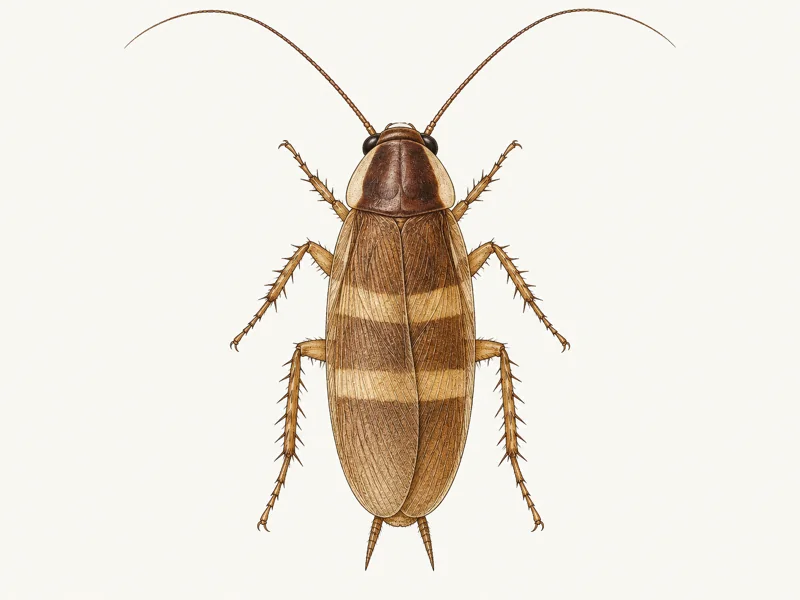
- Long whip antennae: Thread-like filiform feelers sweeping wider than the entire body length.
- Pale-edged pronotum: Dark mahogany shield with translucent margins (lacks German roach's twin bars).
- Two pale wing bands: Unmistakable pair of light golden-tan bands crossing the tawny-brown folded wings.
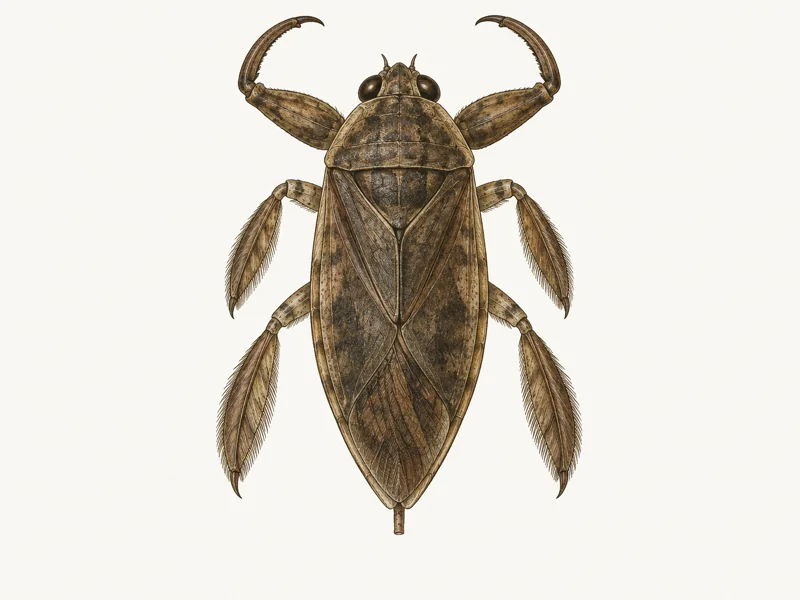
- Raptorial front claws: Massive curved pincer-like forelegs grasp prey—cockroaches never have these claws.
- Pointed piercing beak: Short stout rostrum tucked under the head can deliver a painful defensive bite.
- Flat olive wing covers: Broad oval leathery-brown wings (45–65 mm) drawn to porch lights at night.
The 3-second ID verdict: If it has long, threadlike antennae and a shield-like plate partly covering its head, it's a cockroach. If it has thick, grasping front legs like a praying mantis and a short, pointed beak under its head, it's a true giant water bug.
This cockroach vs water bug guide covers what separates them, where each lives, and how to deal with them safely.
Why Cockroaches Get Called Water Bugs
The mix-up is mostly regional slang. In much of the US, "water bug" is a polite nickname for the Oriental cockroach, a dark species that favors damp drains, crawlspaces, and basements. In the South, the large American cockroach often goes by "palmetto bug" for similar reasons.
The nickname stuck because these roaches show up near water and look less offensive in conversation. But entomologists reserve "water bug" for true aquatic insects in the family Belostomatidae, the giant water bugs. Those insects spend most of their lives in ponds, marshes, and slow streams, not under kitchen sinks.
Key Differences Between a Cockroach and a Water Bug
The difference between cockroach and water bug becomes obvious once you know where to look. Here's a quick side-by-side before the details.
FeatureCockroach (Blattodea)Giant Water Bug (Belostomatidae)Length12–50 mm20–65 mmKey IDShield-like pronotum partly covers headGrasping front legs, short piercing beakAntennaeLong and threadlikeShort, hidden under the headDanger levelNuisanceNuisance
Size, Shape, and Color
Both insects have flattened, oval bodies, which is why people confuse them. Cockroaches range from 12 to 50 mm and come in tan, reddish-brown, or nearly black. Their defining feature is the pronotum, a shield-like plate that partly covers the head.
Giant water bugs run larger, from 20 to 65 mm, and are typically a dull, mottled brown. Their bodies look broad and flat, almost like a leaf, which helps them glide through water.
Antennae, Legs, and Mouthparts
This is the fastest route to cockroach vs water bug identification. Cockroaches have long, whip-like antennae that are often as long as their bodies, plus spiny legs built for running. Their mouthparts are designed for chewing.
Giant water bugs have short antennae tucked out of sight beneath the head. Their front legs are thick and hooked for grabbing prey, and the back legs are flattened like oars. Instead of chewing jaws, they have a short, piercing beak.
Habitat, Behavior, and Seasonal Activity
Cockroaches are scavengers that live indoors year-round in heated buildings, feeding on crumbs, grease, and organic debris. They hide in cracks by day and forage at night.
Giant water bugs are predators that hunt insects, tadpoles, and small fish in freshwater. They're most active from late spring through summer, when adults fly at night and are drawn to porch and parking-lot lights, earning the nickname "electric light bugs." They don't breed or feed inside homes.
Both are classified as nuisance pests. A giant water bug can deliver a painful bite if handled, which is why some people call them "toe-biters." If anyone has a severe reaction to a bite, contact US Poison Control at 1-800-222-1222 and see a doctor.
Where Each Pest Lives Across the US
Cockroaches are found in every state. The most common indoor species break down like this:
- German cockroach: Nationwide, almost always indoors in kitchens and bathrooms.
- American cockroach: Common in the South and in sewers, steam tunnels, and large buildings in northern cities.
- Oriental cockroach: Cooler, damp areas, especially in the North and Pacific Northwest.
- Smokybrown cockroach: Warm, humid Southeast and Gulf Coast regions.
Giant water bugs occur in freshwater habitats throughout the lower 48 states, from Florida marshes to Midwestern farm ponds. Homeowners near ponds, lakes, or retention basins are most likely to spot them, usually on warm summer nights near outdoor lights.
So which one is worse for homeowners? Cockroaches, by a wide margin. A water bug indoors is almost always a lost visitor, while cockroaches can establish breeding populations and contaminate food surfaces.
Safe IPM Steps for Controlling Cockroaches and Water Bugs
Integrated Pest Management starts with non-chemical steps. These work for both pests and often solve the problem on their own.
Exclusion
- Seal gaps around pipes, drains, and utility lines with caulk or copper mesh.
- Install door sweeps and repair torn window screens.
- Add drain covers in basements and laundry rooms.
Sanitation
- Store food in sealed containers and wipe up crumbs and grease nightly.
- Empty trash and recycling regularly, and rinse containers.
- Clear clutter like cardboard boxes, which roaches use for shelter.
Moisture and Light Control
- Fix leaky faucets and pipes, and run a dehumidifier in damp basements.
- Improve crawlspace ventilation.
- Switch outdoor bulbs to yellow "bug lights" or LEDs to attract fewer flying water bugs.
When to Escalate
If you still see cockroaches after a few weeks, monitor with sticky traps to locate hot spots. Gel baits and bait stations are targeted options, and any product should be used exactly as directed on its EPA label. Water bugs rarely need treatment: a stray one can be scooped into a container and released near water. For persistent infestations, a licensed pest management professional can help.
Frequently Asked Questions
What's the difference between a cockroach and a water bug?
The main differences are physical: cockroaches have long threadlike antennae and a shield-like plate covering the head, while giant water bugs have short hidden antennae and thick grasping front legs with a piercing beak. Cockroaches live indoors year-round; water bugs are aquatic predators in freshwater habitats.
How can I identify a cockroach vs water bug in 3 seconds?
Look at the head and legs: if it has a shield-like plate covering the head with long antennae, it's a cockroach. If it has thick, mantis-like front legs and a short pointed beak, it's a true giant water bug.
Why is a cockroach called a water bug in some regions?
It's regional slang, particularly in the US South. The Oriental cockroach, which lives in damp areas like drains and basements, earned the nickname because it appears near water. 'Palmetto bug' is another regional name for the American cockroach for similar reasons.
Which pest is more dangerous to have in my home?
Cockroaches pose a greater threat: they establish breeding populations indoors, contaminate food surfaces, and cause year-round infestations. Water bugs are almost always accidental visitors that don't breed or feed inside homes.
What should I do if a water bug bites me?
Giant water bugs can deliver painful bites when handled. If you experience a severe reaction, contact US Poison Control at 1-800-222-1222 and see a doctor. For minor bites, typical first aid applies. Avoid handling them whenever possible.
What are the best non-chemical ways to prevent cockroaches and water bugs?
Use Integrated Pest Management: seal gaps around pipes and drains, install door sweeps, store food in sealed containers, eliminate clutter, fix leaks, and reduce moisture. For water bugs, switch outdoor lights to yellow 'bug lights' to minimize attraction.