Tick vs Cockroach: How to Tell Them Apart and Which Is Worse
Quick ID Verdict: Count the legs and check the size. A tick is a tiny 1-6 mm arachnid with eight legs (six as a larva) and a teardrop-shaped body. A cockroach is a much larger 12-50 mm insect with six legs, long antennae, and a shield-like pronotum that partly covers its head.
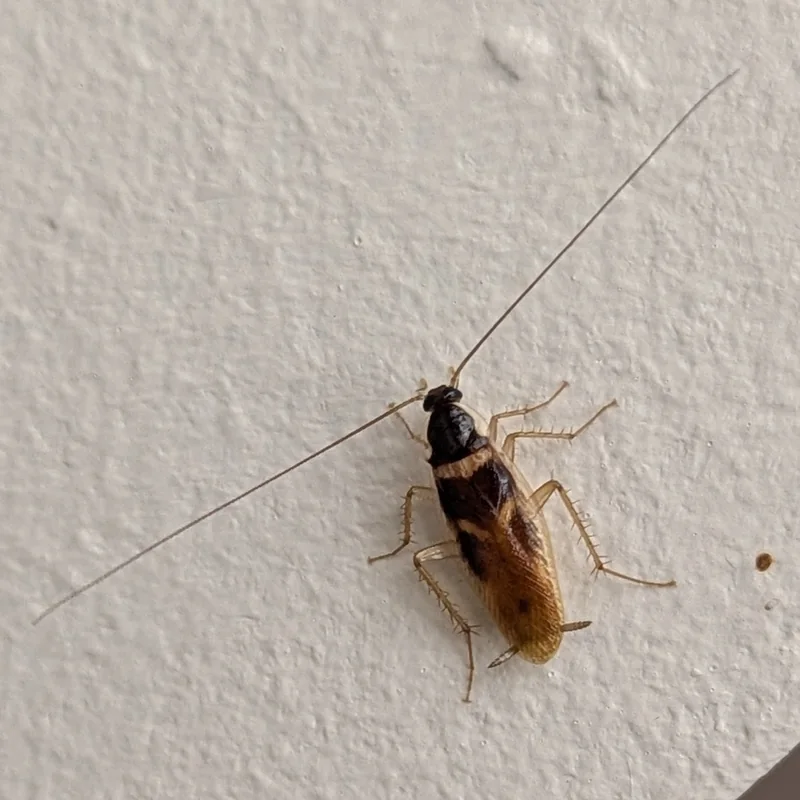
Cockroach
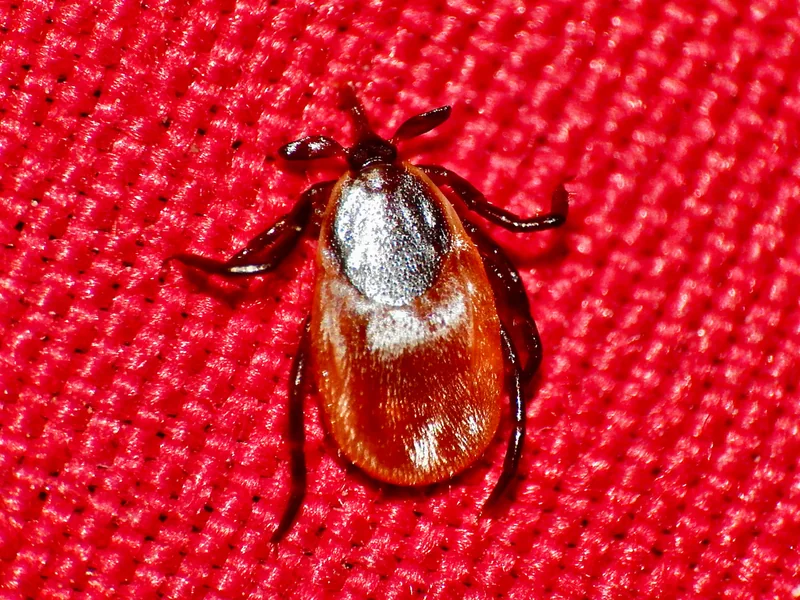
Tick
Side-by-Side Comparison Table
| Trait | Cockroach | Tick |
|---|---|---|
| Scientific Group | Blattodea | Ixodidae |
| Category | Insect | Arachnid |
| Typical Size | 12–50 mm | 1–6 mm |
| Danger Level | Nuisance | Medically Significant |
| Bites or Stings? | No | Yes |
| Peak US Months | May, June, July, September | April, May, June, July |
| Key ID Trait | Flattened oval body with a shield-like pronotum partly covering the head | Flat, oval, teardrop-shaped arachnid with eight legs (six in larval stage) |
Cockroach vs. Tick: True Size Comparison
Side-by-Side Anatomy Blueprint
Compare body segments, antennae, leg count, and key markings directly before treating or removing either species.
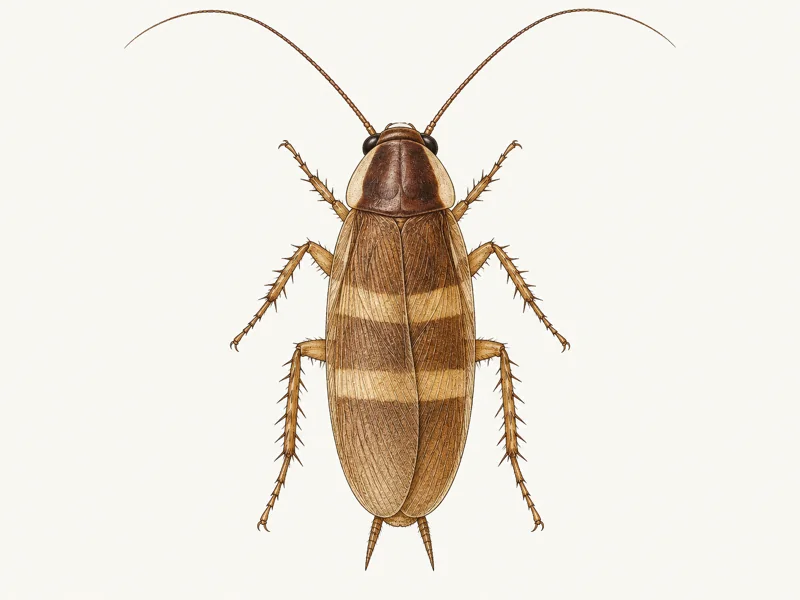
- Long whip antennae: Thread-like filiform feelers sweeping wider than the entire body length.
- Pale-edged pronotum: Dark mahogany shield with translucent margins (lacks German roach's twin bars).
- Two pale wing bands: Unmistakable pair of light golden-tan bands crossing the tawny-brown folded wings.
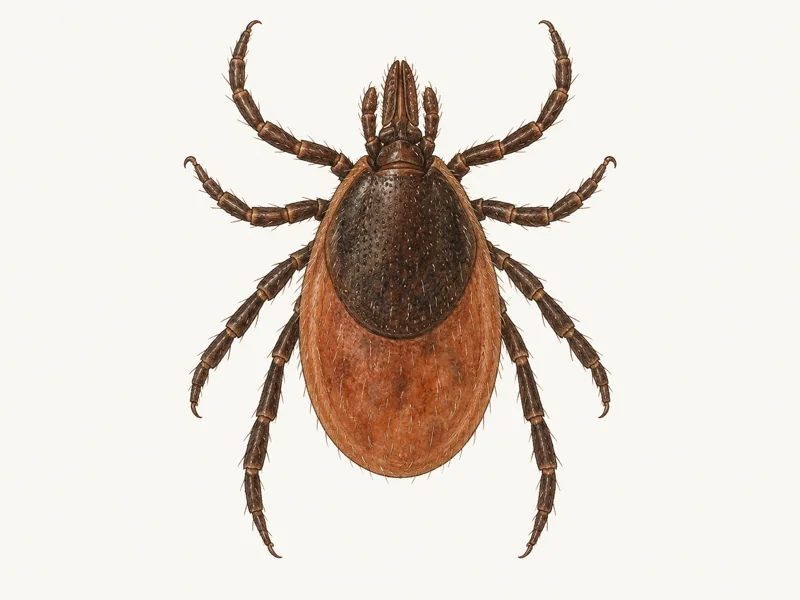
- Piercing mouthparts: Forward-projecting capitulum and barbed hypostome at the front tip—no antennae or wings.
- Hardened scutum: Distinct dark dorsal shield plate behind the head (varies by deer, dog, and lone star ticks).
- Eight jointed legs: Adults and nymphs have 8 legs (tiny seed-tick larvae have 6 legs).
Quick Answer: Count the legs and check the size. A tick is a tiny 1-6 mm arachnid with eight legs (six as a larva) and a teardrop-shaped body. A cockroach is a much larger 12-50 mm insect with six legs, long antennae, and a shield-like pronotum that partly covers its head.
In three seconds, the difference between cockroach and tick comes down to this: if it is sesame-seed sized, has no antennae, and clings to skin or fur, it is a tick. If it is fast, has antennae, and darts away from light, it is a cockroach.
Key Visual & Physical Differences
Although both pests have flattened, oval bodies, they belong to entirely different groups. Cockroaches are insects in the order Blattodea, while hard ticks belong to the family Ixodidae and are arachnids, related to spiders and mites.
Size and Shape
- Cockroaches: 12-50 mm long, with a flattened oval body and a shield-like pronotum that partly covers the head.
- Ticks: 1-6 mm long before feeding, with a flat, oval, teardrop-shaped body. Engorged ticks swell noticeably and look rounded.
Legs, Antennae, and Body Segments
- Legs: Cockroaches have six spiny legs. Adult and nymph ticks have eight, while larval ticks have six, which can cause confusion.
- Antennae: Cockroaches have long, thread-like antennae, often as long as the body. Ticks have none.
- Body plan: Cockroaches show a distinct head, thorax, and abdomen. Ticks look like a single fused body with small mouthparts at the front.
- Wings: Many adult cockroaches have wings. Ticks never do.
Cockroach vs Tick Identification Tip
The most common mix-up involves a tiny cockroach nymph and an adult tick. Look for antennae and movement: roach nymphs run quickly and wave their antennae, while ticks crawl slowly and steadily upward toward a host.
Behavior, Habitat & Danger Comparison
Where You Find Them
Cockroaches live indoors around kitchens, bathrooms, drains, and appliances where food, warmth, and moisture are available. They hide in cracks by day and forage at night.
Ticks live mostly outdoors in tall grass, leaf litter, brush, and wooded edges. They wait on vegetation to latch onto passing people, pets, and wildlife, then hitch a ride indoors.
Feeding Habits
- Cockroaches: Scavengers that eat crumbs, grease, paper, and organic debris.
- Ticks: Blood feeders that attach to a host and can stay embedded for days.
Health Risk
Cockroaches are classified as a nuisance. They contaminate food surfaces and their droppings and shed skins can aggravate allergies and asthma, but they do not bite people under normal conditions.
Ticks are medically significant. Various species can transmit disease-causing pathogens during feeding. Remove an attached tick promptly with fine-tipped tweezers, grasping close to the skin and pulling straight up. Contact a doctor if you develop a rash, fever, or other symptoms after a bite. For urgent questions, call US Poison Control at 1-800-222-1222.
Which One Is Worse for Homeowners?
For health risk, ticks are worse because a single bite can carry disease. For household infestation, cockroaches are worse because they breed indoors, multiply quickly, and are hard to eliminate once established.
Non-Chemical IPM for Cockroaches
- Seal cracks, gaps around pipes, and openings under doors.
- Fix leaks and reduce moisture under sinks and in basements.
- Store food in sealed containers, clean crumbs nightly, and take out trash often.
- Reduce clutter such as cardboard and paper stacks.
Non-Chemical IPM for Ticks
- Keep grass mowed and clear leaf litter and brush near the house.
- Create a gravel or wood-chip barrier between lawns and wooded areas.
- Check yourself, children, and pets after time outdoors, and shower soon after.
- Dry outdoor clothing on high heat to kill hitchhiking ticks.
If problems persist, baits, repellents, or yard treatments may help. Always follow EPA product labels exactly, and ask a veterinarian about tick prevention for pets. A licensed pest professional can handle heavy infestations.
Frequently Asked Questions
Is it a cockroach or tick if it has six legs?
Most six-legged look-alikes are cockroach nymphs, which also have long antennae. However, larval ticks have six legs too, so check for antennae; ticks have none.
Can ticks live inside a house like cockroaches?
Most ticks cannot establish indoors the way cockroaches do. They usually arrive on pets or clothing, though a few species can survive in kennels or homes.
Do cockroaches bite people?
Bites are extremely rare and generally happen only in severe infestations. Their main risks are food contamination and allergens.
What is the fastest way to tell a tick vs cockroach?
Check size and antennae. A tick is 1-6 mm with no antennae, while a cockroach is 12-50 mm with long antennae and a shield-like pronotum over the head.