Cockroaches in Louisiana: Identification, Season and Prevention
Quick Answer: Yes, cockroaches are common in Louisiana, with 1,759 verified GBIF sightings concentrated in East Baton Rouge, Orleans, Lafayette, Jefferson, and Acadia parishes. Activity peaks in May, when warm, wet weather pushes large species like the American cockroach out of drains and mulch and into homes. They are considered a nuisance pest, and steady sanitation, moisture control, and sealing gaps keep most problems in check.
When Cockroaches Are Most Active in Louisiana
Now (November): Lower Outdoor ActivityVerified Louisiana Counties, Species & US Range
Counties with Verified Observations
- East Baton Rouge
- Orleans
- Lafayette
- Jefferson
- Acadia
- Rapides
- Livingston
- Natchitoches
- Iberville
- Terrebonne
Species Recorded in Louisiana
| Species | Scientific Name | GBIF Records |
|---|---|---|
| Formosan subterranean termite | Coptotermes formosanus | 419 |
| American Cockroach | Periplaneta americana | 313 |
| Cuban cockroach | Panchlora nivea | 247 |
How Louisiana Compares to Neighboring States
Note: Wildlife does not follow state or county lines. GBIF totals reflect verified citizen and museum records, so low counts in a neighboring county do not guarantee absence.
How to Identify Cockroaches
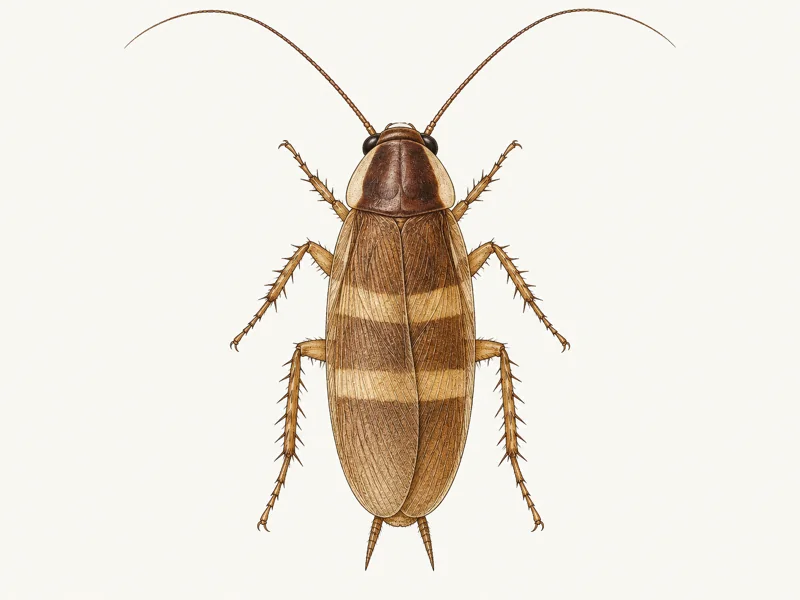
Annotated Anatomy Key (Cockroach)
- Long whip antennae: Thread-like filiform feelers sweeping wider than the entire body length.
- Pale-edged pronotum: Dark mahogany shield with translucent margins (lacks German roach's twin bars).
- Two pale wing bands: Unmistakable pair of light golden-tan bands crossing the tawny-brown folded wings.
- Spiny legs & cerci: Six bristled running legs and twin rear sensory cerci; prefers warm dry upper cabinets.
Cockroaches Field Checklist
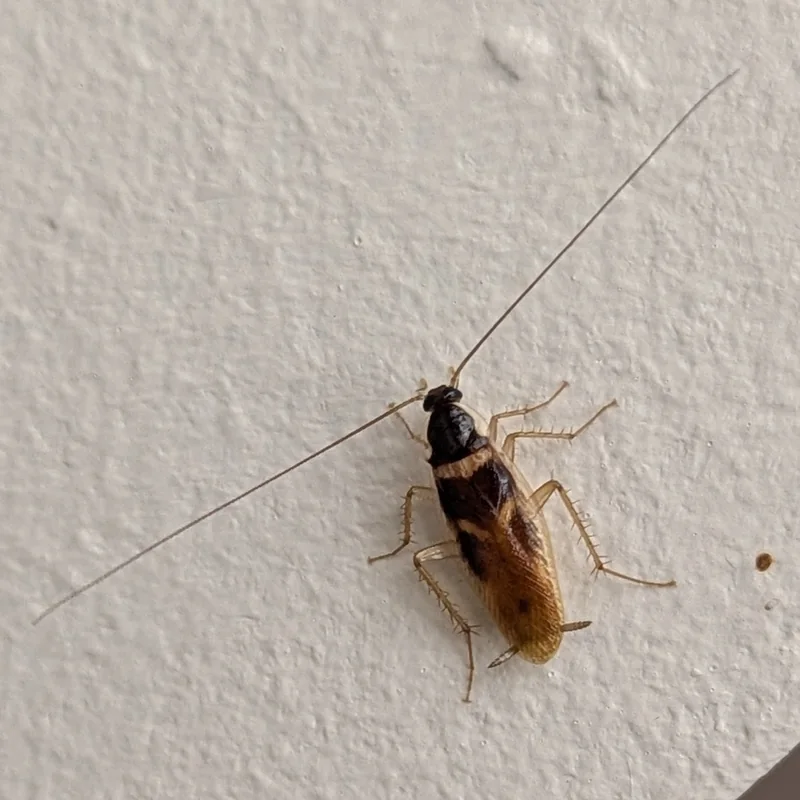
- Flattened oval body with a shield-like pronotum partly covering the head
- Very long, whip-like antennae and spiny legs built for rapid running
- Two tail-like cerci protruding from the rear of the abdomen
- Nocturnal scavengers that trigger indoor asthma and contaminate food surfaces
Side-by-Side Look-Alike Comparisons
- Cockroach vs Water Bug
- Cockroach vs Palmetto Bug
- Bed Bug vs Cockroach
- Cockroach vs Earwig
- Cockroach vs Termite
- Cockroach vs Honey Bee
- Centipede vs Cockroach
- Cockroach vs Silverfish
- Cockroach vs German Cockroach
- Cockroach vs Wasp
- Cockroach vs Flea
- Camel Cricket vs Cockroach
- Carpet Beetle vs Cockroach
- American Cockroach vs Cockroach
- Cockroach vs Hornet
- Cockroach vs Tick
- Cockroach vs House Centipede
Cockroaches Size at True Relative Scale
Where Cockroaches Live in Louisiana
Louisiana's humid subtropical climate, with very wet, hot summers and mild, frost-light winters (USDA zones 8a-10a), suits cockroaches well. Outdoor populations rarely face a hard freeze, so they stay active for much of the year. Verified records cluster in the state's most populated parishes, which likely reflects both dense housing and more people reporting what they see.
Top parishes for verified GBIF sightings include:
- East Baton Rouge
- Orleans
- Jefferson
- Lafayette
- Acadia
Species recorded in Louisiana's GBIF data for the order Blattodea include the American cockroach (Periplaneta americana), the Cuban cockroach (Panchlora nivea), and the Formosan subterranean termite (Coptotermes formosanus). That last entry can surprise homeowners, but termites belong to the cockroach order. The Formosan termite is a serious structural pest in New Orleans and other parts of southern Louisiana.
American cockroaches favor sewers, storm drains, crawl spaces, palm trees, and damp mulch beds. The pale green Cuban cockroach lives mostly outdoors in leaf litter and shrubs. It often flies toward porch lights at night and seldom infests homes.
When Cockroaches Are Most Active in Louisiana
Louisiana's cockroach season runs nearly all year, but verified sightings peak in May. Late spring brings rising temperatures, heavy rain, and active breeding. Flooded drains and soaked soil push roaches upward and indoors.
Expect these seasonal patterns:
- Spring (March-May): Populations build quickly, and May is the high point for sightings.
- Summer: Heavy storms and humidity keep large roaches moving. They often show up after downpours or during drain backups.
- Fall and winter: Outdoor activity slows during cool snaps, but indoor species like German cockroaches breed year-round in heated kitchens.
Formosan subterranean termites also swarm in late spring, usually on warm, humid evenings. Seeing winged insects around lights in May does not always mean cockroaches.
Look-Alikes Frequently Mistaken for Cockroaches
Identifying cockroaches in Louisiana gets confusing because local nicknames overlap. Use body size, color, and where the insect turns up to tell them apart.
Palmetto Bugs
"Palmetto bug" is a regional name, usually for the American cockroach or other large outdoor roaches. They are reddish-brown, up to about 2 inches long, and often found near palms, mulch, and porches.
Water Bugs
Many Louisianans call large roaches "water bugs" because they come up through drains. True water bugs are aquatic insects with grasping front legs and flattened bodies that live in ponds and ditches. They do not infest kitchens.
American Cockroaches
This is the largest common roach in the state. Look for a reddish-brown body and a yellowish band around the shield behind the head. Adults can fly short distances in warm weather.
German Cockroaches
German cockroaches are small, about half an inch long, and light tan with two dark stripes behind the head. They live almost entirely indoors, in kitchens and bathrooms, and multiply fast.
Oriental Cockroaches
Oriental cockroaches are shiny, dark brown to black, and about an inch long. They prefer cool, damp spots such as basements, crawl spaces, and floor drains.
How to Keep Cockroaches Out of Your Louisiana Home
The best way to prevent cockroaches in Louisiana is Integrated Pest Management (IPM). Start with exclusion, sanitation, and moisture control, and use chemical products only where they are needed. University cooperative extension IPM guidance consistently ranks these basics ahead of sprays.
Exclusion
- Seal gaps around pipes, wires, and utility lines with caulk or copper mesh.
- Install door sweeps and repair torn window and vent screens.
- Keep drain covers in place and run water in unused drains to keep traps full.
Sanitation
- Store food, including pet food, in sealed containers.
- Wipe up crumbs and grease and take trash out nightly.
- Reduce cardboard and clutter, which give roaches hiding spots.
Moisture Control
- Fix leaky faucets, pipes, and AC condensate lines.
- Run a dehumidifier in damp rooms and ventilate crawl spaces.
- Pull mulch and leaf litter several inches back from the foundation, and trim plants touching the house.
Targeted Treatment
If roaches persist, gel baits and bait stations placed in cracks work better than broad sprays. Always read and follow the EPA-registered product label, and keep products away from children, pets, and food surfaces.
When to Call a Licensed Louisiana Pest Professional
- You see German cockroaches regularly, especially in daylight.
- Droppings, egg cases, or a musty odor keep showing up after cleanup.
- Roaches return despite several weeks of IPM effort.
- You find mud tubes, discarded wings, or damaged wood, which may point to Formosan termites.
IPM Prevention Checklist for Louisiana Homes
- Store all pantry foods in airtight glass/plastic containers and never leave dirty dishes overnight
- Fix leaking under-sink traps and dry wet counters/pet bowls before bed
- Seal gaps around plumbing pipes, baseboards, and exterior door sweeps
 EXCLUSION BLUEPRINT
Inspect eaves, screens, door sweeps, foundation cracks, and utility penetrations around Louisiana homes before peak season.
Cockroaches in Louisiana: Frequently Asked Questions
Are there cockroaches in Louisiana all year?
Yes. Mild, frost-light winters let outdoor roaches survive, and indoor species breed year-round. Sightings peak in May.
What is the most common large cockroach in Louisiana?
The American cockroach, often called a palmetto bug or water bug, is the most familiar large species. It lives in drains, sewers, and damp outdoor areas.
Are Louisiana cockroaches dangerous?
Cockroaches are classed as a nuisance pest. They can contaminate food surfaces, so good sanitation matters, but they do not sting.
Why do I see green cockroaches near my porch light?
That is likely the Cuban cockroach, an outdoor species attracted to lights at night. It rarely establishes indoors.
Sources & Verification
Data refreshed · Editorial & GBIF Methodology