American Cockroach vs Cockroach: How to Tell Them Apart
Quick ID Verdict: The American cockroach (Periplaneta americana) is one species within the larger cockroach order, Blattodea. To tell them apart in about three seconds, look for size and the pronotum. A large reddish-brown roach measuring 35-53 mm (up to 2 inches) with a pale yellow figure-8 halo behind the head is an American cockroach.
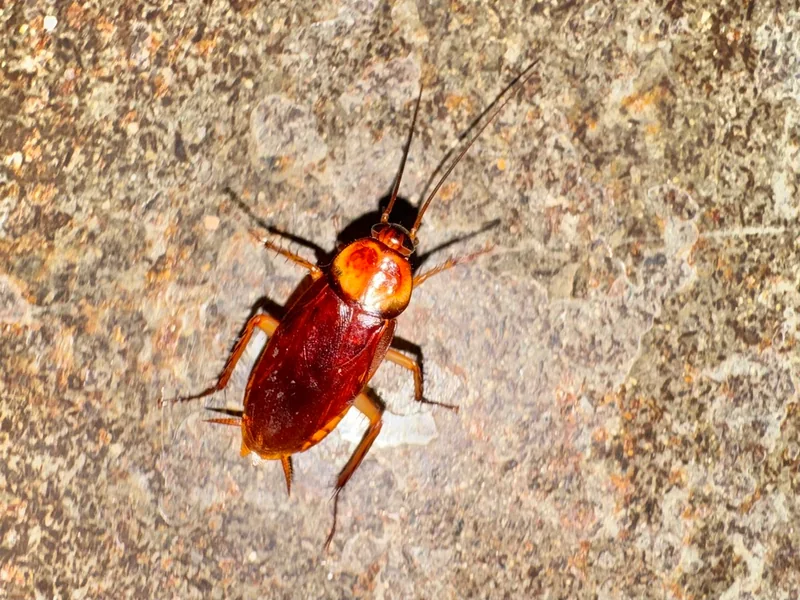
American Cockroach
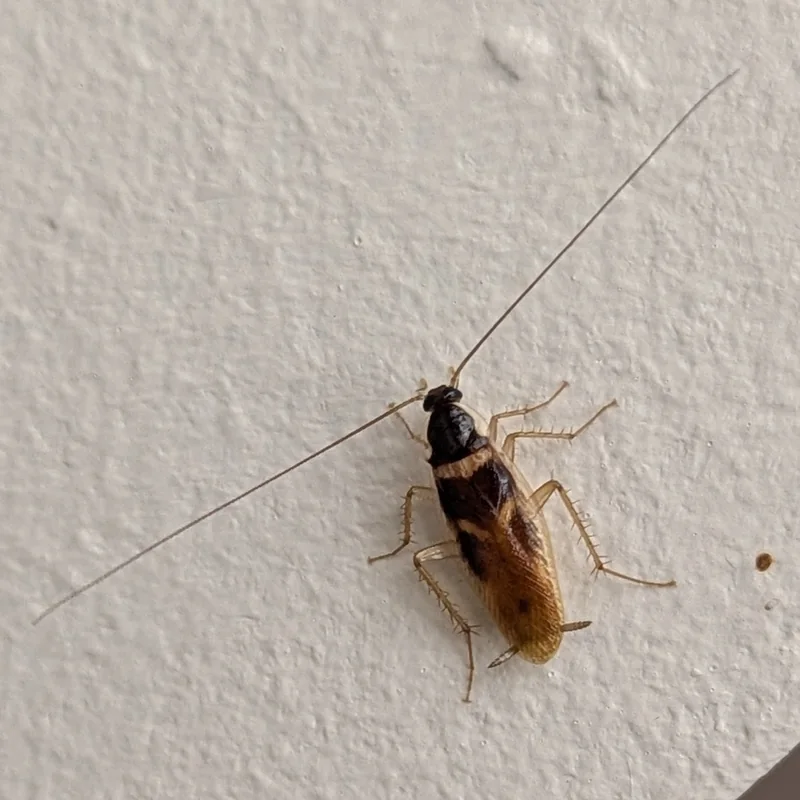
Cockroach
Side-by-Side Comparison Table
| Trait | American Cockroach | Cockroach |
|---|---|---|
| Scientific Group | Periplaneta americana | Blattodea |
| Category | Insect | Insect |
| Typical Size | 35–53 mm | 12–50 mm |
| Danger Level | Nuisance | Nuisance |
| Bites or Stings? | No | No |
| Peak US Months | April, August, September, October | May, June, July, September |
| Key ID Trait | Large reddish-brown cockroach (up to 2 inches) with a pale yellow figure-8 halo around the pronotum | Flattened oval body with a shield-like pronotum partly covering the head |
American Cockroach vs. Cockroach: True Size Comparison
Side-by-Side Anatomy Blueprint
Compare body segments, antennae, leg count, and key markings directly before treating or removing either species.
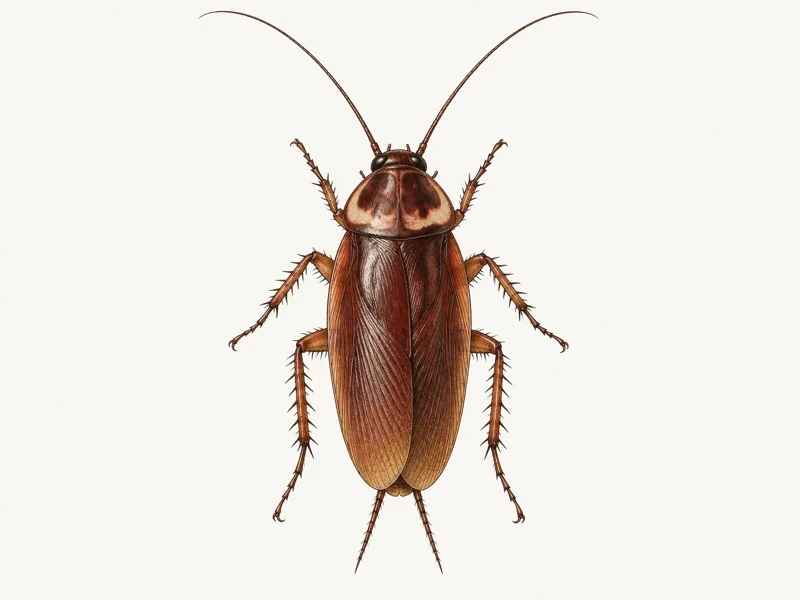
- Long whip antennae: Thread-like filiform antennae sweeping longer than the 35–50 mm reddish-brown body.
- Yellow figure-8 shield: Broad chestnut pronotum behind the head ringed by a distinctive pale yellowish halo.
- Spiny running legs: Six fast-running bristled legs built for rapid sprinting along sewer lines and basements.
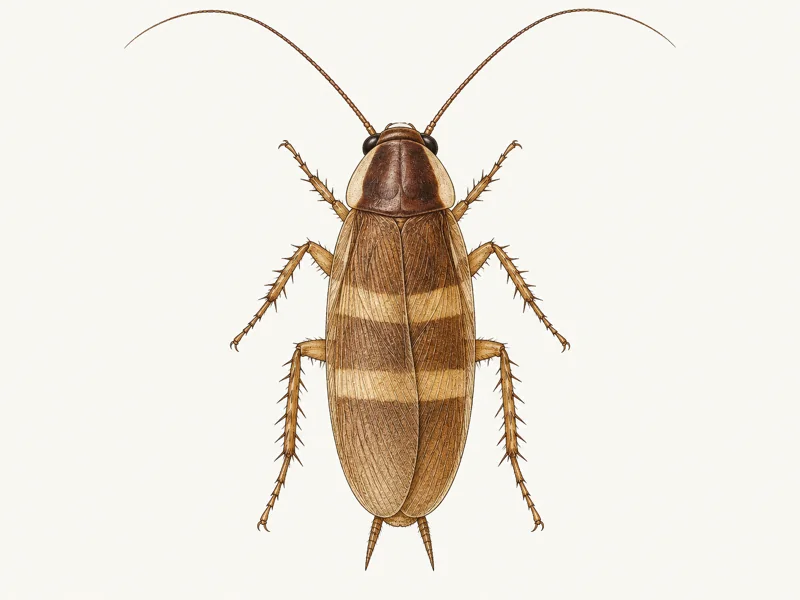
- Long whip antennae: Thread-like filiform feelers sweeping wider than the entire body length.
- Pale-edged pronotum: Dark mahogany shield with translucent margins (lacks German roach's twin bars).
- Two pale wing bands: Unmistakable pair of light golden-tan bands crossing the tawny-brown folded wings.
Quick Answer: The American cockroach (Periplaneta americana) is one species within the larger cockroach order, Blattodea. To tell them apart in about three seconds, look for size and the pronotum. A large reddish-brown roach measuring 35-53 mm (up to 2 inches) with a pale yellow figure-8 halo behind the head is an American cockroach. A smaller or differently marked roach with a flattened oval body and a shield-like pronotum is most likely another cockroach species.
Many homeowners ask whether they are looking at an American cockroach or a cockroach in general. The confusion is understandable, since every American cockroach is a cockroach, but most cockroaches are not American cockroaches. This guide covers the practical differences that matter for identification and control.
Key Visual & Physical Differences
Size and markings carry most of the identification. Cockroaches as a group range from 12 to 50 mm, so many species found indoors are far smaller than an adult American cockroach. The American cockroach sits at the top of that range and beyond, reaching 35-53 mm.
American Cockroach (Periplaneta americana)
- Size: 35-53 mm, up to about 2 inches long
- Color: Glossy reddish-brown overall
- Signature mark: A pale yellow figure-8 halo around the pronotum, the plate just behind the head
- Build: Long, broad, and noticeably larger than most indoor roaches
Cockroaches in General (Order Blattodea)
- Size: 12-50 mm, depending on species
- Body shape: Flattened oval body that slips easily into cracks
- Pronotum: Shield-like plate that partly covers the head when viewed from above
- Color and markings: Vary widely, from tan to dark brown or nearly black
For quick American cockroach vs cockroach identification, check the pronotum first. If it shows that pale yellow figure-8 outline on a large reddish-brown insect, the ID is fairly clear. If the roach is small, darker, or lacks that halo, it belongs to another species within Blattodea.
Identification Tips
- Use a phone camera with zoom to photograph the pronotum without handling the insect.
- Place a coin beside a dead specimen to judge length.
- Remember that young nymphs of any species are smaller and may not show adult markings yet.
Behavior, Habitat & Danger Comparison
Both the American cockroach and cockroaches in general are rated as nuisance pests. Neither bites people in any meaningful way, and neither is venomous. The main concerns are contamination of food surfaces, unpleasant odors, and the stress of seeing them indoors.
Shared Habits
- Mostly active at night and quick to scatter when lights come on
- Drawn to moisture, food scraps, grease, and clutter
- Hide in tight cracks, thanks to their flattened bodies
Where You Tend to Find Them
Large reddish-brown roaches like the American cockroach are often linked to warm, damp areas such as basements, drains, utility rooms, and spaces around plumbing. Other cockroach species may favor kitchens, cabinets, appliances, or bathrooms. Where a roach turns up offers a helpful clue, but the physical traits above remain the most reliable way to confirm the species.
If anyone in the household has a reaction after contact with pests or contaminated food, contact a doctor. For questions about accidental exposure to pest-control products, call US Poison Control at 1-800-222-1222.
Which One Is Worse for Homeowners?
On paper, the danger rating is the same: both are nuisance pests. In practice, the American cockroach tends to alarm people more because of its size, while smaller cockroach species can be harder to spot and reach. The better question is how many roaches are present and what conditions are drawing them in.
Start with Non-Chemical IPM
- Moisture control: Fix leaky pipes, dry out damp basements, and run a dehumidifier where needed.
- Sanitation: Store food in sealed containers, clean up crumbs and grease, and take trash out often.
- Exclusion: Seal gaps around pipes, doors, and vents with caulk, weatherstripping, or mesh, and cover floor drains.
- Clutter reduction: Remove cardboard boxes, paper stacks, and other hiding spots.
- Monitoring: Place sticky traps along walls to track activity and confirm the species.
When Products Are Needed
If sanitation and exclusion do not solve the problem, baits and other products designed for cockroaches may help. Always read and follow the EPA product label exactly, including placement, dosage, and precautions around children and pets. For persistent or widespread activity, a licensed pest management professional can confirm the species and build a targeted plan.
Frequently Asked Questions
Is an American cockroach a different insect from a cockroach?
No. The American cockroach is a specific species, Periplaneta americana, within the cockroach order Blattodea. The difference between an American cockroach and a cockroach is the difference between one species and the whole group.
What is the fastest way to identify an American cockroach?
Look for a large reddish-brown roach, 35-53 mm long, with a pale yellow figure-8 halo around the pronotum. That combination sets it apart from most other cockroaches.
Are American cockroaches more dangerous than other cockroaches?
No. Both are classified as nuisance pests. The American cockroach is larger and more startling, but its danger rating matches that of cockroaches in general.
How can homeowners keep both types out?
Focus on moisture control, sanitation, and sealing entry points first. If products are needed, choose ones labeled for cockroaches and follow the EPA label directions carefully.