Bed Bug vs Cockroach: How to Tell Them Apart Fast
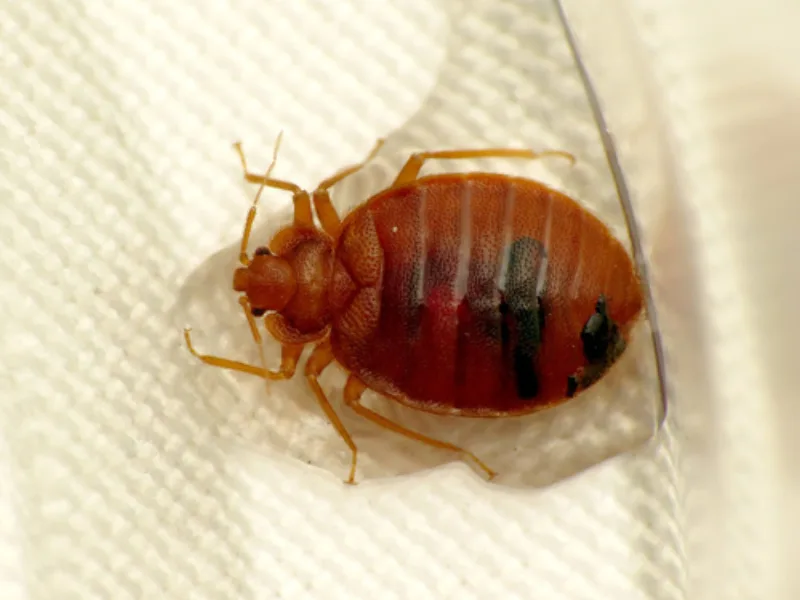
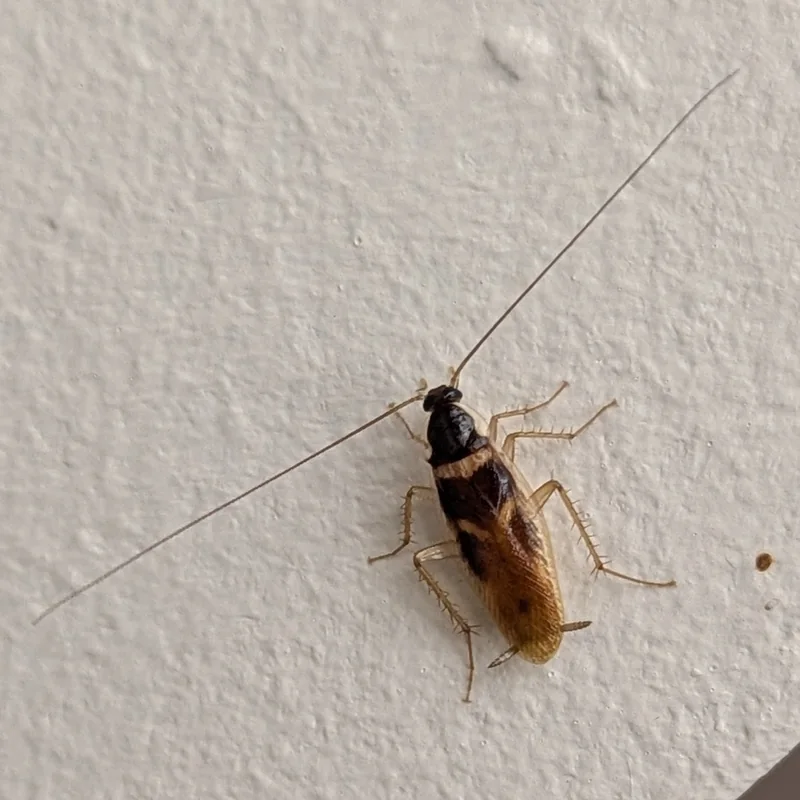
Quick ID Verdict: Bed bugs (Cimex lectularius) are tiny, wingless, apple-seed-shaped insects measuring 4-7 mm. Cockroaches (order Blattodea) are much larger at 12-50 mm, with a shield-like pronotum that partly covers the head. If the insect is smaller than a pencil eraser and has no wings, it is likely a bed bug. If it is long, fast, and has a hood over its head, it is a cockroach.
Bed Bug
Cockroach
Side-by-Side Comparison Table
| Trait | Bed Bug | Cockroach |
|---|---|---|
| Scientific Group | Cimex lectularius | Blattodea |
| Category | Insect | Insect |
| Typical Size | 4–7 mm | 12–50 mm |
| Danger Level | Nuisance | Nuisance |
| Bites or Stings? | Yes | No |
| Peak US Months | May, July, October, November | May, June, July, September |
| Key ID Trait | Flat, oval, apple-seed-shaped reddish-brown body without wings | Flattened oval body with a shield-like pronotum partly covering the head |
Bed Bug vs. Cockroach: True Size Comparison
Side-by-Side Anatomy Blueprint
Compare body segments, antennae, leg count, and key markings directly before treating or removing either species.
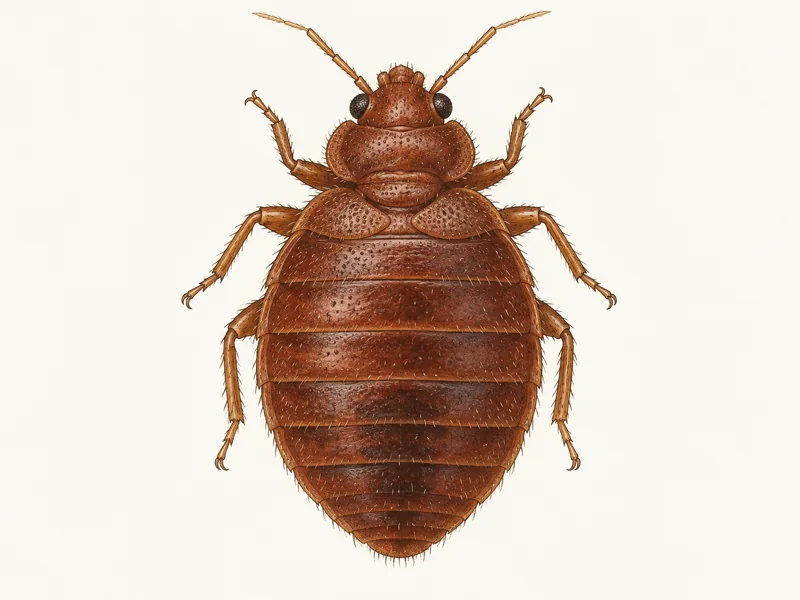
- Short 4-part antennae: Compact head with dark compound eyes and short 4-segmented antennae (shorter than roach feelers).
- Scalloped pronotum: Curved collar plate behind the head followed by tiny stubby wing pads—bed bugs cannot fly.
- Six short legs: Three pairs of short crawling legs suited for clinging to mattress piping and wood cracks.
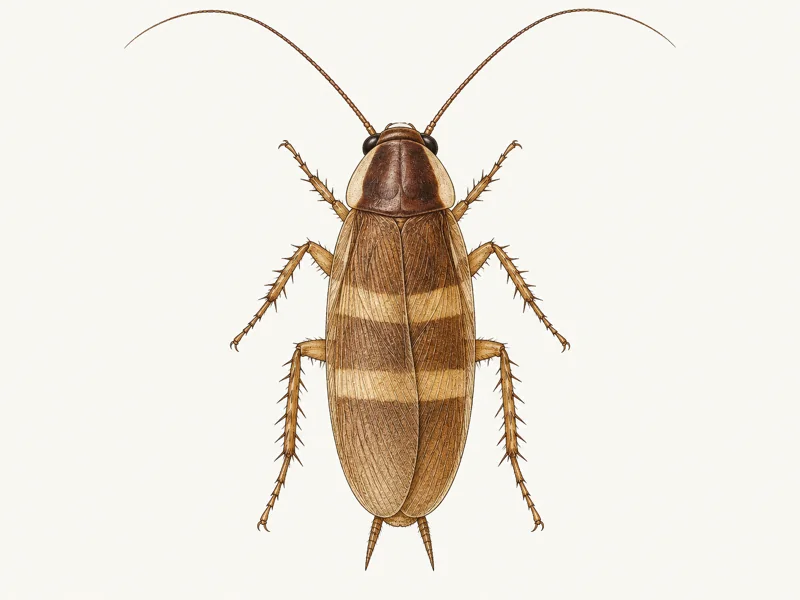
- Long whip antennae: Thread-like filiform feelers sweeping wider than the entire body length.
- Pale-edged pronotum: Dark mahogany shield with translucent margins (lacks German roach's twin bars).
- Two pale wing bands: Unmistakable pair of light golden-tan bands crossing the tawny-brown folded wings.
Quick Answer: Bed bugs (Cimex lectularius) are tiny, wingless, apple-seed-shaped insects measuring 4-7 mm. Cockroaches (order Blattodea) are much larger at 12-50 mm, with a shield-like pronotum that partly covers the head. If the insect is smaller than a pencil eraser and has no wings, it is likely a bed bug. If it is long, fast, and has a hood over its head, it is a cockroach.
The 3-Second ID Verdict
Size and the head are the fastest clues. A bed bug is flat, oval, and reddish-brown with a clearly visible head. A cockroach is several times longer, and its head is tucked beneath a broad shield.
The location also helps. An insect found along mattress seams after a night of itchy welts points to a bed bug. One that scatters across the kitchen floor when the lights come on points to a cockroach.
Key Visual & Physical Differences
Both pests have flattened bodies, which lets them squeeze into cracks. That is where the resemblance ends. The features below settle most bed bug vs cockroach identification questions.
Bed Bugs (Cimex lectularius)
- Size: 4-7 mm, roughly the size of an apple seed.
- Shape: Flat, broadly oval, and rounded. The body swells and lengthens after a blood meal.
- Color: Reddish-brown. Nymphs are paler and can look almost translucent.
- Wings: None. Bed bugs cannot fly or jump.
- Head: Fully exposed, with short antennae and a beak folded underneath.
Cockroaches (Blattodea)
- Size: 12-50 mm, depending on species and life stage.
- Shape: A flattened oval with a shield-like pronotum that partly covers the head.
- Color: Ranges from light tan to dark brown or nearly black.
- Wings: Most adults have wings, though many species seldom fly. Nymphs lack wings.
- Antennae and legs: Long, whip-like antennae and spiny legs built for running.
A young cockroach nymph can confuse homeowners because it is small and wingless. Look for the long antennae and the pronotum. Bed bugs never have either feature.
Behavior, Habitat & Danger Comparison
The biggest difference between bed bug and cockroach behavior is diet. Bed bugs feed only on blood, mostly from people. Cockroaches are scavengers that eat crumbs, grease, paper, and nearly any organic material.
Where Each Pest Hides
- Bed bugs: Mattress seams, box springs, headboards, bed frames, upholstered furniture, and outlets near sleeping areas.
- Cockroaches: Kitchens, bathrooms, behind appliances, under sinks, in drains, and any warm, damp void.
Signs of an Infestation
- Bed bugs: Rusty or dark spots on sheets, shed skins, tiny white eggs, and bites often found in rows or clusters.
- Cockroaches: Pepper-like droppings, smear marks, egg capsules, and a musty odor in heavy infestations.
Danger Level
Both pests are classified here as nuisance pests rather than medically significant ones. Bed bug bites can itch and disrupt sleep. Cockroaches can contaminate food surfaces, and their droppings and shed skins can aggravate allergies or asthma in some people. Anyone with a severe skin reaction or breathing trouble should see a doctor.
Which One Is Worse for Homeowners?
It depends on how you measure "worse." Cockroaches tend to pose the larger sanitation and allergen problem. Bed bugs are usually harder and more expensive to eliminate because they hide in furniture and travel in luggage and used goods.
Non-Chemical IPM First
Integrated Pest Management starts with steps that remove food, shelter, and entry points. These work for both pests:
- Bed bugs: Wash and dry bedding on the highest heat setting, vacuum seams and cracks, install encasements on mattresses and box springs, and inspect secondhand furniture before bringing it inside.
- Cockroaches: Store food in sealed containers, clean up grease and crumbs nightly, fix leaky pipes, reduce moisture, and seal gaps around pipes and baseboards.
- Both: Reduce clutter, caulk cracks, and use sticky monitors to track activity.
If problems persist, choose targeted products such as cockroach gel baits or professional bed bug heat treatment. Always read and follow the EPA product label. Bed bugs often resist over-the-counter sprays, so a licensed pest professional is frequently the most reliable option.
Frequently Asked Questions
Can a baby cockroach be mistaken for a bed bug?
Yes, because both are small and wingless. Cockroach nymphs have long antennae and run quickly, while bed bugs have short antennae, a rounder body, and crawl slowly.
Do cockroaches bite people like bed bugs?
Cockroaches rarely bite people and do not feed on blood. Bed bugs depend on blood meals and bite while people sleep.
How can I tell if I have a bed bug or cockroach problem?
Check where you find the insects and their signs. Blood spots and shed skins near the bed suggest bed bugs, while droppings and egg capsules in the kitchen suggest cockroaches.
Can bed bugs fly like some cockroaches?
No. Bed bugs have no wings and cannot fly or jump. They spread by crawling and hitchhiking on luggage, clothing, and furniture.