Cockroach vs Earwig: How to Tell Them Apart Fast
Quick ID Verdict: The fastest way to settle the cockroach vs earwig question is to look at the rear end. Earwigs carry a pair of pincer-like forceps (cerci) at the tip of the abdomen, while cockroaches have a flattened oval body with a shield-like pronotum that partly covers the head and no pincers.
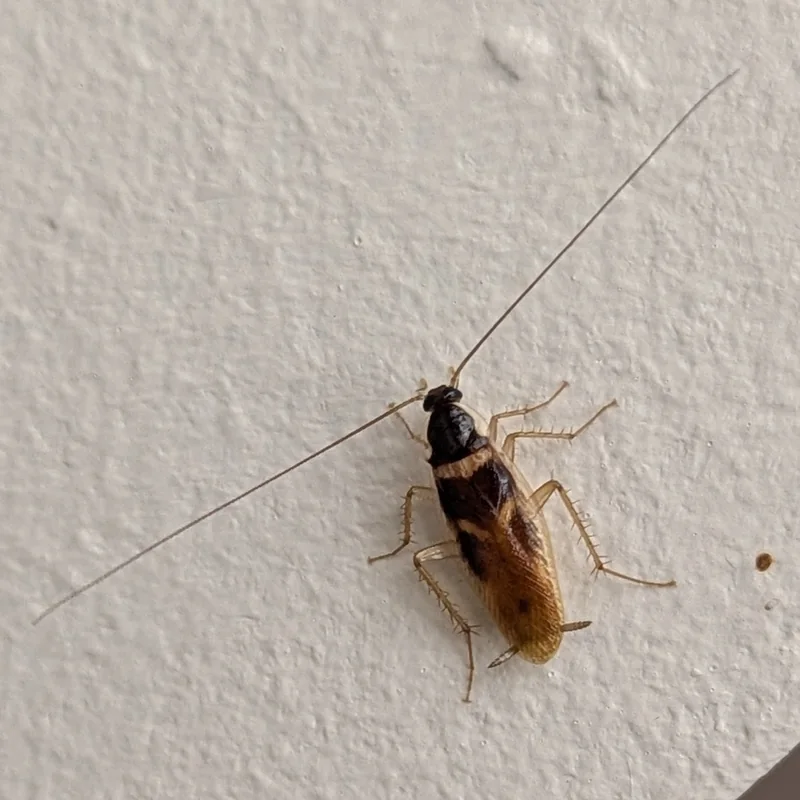
Cockroach
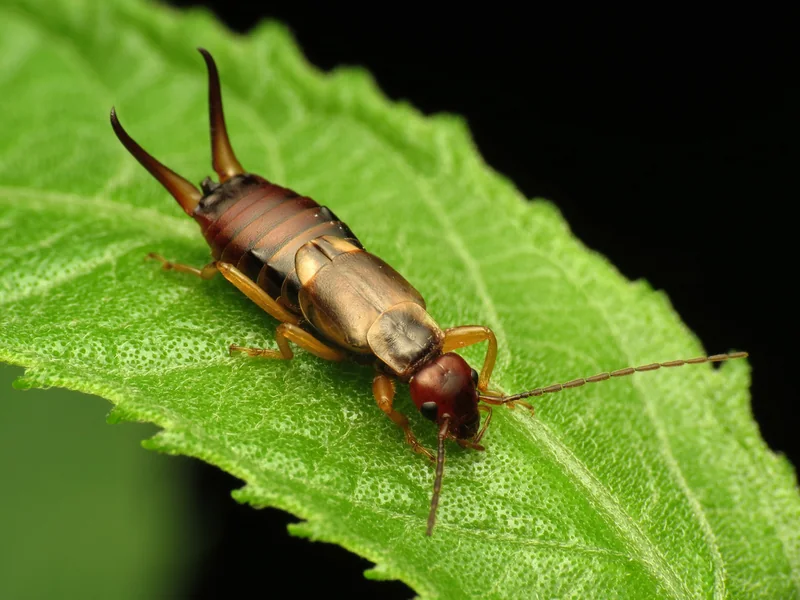
Earwig
Side-by-Side Comparison Table
| Trait | Cockroach | Earwig |
|---|---|---|
| Scientific Group | Blattodea | Dermaptera |
| Category | Insect | Insect |
| Typical Size | 12–50 mm | 12–22 mm |
| Danger Level | Nuisance | Nuisance |
| Bites or Stings? | No | No |
| Peak US Months | May, June, July, September | June, July, August, September |
| Key ID Trait | Flattened oval body with a shield-like pronotum partly covering the head | Slender, flattened dark reddish-brown body |
Cockroach vs. Earwig: True Size Comparison
Side-by-Side Anatomy Blueprint
Compare body segments, antennae, leg count, and key markings directly before treating or removing either species.
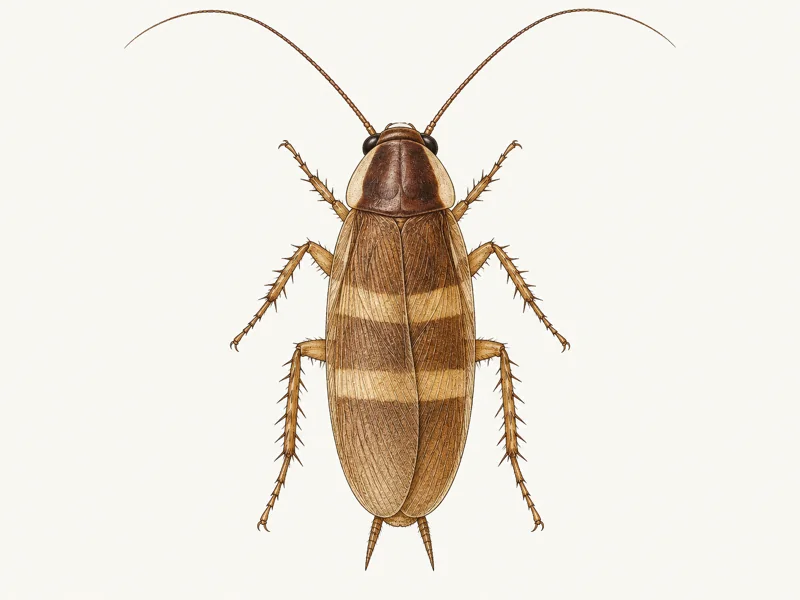
- Long whip antennae: Thread-like filiform feelers sweeping wider than the entire body length.
- Pale-edged pronotum: Dark mahogany shield with translucent margins (lacks German roach's twin bars).
- Two pale wing bands: Unmistakable pair of light golden-tan bands crossing the tawny-brown folded wings.
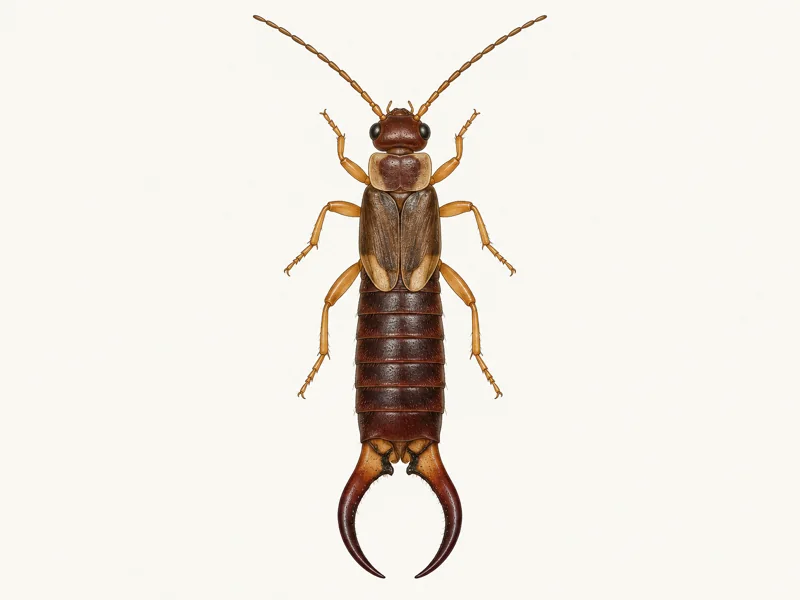
- Thread-like antennae: Segmented medium-length antennae on a flat chestnut-brown head.
- Short wing covers: Compact leathery forewings (tegmina) leave most of the flexible abdomen exposed.
- Six amber legs: Three pairs of slender pale tan legs suited for damp mulch and baseboard crevices.
Quick Answer: The fastest way to settle the cockroach vs earwig question is to look at the rear end. Earwigs carry a pair of pincer-like forceps (cerci) at the tip of the abdomen, while cockroaches have a flattened oval body with a shield-like pronotum that partly covers the head and no pincers. Both are classified as nuisance pests, but cockroaches are generally the bigger indoor problem.
Key Visual & Physical Differences
At a glance, both insects are flattened, brownish, and fast-moving, which is why homeowners often wonder whether they found a cockroach or earwig. A closer look at body shape, size, and the head area makes cockroach vs earwig identification simple.
Cockroaches (Order Blattodea)
- Size: 12-50 mm, depending on species and life stage.
- Body shape: Flattened oval body built for squeezing into cracks.
- Head: A shield-like pronotum partly covers the head, so the head is often hard to see from above.
- Antennae: Very long, thread-like antennae, often as long as the body or longer.
- Rear end: Two short, jointed cerci that look like small bristles, never pincers.
- Wings: Many adults have wings that cover most of the abdomen.
Earwigs (Order Dermaptera)
- Size: 12-22 mm, a narrower size range than cockroaches.
- Body shape: Slender, flattened, dark reddish-brown body that is long rather than oval.
- Head: Fully visible and not hidden under a shield.
- Antennae: Beaded and noticeably shorter than a cockroach's.
- Rear end: Prominent forceps; males usually have curved pincers, females straighter ones.
- Wings: Short, leathery wing covers leave most of the segmented abdomen exposed.
The simplest difference between cockroach and earwig bodies comes down to two things: an oval body with a hidden head, or a slender body with pincers. If you see forceps, it is an earwig.
Behavior, Habitat & Danger Comparison
Both insects are nocturnal and seek dark, damp hiding places during the day. Their reasons for entering homes, however, are quite different.
Cockroach Behavior and Habitat
Cockroaches are scavengers that thrive near food, water, and warmth. Indoors, they hide behind appliances, under sinks, inside cabinets, and in wall voids. Some species live and breed entirely indoors, which allows populations to grow year-round.
Cockroaches are rated as a nuisance, but they can contaminate food surfaces and their droppings and shed skins can aggravate allergies and asthma in some people. Anyone with ongoing breathing symptoms should consult a doctor.
Earwig Behavior and Habitat
Earwigs are primarily outdoor insects that live under mulch, leaf litter, stones, boards, and dense ground cover. They feed on decaying plant matter, small insects, and sometimes tender seedlings or soft fruit. They usually wander indoors by accident during hot, dry spells or heavy rain.
Earwigs are also a nuisance-level pest. Their pincers can give a mild pinch if handled, but they do not carry venom and rarely survive long indoors without moisture.
Side-by-Side Snapshot
- Order: Blattodea vs Dermaptera
- Size: 12-50 mm vs 12-22 mm
- Danger rating: Nuisance vs nuisance
- Breeds indoors: Often vs rarely
- Main attraction: Food and water vs moisture and shelter
Which One Is Worse for Homeowners?
Cockroaches are typically the more serious household pest. They can establish breeding populations inside, spread across kitchens and bathrooms, and contaminate food areas. Earwigs, by contrast, are mostly accidental invaders that signal excess moisture near the foundation.
For both pests, start with Integrated Pest Management (IPM) before reaching for chemicals:
- Exclusion: Seal gaps around pipes, doors, windows, and the foundation; repair torn screens and install door sweeps.
- Sanitation: Store food in sealed containers, clean crumbs and grease, and take out trash regularly.
- Moisture control: Fix leaks, run a dehumidifier in basements, and keep gutters draining away from the house.
- Outdoor buffer: Pull mulch, leaf litter, and woodpiles back from the foundation to discourage earwigs.
- Monitoring: Use sticky traps to track activity; rolled damp newspaper can trap earwigs outdoors.
If baits or other products are needed, choose ones labeled for the specific pest and always follow EPA product label directions. Persistent cockroach infestations often warrant a licensed pest control professional.
Frequently Asked Questions
Can an earwig be mistaken for a baby cockroach?
Yes, since both are small, brown, and flat. Check the rear end: earwigs have pincers, while cockroach nymphs have only short, bristle-like cerci.
Do earwigs or cockroaches bite people?
Earwigs may pinch if handled, and cockroaches rarely bite. Both are rated as nuisance pests, not medically dangerous ones.
Why do earwigs show up inside after rain?
Heavy rain or drought pushes earwigs out of soil and mulch in search of stable moisture and shelter. Reducing damp debris near the foundation helps.
Does seeing one earwig mean an infestation?
Usually not. A single earwig is often an accidental visitor, while repeated cockroach sightings more often point to an indoor breeding population.