Scorpions in Louisiana: Species, Season, Identification and Prevention
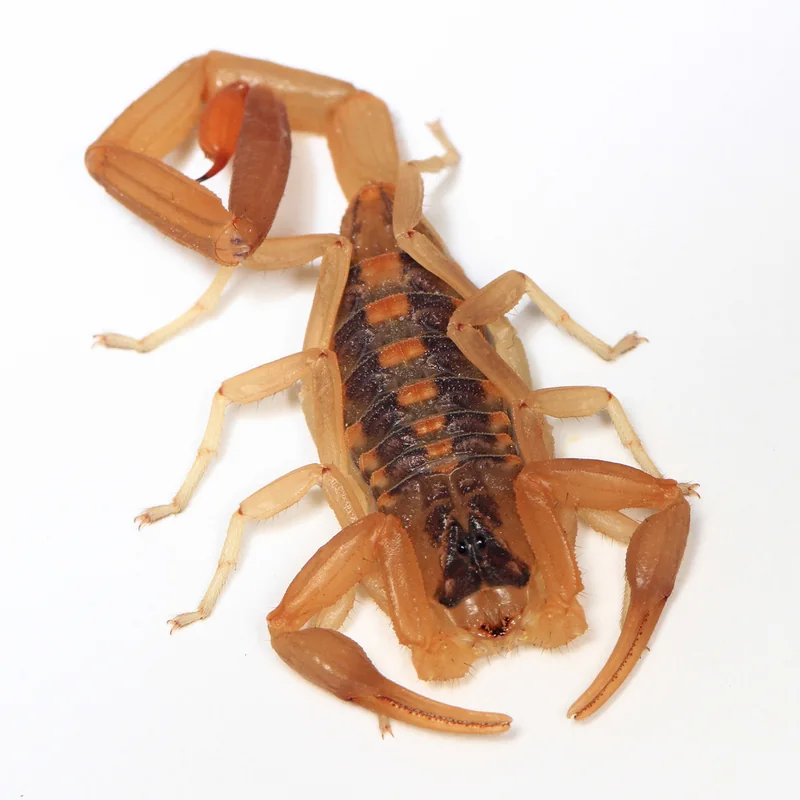
Quick Answer: Yes, scorpions in Louisiana are common, with 142 verified GBIF sightings concentrated in Vernon, Natchitoches, Allen, Caldwell, and Webster parishes. Three species are on record: the striped bark scorpion (Centruroides vittatus), the southern unstriped scorpion (Vaejovis carolinianus), and the Hentz striped scorpion (Centruroides hentzi).
When Scorpions Are Most Active in Louisiana
Now (November): Moderate ActivityVerified Louisiana Counties, Species & US Range
Counties with Verified Observations
- Vernon
- Natchitoches
- Allen
- Caldwell
- Webster
- Bossier
- Rapides
- West Feliciana
- Winn
- Catahoula
Species Recorded in Louisiana
| Species | Scientific Name | GBIF Records |
|---|---|---|
| striped bark scorpion | Centruroides vittatus | 132 |
| southern unstriped scorpion | Vaejovis carolinianus | 8 |
| Hentz striped scorpion | Centruroides hentzi | 2 |
How Louisiana Compares to Neighboring States
Note: Wildlife does not follow state or county lines. GBIF totals reflect verified citizen and museum records, so low counts in a neighboring county do not guarantee absence.
How to Identify Scorpions
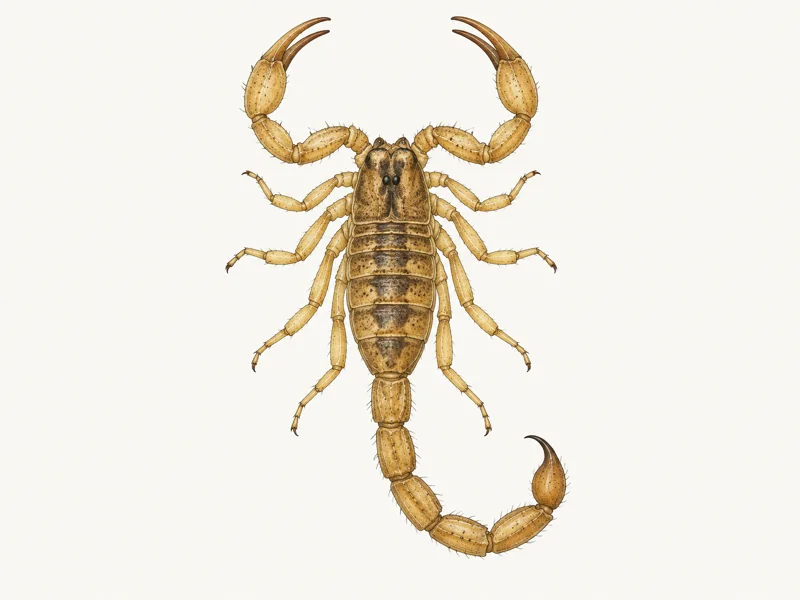
Annotated Anatomy Key (Scorpion)
- Front pincers: Two large curved pedipalps (pincers) used to grasp prey—slender in bark scorpions.
- Segmented trunk: Compact cephalothorax fused to a 7-segmented mesosoma that fluoresces under UV blacklight.
- Eight walking legs: Four pairs of jointed walking legs attached cleanly behind the front pincers.
- Tail & stinger: Five-segmented metasoma tail curving toward a bulbous venomous stinger (telson).
Scorpions Field Checklist
- Eight legs with two large front pincers (pedipalps)
- Segmented tail curving over the back ending in a venomous stinger
- Fluoresces bright blue-green under UV blacklight at night
- Color ranges from pale straw-yellow to dark brown or black
Side-by-Side Look-Alike Comparisons
Scorpions Size at True Relative Scale
Quick Answer: Yes, scorpions in Louisiana are common, with 142 verified GBIF sightings concentrated in Vernon, Natchitoches, Allen, Caldwell, and Webster parishes. Three species are on record: the striped bark scorpion (Centruroides vittatus), the southern unstriped scorpion (Vaejovis carolinianus), and the Hentz striped scorpion (Centruroides hentzi). Activity peaks in April, May, June, and August, so exclusion and moisture control work best when started in early spring.
Where Scorpions Live in Louisiana
Anyone asking "are there scorpions in Louisiana" may be surprised by the answer. Verified records cluster in the west-central and northern parts of the state, especially in the pine forests and rolling uplands of Vernon, Natchitoches, Allen, Caldwell, and Webster parishes. Louisiana's humid subtropical climate, with very wet, hot summers and mild winters (USDA zones 8a-10a), supports a steady supply of the insects scorpions eat.
Outdoors, Louisiana scorpions shelter under loose bark, fallen logs, rocks, leaf litter, and woodpiles. Indoors, they tend to turn up in garages, attics, crawl spaces, closets, and bathrooms, where they look for cover and prey.
Louisiana Scorpion Identification
- Striped bark scorpion (Centruroides vittatus): Yellowish-tan body with two dark stripes along the back and long, slender pincers. It is an agile climber and is often found on walls, trees, and ceilings.
- Hentz striped scorpion (Centruroides hentzi): Similar slender build and striped pattern. It is a frequent bark and wood dweller across the Gulf South.
- Southern unstriped scorpion (Vaejovis carolinianus): Small, dark brown to reddish, with no stripes and thicker pincers. It is usually found in leaf litter and under debris in wooded areas.
Stings from these species are typically compared to a bee or wasp sting. However, Centruroides species are considered medically significant, and some people react more strongly. This guide is not medical advice. If someone is stung, especially a child, an older adult, or anyone with allergies, call US Poison Control at 1-800-222-1222 or contact a doctor. Seek emergency care for any breathing difficulty or severe symptoms.
When Scorpions Are Most Active in Louisiana
Louisiana scorpion season runs mainly from spring through late summer. GBIF records show peak sightings in April, May, June, and August, when warm nights increase hunting and mate-seeking activity.
Scorpions are nocturnal, so most encounters happen after dark or when someone moves stored items, firewood, or yard debris. Heavy summer rains can flood ground shelters and push scorpions toward homes. During mild winter spells, they may still appear indoors, though activity drops sharply.
Look-Alikes Frequently Mistaken for Scorpions
Several common Louisiana creatures get mistaken for scorpions, especially when seen quickly at night.
- Centipedes: Long, flattened bodies with one pair of legs per segment and no pincers or raised tail. House centipedes move very fast and have extremely long legs.
- Earwigs: Small, dark brown insects with pincer-like forceps at the rear end, not the front. They have six legs and no stinger.
- Tarantulas: Large, hairy spiders with eight legs and no pincers or tail. They are rarely seen indoors and are generally docile.
A true scorpion has eight legs, a pair of front pincers (pedipalps), and a segmented tail ending in a stinger that often curls over the back.
How to Keep Scorpions Out of Your Louisiana Home
Integrated Pest Management (IPM), as recommended by university cooperative extension programs, starts with non-chemical steps. Knowing how to prevent scorpions in Louisiana comes down to removing shelter, moisture, and food.
Exclusion
- Seal cracks in foundations, gaps around pipes, and openings around utility lines with caulk or sealant.
- Install tight door sweeps and repair torn window and vent screens.
- Check weep holes and attic vents, and cover them with fine mesh where appropriate.
Sanitation and Habitat Reduction
- Store firewood, lumber, and stones away from the house and off the ground.
- Rake leaf litter, trim shrubs away from walls, and keep tree limbs off the roof.
- Shake out shoes, gloves, and bedding in garages and seasonal storage areas.
Moisture and Prey Control
- Fix leaky faucets, AC drip lines, and gutters that drain near the foundation.
- Use a dehumidifier in damp crawl spaces or basements.
- Reduce insect prey by switching to yellow "bug" bulbs outdoors and keeping the home free of crickets and roaches.
Sticky traps placed along walls can help monitor activity. If chemical treatments are needed, choose products labeled for scorpions and always follow the EPA product label exactly.
When to Call a Licensed Louisiana Pest Professional
- Scorpions are found indoors repeatedly, especially in bedrooms or cribs.
- Multiple scorpions appear in a single week during peak season.
- Someone in the household has had a sting reaction or has known allergies.
- Entry points cannot be located or sealed without professional help.
IPM Prevention Checklist for Louisiana Homes
- Seal exterior cracks, door sweeps, and plumbing penetrations
- Remove rock piles, firewood, and debris within 20 feet of the foundation
- Shake out shoes, towels, and bedding before use in active regions
 EXCLUSION BLUEPRINT
Inspect eaves, screens, door sweeps, foundation cracks, and utility penetrations around Louisiana homes before peak season.
Scorpions in Louisiana: Frequently Asked Questions
Are there scorpions in Louisiana?
Yes. Scorpions are common in Louisiana, with 142 verified GBIF sightings and three recorded species, including the striped bark scorpion and the southern unstriped scorpion.
When is Louisiana scorpion season?
Activity peaks in April, May, June, and August, when warm, humid nights drive scorpions to hunt and wander more widely.
Are Louisiana scorpions dangerous?
Most stings feel similar to a bee sting, but Centruroides species are medically significant. For any sting, call Poison Control at 1-800-222-1222 or consult a doctor.
What attracts scorpions to Louisiana homes?
Moisture, clutter, woodpiles, and abundant insect prey draw scorpions close to homes. Sealing entry points and reducing damp hiding spots are the most effective defenses.
Sources & Verification
- University of Arizona Cooperative Extension — Scorpions
- Texas A&M AgriLife Extension — Scorpions
- GBIF Global Biodiversity Occurrence Records
Data refreshed · Editorial & GBIF Methodology