Brown Recluse in Montana: Facts, Look-Alikes, and Prevention
Quick Answer: Brown recluse spiders (Loxosceles reclusa) do not have breeding populations in Montana, and the species is not established anywhere in the state. Rare individuals can arrive as accidental hitchhikers in boxes, furniture, or vehicles from the south-central US, but these strays do not form lasting infestations.
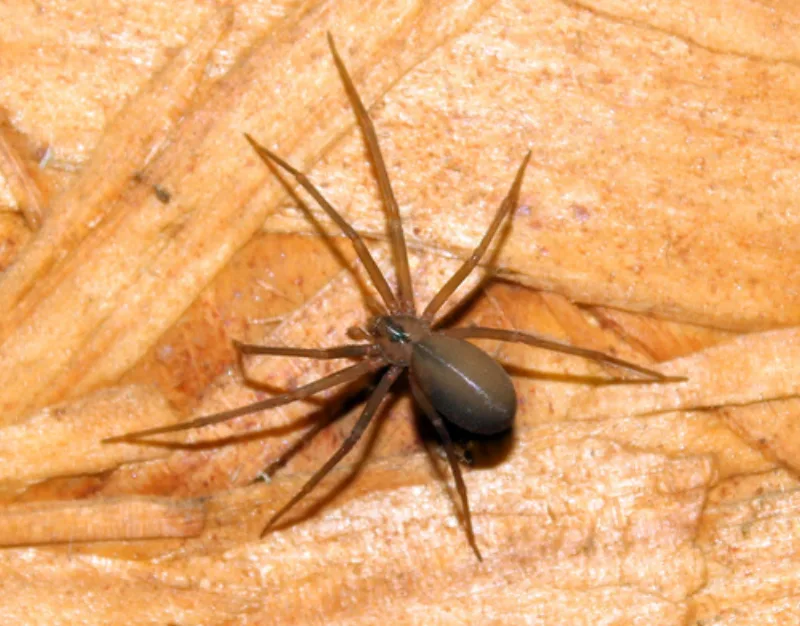
When Brown Recluse Spiders Are Most Active in Montana
November: Rare / AbsentBrown Recluse Spiders Range in Montana vs. Neighboring States
How Montana Compares to Neighboring States
Note: Wildlife does not follow state or county lines. GBIF totals reflect verified citizen and museum records, so low counts in a neighboring county do not guarantee absence.
How to Identify Brown Recluse Spiders
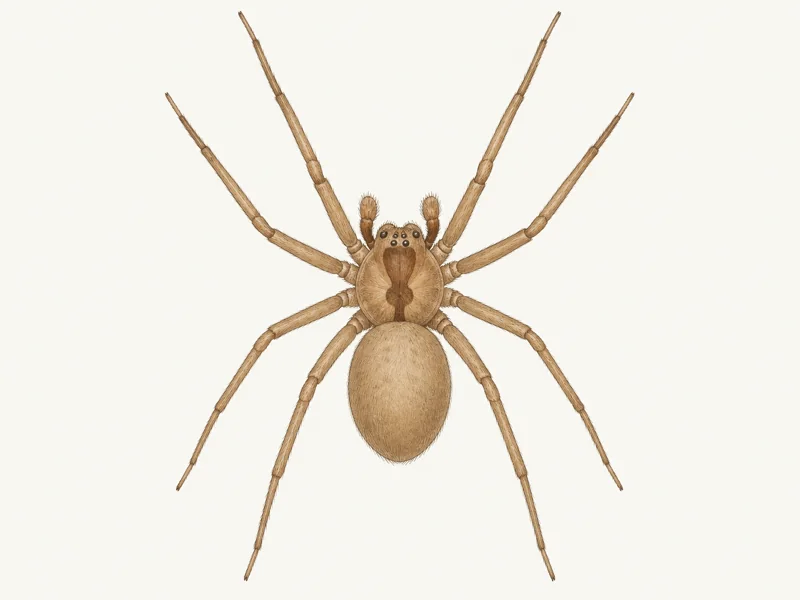
Annotated Anatomy Key (Brown Recluse)
- Six eyes (3 pairs): Six eyes arranged in 3 distinct dyads (pairs) rather than the typical 8 spider eyes.
- Dark violin mark: Dark brown violin-shaped mark on the cephalothorax—wide base behind eyes, thin neck pointing toward abdomen.
- Unbanded smooth legs: Eight uniformly tan-brown legs with NO stripes, rings, or heavy macro-spines.
- Velvety oval abdomen: Uniformly tan to medium brown abdomen covered in fine velvety hairs—no spots or chevrons.
Brown Recluse Spiders Field Checklist
- Uniformly tan to medium brown body with NO stripes, bands, or spines on the legs
- Dark violin-shaped mark on the cephalothorax (neck pointing toward abdomen)
- Six eyes arranged in three distinct pairs (dyads) rather than eight eyes
- Smooth, velvety fine hairs on abdomen; spins messy sheet-like retreat webs
Side-by-Side Look-Alike Comparisons
Brown Recluse Spiders Size at True Relative Scale
Quick Answer: Brown recluse spiders (Loxosceles reclusa) do not have breeding populations in Montana, and the species is not established anywhere in the state. Rare individuals can arrive as accidental hitchhikers in boxes, furniture, or vehicles from the south-central US, but these strays do not form lasting infestations. Most spiders reported as a "brown recluse in Montana" turn out to be wolf spiders, hobo spiders, or cellar spiders.
Where Brown Recluse Spiders Live in Montana
So, are there brown recluse in Montana? Not as a resident species. The brown recluse's native range centers on the south-central and lower Midwestern states, where mild winters and long warm seasons support year-round indoor populations. GBIF occurrence records and university extension IPM guidance consistently place Montana well outside that range.
Montana's climate works against the species. The state combines semi-arid plains with cold alpine mountains, short warm summers, and USDA hardiness zones 3a through 6a. Those long, harsh winters and brief growing seasons don't match the conditions brown recluse spiders need to spread and persist.
The occasional verified find usually traces back to items shipped or moved from within the spider's range. Common sources include:
- Moving boxes and stored household goods from southern states
- Used furniture, especially dressers and cabinets
- Camping gear, RVs, and vehicles that sat in storage elsewhere
- Commercial freight and warehouse shipments
A single hitchhiker found in a garage or unpacked box is a rare event, not a sign that the species lives in the area.
When Brown Recluse Spiders Are Most Active in Montana
Because there is no established population, there is no true Montana brown recluse season. Any accidental arrival would track human activity instead, with moving season in late spring and summer being the most likely window for a stray to show up.
Native spiders follow a clearer pattern. Late summer and early fall bring a noticeable spike in sightings as male spiders wander in search of mates and others move toward sheltered spaces before cold weather. That seasonal surge is when many Montana residents first wonder whether they've found a recluse.
Look-Alikes Frequently Mistaken for Brown Recluse Spiders
Good Montana brown recluse identification starts with knowing what a real recluse looks like. A true brown recluse has a uniformly tan to brown body, a dark violin-shaped mark on the front body section, and only six eyes arranged in three pairs. Its legs are slender and plain, with no bands, stripes, or obvious spines.
Wolf Spiders
Wolf spiders are large, hairy, fast-running hunters that often turn up in basements and garages. They have eight eyes, including two large, prominent ones, and usually show stripes or mottled patterns. Their stocky build and patterned bodies set them apart from the smooth, plain recluse.
Hobo Spiders
Hobo spiders are brown, medium-sized spiders that build funnel-shaped webs in window wells, woodpiles, and basement corners. They often carry chevron-like markings on the abdomen and have eight eyes. Their brown coloring makes them one of the most common sources of recluse confusion in the Mountain West.
Cellar Spiders
Cellar spiders have tiny bodies and very long, thin legs, and they hang upside down in loose, messy webs. Some have faint markings on the body that people mistake for a violin shape. Their delicate, daddy-longlegs appearance is the quickest way to rule out a recluse.
Other Common House Spiders
Many other small brown spiders in Montana homes get blamed for "recluse" sightings. If a spider has eight eyes, banded legs, or bold abdominal patterns, it is not a brown recluse. When in doubt, place the specimen in a sealed jar or rubbing alcohol and take it to a local extension office or licensed professional for identification.
How to Keep Brown Recluse Spiders Out of Your Montana Home
Knowing how to prevent brown recluse in Montana mostly means preventing hitchhikers and controlling the native spiders already present. Integrated Pest Management (IPM) focuses on non-chemical steps first: exclusion, sanitation, and moisture control.
- Inspect incoming goods: Unpack boxes and used furniture from southern states outdoors or in a garage, and shake out stored items.
- Seal entry points: Caulk gaps around windows, utility lines, and foundations, and repair torn screens and door sweeps.
- Reduce clutter: Store items in sealed plastic bins rather than cardboard, and keep basements and closets tidy.
- Control moisture: Run dehumidifiers in damp basements and fix leaks that attract the insects spiders eat.
- Use sticky traps: Place glue traps along baseboards to monitor activity and capture specimens for identification.
- Manage the exterior: Move woodpiles and debris away from the foundation and trim vegetation touching the house.
If chemical control becomes necessary, choose products registered for spiders and always follow the EPA product label exactly.
When to Call a Licensed Montana Pest Professional
- You find a spider with six eyes and a violin marking that you suspect is a true brown recluse
- Sticky traps catch multiple spiders of the same unidentified species
- Spider activity continues despite sealing, cleaning, and moisture control
- You recently moved belongings from a state where brown recluse spiders are common
This guide is for educational purposes only and is not medical advice. If someone is bitten by any spider and develops pain, spreading redness, or other symptoms, contact US Poison Control at 1-800-222-1222 and see a doctor. Never rely on home remedies for a suspected venomous bite.
IPM Prevention Checklist for Montana Homes
- Replace cardboard storage with sealed plastic totes
- Keep bed skirts off the floor and pull beds away from walls
- Shake out shoes, towels, and stored clothing before wearing
 EXCLUSION BLUEPRINT
Inspect eaves, screens, door sweeps, foundation cracks, and utility penetrations around Montana homes before peak season.
Brown Recluse Spiders in Montana: Frequently Asked Questions
Are brown recluse spiders established in Montana?
No. Breeding populations do not occur in Montana. Only rare accidental hitchhikers arrive in shipped goods or belongings from the species' southern range.
What spider is most often mistaken for a brown recluse in Montana?
Hobo spiders and wolf spiders are the most common culprits because of their brown coloring. Cellar spiders with faint body markings also cause confusion.
How can someone tell a brown recluse apart from local spiders?
Check the eyes. A brown recluse has six eyes in three pairs, plain unbanded legs, and a dark violin marking. Most look-alikes have eight eyes.
What should someone do after a suspected spider bite in Montana?
Call US Poison Control at 1-800-222-1222 and contact a doctor. If possible, safely collect the spider so a professional can identify it.
Sources & Verification
- UC Riverside Spider Biology — Brown Recluse Range & Myths
- University of Kentucky Entomology — Brown Recluse Spider
- GBIF Global Biodiversity Occurrence Records
Data refreshed · Editorial & GBIF Methodology