Centipedes in Louisiana: Species, Season, and Prevention Guide
Quick Answer: Centipedes in Louisiana are common. GBIF holds 193 verified sightings, with the most records in February through May. They are generally a nuisance rather than a danger, and moisture control and exclusion are the best ways to keep them out.
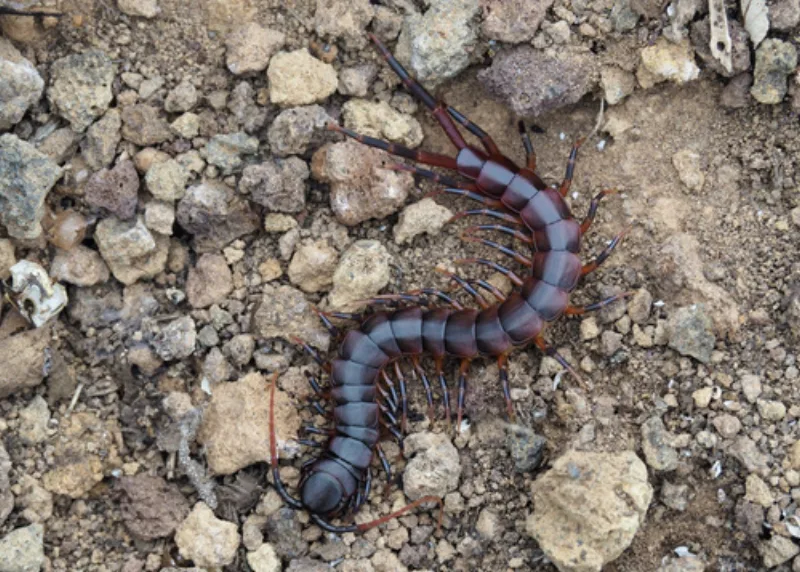
When Centipedes Are Most Active in Louisiana
Now (November): Moderate ActivityVerified Louisiana Counties, Species & US Range
Counties with Verified Observations
- Saint Tammany
- East Baton Rouge
- Vernon
- Livingston
- Ouachita
- West Feliciana
- Natchitoches
- Lincoln
- Calcasieu
- Evangeline
Species Recorded in Louisiana
| Species | Scientific Name | GBIF Records |
|---|---|---|
| Eastern Bark Centipede | Hemiscolopendra marginata | 84 |
| Big-leg Centipede | Theatops posticus | 18 |
| Scolopocryptops sexspinosus | Scolopocryptops sexspinosus | 13 |
How Louisiana Compares to Neighboring States
Note: Wildlife does not follow state or county lines. GBIF totals reflect verified citizen and museum records, so low counts in a neighboring county do not guarantee absence.
How to Identify Centipedes
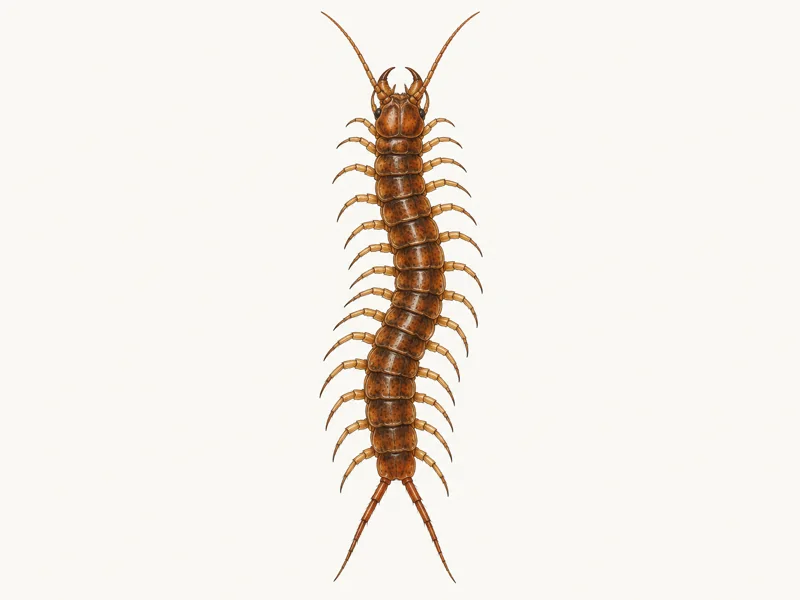
Annotated Anatomy Key (Centipede)
- Antennae & forcipules: Long segmented antennae and modified front venom claws (forcipules) behind the head.
- Flattened segments: Flat, flexible segmented trunk built for fast sprinting—never coils into a tight spiral.
- 1 leg pair / segment: EXACTLY ONE pair of legs extending outward per body segment (millipedes have two pairs).
- Trailing rear legs: Elongated sensory rear leg pair projecting backward like antennae to confuse predators.
Centipedes Field Checklist
- Flattened, elongated segmented body with exactly ONE pair of legs per body segment
- Long antennae and modified front venom claws (forcipules) used to subdue insect prey
- Moves very rapidly when exposed to light
- Large desert species (Scolopendra) deliver painful pinches; smaller garden centipedes are harmless
Centipedes Size at True Relative Scale
Where Centipedes Live in Louisiana
Louisiana's humid subtropical climate (USDA zones 8a to 10a) suits these moisture-loving predators. Verified records come from across the state, with the most from Saint Tammany, East Baton Rouge, Vernon, Livingston, and Ouachita parishes. GBIF lists these as counties, though Louisiana's local units are parishes.
Three species appear in the records:
- Eastern Bark Centipede (Hemiscolopendra marginata): a flattened, many-legged hunter found under bark, logs, and stones.
- Big-leg Centipede (Theatops posticus): a forest-floor species that lives in rotting wood and leaf litter.
- Scolopocryptops sexspinosus: a slender, fast-moving centipede that also favors damp leaf litter and decaying wood.
Outdoors, centipedes hide in mulch, woodpiles, leaf litter, and under landscape timbers. Indoors, they turn up in damp basements, crawl spaces, bathrooms, garages, and laundry rooms. They are predators that eat insects and spiders, so a few outdoors are part of a healthy yard.
When Centipedes Are Most Active in Louisiana
People asking about the Louisiana centipede season will find that GBIF sightings peak from February through May. Mild, frost-light winters let centipedes stay active longer than in colder states, and spring rains push them to move and hunt.
Heavy rain, flooding, and drought can drive them toward buildings at any time of year. They are nocturnal, so most people see one at night or when moving stored items. A centipede indoors usually signals a moist spot nearby and often a food supply of other small pests.
Look-Alikes Frequently Mistaken for Centipedes
Good Louisiana centipede identification starts with leg count and body shape. Centipedes have one pair of legs per body segment, a flattened body, and long antennae. Several local pests are often confused with them:
- House centipedes: also true centipedes, but with very long, thin legs and a gray-yellow body with dark stripes. They usually live indoors and hunt other household pests.
- Millipedes: rounded, cylindrical bodies with two pairs of legs per segment. They move slowly, curl into a coil, and feed on decaying plants rather than prey.
- Silverfish: silvery, tapered, wingless insects with three tail-like bristles and only six legs.
- Earwigs: six-legged insects with a pair of pincers at the rear.
How to Keep Centipedes Out of Your Louisiana Home
Anyone wondering how to prevent centipedes in Louisiana should start with non-chemical steps. Centipedes follow moisture and prey, so remove both.
Exclusion and Moisture Control
- Seal cracks in the foundation, gaps around pipes, and torn window screens.
- Add or replace door sweeps and weatherstripping.
- Fix leaky pipes and faucets, and keep gutters and downspouts directing water away from the house.
- Run a dehumidifier in damp basements, crawl spaces, and garages.
- Improve crawl space ventilation and consider a vapor barrier.
Sanitation and Yard Care
- Pull mulch, leaf litter, and grass clippings back a foot or so from the foundation.
- Stack firewood off the ground and away from the house.
- Declutter storage areas, since cardboard boxes and piles of debris offer shelter.
- Reduce other insects and spiders, which are the centipedes' food.
Sticky traps along baseboards and in corners can help confirm activity and catch wandering individuals. If you use any insecticide, choose a product labeled for centipedes and follow the EPA-approved label exactly.
When to Call a Licensed Louisiana Pest Professional
- You see centipedes indoors repeatedly after fixing moisture problems.
- Many centipedes appear at once, which may point to a larger pest or moisture issue.
- You suspect hidden water damage, or have a persistent crawl space problem.
- Someone in the home, such as a child, is at higher risk from bites.
Centipede bites are uncommon and usually cause short-lived pain and swelling. If someone is bitten and has a strong reaction, trouble breathing, or spreading symptoms, call US Poison Control at 1-800-222-1222 and contact a doctor.
IPM Prevention Checklist for Louisiana Homes
- Run a dehumidifier in damp basements and fix foundation moisture leaks
- Pull mulch, firewood, and compost piles back at least 12–18 inches from foundation walls
- Seal exterior cracks and install tight door sweeps
 EXCLUSION BLUEPRINT
Inspect eaves, screens, door sweeps, foundation cracks, and utility penetrations around Louisiana homes before peak season.
Centipedes in Louisiana: Frequently Asked Questions
Are there centipedes in Louisiana?
Yes. GBIF has 193 verified sightings, including the Eastern Bark Centipede, Big-leg Centipede, and Scolopocryptops sexspinosus. They are considered common across the state.
Are Louisiana centipedes dangerous?
They are classed as a nuisance. They can bite if handled or pressed against skin, but they are not aggressive. For a severe reaction, call Poison Control at 1-800-222-1222 and see a doctor.
Why do centipedes come inside?
They follow moisture and prey. Damp areas, clutter, and other household insects draw them in, especially after heavy rain or flooding.
Do centipedes mean my house has an infestation?
Not always. An occasional centipede is common, but repeated sightings suggest excess moisture or plenty of prey nearby. Fix those first, and call a licensed professional if they continue.
Sources & Verification
- Texas A&M AgriLife Extension — Centipedes
- Penn State Extension — Centipedes and Millipedes
- GBIF Global Biodiversity Occurrence Records
Data refreshed · Editorial & GBIF Methodology