Centipede vs Scorpion: How to Tell These Leggy Home Invaders Apart
Quick ID Verdict: A flash of legs across the bathroom floor can make anyone jump, but the next move depends on what actually ran past. Quick ID verdict: if the pest has a flattened, segmented body with exactly one pair of legs on each segment, it's a centipede. If it has eight legs, two large front pincers, and a curled tail, it's a scorpion, and that one deserves more caution.
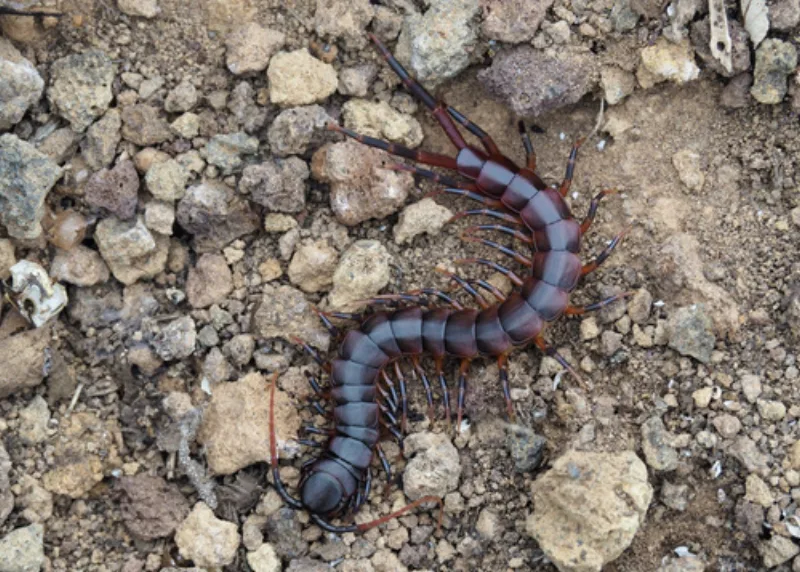
Centipede
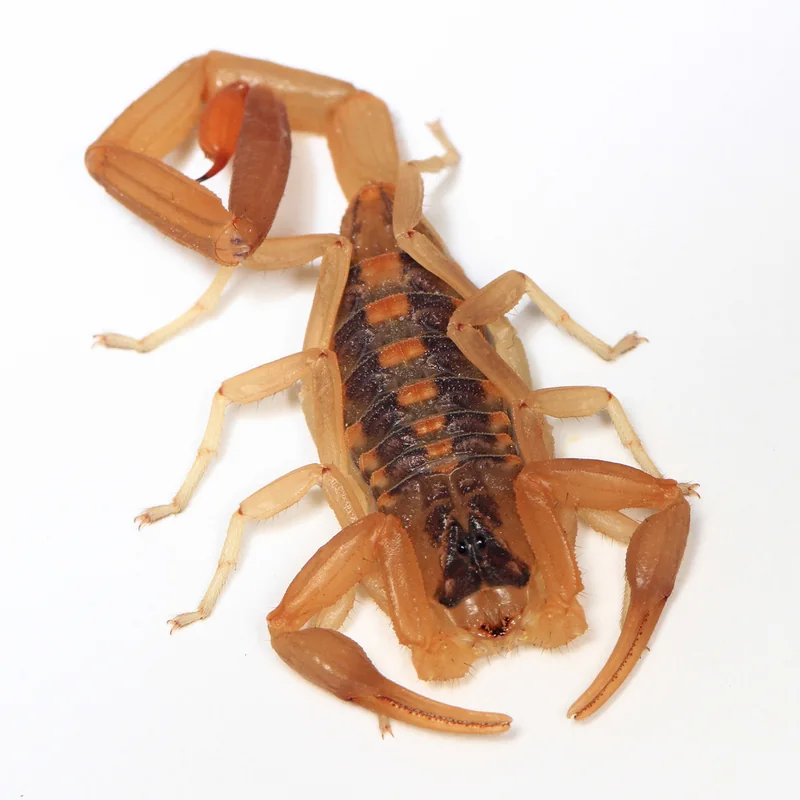
Scorpion
Side-by-Side Comparison Table
| Trait | Centipede | Scorpion |
|---|---|---|
| Scientific Group | Chilopoda | Scorpiones |
| Category | Myriapod | Arachnid |
| Typical Size | 25–180 mm | 25–120 mm |
| Danger Level | Nuisance | Medically Significant |
| Bites or Stings? | Yes | Yes |
| Peak US Months | April, May, June, October | April, May, August, September |
| Key ID Trait | Flattened, elongated segmented body with exactly ONE pair of legs per body segment | Eight legs with two large front pincers (pedipalps) |
Centipede vs. Scorpion: True Size Comparison
Side-by-Side Anatomy Blueprint
Compare body segments, antennae, leg count, and key markings directly before treating or removing either species.
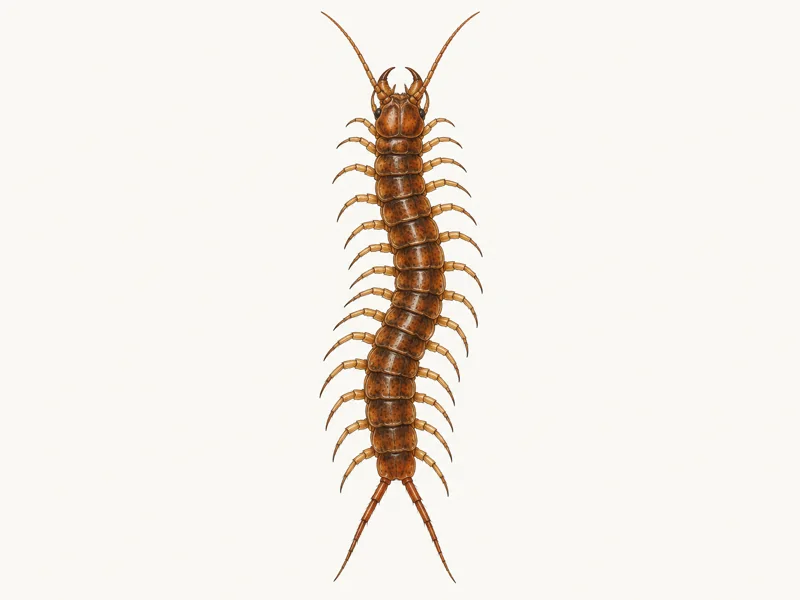
- Antennae & forcipules: Long segmented antennae and modified front venom claws (forcipules) behind the head.
- Flattened segments: Flat, flexible segmented trunk built for fast sprinting—never coils into a tight spiral.
- 1 leg pair / segment: EXACTLY ONE pair of legs extending outward per body segment (millipedes have two pairs).
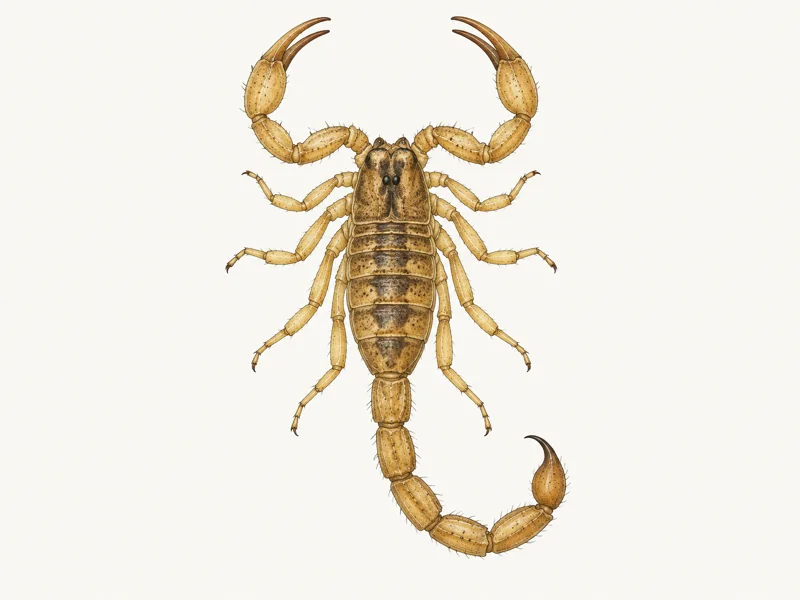
- Front pincers: Two large curved pedipalps (pincers) used to grasp prey—slender in bark scorpions.
- Segmented trunk: Compact cephalothorax fused to a 7-segmented mesosoma that fluoresces under UV blacklight.
- Eight walking legs: Four pairs of jointed walking legs attached cleanly behind the front pincers.
This centipede vs scorpion guide covers identification, US range, seasonal patterns, and safe control.
Key Physical Differences for Quick Identification
The difference between centipede and scorpion bodies is obvious once someone knows where to look. Both are arthropods and both hunt at night, but they belong to entirely separate groups. Centipedes are in the class Chilopoda, and scorpions are in the order Scorpiones.
Body Shape, Legs, and Tail Features
For centipede vs scorpion identification, three features settle it almost instantly:
- Legs: Centipedes have one pair of legs per body segment, often dozens of legs in total. Scorpions always have eight legs.
- Front end: Scorpions carry two large pincers (pedipalps) held forward like a crab's claws. Centipedes have antennae and no pincers.
- Tail: A scorpion's segmented tail curves up over its back and ends in a stinger. Centipedes have no stinger, though their last pair of legs can look tail-like.
- Size: Centipedes range from about 25 to 180 mm. Scorpions run roughly 25 to 120 mm.
Most centipedes have a flattened, elongated body. The common house centipede looks fuzzier because of its very long legs, but it still has one pair per segment.
Venom, Stings, and Bites Compared
Centipedes bite using modified front legs called forcipules. Their bites can sting like a bee and cause local swelling, yet they're generally rated a nuisance rather than a serious threat.
Scorpions sting with their tail, and they're medically significant. The Arizona bark scorpion can cause severe reactions, especially in children and older adults. After any scorpion sting, or a bite that causes spreading symptoms, people should call US Poison Control at 1-800-222-1222 and contact a doctor. Home remedies aren't a substitute for medical care.
Where Each Pest Lives Across US States
Centipedes live in every US state. The house centipede is a familiar basement resident from New England through the Midwest, and the Pacific Northwest has its share too. In the Southwest, the giant desert centipede can reach lengths that startle even experienced homeowners.
Scorpions have a narrower range. They're concentrated in the South and West, especially:
- Arizona, New Mexico, Nevada, and Southern California (home to the bark scorpion)
- Texas, Oklahoma, and Kansas (the striped bark scorpion is common here)
- Parts of the Southeast, where smaller species occur
So a homeowner in Ohio wondering "centipede or scorpion?" is almost certainly looking at a centipede. Someone in Phoenix has to consider both.
Seasonal Activity and Why They Enter Homes
Both pests are most active in the warm months, from late spring through early fall. Scorpions often surge during summer heat and after monsoon rains in the desert Southwest. Centipedes tend to move indoors in fall as outdoor conditions turn cold or dry.
They come inside for three main reasons:
- Moisture: Centipedes dry out quickly, so damp basements, crawl spaces, and bathrooms draw them in.
- Food: Both feed on insects such as crickets, cockroaches, and silverfish. A home with a bug problem gives them an easy meal.
- Shelter: Scorpions seek cool, dark cracks during the heat of the day, and wall voids and garages make good hiding spots.
Seeing either one regularly usually points to an underlying prey or moisture issue.
Safe Integrated Pest Management Strategies
Integrated Pest Management (IPM) starts with non-chemical steps, which often solve the problem on their own.
- Exclusion: Seal gaps around doors, windows, pipes, and utility lines. Install door sweeps and repair torn screens. Bark scorpions can squeeze through cracks about as thin as a credit card.
- Moisture control: Run a dehumidifier in basements, fix leaky plumbing, and keep gutters draining away from the foundation.
- Sanitation: Clear leaf litter, woodpiles, rocks, and debris from the edge of the house. Store firewood off the ground and away from walls.
- Prey reduction: Fewer insects inside means fewer hunters following them.
- Monitoring: Glue traps along baseboards show where activity is heaviest. In scorpion country, a UV flashlight at night makes them glow.
If an insecticide is needed, homeowners should always read and follow the EPA product label exactly. The label is the law, and it lists target pests, approved locations, and safety precautions.
When to Call a Pest Professional
A licensed pro is worth calling when:
- Scorpions show up indoors repeatedly, especially in homes with young children, pets, or older adults
- Centipede numbers stay high after moisture has been fixed
- The source of entry can't be found
- Treatment would involve attics, wall voids, or crawl spaces
A good technician will inspect first, rely on exclusion and habitat changes, and apply products only where they're truly needed. In the centipede vs scorpion question, that kind of targeted help matters most where scorpions are present.
Frequently Asked Questions
How do I tell the difference between a centipede and a scorpion?
Centipedes have one pair of legs per body segment and antennae at the front. Scorpions have eight legs, two large pincers, and a curved tail with a stinger. Centipedes are flattened and elongated; scorpions are compact. These key differences make identification straightforward once you know what to look for.
Are centipede and scorpion bites or stings dangerous?
Centipede bites rarely cause serious harm—they sting locally like a bee sting. Scorpion stings are medically significant; the Arizona bark scorpion can cause severe reactions in children and elderly people. For any spreading symptoms after a sting, call US Poison Control at 1-800-222-1222 immediately.
What states in the US have scorpions?
Scorpions are concentrated in the South and West, primarily Arizona, New Mexico, Nevada, Southern California, Texas, Oklahoma, and Kansas. The Southeast has smaller species. Centipedes, by contrast, live in every US state, so northern residents are almost certainly encountering centipedes.
Why do centipedes and scorpions enter homes?
Both pests enter homes seeking moisture, food (insects like crickets and cockroaches), and shelter. Centipedes are drawn to damp basements and bathrooms because they dry out quickly. Scorpions hide in cool, dark cracks during heat. Regular sightings suggest an underlying pest or moisture problem.
What's the best way to get rid of centipedes and scorpions?
Start with integrated pest management (IPM): seal cracks, fix plumbing leaks, remove debris, and reduce insect prey. These non-chemical steps often solve the problem alone. Use insecticides only as a last resort, following EPA labels exactly. Call a licensed pest professional if scorpions persist or infestations are severe.
When are centipedes and scorpions most active?
Both are most active from late spring through early fall in warm months. Scorpions surge during summer heat and after desert monsoons. Centipedes often move indoors in fall as outdoor conditions cool and dry out, making autumn a critical time for prevention.