Wasp vs Centipede: How to Tell Them Apart and Which Is Worse
Quick ID Verdict: A centipede is a flattened, elongated, many-legged creature with exactly one pair of legs per body segment, while a wasp is a slender, smooth, nearly hairless flying insect with a very narrow pinched waist. If it crawls on dozens of legs, it's a centipede; if it has wings, six legs, and a wasp waist, it's a wasp.
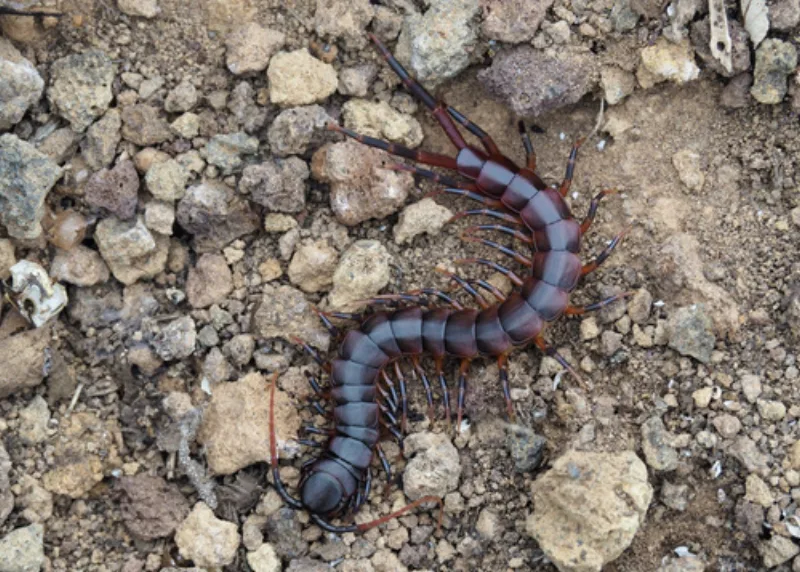
Centipede
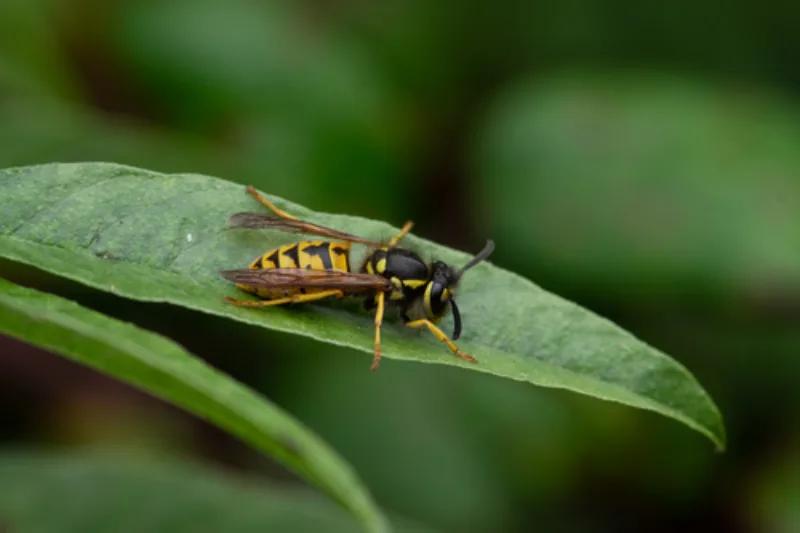
Wasp
Side-by-Side Comparison Table
| Trait | Centipede | Wasp |
|---|---|---|
| Scientific Group | Chilopoda | Vespidae |
| Category | Myriapod | Insect |
| Typical Size | 25–180 mm | 12–28 mm |
| Danger Level | Nuisance | Medically Significant |
| Bites or Stings? | Yes | Yes |
| Peak US Months | April, May, June, October | July, August, September, October |
| Key ID Trait | Flattened, elongated segmented body with exactly ONE pair of legs per body segment | Slender, smooth, nearly hairless body with a very narrow pinched waist |
Centipede vs. Wasp: True Size Comparison
Side-by-Side Anatomy Blueprint
Compare body segments, antennae, leg count, and key markings directly before treating or removing either species.
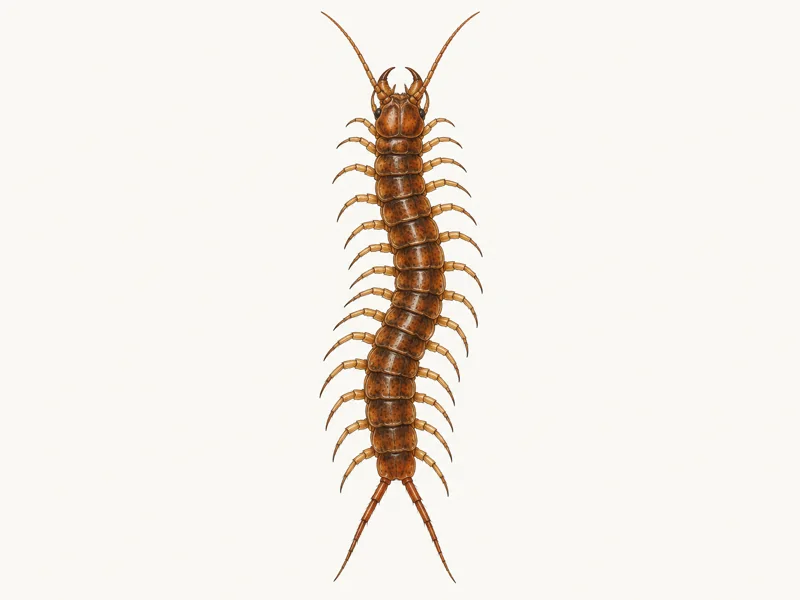
- Antennae & forcipules: Long segmented antennae and modified front venom claws (forcipules) behind the head.
- Flattened segments: Flat, flexible segmented trunk built for fast sprinting—never coils into a tight spiral.
- 1 leg pair / segment: EXACTLY ONE pair of legs extending outward per body segment (millipedes have two pairs).
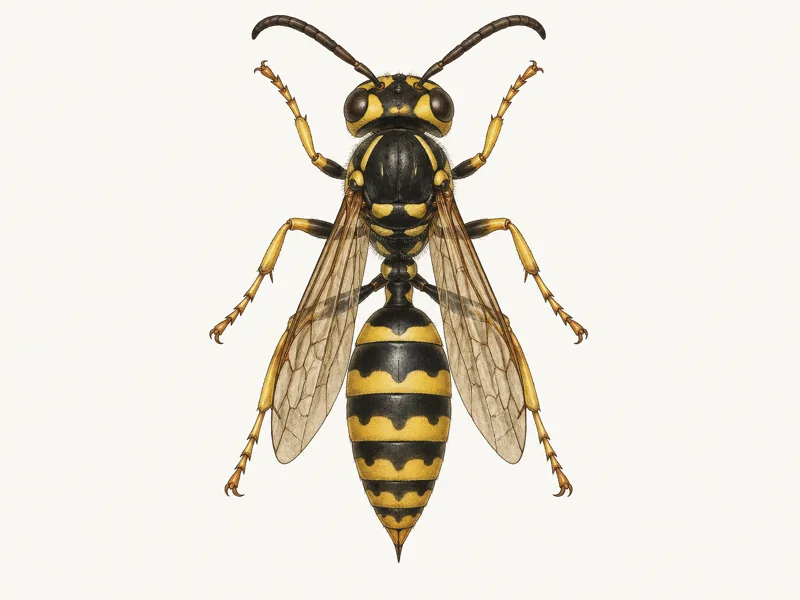
- Curved dark antennae: Segmented dark antennae and strong chewing mandibles for wood pulp nests.
- Smoky folded wings: Two pairs of narrow veined wings that fold lengthwise along the back at rest.
- Pinched waist: Sharp slender constriction separating the smooth hairless thorax from abdomen.
Quick Answer: A centipede is a flattened, elongated, many-legged creature with exactly one pair of legs per body segment, while a wasp is a slender, smooth, nearly hairless flying insect with a very narrow pinched waist. If it crawls on dozens of legs, it's a centipede; if it has wings, six legs, and a wasp waist, it's a wasp. Centipedes are a nuisance, but wasps are medically significant because their stings can trigger serious allergic reactions.
Key Visual & Physical Differences
The difference between centipede and wasp is easy to spot once you know what to look for. They belong to entirely different groups: centipedes are in the class Chilopoda, and the wasps covered here are in the family Vespidae, which includes yellowjackets, hornets, and paper wasps.
Body Shape and Size
- Centipedes (Chilopoda): 25-180 mm long, with a flattened, elongated, segmented body built for squeezing into cracks.
- Wasps (Vespidae): 12-28 mm long, with a slender, smooth, nearly hairless body divided into three parts and joined by a very narrow pinched waist.
Legs, Wings, and Antennae
- Centipedes: Exactly one pair of legs per body segment, giving them anywhere from a few dozen to many legs. They have no wings and carry long antennae.
- Wasps: Six legs, two pairs of wings, and shorter, often bent antennae. Many show bright yellow-and-black or reddish-brown patterns.
Movement
For quick centipede vs wasp identification, watch how it moves. Centipedes race across floors in a rippling, wave-like motion and vanish under objects. Wasps fly, hover around eaves and food, and walk slowly on surfaces when landing.
Behavior, Habitat & Danger Comparison
These two pests live very different lives, which affects where homeowners meet them and how risky those encounters are.
Centipedes: Moist, Hidden Hunters
Centipedes are nocturnal predators that hunt spiders, silverfish, cockroaches, and other small pests. Indoors, they favor damp basements, bathrooms, crawl spaces, and laundry rooms. Outdoors, they shelter under mulch, stones, leaf litter, and logs.
Centipedes are classified as a nuisance. They can pinch with venomous claws called forcipules, but they rarely bite people unless handled or trapped against skin. A bite from a larger species may cause localized pain and swelling.
Wasps: Social Defenders
Vespid wasps build paper nests under eaves, in shrubs, attic vents, wall voids, or underground burrows. Colonies grow through summer and become most defensive in late summer and early fall, when workers forage aggressively for sugars.
Wasps are medically significant. Unlike honey bees, they can sting repeatedly, and disturbing a nest can provoke a group attack. Stings can cause allergic reactions, including anaphylaxis in sensitive people.
If Someone Is Stung or Bitten
For any sting or bite with spreading swelling, trouble breathing, dizziness, or facial swelling, call 911 immediately. For guidance on non-emergency stings or bites, contact US Poison Control at 1-800-222-1222 and follow up with a doctor. Avoid home venom remedies.
Which One Is Worse for Homeowners?
When deciding whether a centipede or wasp is the bigger problem, wasps clearly pose the greater health risk. A single nest near a door, deck, or play area can lead to multiple stings, and allergic reactions can be life-threatening. Centipedes are unsettling to see but are mostly harmless and even help control other household pests.
Non-Chemical IPM for Centipedes
- Run a dehumidifier in basements and crawl spaces to reduce moisture.
- Fix leaky pipes, faucets, and gutters.
- Seal cracks, gaps around pipes, and door sweeps.
- Move mulch, firewood, and debris away from the foundation.
- Reduce prey insects, which also reduces centipedes.
Non-Chemical IPM for Wasps
- Keep trash cans tightly lidded and clean up sugary spills outdoors.
- Screen attic vents, soffits, and chimney openings.
- Inspect eaves in spring and knock down small, early nests while inactive.
- Cover drinks and food during outdoor meals.
If chemical control becomes necessary, choose a product labeled for the specific pest and always follow the EPA product label exactly. For large, hidden, or ground nests, or anyone with a known sting allergy, hire a licensed pest management professional rather than treating it yourself.
Frequently Asked Questions
Can a centipede sting like a wasp?
No. Centipedes don't sting; they bite with venomous front claws. Wasps sting with a stinger at the tip of the abdomen and can sting repeatedly.
Do centipedes or wasps fly?
Only wasps fly. Centipedes have no wings and move by running on their many legs, one pair per body segment.
Why are centipedes in my house?
Centipedes come indoors seeking moisture and prey. Damp basements, bathrooms, and an existing population of small insects attract them.
Should homeowners remove a wasp nest themselves?
Small, inactive nests can sometimes be knocked down carefully. Large, active, or hidden nests, or any situation involving a sting allergy, should be handled by a licensed professional.