Centipedes in New Mexico: Identification, Season, and Prevention Guide
Quick Answer: Yes, centipedes are common in New Mexico, with 953 verified GBIF sightings concentrated in Bernalillo, Doña Ana, Santa Fe, Eddy, and Sierra counties. Activity peaks from July through October, when summer monsoons bring moisture and insect prey.
When Centipedes Are Most Active in New Mexico
Now (November): Lower Outdoor ActivityVerified New Mexico Counties, Species & US Range
Counties with Verified Observations
- Bernalillo
- Dona Ana
- Santa Fe
- Eddy
- Sierra
- Sandoval
- Curry
- Taos
- Colfax
- Chaves
Species Recorded in New Mexico
| Species | Scientific Name | GBIF Records |
|---|---|---|
| Common Desert Centipede | Scolopendra polymorpha | 459 |
| Blue-tailed Centipede | Scolopendra heros | 129 |
| House Centipede | Scutigera coleoptrata | 74 |
How New Mexico Compares to Neighboring States
Note: Wildlife does not follow state or county lines. GBIF totals reflect verified citizen and museum records, so low counts in a neighboring county do not guarantee absence.
How to Identify Centipedes
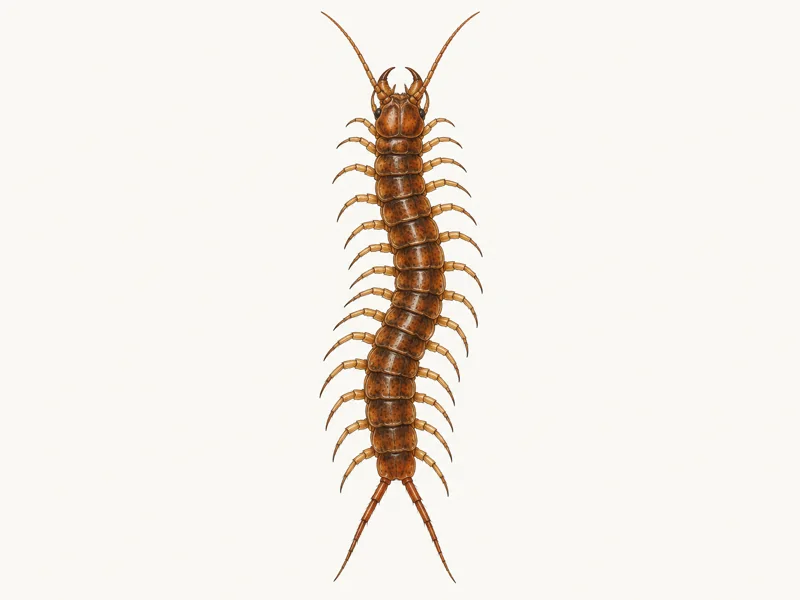
Annotated Anatomy Key (Centipede)
- Antennae & forcipules: Long segmented antennae and modified front venom claws (forcipules) behind the head.
- Flattened segments: Flat, flexible segmented trunk built for fast sprinting—never coils into a tight spiral.
- 1 leg pair / segment: EXACTLY ONE pair of legs extending outward per body segment (millipedes have two pairs).
- Trailing rear legs: Elongated sensory rear leg pair projecting backward like antennae to confuse predators.
Centipedes Field Checklist
- Flattened, elongated segmented body with exactly ONE pair of legs per body segment
- Long antennae and modified front venom claws (forcipules) used to subdue insect prey
- Moves very rapidly when exposed to light
- Large desert species (Scolopendra) deliver painful pinches; smaller garden centipedes are harmless
Centipedes Size at True Relative Scale
Quick Answer: Yes, centipedes are common in New Mexico, with 953 verified GBIF sightings concentrated in Bernalillo, Doña Ana, Santa Fe, Eddy, and Sierra counties. Activity peaks from July through October, when summer monsoons bring moisture and insect prey. Most encounters involve the Common Desert Centipede, the Blue-tailed Centipede, or the indoor House Centipede, and all are considered a nuisance rather than a serious threat.
Where Centipedes Live in New Mexico
People often ask whether there are centipedes in New Mexico's dry climate. There are, and plenty of them. These predators belong to the class Chilopoda. They survive the high desert by sheltering in cool, humid microhabitats during the day and hunting insects, spiders, and other small arthropods at night.
GBIF occurrence records show the most sightings in these counties:
- Bernalillo County: The Albuquerque metro area, where irrigated yards and foundations hold moisture
- Doña Ana County: Las Cruces and the Mesilla Valley's warm desert lowlands
- Santa Fe County: Higher-elevation neighborhoods with rock walls and mulched beds
- Eddy County: Carlsbad and the Chihuahuan Desert southeast
- Sierra County: Truth or Consequences and surrounding rangeland
New Mexico Centipede Identification
Three recorded species make up most local sightings:
- Common Desert Centipede (Scolopendra polymorpha): Usually 4 to 7 inches long, tan to orange, often with dark bands across each segment. It is found under rocks, logs, and landscape debris.
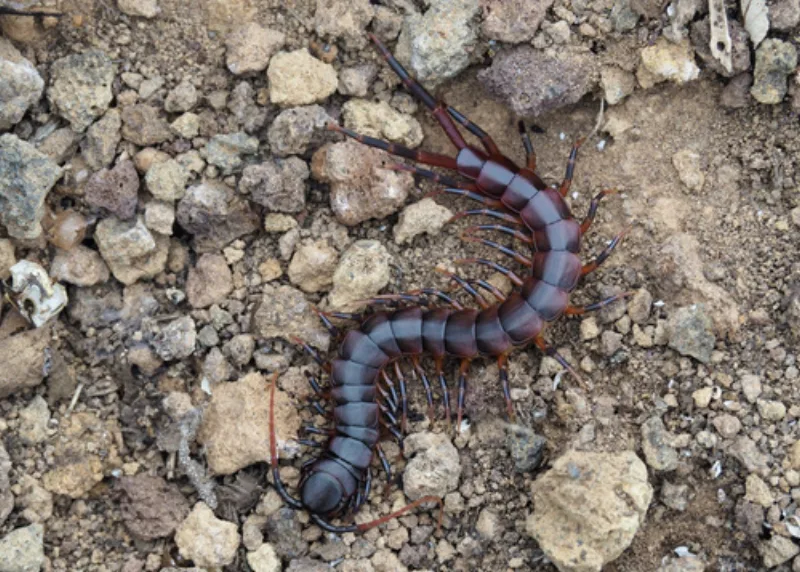
- Blue-tailed Centipede (Scolopendra heros): Also called the giant desert centipede, it can exceed 6 inches. It often has a reddish or black head, banded body segments, and dark bluish rear legs. Its size is striking, but it avoids people when left alone.
- House Centipede (Scutigera coleoptrata): About 1 to 1.5 inches long with 15 pairs of very long legs. It is grayish-yellow with dark stripes and moves fast across walls, basements, and bathrooms.
Each centipede has one pair of legs per body segment and a pair of venomous forcipules near the head that it uses to subdue prey. Large Scolopendra species can deliver a painful bite if handled. Anyone bitten who has severe swelling, an allergic reaction, or worsening symptoms should call US Poison Control at 1-800-222-1222 or contact a doctor.
When Centipedes Are Most Active in New Mexico
New Mexico centipede season peaks in July, August, September, and October, according to GBIF records. This lines up with the summer monsoon. Rain raises soil humidity, triggers insect activity, and pushes centipedes out of their burrows to hunt and disperse.
After heavy storms, homeowners often find large desert centipedes on patios, in garages, or in swimming pools. As nights cool in late fall, centipedes look for sheltered spots, and some wander indoors. During cool mountain winters and dry spring months, outdoor activity drops sharply. House centipedes can stay active indoors all year wherever moisture persists.
Look-Alikes Frequently Mistaken for Centipedes
Several common New Mexico pests get confused with centipedes. A quick look at body shape and legs usually settles it.
- House Centipedes: These are true centipedes, but their feathery long legs and small size lead many people to mistake them for spiders or a separate type of pest.
- Millipedes: Rounded, slow-moving bodies with two pairs of short legs per segment. They curl up when disturbed, eat decaying plant matter, and do not bite.
- Silverfish: Wingless, carrot-shaped insects with only six legs and three tail bristles. They have a silvery, scaly sheen and favor bathrooms and stored paper.
- Earwigs: Six-legged insects with pincer-like cerci at the rear. They are often found in damp mulch and under pots.
How to Keep Centipedes Out of Your New Mexico Home
Integrated Pest Management (IPM) guidance from university cooperative extension programs stresses non-chemical steps first. Centipedes follow moisture and prey, so removing both is the best way to prevent centipedes in New Mexico homes.
Exclusion
- Seal cracks in foundations, slab edges, and stucco with caulk or mortar.
- Install door sweeps and repair torn window and vent screens.
- Close gaps around plumbing, swamp cooler lines, and utility entries.
Moisture Control
- Fix leaky faucets, swamp coolers, and irrigation lines.
- Run dehumidifiers or exhaust fans in basements and bathrooms.
- Grade soil and direct monsoon runoff away from the foundation.
Sanitation and Yard Care
- Move rock piles, firewood, boards, and debris away from exterior walls.
- Keep a dry, gravel-only strip next to the foundation instead of thick mulch.
- Reduce indoor insect prey by sealing food and controlling other pests.
- Use sticky traps near entry points to monitor activity.
To remove a single centipede, trap it under a jar and release it outdoors. Do not handle large species bare-handed. If treatment is needed, use only registered products and always follow the EPA product label for application sites, rates, and safety precautions.
When to Call a Licensed New Mexico Pest Professional
- You see centipedes indoors repeatedly, even after sealing and drying the home.
- Large Scolopendra centipedes appear in bedrooms, nurseries, or near pets.
- You notice signs of an underlying insect infestation that is feeding them.
- Moisture problems in crawl spaces or walls need inspection.
IPM Prevention Checklist for New Mexico Homes
- Run a dehumidifier in damp basements and fix foundation moisture leaks
- Pull mulch, firewood, and compost piles back at least 12–18 inches from foundation walls
- Seal exterior cracks and install tight door sweeps
 EXCLUSION BLUEPRINT
Inspect eaves, screens, door sweeps, foundation cracks, and utility penetrations around New Mexico homes before peak season.
Centipedes in New Mexico: Frequently Asked Questions
Are centipedes in New Mexico dangerous?
They are rated a nuisance. Large desert species can give a painful bite if handled. For severe reactions, call Poison Control at 1-800-222-1222 or see a doctor.
Why do I see more centipedes after monsoon rains?
Monsoon moisture floods burrows and boosts insect prey, so centipedes become more active and visible from July through October.
What is the biggest centipede in New Mexico?
The Blue-tailed Centipede (Scolopendra heros) is the largest recorded species and can grow longer than 6 inches.
Are house centipedes harmful to keep around?
House centipedes rarely bite and eat other household pests. Large numbers, however, usually point to a moisture or insect problem worth fixing.
Sources & Verification
- Texas A&M AgriLife Extension — Centipedes
- Penn State Extension — Centipedes and Millipedes
- GBIF Global Biodiversity Occurrence Records
Data refreshed · Editorial & GBIF Methodology