Hornet vs Centipede: How to Tell Them Apart and Which Is Worse
Quick ID Verdict: A centipede is a flattened, elongated, many-segmented arthropod with exactly one pair of legs per body segment, while a hornet is a stout, winged insect with six legs and a narrow waist. If it crawls on dozens of legs, it's a centipede. If it flies and looks noticeably bigger and bulkier than a yellow jacket, it's a hornet.
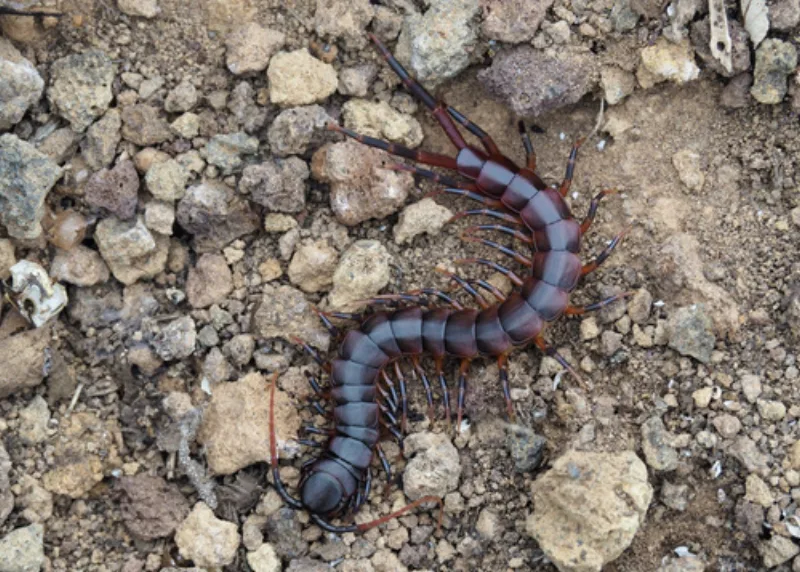
Centipede
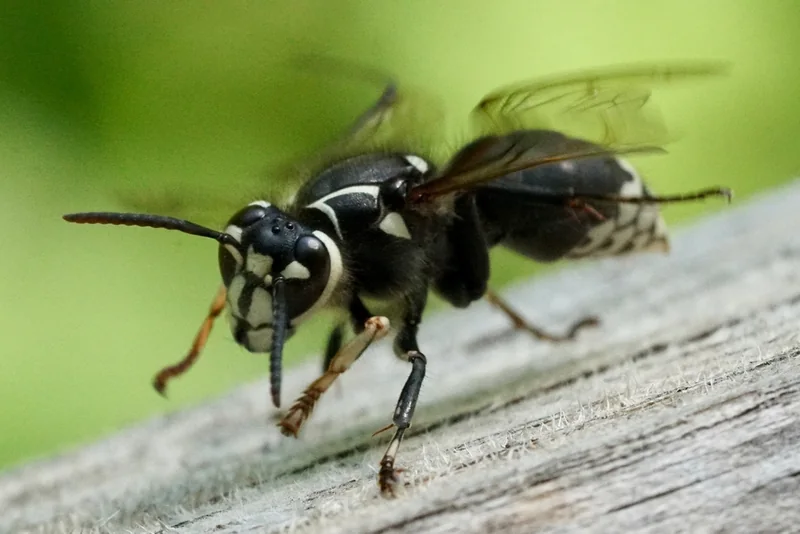
Hornet
Side-by-Side Comparison Table
| Trait | Centipede | Hornet |
|---|---|---|
| Scientific Group | Chilopoda | Vespa & Dolichovespula maculata |
| Category | Myriapod | Insect |
| Typical Size | 25–180 mm | 18–35 mm |
| Danger Level | Nuisance | Medically Significant |
| Bites or Stings? | Yes | Yes |
| Peak US Months | April, May, June, October | August, September, October |
| Key ID Trait | Flattened, elongated segmented body with exactly ONE pair of legs per body segment | Notably larger and stouter than typical yellow jackets or paper wasps |
Centipede vs. Hornet: True Size Comparison
Side-by-Side Anatomy Blueprint
Compare body segments, antennae, leg count, and key markings directly before treating or removing either species.
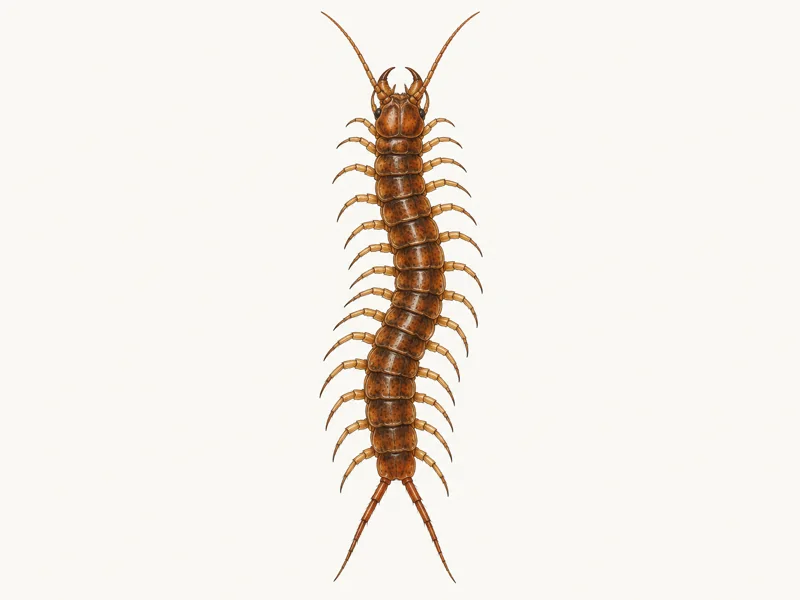
- Antennae & forcipules: Long segmented antennae and modified front venom claws (forcipules) behind the head.
- Flattened segments: Flat, flexible segmented trunk built for fast sprinting—never coils into a tight spiral.
- 1 leg pair / segment: EXACTLY ONE pair of legs extending outward per body segment (millipedes have two pairs).
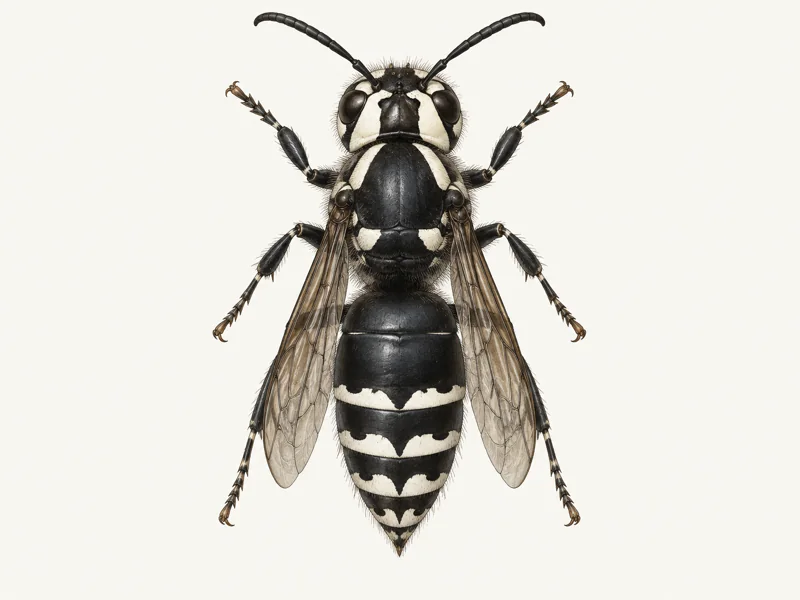
- Ivory-white face: Bold creamy-white face and thorax-side markings distinguish it from yellow jackets.
- Stout black thorax: Heavy-bodied glossy jet-black aerial wasp measuring 15–20 mm.
- Smoky veined wings: Dark-veined translucent wings powering rapid defense around aerial paper nests.
Quick Answer: A centipede is a flattened, elongated, many-segmented arthropod with exactly one pair of legs per body segment, while a hornet is a stout, winged insect with six legs and a narrow waist. If it crawls on dozens of legs, it's a centipede. If it flies and looks noticeably bigger and bulkier than a yellow jacket, it's a hornet.
Quick ID Verdict: Centipede or Hornet in 3 Seconds
Count the legs and look for wings. Centipedes (class Chilopoda) have no wings and many legs, one pair per segment, along a long, flat body. Hornets (genus Vespa and the bald-faced hornet, Dolichovespula maculata) have wings, six legs, and a thick, robust body.
Key Visual & Physical Differences
The two pests belong to entirely different groups. Hornets are true insects, while centipedes are arthropods in their own class. That shows up immediately in body shape, size, and movement.
Centipede Identification
- Size: 25-180 mm long, depending on species.
- Body: Flattened, elongated, and clearly segmented.
- Legs: Exactly one pair of legs per body segment, the most reliable ID feature.
- Wings: None.
- Movement: Fast, darting runs across floors and walls.
Hornet Identification
- Size: 18-35 mm long.
- Body: Notably larger and stouter than typical yellow jackets or paper wasps.
- Legs: Six, like all insects.
- Wings: Two pairs, used for strong, direct flight.
- Coloring: Bald-faced hornets are black with white facial markings; Vespa species often show brown, yellow, or orange tones.
For quick centipede vs hornet identification, remember that body length overlaps only slightly. A large centipede can far exceed any hornet in length, but it will never have wings.
Behavior, Habitat & Danger Comparison
Where They Live
Centipedes favor damp, dark places such as basements, crawl spaces, bathrooms, leaf litter, and mulch beds. They hunt at night for small insects and spiders, which means a centipede indoors often points to a moisture problem or another pest population.
Hornets are social insects that build papery nests. Bald-faced hornets typically hang football-shaped nests in trees, shrubs, or under eaves. Vespa species often nest in hollow trees, wall voids, attics, or sheds.
Danger Level
The biggest difference between centipede and hornet risk is danger rating. Centipedes are classified as a nuisance. Larger species can bite if handled, but they rarely interact with people and generally avoid confrontation.
Hornets are medically significant. They defend their nests aggressively and can sting repeatedly. Stings are painful and can trigger serious allergic reactions in sensitive people. If someone is stung and shows unusual symptoms, call US Poison Control at 1-800-222-1222 or seek medical care right away. Call 911 for trouble breathing, facial swelling, or dizziness.
Which One Is Worse for Homeowners?
Hornets pose the greater threat. A single nest near a doorway, deck, or play area can lead to multiple stings, especially when mowing, trimming hedges, or doing yard work. Centipedes are unsettling to find but cause little real harm.
Managing Centipedes
Start with non-chemical Integrated Pest Management (IPM). Because centipedes depend on moisture and prey, changing their environment usually solves the problem.
- Run a dehumidifier in basements and crawl spaces.
- Fix leaky pipes and improve drainage near the foundation.
- Seal cracks, gaps under doors, and utility openings.
- Move mulch, firewood, and debris away from the house.
- Reduce other indoor insects that centipedes eat.
Managing Hornets
Prevention matters most. Seal gaps in eaves, soffits, and siding in early spring, and keep trash and sweet drinks covered outdoors. For active nests, especially large ones or those inside walls, hire a licensed pest professional rather than attempting removal yourself.
If any pesticide is used for either pest, read and follow the EPA product label exactly. The label is the law and covers safe application, protective gear, and site restrictions.
Frequently Asked Questions
Can a centipede sting like a hornet?
No. Centipedes do not sting. They have modified front legs that can deliver a bite, while hornets sting with a stinger at the tip of the abdomen.
Are hornets bigger than centipedes?
Not always. Hornets range from 18-35 mm, while centipedes range from 25-180 mm. Hornets look bulkier, but large centipedes can be much longer.
Why do I find centipedes indoors?
Centipedes are drawn to damp areas and to the small insects they hunt. Reducing humidity and sealing entry points usually makes your home far less appealing.
Should I remove a hornet nest myself?
It's safer to call a licensed professional. Hornets are medically significant and defend nests aggressively, so DIY removal can lead to multiple stings.