Centipedes in Iowa: Identification, Season, and Prevention Guide
Quick Answer: Yes, there are centipedes in Iowa, and they are common across the state, with 136 verified GBIF sightings concentrated in Johnson, Polk, Linn, Boone, and Dubuque counties. They are nuisance pests rather than a health threat, and most indoor problems trace back to excess moisture. Activity peaks in April, June, September, and October.
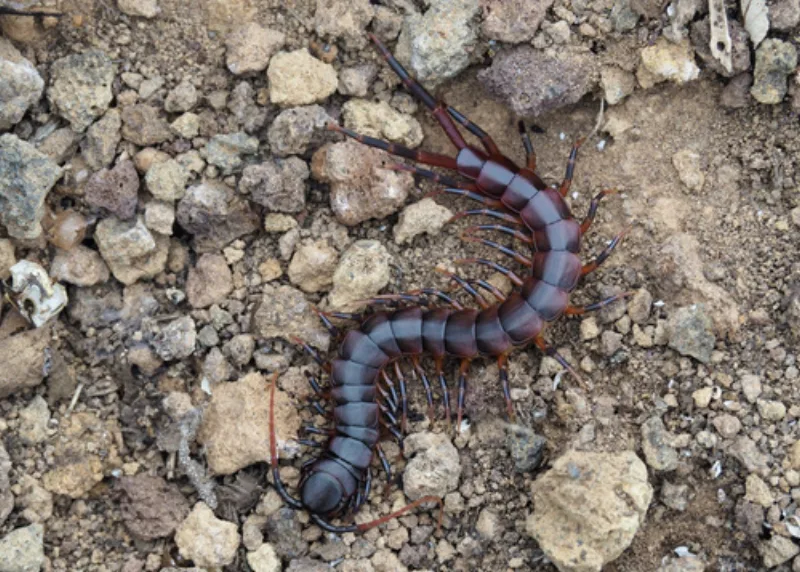
When Centipedes Are Most Active in Iowa
Now (November): Lower Outdoor ActivityVerified Iowa Counties, Species & US Range
Counties with Verified Observations
- Johnson
- Polk
- Linn
- Boone
- Dubuque
- Story
- Woodbury
- Scott
- Mills
- Poweshiek
Species Recorded in Iowa
| Species | Scientific Name | GBIF Records |
|---|---|---|
| House Centipede | Scutigera coleoptrata | 80 |
| Japanese House Centipede | Thereuonema tuberculata | 15 |
| Centipede | Lithobius forficatus | 11 |
How Iowa Compares to Neighboring States
Note: Wildlife does not follow state or county lines. GBIF totals reflect verified citizen and museum records, so low counts in a neighboring county do not guarantee absence.
How to Identify Centipedes
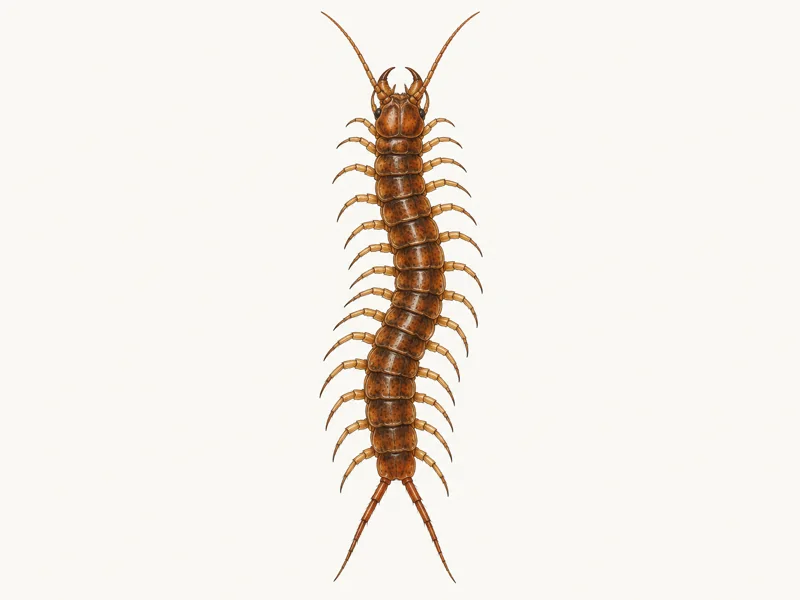
Annotated Anatomy Key (Centipede)
- Antennae & forcipules: Long segmented antennae and modified front venom claws (forcipules) behind the head.
- Flattened segments: Flat, flexible segmented trunk built for fast sprinting—never coils into a tight spiral.
- 1 leg pair / segment: EXACTLY ONE pair of legs extending outward per body segment (millipedes have two pairs).
- Trailing rear legs: Elongated sensory rear leg pair projecting backward like antennae to confuse predators.
Centipedes Field Checklist
- Flattened, elongated segmented body with exactly ONE pair of legs per body segment
- Long antennae and modified front venom claws (forcipules) used to subdue insect prey
- Moves very rapidly when exposed to light
- Large desert species (Scolopendra) deliver painful pinches; smaller garden centipedes are harmless
Centipedes Size at True Relative Scale
Where Centipedes Live in Iowa
Iowa's humid continental prairie climate, with warm summers and frigid winters across USDA zones 4b to 6a, shapes where centipedes settle. Outdoors they shelter under leaf litter, mulch, landscape timbers, stones, and firewood piles. When soil dries out in late summer or temperatures drop in fall, many move toward the damp, stable conditions found in basements and crawl spaces.
GBIF occurrence records for Iowa include three species worth knowing for Iowa centipede identification:
- House Centipede (Scutigera coleoptrata): Grayish-yellow body with dark stripes and 15 pairs of very long legs. This is the fast, feathery-looking centipede most Iowans spot indoors.
- Japanese House Centipede (Thereuonema tuberculata): A close relative of the house centipede with a similar long-legged build. It also favors damp, sheltered spots near structures.
- Stone Centipede (Lithobius forficatus): Shorter, flattened, and reddish-brown with stockier legs. It usually lives outdoors under rocks and debris but can wander into ground-level rooms.
Sightings cluster in more populated counties such as Johnson, Polk, and Linn. That pattern likely reflects where people are observing and reporting rather than a strict limit on range, so homeowners statewide should expect to encounter them.
When Centipedes Are Most Active in Iowa
Iowa centipede season follows a two-peak pattern. Verified records show the highest activity in April, June, September, and October, which line up with spring warming and the fall cooldown.
- April: Centipedes become active as soils thaw and insect prey returns.
- June: Warm, humid weather supports feeding and reproduction outdoors.
- September and October: Cooling nights push centipedes toward foundations and indoor shelter.
House centipedes can stay active indoors through winter in heated, humid basements. Since they hunt at night, a sighting at the sink or on a basement wall often means more are hiding nearby.
Look-Alikes Frequently Mistaken for Centipedes
Several common Iowa household pests get confused with centipedes. Telling them apart helps homeowners choose the right control approach.
- House Centipedes: Often reported as a separate pest, but they are true centipedes. Their extremely long legs and quick bursts of speed set them apart from other centipedes.
- Millipedes: Rounded, slow-moving bodies with two pairs of legs per segment. They tend to curl into a coil when disturbed and feed on decaying plant matter rather than hunting.
- Silverfish: Carrot-shaped, wingless, and covered in silvery scales, with three tail filaments. They have only six legs and feed on starches like paper and glue.
- Earwigs: Six-legged insects with obvious pincers (cerci) at the rear. They often share damp habitats with centipedes but look quite different up close.
A simple rule: centipedes have one pair of legs per body segment and move quickly, while millipedes have two pairs and move slowly.
How to Keep Centipedes Out of Your Iowa Home
Knowing how to prevent centipedes in Iowa starts with Integrated Pest Management (IPM). University cooperative extension guidance consistently emphasizes moisture control, exclusion, and sanitation before any chemical treatment.
Control Moisture
- Run a dehumidifier in basements and aim to keep relative humidity below 50 percent.
- Repair leaky pipes, faucets, and sump pump discharge lines.
- Make sure gutters and downspouts carry water well away from the foundation.
Seal Entry Points
- Caulk cracks in foundations and around utility penetrations.
- Install door sweeps and replace worn weatherstripping.
- Screen floor drains, crawl space vents, and window wells.
Reduce Shelter and Food
- Keep mulch, leaves, and stones pulled back several inches from the foundation.
- Store firewood off the ground and away from the house.
- Clear basement clutter and use sticky traps to monitor activity and catch the insects centipedes hunt.
If chemical control becomes necessary, use products labeled for centipedes as targeted perimeter or crack-and-crevice treatments. Always read and follow EPA product labels exactly.
When to Call a Licensed Iowa Pest Professional
- Centipedes appear daily or in multiple rooms despite moisture control.
- Large numbers of prey insects, such as silverfish or cockroaches, are present.
- Persistent dampness suggests a hidden leak or foundation drainage issue.
- Someone in the home is uncomfortable applying treatments or has health concerns.
IPM Prevention Checklist for Iowa Homes
- Run a dehumidifier in damp basements and fix foundation moisture leaks
- Pull mulch, firewood, and compost piles back at least 12–18 inches from foundation walls
- Seal exterior cracks and install tight door sweeps
 EXCLUSION BLUEPRINT
Inspect eaves, screens, door sweeps, foundation cracks, and utility penetrations around Iowa homes before peak season.
Centipedes in Iowa: Frequently Asked Questions
Are there centipedes in Iowa?
Yes. Centipedes are common in Iowa, with 136 verified GBIF sightings and species including the House Centipede, Japanese House Centipede, and the stone centipede Lithobius forficatus.
Are Iowa centipedes dangerous?
They are considered nuisance pests. A house centipede can occasionally bite if handled, typically causing mild, short-lived discomfort. For any severe reaction, contact US Poison Control at 1-800-222-1222 or a doctor.
Why do I see centipedes in my basement?
Basements offer the humidity and insect prey centipedes need. Reducing moisture and sealing cracks usually lowers sightings significantly.
What month are centipedes worst in Iowa?
Activity peaks in April, June, September, and October, with fall bringing the most indoor encounters as centipedes seek shelter.
Sources & Verification
- Texas A&M AgriLife Extension — Centipedes
- Penn State Extension — Centipedes and Millipedes
- GBIF Global Biodiversity Occurrence Records
Data refreshed · Editorial & GBIF Methodology