Centipede vs House Centipede: How to Tell Them Apart and What It Means for Your Home
Quick ID Verdict: A fast-moving, many-legged creature darts across the bathroom floor, and the first question is simple: what was that? Here's the 3-second answer. If it's yellowish-gray with three dark stripes running down its back and long, spidery legs fringing its body, it's a house centipede. If it's flattened, darker, and close to the ground, with one short pair of legs per segment, it's one of the many other centipedes. This centipede vs house centipede guide explains the details and what each one means for a home.
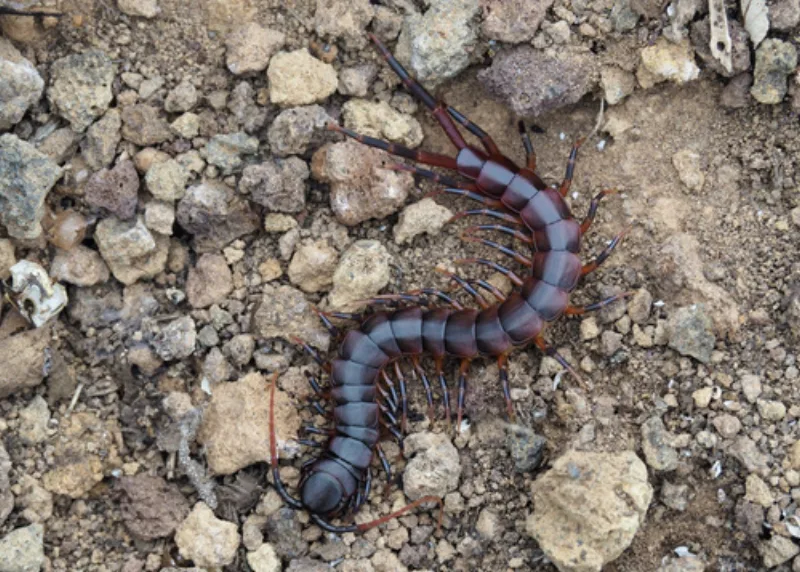
Centipede
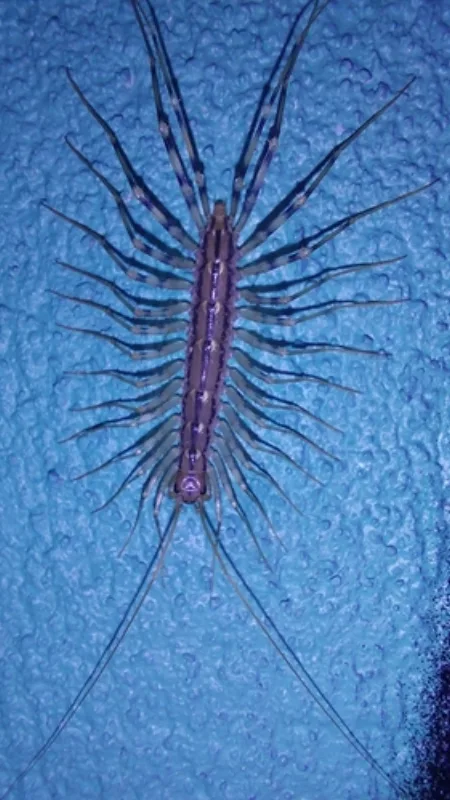
House Centipede
Side-by-Side Comparison Table
| Trait | Centipede | House Centipede |
|---|---|---|
| Scientific Group | Chilopoda | Scutigera coleoptrata |
| Category | Myriapod | Myriapod |
| Typical Size | 25–180 mm | 25–40 mm |
| Danger Level | Nuisance | None |
| Bites or Stings? | Yes | No |
| Peak US Months | April, May, June, October | May, July, September, October |
| Key ID Trait | Flattened, elongated segmented body with exactly ONE pair of legs per body segment | Yellowish-gray body with three dark lengthwise stripes |
Centipede vs. House Centipede: True Size Comparison
Side-by-Side Anatomy Blueprint
Compare body segments, antennae, leg count, and key markings directly before treating or removing either species.
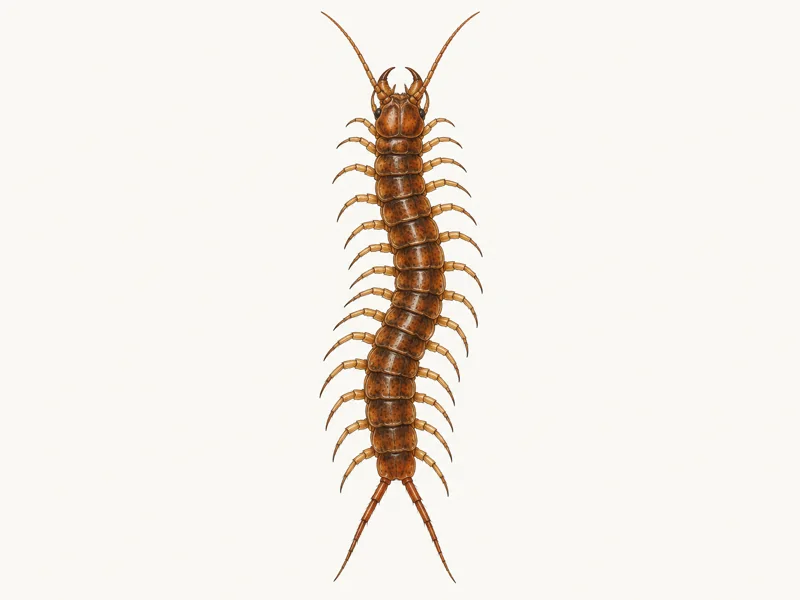
- Antennae & forcipules: Long segmented antennae and modified front venom claws (forcipules) behind the head.
- Flattened segments: Flat, flexible segmented trunk built for fast sprinting—never coils into a tight spiral.
- 1 leg pair / segment: EXACTLY ONE pair of legs extending outward per body segment (millipedes have two pairs).
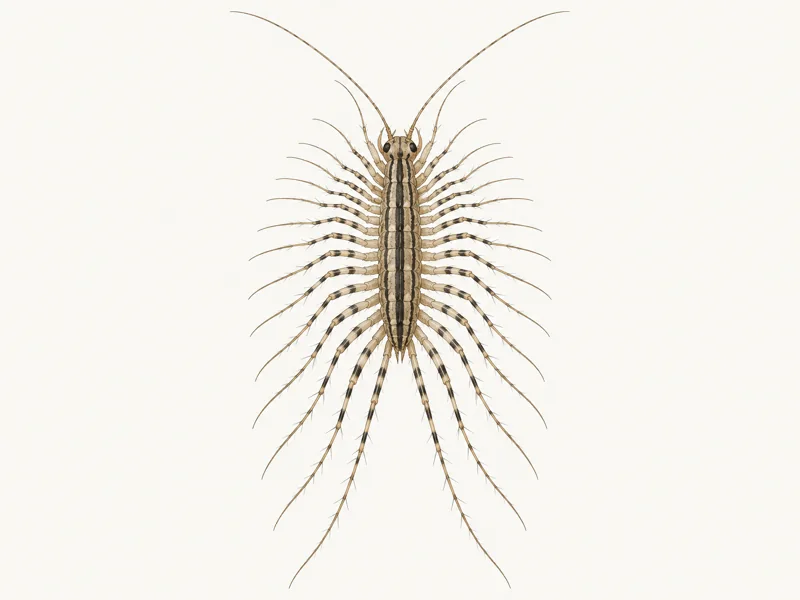
- Sweeping front antennae: Extraordinarily long hair-thin antennae detect silverfish, roaches, and spiders.
- Three dark dorsal stripes: Compact yellowish-gray 25–38 mm trunk striped lengthwise in three dark bands.
- 15 pairs of wispy legs: Delicate, banded, spider-like legs fan symmetrically outward for lightning speed.
Are House Centipedes Really Centipedes?
Yes. Every centipede belongs to the class Chilopoda, and the house centipede, Scutigera coleoptrata, is one member of that group. So the real difference between centipede and house centipede is the difference between a whole category and one well-known species within it.
That distinction matters. Chilopoda includes thousands of species, from tiny soil dwellers to desert giants. The house centipede is simply the one most likely to move indoors and stay there, which is why homeowners treat it as its own category.
Key Physical Differences for Quick Identification
Good centipede vs house centipede identification comes down to a few features that can be spotted without a magnifying glass. Here's what to check.
Legs, Body Shape, and Size
Typical centipedes have a flattened, elongated, segmented body with exactly one pair of legs per body segment. The legs are fairly short and splay out to the sides, giving the animal a low, ground-hugging profile.
House centipedes look different at a glance. Their 15 pairs of legs are extremely long and thin, so the body seems suspended inside a fringe of legs.
- Centipedes (Chilopoda): 25–180 mm long, depending on species
- House centipedes: 25–40 mm body length, though the legs and antennae make them look larger
Anything longer than about 40 mm, especially in the Southwest, is not a house centipede.
Color, Markings, and Speed
The house centipede's giveaway is a yellowish-gray body with three dark lengthwise stripes. Its legs often show faint dark banding too.
Other centipedes range from reddish-brown to orange, tan, or nearly black, and they lack those three stripes. Some desert species are boldly colored, but none match the house centipede's pattern.
Speed is another clue. House centipedes sprint across walls and ceilings with startling quickness. Most other centipedes move fast too, but they stay on floors and under debris rather than climbing vertical surfaces.
Frequently Asked Questions
What is the main difference between a centipede and a house centipede?
The key difference is that house centipedes are a specific species (Scutigera coleoptrata) within the broader centipede class. House centipedes have 15 pairs of extremely long, thin legs and a yellowish-gray body with three dark stripes, while typical centipedes are flattened, have shorter legs, and lack these distinctive markings.
How can I identify a house centipede in my home?
Look for a yellowish-gray body with three dark lengthwise stripes, extremely long and spidery legs fringing the body, and a body length of 25–40 mm. House centipedes are also distinguishable by their surprising speed on walls and ceilings, which typical centipedes rarely do.
Are house centipedes actually centipedes?
Yes, house centipedes are true centipedes. They belong to the class Chilopoda, the same scientific classification as all other centipede species. The house centipede is simply the most common species found indoors in homes.
How fast are house centipedes compared to other centipedes?
House centipedes sprint across walls and ceilings with startling quickness. While most other centipedes also move quickly, they typically stay on floors and under debris rather than climbing vertical surfaces like house centipedes do.
What size centipede vs house centipede should I expect to see?
Most centipedes range from 25–180 mm depending on species, while house centipedes are specifically 25–40 mm in body length. If you spot a centipede longer than 40 mm, especially in the Southwest, it's likely not a house centipede.
Why are house centipedes more common indoors than other centipedes?
House centipedes are adapted to thrive in indoor environments and have a natural tendency to move indoors and establish themselves in homes. Their long legs and climbing ability allow them to navigate vertical surfaces, ceilings, and walls better than typical ground-dwelling centipede species.