Centipedes in Missouri: Identification, Season, and Prevention
Quick Answer: Yes, centipedes in Missouri are common, with 452 verified GBIF sightings concentrated in Saint Louis, Jackson, Boone, Clay, and Cass counties. Activity peaks in April, May, September, and October, and the species found here are considered a nuisance rather than a danger. Moisture control and sealing entry points solve most indoor problems.
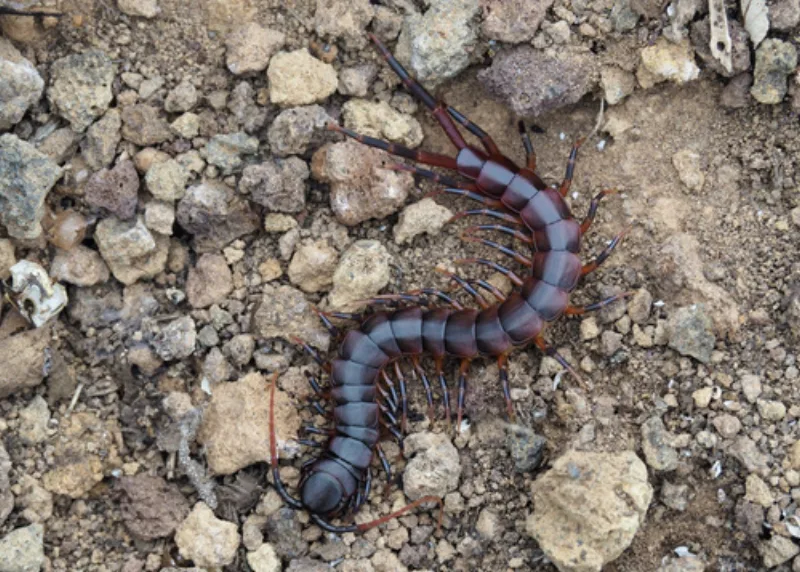
When Centipedes Are Most Active in Missouri
Now (November): Moderate ActivityVerified Missouri Counties, Species & US Range
Counties with Verified Observations
- Saint Louis
- Jackson
- Boone
- Clay
- Cass
- Greene
- Platte
- Adair
- Saint Charles
- Christian
Species Recorded in Missouri
| Species | Scientific Name | GBIF Records |
|---|---|---|
| House Centipede | Scutigera coleoptrata | 225 |
| Japanese House Centipede | Thereuonema tuberculata | 129 |
| Scolopocryptops sexspinosus | Scolopocryptops sexspinosus | 29 |
How Missouri Compares to Neighboring States
Note: Wildlife does not follow state or county lines. GBIF totals reflect verified citizen and museum records, so low counts in a neighboring county do not guarantee absence.
How to Identify Centipedes
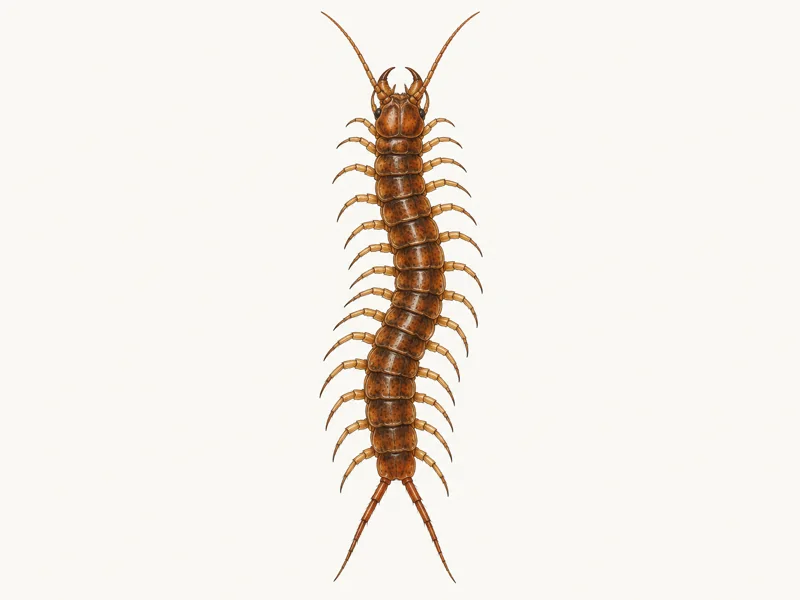
Annotated Anatomy Key (Centipede)
- Antennae & forcipules: Long segmented antennae and modified front venom claws (forcipules) behind the head.
- Flattened segments: Flat, flexible segmented trunk built for fast sprinting—never coils into a tight spiral.
- 1 leg pair / segment: EXACTLY ONE pair of legs extending outward per body segment (millipedes have two pairs).
- Trailing rear legs: Elongated sensory rear leg pair projecting backward like antennae to confuse predators.
Centipedes Field Checklist
- Flattened, elongated segmented body with exactly ONE pair of legs per body segment
- Long antennae and modified front venom claws (forcipules) used to subdue insect prey
- Moves very rapidly when exposed to light
- Large desert species (Scolopendra) deliver painful pinches; smaller garden centipedes are harmless
Centipedes Size at True Relative Scale
Where Centipedes Live in Missouri
Anyone asking whether there are centipedes in Missouri will find the records clear. GBIF occurrence data shows they are widespread, with the most verified sightings in Saint Louis, Jackson, Boone, Clay, and Cass counties. Those counties include the St. Louis and Kansas City metro areas and Columbia, where more people observe and report wildlife.
Missouri's climate ranges from humid continental in the north to humid subtropical in the south, with hot summers and variable winters across USDA zones 5b to 7b. That humidity suits centipedes, which lose water quickly and need damp shelter. Outdoors they hide under leaf litter, mulch, logs, stones, and loose bark.
Species Recorded in Missouri
- House Centipede (Scutigera coleoptrata): The one most homeowners see indoors. It is yellowish-gray with three dark stripes and 15 pairs of very long, banded legs.
- Japanese House Centipede (Thereuonema tuberculata): A long-legged relative of the house centipede, recorded in GBIF data for the state.
- **Scolopocryptops sexspinosus:** A reddish-brown, flattened soil centipede with shorter legs. It usually stays outdoors under logs and debris.
Indoors, centipedes gather in basements, crawl spaces, bathrooms, laundry rooms, and floor drains. Anywhere damp and dark can hold them, especially if insects are available to eat.
When Centipedes Are Most Active in Missouri
The Missouri centipede season follows two peaks. Verified sightings are highest in April and May, then again in September and October. Spring warmth and rain draw centipedes out to hunt and breed, and fall cooling pushes some toward foundations and basements.
During the hottest, driest stretches of summer, centipedes often retreat deeper into moist soil or cool indoor spaces. In winter, outdoor activity slows, but house centipedes can stay active year-round inside heated homes. They hunt at night, so most people spot them after dark or when turning on a basement light.
Look-Alikes Frequently Mistaken for Centipedes
Good Missouri centipede identification starts with counting legs per body segment and noting speed. True centipedes have one pair of legs per segment, move fast, and carry venomous forcipules behind the head for catching prey.
- House Centipedes: Often confused with spiders because of their long legs. Look for the striped body and the rapid, darting movement.
- Millipedes: Rounder bodies with two pairs of legs per segment. They move slowly, curl into a coil when disturbed, and feed on decaying plant matter.
- Silverfish: Wingless, carrot-shaped insects with six legs and three tail filaments. Their silvery scales and wiggling motion set them apart.
- Earwigs: Six-legged insects with a pair of pincers on the rear end. They often share the same damp hiding spots as centipedes.
How to Keep Centipedes Out of Your Missouri Home
Learning how to prevent centipedes in Missouri comes down to Integrated Pest Management (IPM). University cooperative extension guidance consistently recommends non-chemical steps first, because centipedes follow moisture and prey.
Reduce Moisture
- Run a dehumidifier in basements and crawl spaces, aiming for humidity below 50 percent.
- Fix leaking pipes, faucets, and AC condensate lines.
- Clean gutters and extend downspouts so water drains away from the foundation.
Seal Entry Points
- Caulk gaps around foundations, windows, pipes, and utility lines.
- Install weatherstripping and door sweeps on exterior doors.
- Screen vents and cover floor drains when not in use.
Remove Shelter and Food
- Keep mulch, leaves, firewood, and stones at least a foot from the foundation.
- Store items in sealed plastic bins instead of cardboard boxes.
- Control insects indoors, since centipedes stay where prey is plentiful.
- Use sticky traps in basements to monitor activity.
If problems continue, a perimeter treatment labeled for centipedes may help. Always read and follow the EPA product label exactly, including where and how the product may be applied.
When to Call a Licensed Missouri Pest Professional
- You see centipedes nightly despite moisture control and sealing.
- Traps catch many centipedes or other insects, pointing to a larger hidden infestation.
- Persistent dampness or water damage suggests structural or drainage issues.
- You prefer not to handle pesticide applications yourself.
IPM Prevention Checklist for Missouri Homes
- Run a dehumidifier in damp basements and fix foundation moisture leaks
- Pull mulch, firewood, and compost piles back at least 12–18 inches from foundation walls
- Seal exterior cracks and install tight door sweeps
 EXCLUSION BLUEPRINT
Inspect eaves, screens, door sweeps, foundation cracks, and utility penetrations around Missouri homes before peak season.
Centipedes in Missouri: Frequently Asked Questions
Are centipedes in Missouri dangerous?
Missouri's centipedes are rated a nuisance. A bite is rare and usually causes mild, localized pain. If a bite causes a severe reaction or symptoms that worry you, contact US Poison Control at 1-800-222-1222 or a doctor.
Why do I see centipedes in my basement?
Basements are dark, humid, and often hold insects to eat. Lowering humidity and sealing cracks usually cuts sightings sharply.
What month are centipedes worst in Missouri?
Verified sightings peak in April, May, September, and October. House centipedes can still appear indoors any time of year.
Should I kill house centipedes?
They eat spiders, silverfish, and other household pests, so a few are harmless. If numbers grow, focus on moisture control and exclusion before considering any labeled product.
Sources & Verification
- Texas A&M AgriLife Extension — Centipedes
- Penn State Extension — Centipedes and Millipedes
- GBIF Global Biodiversity Occurrence Records
Data refreshed · Editorial & GBIF Methodology