Bee vs Centipede: How to Tell Them Apart and Which Matters More
Quick ID Verdict: A centipede is a flattened, elongated, segmented arthropod measuring 25-180 mm with exactly one pair of legs per body segment. A honey bee (Apis mellifera) is a compact 12-16 mm flying insect with six legs, wings, a fuzzy golden-tan thorax, and a striped amber-to-brown abdomen.
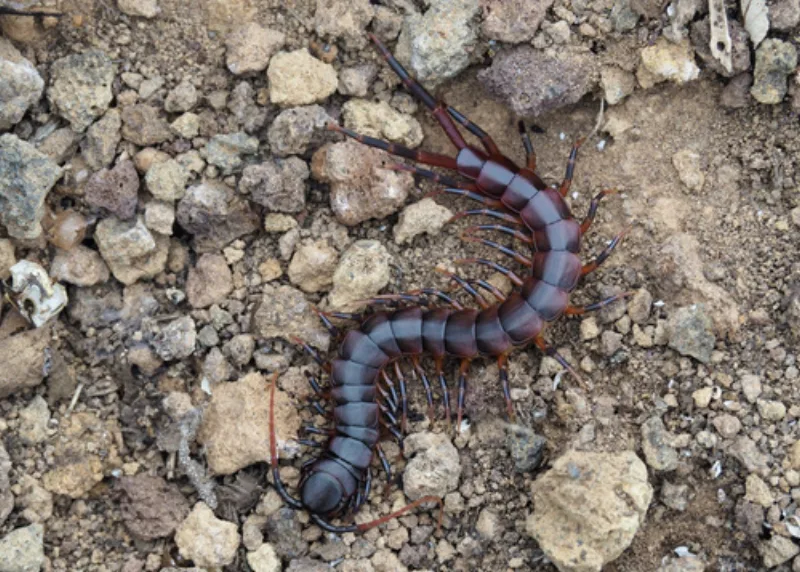
Centipede
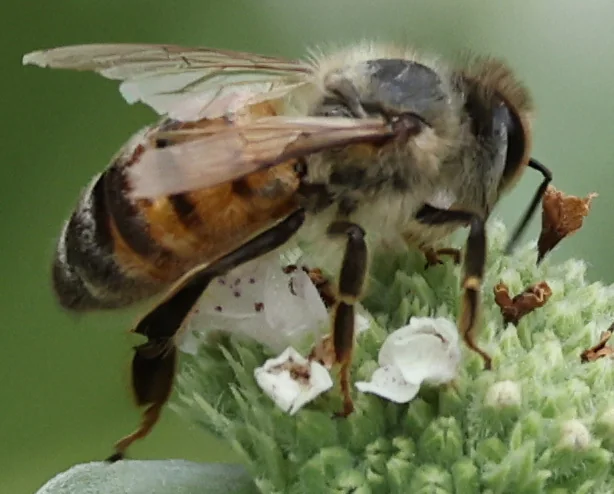
Honey Bee
Side-by-Side Comparison Table
| Trait | Centipede | Honey Bee |
|---|---|---|
| Scientific Group | Chilopoda | Apis mellifera |
| Category | Myriapod | Insect |
| Typical Size | 25–180 mm | 12–16 mm |
| Danger Level | Nuisance | Nuisance |
| Bites or Stings? | Yes | Yes |
| Peak US Months | April, May, June, October | April, July, August, September |
| Key ID Trait | Flattened, elongated segmented body with exactly ONE pair of legs per body segment | Golden-amber to dark brown striped abdomen with fuzzy golden-tan thorax |
Centipede vs. Honey Bee: True Size Comparison
Side-by-Side Anatomy Blueprint
Compare body segments, antennae, leg count, and key markings directly before treating or removing either species.
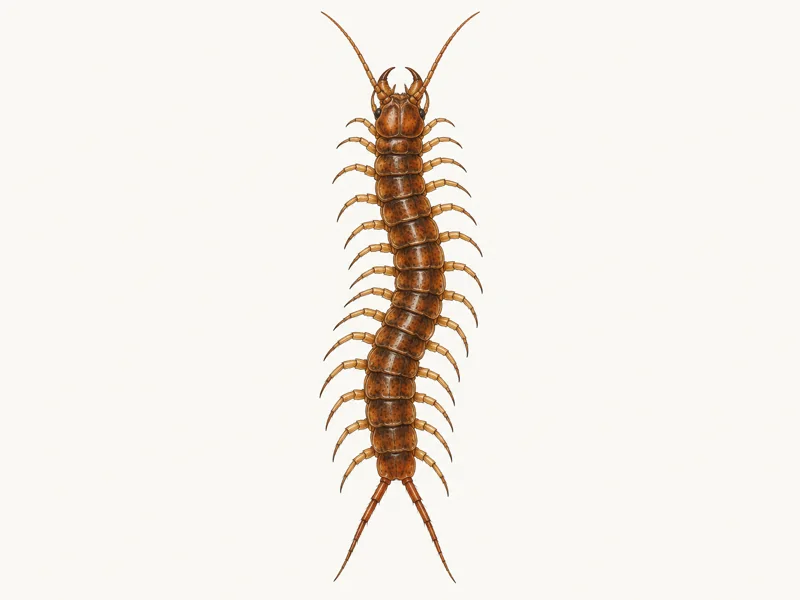
- Antennae & forcipules: Long segmented antennae and modified front venom claws (forcipules) behind the head.
- Flattened segments: Flat, flexible segmented trunk built for fast sprinting—never coils into a tight spiral.
- 1 leg pair / segment: EXACTLY ONE pair of legs extending outward per body segment (millipedes have two pairs).
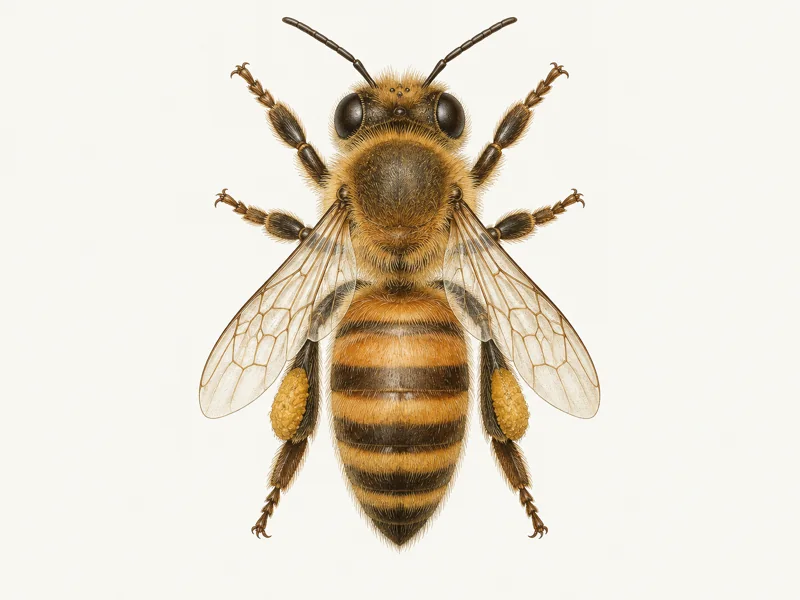
- Fuzzy golden thorax: Dense soft tawny-gold hairs trap pollen grains—wasps are smooth and hairless.
- Delicate clear wings: Two pairs of clear veined wings held flat over the back at rest.
- Pollen-basket legs: Broadened flattened hind legs carry golden pollen pellets back to the hive.
Quick Answer: A centipede is a flattened, elongated, segmented arthropod measuring 25-180 mm with exactly one pair of legs per body segment. A honey bee (Apis mellifera) is a compact 12-16 mm flying insect with six legs, wings, a fuzzy golden-tan thorax, and a striped amber-to-brown abdomen. Both are classed as nuisance-level pests, and you can tell them apart in about three seconds by counting legs and looking for wings.
Quick ID Verdict
If it has dozens of legs, no wings, and moves fast along the floor or wall, it is a centipede. If it has wings, six legs, a fuzzy body, and flies between flowers or around a hive, it is a honey bee.
Key Visual & Physical Differences
The difference between a centipede and a honey bee comes down to body plan. Centipedes belong to the class Chilopoda and are not insects at all. Honey bees are true insects, with three body regions and six legs.
Centipedes (Chilopoda)
- Size: 25-180 mm, depending on species
- Body: Flattened, elongated, and clearly segmented
- Legs: Exactly one pair per body segment, often giving a fringed look
- Wings: None
- Color: Usually yellowish, brown, or reddish, depending on species
Honey Bees (Apis mellifera)
- Size: 12-16 mm
- Body: Head, fuzzy golden-tan thorax, and a striped abdomen
- Abdomen: Golden-amber to dark brown bands
- Legs: Six, often carrying pollen on the hind pair
- Wings: Two pairs of clear wings
For centipede vs honey bee identification, the leg count is the most reliable clue. Millipedes sometimes cause confusion. They have two pairs of legs per segment and a rounder body, so they are a different group.
Behavior, Habitat & Danger Comparison
These two pests live very different lives. That difference also shapes where homeowners tend to find them.
Centipede Behavior
Centipedes are nocturnal predators that hunt insects, spiders, and other small arthropods. They prefer damp spots such as basements, crawl spaces, bathrooms, mulch beds, and leaf litter. Indoors, they often signal high humidity or an existing insect population.
Honey Bee Behavior
Honey bees are social pollinators that live in colonies and forage on flowers during the day. They are generally gentle away from the hive. Swarms or colonies can sometimes settle in wall voids, chimneys, or attics.
Danger Level
Both centipedes and honey bees are rated nuisance-level pests. Centipedes can bite if handled, and honey bees sting when defending themselves or their colony. Sting reactions can be serious for people with allergies. If someone shows swelling of the face or throat, has trouble breathing, or feels dizzy, call 911. For questions about stings or bites, contact US Poison Control at 1-800-222-1222 and consult a doctor.
Which One Is Worse for Homeowners?
Neither pest usually causes structural damage, but each creates a different kind of problem. Centipedes indoors are mainly an unsettling sight. They also suggest moisture and prey insects that need attention. Honey bees are beneficial pollinators, but an established colony inside a wall can bring stinging risk, honey seepage, and comb that attracts other pests.
Non-Chemical IPM First
- For centipedes: Run a dehumidifier, fix leaks, seal cracks and door gaps, and clear mulch, boards, and debris away from the foundation.
- Reduce prey: Control the insects centipedes feed on through sanitation and exclusion.
- For honey bees: Seal openings in siding, eaves, and vents before swarm season. Contact a local beekeeper or bee removal service for live relocation of swarms and colonies.
- Avoid spraying colonies in walls: Dead bees and leftover comb can cause odors, stains, and secondary pest problems.
If pesticides become necessary, choose products labeled for the specific pest and site. Always follow the EPA product label exactly. Many areas encourage protecting honey bees, so relocation is the preferred route for a bee colony.
Frequently Asked Questions
Is a centipede an insect like a bee?
No. Centipedes are in the class Chilopoda and have many legs, one pair per body segment. Honey bees are insects with six legs and wings.
How can I tell if I'm seeing a centipede or honey bee?
Look for wings and count the legs. A wingless, many-legged crawler is a centipede, while a winged, fuzzy, striped flier is a honey bee.
Which is bigger, a centipede or a honey bee?
Centipedes range from 25-180 mm, so they are usually much longer. Honey bees measure 12-16 mm.
What should I do after a sting or bite?
Call 911 for breathing trouble or facial swelling. For other concerns, contact US Poison Control at 1-800-222-1222 and a doctor.