Honey Bees in South Carolina: Identification, Season, and Prevention
Quick Answer: Yes, honey bees (Apis mellifera) are common in South Carolina, with 1,534 verified GBIF sightings statewide. They are a nuisance-level insect that rarely stings unless the hive is disturbed. Seal entry points early, and call a licensed professional or local beekeeper for any colony inside a wall.
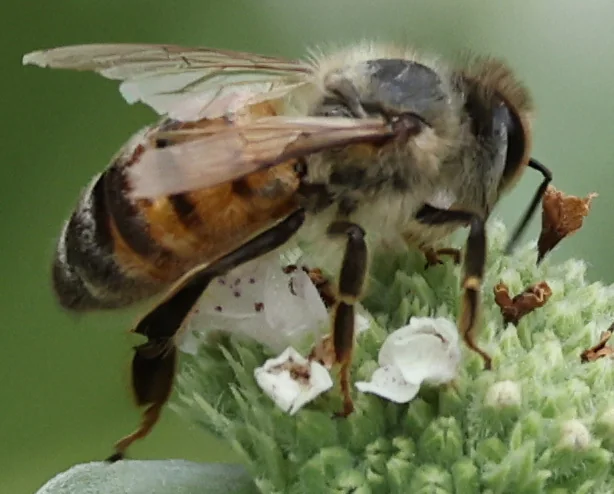
When Honey Bees Are Most Active in South Carolina
Now (November): Moderate ActivityVerified South Carolina Counties, Species & US Range
Counties with Verified Observations
- Charleston
- Richland
- Greenville
- Greenwood
- Georgetown
- York
- Clarendon
- Horry
- Pickens
- Beaufort
Species Recorded in South Carolina
| Species | Scientific Name | GBIF Records |
|---|---|---|
| western honey bee | Apis mellifera | 1,534 |
How South Carolina Compares to Neighboring States
Note: Wildlife does not follow state or county lines. GBIF totals reflect verified citizen and museum records, so low counts in a neighboring county do not guarantee absence.
How to Identify Honey Bees
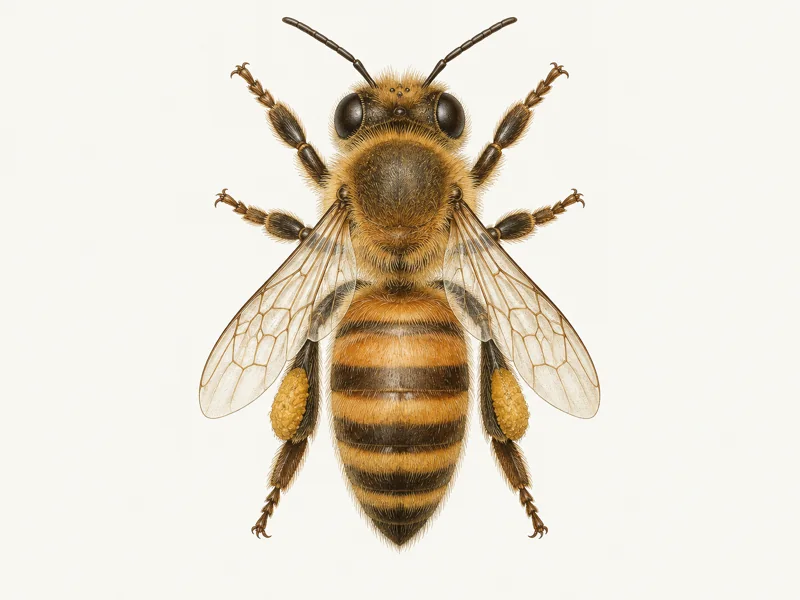
Annotated Anatomy Key (Honey Bee)
- Fuzzy golden thorax: Dense soft tawny-gold hairs trap pollen grains—wasps are smooth and hairless.
- Delicate clear wings: Two pairs of clear veined wings held flat over the back at rest.
- Pollen-basket legs: Broadened flattened hind legs carry golden pollen pellets back to the hive.
- Warm amber stripes: Lightly hairy honey-orange and dark brown bands—softer hue than neon yellow jackets.
Honey Bees Field Checklist
- Golden-amber to dark brown striped abdomen with fuzzy golden-tan thorax
- Pollen baskets on flattened hind legs
- Barbed stinger allows workers to sting only once
- Forms perennial wax-comb colonies and temporary spring swarms on tree branches
Honey Bees Size at True Relative Scale
Quick Answer: Yes, honey bees (Apis mellifera) are common in South Carolina, with 1,534 verified GBIF sightings statewide. They are a nuisance-level insect that rarely stings unless the hive is disturbed. Seal entry points early, and call a licensed professional or local beekeeper for any colony inside a wall.
Where Honey Bees Live in South Carolina
People often ask whether there are honey bees in South Carolina. There are, and the western honey bee is the recorded species. GBIF occurrence records cluster in Charleston, Richland, Greenville, Greenwood, and Georgetown counties, which span the coast, the Midlands, and the Upstate.
The state's humid subtropical climate (USDA zones 7a to 9a) with mild coastal winters suits bees well. Managed hives sit in backyards and farms, while wild colonies settle in sheltered cavities.
- Hollow trees and fallen logs
- Wall voids, chimneys, and attic spaces
- Utility boxes, meter enclosures, and sheds
- Abandoned or unattended hive boxes
When Honey Bees Are Most Active in South Carolina
For South Carolina honey bee season, GBIF records peak in March, April, June, and October. Spring brings blooming trees, strong colony growth, and swarming. Fall activity reflects bees gathering late-season nectar and pollen.
Swarms are the main reason homeowners notice bees. A swarm is a temporary cluster resting on a branch, fence, or eave while scouts look for a permanent cavity. Swarming bees are generally docile, and they often move on within a day or two.
How to Recognize Honey Bees
South Carolina honey bee identification starts with body shape and behavior. Honey bees are about 1/2 inch long, golden-brown to amber with darker bands, and covered in fine hair. Workers carry pollen on their hind legs and fly steadily from flower to flower.
- Fuzzy, moderately slender body with muted brown-and-tan banding
- Pollen baskets on the hind legs
- Steady traffic in and out of one small opening
- Visible wax comb, sometimes with a sweet smell near a wall
Look-Alikes Frequently Mistaken for Honey Bees
Several stinging and flying insects found in South Carolina resemble honey bees. Correct identification matters because the control approach differs. Honey bees are beneficial pollinators, so removal should be a last resort.
- Wasps: Slender, smooth, with a narrow waist and little hair. They build papery nests and may sting repeatedly.
- Yellow jackets: Bright yellow and black, smooth-bodied, and aggressive near food and ground nests.
- Bumble bees: Larger, rounder, and very fuzzy. They nest in small colonies, often in ground cavities or grass tufts.
- Carpenter bees: Large with a shiny, hairless black abdomen. They bore round holes in bare wood.
How to Keep Honey Bees Out of Your South Carolina Home
For how to prevent honey bees in South Carolina, start with non-chemical integrated pest management. The goal is to remove the cavities and attractants that make a structure appealing.
- Seal cracks, gaps, and holes larger than 1/8 inch with caulk or fine mesh.
- Screen chimneys, vents, and soffit openings.
- Close or remove unused hive boxes, empty barrels, and stacked equipment.
- Repair damaged siding and rotted trim, and fix moisture problems.
- Keep open sugary drinks and pet water sources covered outdoors.
- Fill old rodent holes and tree cavities near the house when no bees are present.
If a swarm lands on your property, keep children and pets away and contact a local beekeeper, who may collect it for free. Do not spray a swarm. If you use any product, follow the EPA-registered label exactly.
When to Call a Licensed South Carolina Pest Professional
- Bees are entering or exiting a wall, roof, or chimney.
- You hear buzzing inside walls or see honey staining on drywall.
- A colony has been in place for weeks, since leftover comb and honey can attract other pests.
- Anyone in the household has a known bee allergy.
- You are unsure whether the insects are honey bees, wasps, or yellow jackets.
After a sting, wash the area and watch for severe symptoms. For difficulty breathing, facial swelling, or dizziness, call 911. For other questions about stings, contact US Poison Control at 1-800-222-1222 or see a doctor.
IPM Prevention Checklist for South Carolina Homes
- Seal exterior wall voids, fascia cracks, and unused chimney flues before spring swarming season
 EXCLUSION BLUEPRINT
Inspect eaves, screens, door sweeps, foundation cracks, and utility penetrations around South Carolina homes before peak season.
Honey Bees in South Carolina: Frequently Asked Questions
Are there honey bees in South Carolina?
Yes. The western honey bee (Apis mellifera) is common statewide, with GBIF sightings concentrated in Charleston, Richland, Greenville, Greenwood, and Georgetown counties.
When is honey bee season in South Carolina?
Recorded activity peaks in March, April, June, and October. Spring swarming is the time when homeowners most often notice them.
Are honey bees dangerous?
They are considered a nuisance and usually sting only when the hive is threatened. Keep your distance from colonies, and seek medical care for any serious reaction.
Should I kill a honey bee colony on my property?
Avoid it where possible. Honey bees are valuable pollinators, so contact a beekeeper or licensed professional for removal, and follow EPA label directions for any product.
Sources & Verification
Data refreshed · Editorial & GBIF Methodology