Termites in South Carolina: Identification, Season and Prevention
Quick Answer: Yes, termites are firmly established in South Carolina, with 99 verified GBIF sightings concentrated in York, Charleston, Lexington, Richland, and Greenville counties. Three subterranean species are on record, and swarms peak in March and April.
When Termites Are Most Active in South Carolina
Now (November): Lower Outdoor ActivityVerified South Carolina Counties, Species & US Range
Counties with Verified Observations
- York
- Charleston
- Lexington
- Richland
- Greenville
- Spartanburg
- Hampton
- Chesterfield
- Berkeley
- Colleton
Species Recorded in South Carolina
| Species | Scientific Name | GBIF Records |
|---|---|---|
| Eastern Subterranean Termite | Reticulitermes flavipes | 43 |
| Formosan subterranean termite | Coptotermes formosanus | 11 |
| Dark Southern Subterranean Termite | Reticulitermes virginicus | 2 |
How South Carolina Compares to Neighboring States
Note: Wildlife does not follow state or county lines. GBIF totals reflect verified citizen and museum records, so low counts in a neighboring county do not guarantee absence.
How to Identify Termites
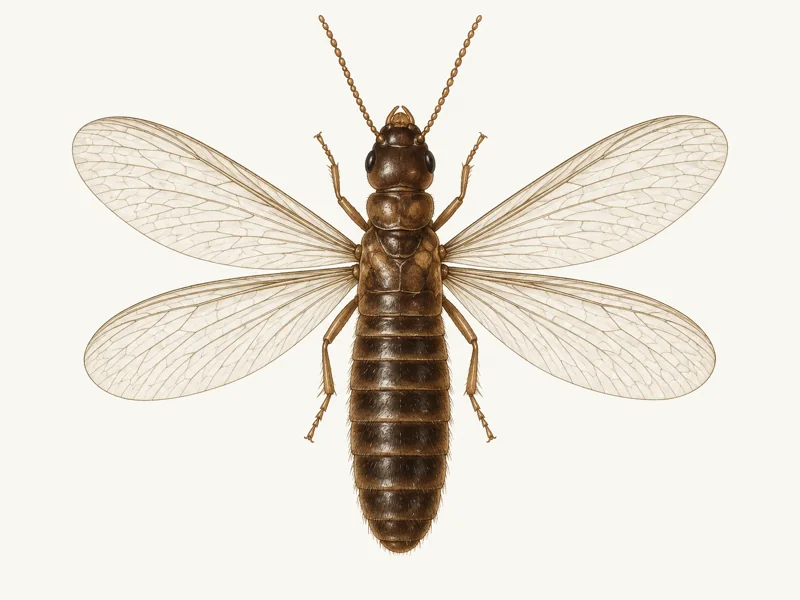
Annotated Anatomy Key (Termite)
- Straight antennae: Straight, bead-like (moniliform) antennae—never sharply bent like ant antennae.
- Four equal wings: Two pairs of equal-length translucent veined wings extending far past the abdomen (shed easily).
- Six insect legs: Three pairs of slender crawling legs beneath the pale translucent wings.
- Broad thick waist: Uniform, straight-sided waist with NO narrow pinch between thorax and abdomen.
Termites Field Checklist
- Straight, bead-like antennae (unlike the elbowed antennae of ants)
- Broad, thick waist with no narrow pinch between thorax and abdomen
- Swarmers have four equal-length translucent wings that shed easily
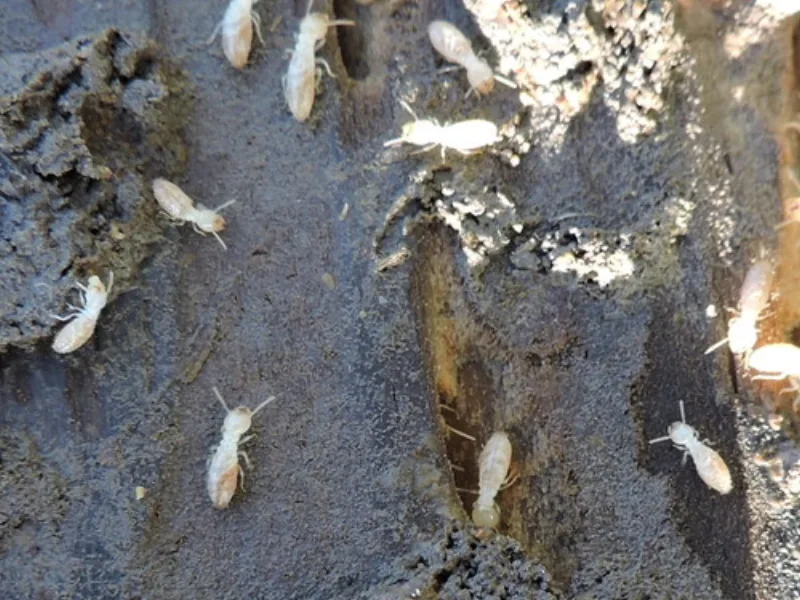
- Workers are pale cream-white and avoid open light
Termites Size at True Relative Scale
Quick Answer: Yes, termites are firmly established in South Carolina, with 99 verified GBIF sightings concentrated in York, Charleston, Lexington, Richland, and Greenville counties. Three subterranean species are on record, and swarms peak in March and April. Because termites cause structural damage rather than health risks, the priority for homeowners is early detection and moisture control.
Where Termites Live in South Carolina
Anyone asking whether there are termites in South Carolina will find a clear answer in the records: the state's humid subtropical climate, with hot, muggy summers and mild coastal winters (USDA zones 7a-9a), suits subterranean termites well. Verified sightings span the Upstate, the Midlands, and the coast, which shows that no region of the state is out of reach.
The most documented counties are:
- York – fast-growing suburbs near Charlotte with plenty of new construction and wooded lots
- Charleston – warm, humid coastal conditions with older wooden structures
- Lexington and Richland – the Columbia metro area with mature landscaping and mulch beds
- Greenville – Upstate neighborhoods with clay soils and shaded foundations
Species Recorded in the State
- Eastern Subterranean Termite (Reticulitermes flavipes) – the most widespread species, nesting in soil and building mud tubes to reach wood.
- Dark Southern Subterranean Termite (Reticulitermes virginicus) – a close relative with darker swarmers, often found in moist, wooded areas.
- Formosan Subterranean Termite (Coptotermes formosanus) – an invasive species known for very large colonies and aggressive feeding, most often linked to coastal areas.
All three species need contact with moisture. They thrive where soil stays damp against a foundation or where wood touches the ground.
When Termites Are Most Active in South Carolina
South Carolina termite season is most noticeable in March and April, the peak months in verified GBIF records. This is when winged reproductives, called swarmers or alates, leave mature colonies to mate and start new ones, often after a warm rain.
Native Reticulitermes swarms usually happen during daylight hours in spring. Formosan termites tend to swarm later in the warm season, often at dusk, and are drawn to lights. Worker termites feed year-round in South Carolina's mild climate, so damage can progress even when no swarmers are visible.
A swarm inside the home, or piles of shed wings near windowsills and doors, strongly suggests an active colony in or under the structure.
Look-Alikes Frequently Mistaken for Termites
Good South Carolina termite identification starts with ruling out the two most common local look-alikes: flying ants and carpenter ants. Both are present in the state and often swarm in spring too.
Flying Ants
- Waist: Ants have a pinched, narrow waist; termites have a thick, straight body.
- Antennae: Ants have elbowed (bent) antennae; termites have straight, bead-like antennae.
- Wings: Ant forewings are longer than the hindwings; termite wings are equal in length and extend well past the body.
Carpenter Ants
Carpenter ants are large, often black or reddish-black, and hollow out damp wood to nest without eating it. They leave behind smooth galleries and coarse sawdust-like debris called frass. Termite galleries, by contrast, are often packed with soil and mud, and subterranean termites rarely leave sawdust piles.
How to Keep Termites Out of Your South Carolina Home
Learning how to prevent termites in South Carolina begins with non-chemical Integrated Pest Management (IPM), the approach recommended by university cooperative extension programs across the Southeast. The goal is to remove the moisture and wood contact termites depend on.
Non-Chemical Prevention Steps
- Control moisture: Repair leaky pipes, AC condensate lines, and gutters, and grade soil so water drains away from the foundation.
- Break wood-to-soil contact: Keep siding, door frames, and wooden steps at least 6 inches above soil.
- Manage mulch: Keep mulch thin and pulled back several inches from the foundation.
- Remove food sources: Clear stumps, buried lumber, and firewood stacked against the house.
- Ventilate crawl spaces: Use vents, vapor barriers, or dehumidification to keep humidity low.
- Inspect regularly: Check foundation walls, piers, and crawl spaces for mud tubes each spring.
Treatment Options
When an infestation is confirmed, professional treatments typically include liquid soil termiticides or baiting systems. Any product used must be applied exactly as directed on its EPA-registered label. Do-it-yourself products rarely reach an entire colony, especially a large Formosan colony.
When to Call a Licensed South Carolina Pest Professional
- Swarmers emerge indoors, or shed wings collect on sills and floors
- Pencil-width mud tubes appear on foundations, piers, or walls
- Wood sounds hollow, blisters, or crumbles when probed
- Doors or windows suddenly stick, or paint bubbles without a moisture cause
- You are buying or selling a home and need a wood-destroying insect report
Choose a company licensed through South Carolina's state pesticide regulatory program, and ask about inspection frequency and warranty terms.
IPM Prevention Checklist for South Carolina Homes
- Maintain a 6-inch clearance between soil/mulch and wood siding
- Fix leaking roofs, gutters, plumbing, and AC condensate lines immediately
- Store firewood elevated and at least 20 feet from the house
- Schedule annual inspections by a licensed wood-destroying insect inspector
 EXCLUSION BLUEPRINT
Inspect eaves, screens, door sweeps, foundation cracks, and utility penetrations around South Carolina homes before peak season.
Termites in South Carolina: Frequently Asked Questions
Are there termites in South Carolina?
Yes. GBIF holds 99 verified sightings in the state, led by York, Charleston, Lexington, Richland, and Greenville counties. Three subterranean species are recorded.
When is termite swarming season in South Carolina?
Swarm activity peaks in March and April. Formosan termites can swarm later in the warm months, often in the evening near lights.
Are Formosan termites found in South Carolina?
Yes, the Formosan subterranean termite (Coptotermes formosanus) is recorded in the state. Its large colonies can cause damage faster than native species, so prompt professional treatment is wise.
Do termites in South Carolina bite people?
Termites are not considered a health threat to people. Their danger is structural, so the main concern is protecting wood framing, floors, and foundations.
Sources & Verification
- US EPA — Termites: How to Identify and Control Them
- UF/IFAS Extension — Subterranean & Drywood Termites
- GBIF Global Biodiversity Occurrence Records
Data refreshed · Editorial & GBIF Methodology