Palmetto Bugs in South Carolina: Identification, Season & Prevention
Quick Answer: Yes, palmetto bugs live in South Carolina. The species behind the name, the Florida cockroach (Eurycotis floridana), has 10 verified GBIF sightings in the state, clustered in Beaufort and Charleston counties. They are a nuisance pest rather than a health threat, and moisture control, sealing entry points, and good sanitation keep most homes free of them.
When Palmetto Bugs Are Most Active in South Carolina
Now (November): Lower Outdoor ActivityVerified South Carolina Counties, Species & US Range
Counties with Verified Observations
- Beaufort
- Charleston
Species Recorded in South Carolina
| Species | Scientific Name | GBIF Records |
|---|---|---|
| Florida cockroach | Eurycotis floridana | 10 |
How South Carolina Compares to Neighboring States
Note: Wildlife does not follow state or county lines. GBIF totals reflect verified citizen and museum records, so low counts in a neighboring county do not guarantee absence.
How to Identify Palmetto Bugs
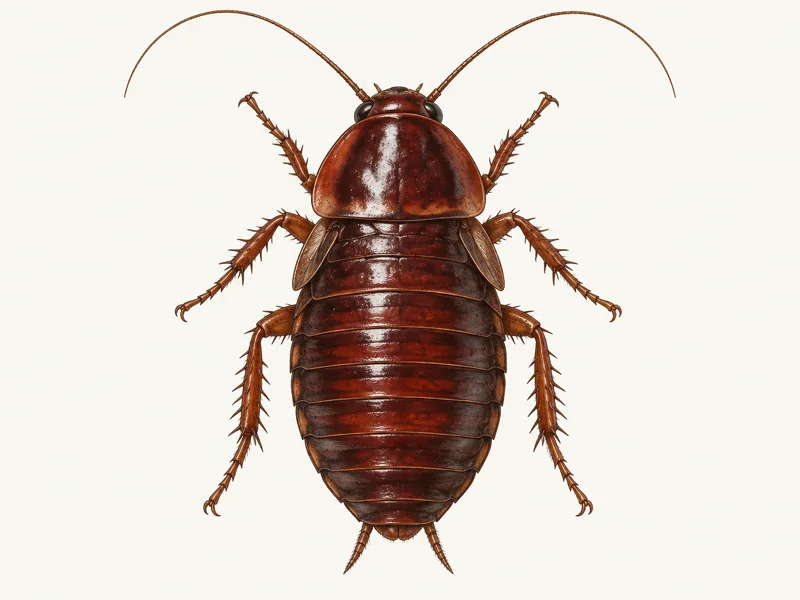
Annotated Anatomy Key (Palmetto Bug)
- Sweeping whip antennae: Long sensitive antennae on a broad, heavy-bodied 30–40 mm outdoor roach.
- Domed mahogany shield: Wide smooth reddish-mahogany thorax—solid glossy dark chestnut without bands.
- Heavy spiny legs: Six thick reddish-brown spiny legs built for mulch, palm fronds, and crawlspaces.
- Wingless broad abdomen: Completely flightless horizontally banded oval body with tiny stubby side pads.
Palmetto Bugs Field Checklist
- Large, broad, shiny dark reddish-brown to black wood cockroach (Florida woods cockroach)
- Short stubby wing pads—cannot fly (unlike flying American or smokybrown roaches often nicknamed palmetto bugs)
- Moves relatively slowly and emits a strong foul defensive liquid when alarmed
- Primarily an outdoor southeastern US native
Side-by-Side Look-Alike Comparisons
Palmetto Bugs Size at True Relative Scale
Quick Answer: Yes, palmetto bugs live in South Carolina. The species behind the name, the Florida cockroach (Eurycotis floridana), has 10 verified GBIF sightings in the state, clustered in Beaufort and Charleston counties. They are a nuisance pest rather than a health threat, and moisture control, sealing entry points, and good sanitation keep most homes free of them.
Where Palmetto Bugs Live in South Carolina
People who ask whether there are palmetto bugs in South Carolina usually live near the coast, and the records support that pattern. Verified GBIF observations of the Florida cockroach come mainly from Beaufort and Charleston counties, where humid subtropical weather and mild coastal winters suit this warmth-loving insect. The state spans USDA zones 7a through 9a, and the warmer coastal zones offer the most favorable conditions.
Outdoors, Florida cockroaches shelter in damp, sheltered spots, including:
- Leaf litter, pine straw, and mulch beds
- Rotting logs, stumps, and woodpiles
- Tree holes, palm boots, and dense shrubbery
- Gaps under stones, pavers, and outdoor debris
They are mostly an outdoor species that wanders inside by accident, often during heavy rain, extreme heat, or a sudden cold snap. Garages, crawl spaces, bathrooms, and kitchens near exterior doors are the usual indoor trouble spots.
When Palmetto Bugs Are Most Active in South Carolina
South Carolina palmetto bug season follows the state's long, warm months. GBIF sightings peak in May, July, and October, which lines up with late-spring warming, the muggy height of summer, and the transition into fall.
Like most cockroaches, they are nocturnal and do most of their foraging after dark. Homeowners often notice them after summer thunderstorms flood their outdoor hiding places. In mild coastal winters, activity slows but may not stop completely, so occasional sightings in cooler months are not unusual.
Look-Alikes Frequently Mistaken for Palmetto Bugs
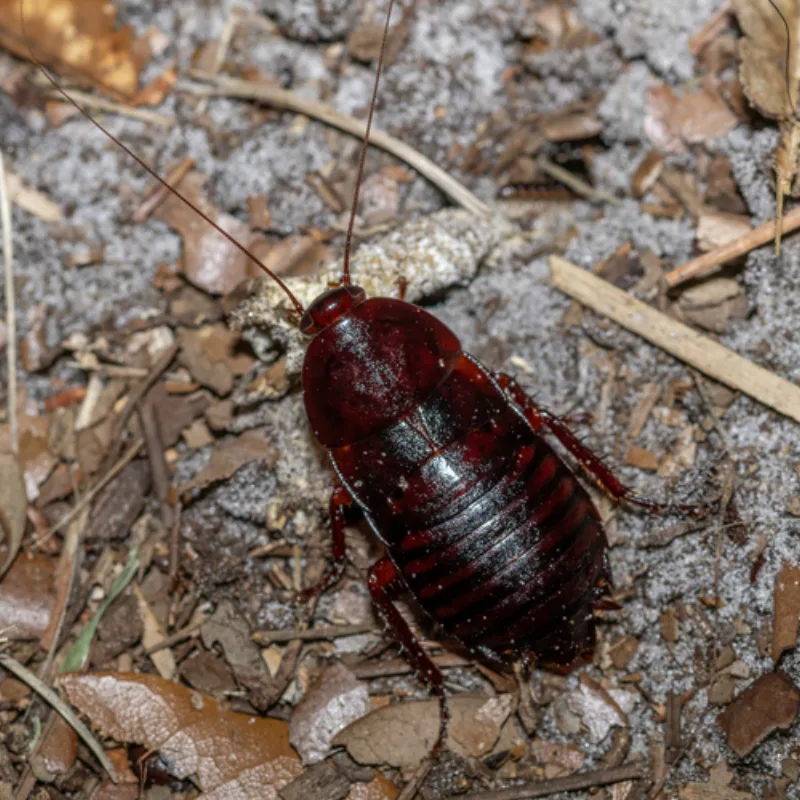
Accurate South Carolina palmetto bug identification starts with knowing the true Florida cockroach. Adults are dark reddish-brown to nearly black, about 1.2 to 1.6 inches long, broad, and slow-moving. Their wings are reduced to short pads, so they cannot fly. When disturbed, they can release a strong-smelling defensive secretion, which earned them the nickname "stinking cockroach."
Several local insects get lumped under the same name:
- American cockroaches: Many South Carolinians call these palmetto bugs too. They are lighter reddish-brown, have a pale, figure-eight-like band behind the head, and carry full wings that can produce short gliding flights.
- Other cockroaches: Smaller household species are tan or light brown and much tinier than a Florida cockroach. A large, dark, wingless roach points toward Eurycotis floridana.
- Water bugs: True water bugs are aquatic insects with grasping front legs and a flatter, oval body. "Water bug" is also slang for large roaches, which adds to the confusion.
How to Keep Palmetto Bugs Out of Your South Carolina Home
The best approach to how to prevent palmetto bugs in South Carolina is Integrated Pest Management (IPM), which university cooperative extension programs recommend for cockroaches. Start with non-chemical steps that remove moisture, food, and entry points.
Exclusion
- Install door sweeps and repair weatherstripping on exterior doors.
- Seal gaps around pipes, cables, and vents with caulk or copper mesh.
- Repair torn window and vent screens, including crawl space vents.
Moisture Control
- Fix leaky faucets, AC condensate lines, and plumbing drips.
- Run a dehumidifier in damp crawl spaces, basements, and laundry rooms.
- Keep gutters clear and direct downspouts away from the foundation.
Sanitation and Yard Care
- Store food and pet food in sealed containers and wipe up crumbs nightly.
- Keep mulch and pine straw a foot or more away from the foundation.
- Stack firewood off the ground and away from the house.
- Use tight-fitting lids on trash and recycling bins.
If problems continue, sticky monitoring traps help show where roaches are entering. Gel baits or perimeter treatments can help, but always read and follow the EPA-registered product label exactly, and keep products away from children and pets.
When to Call a Licensed Professional
Contact a licensed South Carolina pest control professional if you notice:
- Roaches seen nightly or in daylight, which suggests a larger population
- Egg cases, droppings, or shed skins inside cabinets or wall voids
- Persistent sightings after several weeks of IPM steps
- Moisture or structural problems you cannot correct yourself
IPM Prevention Checklist for South Carolina Homes
- Keep pine straw and heavy mulch cleared 12–18 inches from foundations
- Install tight door sweeps and screen soffit/crawlspace vents
 EXCLUSION BLUEPRINT
Inspect eaves, screens, door sweeps, foundation cracks, and utility penetrations around South Carolina homes before peak season.
Palmetto Bugs in South Carolina: Frequently Asked Questions
Are palmetto bugs dangerous in South Carolina?
No. The Florida cockroach is rated a nuisance pest. It does not sting, and bites are very rare, but its odor and droppings can contaminate surfaces, so clean affected areas thoroughly.
Which South Carolina counties have the most palmetto bug sightings?
Verified GBIF records are concentrated in Beaufort and Charleston counties, where the warm, humid coastal climate suits the species.
When is palmetto bug season in South Carolina?
Sightings peak in May, July, and October. Expect more indoor encounters after heavy summer rain or sudden temperature swings.
Can palmetto bugs fly?
The true Florida cockroach cannot fly because its wings are short pads. Larger roaches that glide indoors are usually American cockroaches, which many residents also call palmetto bugs.
Sources & Verification
Data refreshed · Editorial & GBIF Methodology