Honey Bee vs Hornet: How to Tell Them Apart and Stay Safe at Home
Quick ID Verdict: A buzzing insect near the porch light or a dark cluster on a fence post raises one urgent question: honey bee or hornet? The quick answer is that a honey bee is small (12-16 mm), fuzzy, and golden-brown, while a hornet is noticeably larger (18-35 mm), smooth, and stout. One is a valuable pollinator that's mostly a nuisance, and the other is a medically significant stinger that needs real caution. Here's how to tell the difference and what to do next.
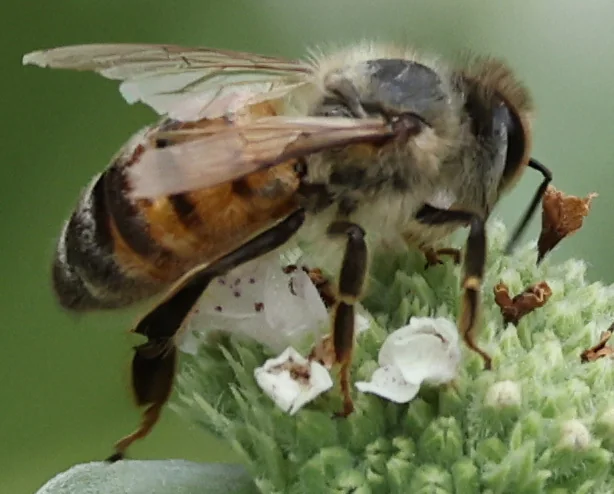
Honey Bee
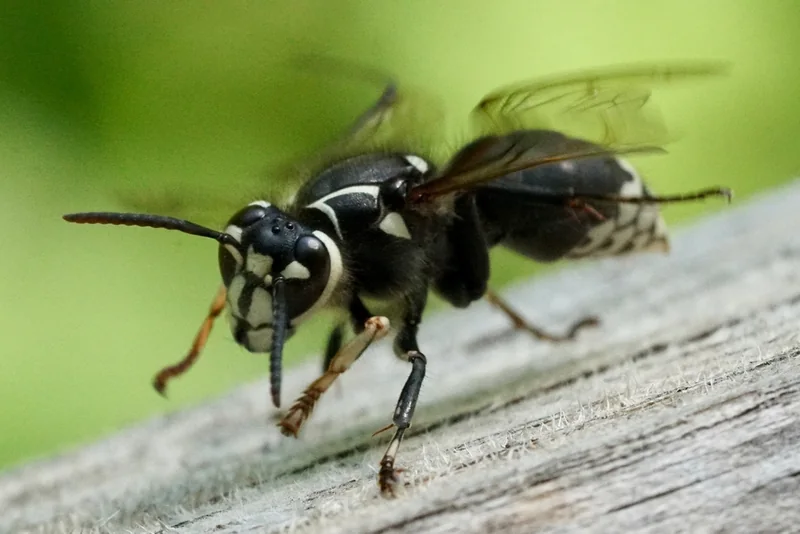
Hornet
Side-by-Side Comparison Table
| Trait | Honey Bee | Hornet |
|---|---|---|
| Scientific Group | Apis mellifera | Vespa & Dolichovespula maculata |
| Category | Insect | Insect |
| Typical Size | 12–16 mm | 18–35 mm |
| Danger Level | Nuisance | Medically Significant |
| Bites or Stings? | Yes | Yes |
| Peak US Months | April, July, August, September | August, September, October |
| Key ID Trait | Golden-amber to dark brown striped abdomen with fuzzy golden-tan thorax | Notably larger and stouter than typical yellow jackets or paper wasps |
Honey Bee vs. Hornet: True Size Comparison
Side-by-Side Anatomy Blueprint
Compare body segments, antennae, leg count, and key markings directly before treating or removing either species.
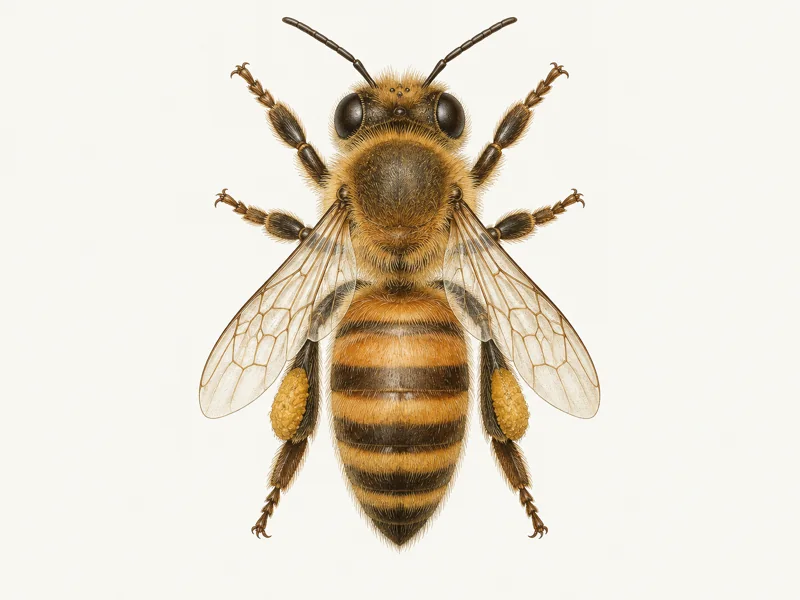
- Fuzzy golden thorax: Dense soft tawny-gold hairs trap pollen grains—wasps are smooth and hairless.
- Delicate clear wings: Two pairs of clear veined wings held flat over the back at rest.
- Pollen-basket legs: Broadened flattened hind legs carry golden pollen pellets back to the hive.
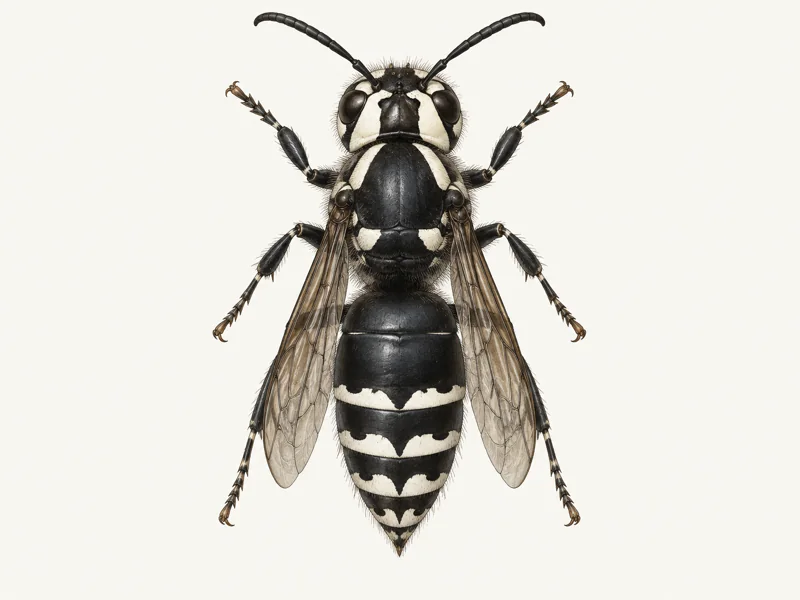
- Ivory-white face: Bold creamy-white face and thorax-side markings distinguish it from yellow jackets.
- Stout black thorax: Heavy-bodied glossy jet-black aerial wasp measuring 15–20 mm.
- Smoky veined wings: Dark-veined translucent wings powering rapid defense around aerial paper nests.
Key Differences Between Honey Bees and Hornets at a Glance
The difference between honey bee and hornet species comes down to three things: size, body texture, and temperament. Honey bees (Apis mellifera) are compact, hairy foragers. Hornets, including true hornets in the genus Vespa and the bald-faced hornet (Dolichovespula maculata), are predatory wasps built for hunting.
Honey Bee vs Hornet Identification: Size, Color, and Body Shape
For honey bee vs hornet identification, start with size. Then look at the fuzz.
- Honey bees: 12-16 mm long, with a golden-amber to dark brown striped abdomen and a fuzzy, golden-tan thorax. The body looks soft and slightly rounded.
- Hornets: 18-35 mm long, notably larger and stouter than typical yellow jackets or paper wasps. Bodies are smooth and shiny, with a distinct narrow waist.
- Color clues: The bald-faced hornet is black with ivory-white face markings. The European hornet (Vespa crabro) shows brown and yellow banding with a reddish-brown head and thorax.
A simple rule helps: if it looks fuzzy and carries pollen on its legs, it's almost certainly a honey bee.
Nests, Behavior, and Sting Risk Compared
Honey bees build wax comb inside protected cavities like hollow trees, wall voids, or managed hives. They're generally gentle away from the colony. A honey bee's barbed stinger usually stays in the skin, so a worker can sting a person only once.
Hornets build gray paper nests from chewed wood fiber. Bald-faced hornets hang football-shaped nests in trees, shrubs, or eaves, while European hornets favor hollow trees, sheds, and wall cavities. Hornets defend their nests aggressively and can sting repeatedly, which is why they're classified as medically significant. Anyone stung multiple times, or showing swelling of the face or throat, hives, or trouble breathing, should call 911. For guidance on stings, contact US Poison Control at 1-800-222-1222 and follow up with a doctor.
Where and When You'll See Them in the US
Honey bees are found in all 50 states, both in managed hives and feral colonies. Their colonies survive winter as a cluster, so activity starts early. Foragers appear on mild days in late winter, and swarming peaks from April through June when colonies split to reproduce.
Hornet colonies follow a different calendar. Only fertilized queens survive the winter, and each starts a new nest in spring.
- Bald-faced hornets occur across much of the US and southern Canada. Nests grow through summer and reach peak size, and peak defensiveness, in late summer and early fall.
- European hornets are established mainly in the eastern half of the country. They're unusual because they fly at night and often bump into lit windows.
- Northern giant hornets (Vespa mandarinia) were detected in Washington State, but USDA and state officials declared them eradicated in late 2024 after an intensive monitoring effort.
The first hard frost kills hornet workers. Old paper nests aren't reused the following year.
Honey Bee or Hornet? What to Do When You Find One Near Your Home
Before taking any action, confirm the ID from a safe distance. A single forager visiting flowers is no threat and can be left alone. An active nest near a doorway, play area, or mower path is a different story, and the right response depends entirely on which insect is involved.
Safe IPM Steps for Hornet Nests
Integrated Pest Management favors prevention and non-chemical steps first:
- Exclusion: Seal gaps around siding, soffits, vents, and utility lines in early spring, before queens choose nest sites.
- Sanitation: Keep trash cans tightly lidded and clean up fallen fruit, pet food, and sugary drinks outdoors.
- Leave remote nests alone: A nest high in a tree away from foot traffic will die off naturally after the first frost.
- Reduce lighting: Use yellow or motion-activated bulbs to discourage night-flying European hornets.
Nests near entryways or inside walls are best handled by a licensed pest management professional. Homeowners who choose to treat should do so only at night, wear protective clothing, and always follow the EPA product label exactly. Never plug an active entrance in a wall void: trapped hornets may chew through drywall into the home.
Protecting Honey Bees While Resolving Swarms
A swarm of honey bees hanging on a branch looks alarming, but it's usually calm. The bees have no comb or brood to defend and are simply resting while scouts search for a new home. Most swarms move on within a day or two.
- Don't spray: Pesticides kill valuable pollinators and rarely solve the problem.
- Call a beekeeper: Many local beekeeping associations and state apiary programs offer free or low-cost swarm removal.
- Address established colonies: If bees have moved into a wall, contact a live-removal specialist. Comb and honey must come out too, or they'll attract pests and can leak through walls.
- Prevent return visits: Once bees are gone, seal the cavity to block future swarms.
When it comes to honey bee vs hornet problems around the house, hornets pose the greater safety risk, while honey bees mostly need relocation rather than elimination.
Frequently Asked Questions
What's the main difference between a honey bee and a hornet?
Honey bees are small (12-16 mm), fuzzy, and golden-brown, while hornets are larger (18-35 mm), smooth, and stout-bodied. Honey bees are gentle pollinators; hornets are aggressive predatory wasps that defend nests vigorously.
How can I identify a honey bee vs hornet by appearance?
Look for fuzz and pollen baskets on the legs—signs of a honey bee. Hornets have smooth, shiny bodies with narrow waists. Bald-faced hornets are black with white markings; European hornets show brown-yellow banding with reddish heads.
Can a honey bee sting multiple times like a hornet?
No. A honey bee's barbed stinger stays embedded in skin, so it can only sting once and dies afterward. Hornets have smooth stingers and can sting repeatedly, making them medically significant threats.
What should I do if I find a honey bee swarm near my home?
Don't spray or panic—swarms are usually calm and move within days. Contact a local beekeeper or beekeeping association for free or low-cost removal. Once gone, seal cavities to prevent return visits.
How should I safely remove an active hornet nest?
Use Integrated Pest Management: seal gaps in spring before queens nest, keep trash sealed, and reduce lighting. Remote nests die naturally after frost. For nests near entryways, hire a licensed pest management professional to treat safely at night.
What are the signs of a serious hornet sting requiring emergency care?
Seek immediate help (call 911) if you experience facial or throat swelling, hives, or difficulty breathing after stings. Contact US Poison Control at 1-800-222-1222 for guidance, then follow up with a doctor.