Honey Bees in North Carolina: Identification, Seasons, and Prevention
Quick Answer: Yes, there are honey bees in North Carolina, and they are common statewide. GBIF has 7,916 verified sightings of the western honey bee (Apis mellifera), which is rated a nuisance-level pest at most. Most problems come from swarms or colonies that settle inside wall voids, and those are best handled by a bee keeper or licensed professional rather than by spraying.
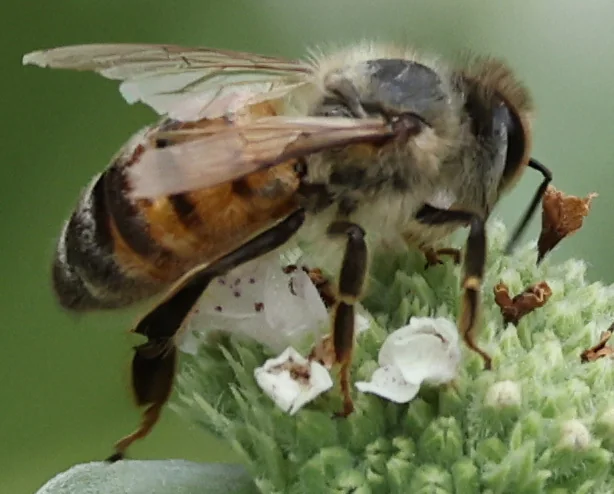
When Honey Bees Are Most Active in North Carolina
Now (November): Lower Outdoor ActivityVerified North Carolina Counties, Species & US Range
Counties with Verified Observations
- Orange
- Wake
- Mecklenburg
- Buncombe
- Dare
- Vance
- Durham
- Guilford
- Currituck
Species Recorded in North Carolina
| Species | Scientific Name | GBIF Records |
|---|---|---|
| western honey bee | Apis mellifera | 7,916 |
How North Carolina Compares to Neighboring States
Note: Wildlife does not follow state or county lines. GBIF totals reflect verified citizen and museum records, so low counts in a neighboring county do not guarantee absence.
How to Identify Honey Bees
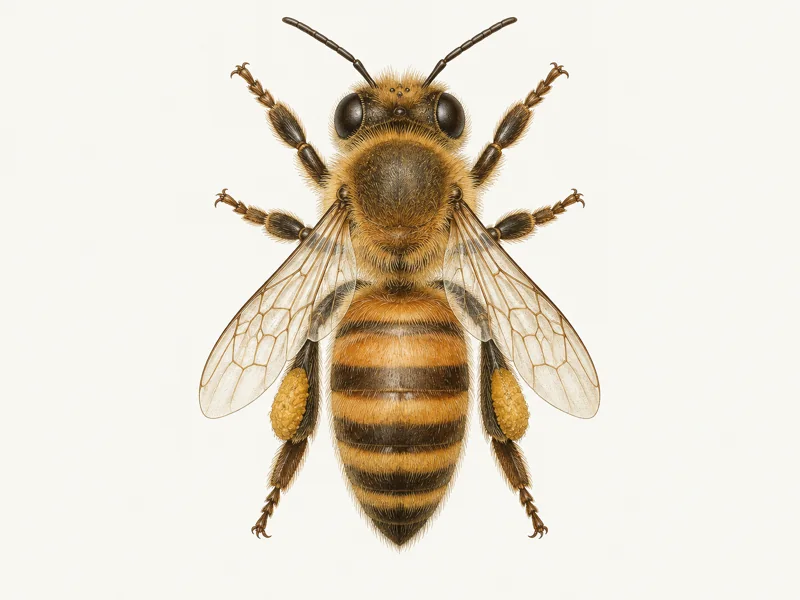
Annotated Anatomy Key (Honey Bee)
- Fuzzy golden thorax: Dense soft tawny-gold hairs trap pollen grains—wasps are smooth and hairless.
- Delicate clear wings: Two pairs of clear veined wings held flat over the back at rest.
- Pollen-basket legs: Broadened flattened hind legs carry golden pollen pellets back to the hive.
- Warm amber stripes: Lightly hairy honey-orange and dark brown bands—softer hue than neon yellow jackets.
Honey Bees Field Checklist
- Golden-amber to dark brown striped abdomen with fuzzy golden-tan thorax
- Pollen baskets on flattened hind legs
- Barbed stinger allows workers to sting only once
- Forms perennial wax-comb colonies and temporary spring swarms on tree branches
Honey Bees Size at True Relative Scale
Quick Answer: Yes, there are honey bees in North Carolina, and they are common statewide. GBIF has 7,916 verified sightings of the western honey bee (Apis mellifera), which is rated a nuisance-level pest at most. Most problems come from swarms or colonies that settle inside wall voids, and those are best handled by a bee keeper or licensed professional rather than by spraying.
Where Honey Bees Live in North Carolina
Honey bees are found across the state's humid subtropical coastal plain and piedmont, and in the cooler Blue Ridge mountains. The state spans USDA zones 6a to 8b, and honey bees adapt to all of them. GBIF records are densest in Orange, Wake, Mecklenburg, Buncombe, and Dare counties.
Managed hives sit in backyards, orchards, and farms. Wild or feral colonies nest in hollow trees, old utility boxes, and building cavities. A nest needs a dry, sheltered cavity with a small entrance.
- Hollow trees and logs
- Wall voids, chimneys, and soffits
- Sheds, attics, and abandoned structures
- Flowering gardens, meadows, and clover lawns (foraging only)
When Honey Bees Are Most Active in North Carolina
The North Carolina honey bee season runs from early spring through fall. Sightings in GBIF records peak in April, June, September, and October. Spring brings bloom and swarming, while fall brings foraging on goldenrod and asters.
Swarms are the most noticeable event. A swarm is a football-to-basketball-sized cluster of bees resting on a branch or fence while scouts look for a permanent home. Swarming bees are usually docile, but they should be left alone and reported to a local beekeeper.
In mild coastal winters, bees may fly on warm days. In the mountains, colonies cluster tightly inside the nest and stay quiet through the cold months.
Look-Alikes Frequently Mistaken for Honey Bees
North Carolina honey bee identification starts with body shape and behavior. Honey bees are about 0.5 inch long, golden-brown with faint darker banding, and have a fuzzy thorax. They carry pollen in packed baskets on their hind legs.
Several local insects are often confused with them:
- Bumble bees: Larger, rounder, and very fuzzy with bold black and yellow markings. They often nest in small ground cavities.
- Carpenter bees: Large, with a shiny, mostly hairless black abdomen. They bore round holes in bare wood.
- Yellow jackets: Smooth, bright yellow and black, with a thin waist. They scavenge at picnics and meat, and often nest underground.
- Wasps: Slender, smooth-bodied, with a narrow waist and legs that dangle in flight. Paper wasps build open, umbrella-shaped nests under eaves.
Correct identification matters because the control approach differs. Honey bees are important pollinators, and many beekeepers will remove a colony alive.
How to Keep Honey Bees Out of Your North Carolina Home
Anyone asking how to prevent honey bees in North Carolina should start with exclusion. Cavity-nesting bees need only a small opening, so sealing gaps is the best long-term defense. Inspect the house in late winter, before spring swarm activity begins.
- Seal cracks, gaps, and holes larger than about 1/8 inch with caulk or metal mesh.
- Screen chimneys, vents, and attic openings.
- Repair damaged siding, soffits, and fascia.
- Close or fill unused utility boxes, old meter enclosures, and hollow fence posts.
- Keep outdoor drink and food containers covered, and fix leaky spigots that attract thirsty bees.
If bees are already inside a wall, do not seal the entrance. Trapped bees can chew into living areas, and abandoned honeycomb can melt and attract other pests.
When to Call a Licensed Professional
Call a licensed North Carolina pest professional or a local beekeeper if you see any of the following:
- Steady bee traffic entering and leaving a wall, roof, or chimney
- A swarm that stays for more than a day or two near doors, play areas, or walkways
- Buzzing sounds or warm, stained spots on interior walls
- Anyone in the household with a known bee allergy
Pesticides should be a last resort. If a product is used, follow the EPA-approved label exactly. Honey bees are protected by many beekeepers and are valuable to agriculture, so live removal is preferred.
For a serious sting reaction, such as trouble breathing, facial swelling, or dizziness, call 911. For other sting questions, contact US Poison Control at 1-800-222-1222 and see a doctor.
IPM Prevention Checklist for North Carolina Homes
- Seal exterior wall voids, fascia cracks, and unused chimney flues before spring swarming season
 EXCLUSION BLUEPRINT
Inspect eaves, screens, door sweeps, foundation cracks, and utility penetrations around North Carolina homes before peak season.
Honey Bees in North Carolina: Frequently Asked Questions
Are there honey bees in North Carolina?
Yes. The western honey bee (Apis mellifera) is common here, with 7,916 verified GBIF sightings. Records are especially dense in Orange, Wake, Mecklenburg, Buncombe, and Dare counties.
When is honey bee season in North Carolina?
Activity begins in early spring and continues into fall. Recorded sightings peak in April, June, September, and October, with swarms most likely in spring.
Are honey bees dangerous?
They are considered a nuisance rather than a major danger. Honey bees sting mainly when defending the nest, but anyone with a bee allergy should keep their distance and seek medical care after a sting.
How can I tell a honey bee from a wasp?
Honey bees are fuzzy, golden-brown, and stocky. Wasps and yellow jackets are smooth, slender, and brightly marked, with a clearly narrow waist.
Sources & Verification
Data refreshed · Editorial & GBIF Methodology