Spiders in South Carolina: Identification, Season, and Prevention Guide
Quick Answer: Spiders in South Carolina are common, with 23,140 verified GBIF sightings concentrated in Charleston, Greenville, Spartanburg, Richland, and Berkeley counties. Activity peaks from July through October, when large orb weavers such as the American golden orb weaver, Jorō spider, and yellow garden spider (Argiope aurantia) become hard to miss.
When Spiders Are Most Active in South Carolina
Now (November): Lower Outdoor ActivityVerified South Carolina Counties, Species & US Range
Counties with Verified Observations
- Charleston
- Greenville
- Spartanburg
- Richland
- Berkeley
- York
- Georgetown
- Aiken
- Lexington
- Beaufort
Species Recorded in South Carolina
| Species | Scientific Name | GBIF Records |
|---|---|---|
| American Golden Orb Weaver | Trichonephila clavipes | 2,654 |
| Jorō spider | Trichonephila clavata | 2,201 |
| Orb Weavers | Argiope aurantia | 1,814 |
How South Carolina Compares to Neighboring States
Note: Wildlife does not follow state or county lines. GBIF totals reflect verified citizen and museum records, so low counts in a neighboring county do not guarantee absence.
How to Identify Spiders
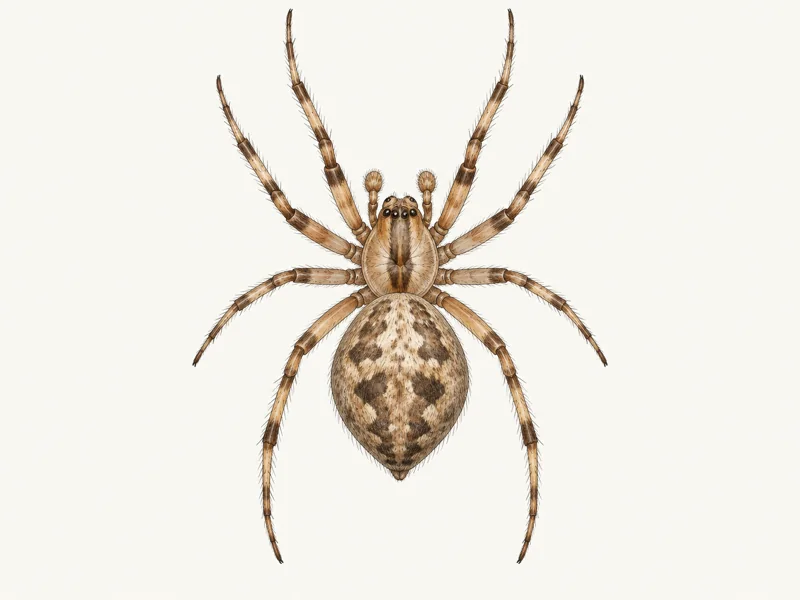
Annotated Anatomy Key (Spider)
- Eight tiny eyes: Two curved rows of 8 small eyes on a smooth tan front cephalothorax.
- Banded slender legs: Eight long thin tan legs ringed with darker brown bands at the joints.
- Comb-footed hind legs: Fine bristles on hind legs help fling silk over trapped insects in cobwebs.
- Mottled globular abdomen: Bulbous cream-and-brown patterned teardrop abdomen—lacks any red hourglass.
Spiders Field Checklist
- Two main body segments (cephalothorax and abdomen) and eight jointed legs
- No wings or antennae; most species have eight eyes (recluses have six)
- Nearly all US spiders are harmless beneficial predators of flies and mosquitoes
- Only widow spiders (Latrodectus) and recluse spiders (Loxosceles) are medically significant in the US
Side-by-Side Look-Alike Comparisons
Spiders Size at True Relative Scale
Quick Answer: Spiders in South Carolina are common, with 23,140 verified GBIF sightings concentrated in Charleston, Greenville, Spartanburg, Richland, and Berkeley counties. Activity peaks from July through October, when large orb weavers such as the American golden orb weaver, Jorō spider, and yellow garden spider (Argiope aurantia) become hard to miss. Most species are harmless nuisances that help control insect pests around homes and gardens.
Where Spiders Live in South Carolina
Anyone asking whether there are spiders in South Carolina only needs to walk a wooded trail in late summer. The state's humid subtropical climate, with hot, muggy summers and mild coastal winters across USDA zones 7a to 9a, supports a steady supply of flying insects. Those insects are prey for a wide range of spiders.
Verified GBIF records show the highest sighting counts in these counties:
- Charleston: Coastal marshes, live oaks, and porch lights draw heavy orb weaver activity.
- Greenville and Spartanburg: Upstate gardens, forest edges, and suburban yards host the Jorō spider and native orb weavers.
- Richland: The Midlands around Columbia offer shrubs, fences, and outbuildings ideal for web building.
- Berkeley: Lowcountry woodlands and waterways support dense insect populations and abundant spiders.
Outdoors, spiders favor shrubs, eaves, fences, woodpiles, and garden beds. Indoors, they settle in quiet, undisturbed spots such as garages, crawl spaces, basements, attics, and closet corners.
When Spiders Are Most Active in South Carolina
South Carolina spider season peaks in July, August, September, and October, according to GBIF occurrence data. During these months, orb weavers reach full adult size, and their large, sturdy webs stretch across paths, porches, and garden rows.
The American golden orb weaver (Trichonephila clavipes) spins golden-tinted silk in shady woods. The Jorō spider (Trichonephila clavata), a non-native species from East Asia now established in the Southeast, builds layered, three-dimensional webs. The yellow garden spider (Argiope aurantia) often hangs head-down in sunny gardens beside a zigzag silk band.
As fall temperatures drop, some spiders wander into homes looking for shelter or mates. Mild coastal winters mean low-level activity can continue year-round in the Lowcountry.
Look-Alikes Frequently Mistaken for Spiders
Accurate South Carolina spider identification starts with telling apart the species most often confused with one another. These look-alikes are all present in the state:
- Black widows: Glossy black with a red hourglass on the underside of the abdomen. They hide in woodpiles, meter boxes, and cluttered sheds. This is the one group here considered medically significant.
- Wolf spiders: Hairy, brown, and fast-running hunters that build no webs. Females carry egg sacs or spiderlings on their backs, and their eyes reflect light at night.
- Cellar spiders: Very long, thin legs and small bodies, often mistaken for "daddy longlegs" harvestmen. They build loose, messy webs in basements and corners.
- Orb weaver spiders: Round-bodied web builders that create the classic wheel-shaped web. Large, colorful orb weavers are often alarming to see but pose little risk.
If a black widow bite is suspected, contact US Poison Control at 1-800-222-1222 and seek care from a doctor. Do not rely on home remedies.
How to Keep Spiders Out of Your South Carolina Home
Knowing how to prevent spiders in South Carolina begins with non-chemical Integrated Pest Management (IPM). Cooperative extension guidance across the US agrees that reducing insect prey and shelter works better than spraying alone.
Exclusion
- Seal gaps around doors, windows, utility lines, and foundation cracks with caulk.
- Install tight door sweeps and repair torn window screens.
- Cover attic and crawl space vents with fine mesh.
Sanitation and Habitat Reduction
- Vacuum webs, spiders, and egg sacs regularly, then discard the bag outdoors.
- Reduce clutter in garages, closets, and storage areas, and store items in sealed plastic bins.
- Move firewood, mulch piles, and debris away from the foundation.
- Trim shrubs and vines so they don't touch siding or rooflines.
Moisture and Lighting Control
- Run a dehumidifier in damp basements and fix leaking pipes or gutters.
- Switch outdoor bulbs to yellow or warm LED lights that attract fewer insects.
- Keep crawl spaces dry and well ventilated.
If chemical control becomes necessary, choose a product labeled for spiders and follow the EPA product label exactly. The label is the law and explains safe application, placement, and re-entry times.
When to Call a Licensed Pest Professional
- Black widows are found repeatedly near children, pets, or high-traffic areas.
- Large numbers of spiders appear indoors despite consistent prevention.
- Webs and egg sacs return quickly in attics, crawl spaces, or wall voids.
- An underlying insect infestation is feeding the spider population.
A licensed South Carolina pest professional can inspect the property, identify the species, and build a targeted IPM plan.
IPM Prevention Checklist for South Carolina Homes
- Switch exterior entry lights to warm yellow bulbs to avoid attracting spider prey
- Seal door sweeps, window screens, and foundation cracks
- Declutter basements and garages using sealed plastic containers
 EXCLUSION BLUEPRINT
Inspect eaves, screens, door sweeps, foundation cracks, and utility penetrations around South Carolina homes before peak season.
Spiders in South Carolina: Frequently Asked Questions
Are there spiders in South Carolina that are dangerous?
Most spiders in the state are harmless nuisances. Black widows are the main medically significant look-alike, so call Poison Control at 1-800-222-1222 and see a doctor if a bite is suspected.
When is South Carolina spider season?
GBIF records show peak activity in July, August, September, and October, when orb weavers are largest and most visible.
Is the Jorō spider found in South Carolina?
Yes. The Jorō spider (Trichonephila clavata) is among the recorded species, especially noticeable in the Upstate and Midlands during late summer and fall.
Which South Carolina counties report the most spiders?
Charleston, Greenville, Spartanburg, Richland, and Berkeley counties have the most verified GBIF spider sightings in the state.
Sources & Verification
- UC IPM — Spiders
- Ohio State University Extension — Common Spiders
- GBIF Global Biodiversity Occurrence Records
Data refreshed · Editorial & GBIF Methodology