Honey Bees in California: Identification, Season, and Prevention
Quick Answer: Honey bees in California are common and widespread. GBIF holds 84,765 verified sightings of the western honey bee (Apis mellifera) in the state, with activity peaking from April through July. They are a nuisance-level pest at most, and they are valuable pollinators, so non-chemical steps and professional bee removal come first.
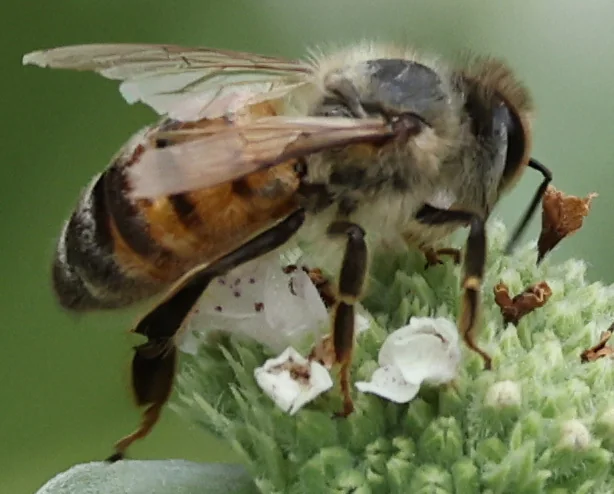
When Honey Bees Are Most Active in California
Now (November): Lower Outdoor ActivityVerified California Counties, Species & US Range
Counties with Verified Observations
- Los Angeles
- San Diego
- Riverside
- Orange
- San Bernardino
- Santa Barbara
- Ventura
- Kern
- Placer
- Amador
Species Recorded in California
| Species | Scientific Name | GBIF Records |
|---|---|---|
| western honey bee | Apis mellifera | 84,765 |
How California Compares to Neighboring States
Note: Wildlife does not follow state or county lines. GBIF totals reflect verified citizen and museum records, so low counts in a neighboring county do not guarantee absence.
How to Identify Honey Bees
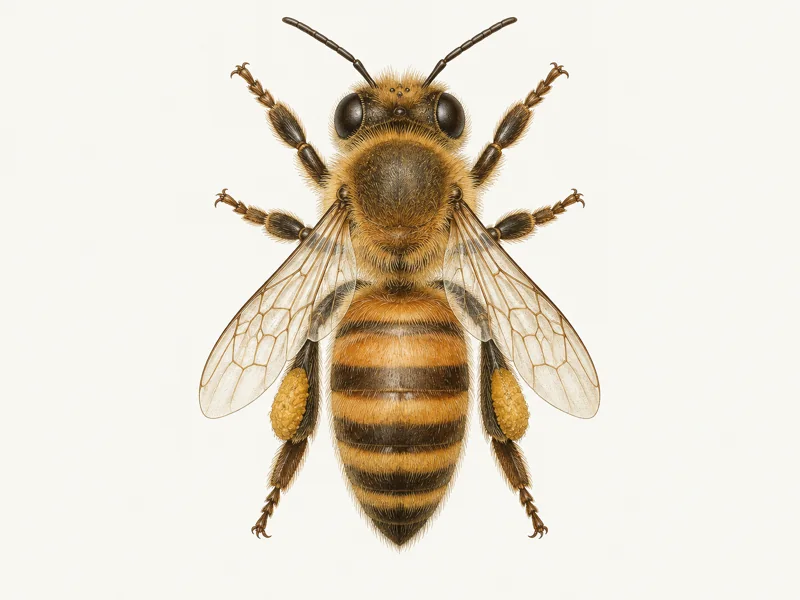
Annotated Anatomy Key (Honey Bee)
- Fuzzy golden thorax: Dense soft tawny-gold hairs trap pollen grains—wasps are smooth and hairless.
- Delicate clear wings: Two pairs of clear veined wings held flat over the back at rest.
- Pollen-basket legs: Broadened flattened hind legs carry golden pollen pellets back to the hive.
- Warm amber stripes: Lightly hairy honey-orange and dark brown bands—softer hue than neon yellow jackets.
Honey Bees Field Checklist
- Golden-amber to dark brown striped abdomen with fuzzy golden-tan thorax
- Pollen baskets on flattened hind legs
- Barbed stinger allows workers to sting only once
- Forms perennial wax-comb colonies and temporary spring swarms on tree branches
Honey Bees Size at True Relative Scale
Where Honey Bees Live in California
Are there honey bees in California? Yes, in nearly every part of the state. The western honey bee thrives in Mediterranean coastal areas, inland valleys, arid desert margins, and lower mountain zones across USDA zones 5a to 11a.
GBIF records are densest in these counties:
- Los Angeles
- San Diego
- Riverside
- Orange
- San Bernardino
Managed hives sit in orchards, farms, and backyards. Wild or feral colonies nest in hollow trees, wall voids, chimneys, eaves, water meter boxes, and unused sheds.
Quick California Honey Bee Identification
Workers are about 1/2 inch long with a golden-brown, fuzzy body and darker bands on the abdomen. Their hind legs carry flattened pollen baskets, often loaded with yellow or orange pollen.
- Fuzzy thorax, not shiny or bare
- Slender, moderately tapered abdomen
- Steady, purposeful flight between flowers
- Wax comb in enclosed cavities, not paper nests
When Honey Bees Are Most Active in California
California honey bee season peaks from April through July, based on GBIF occurrence records. Spring bloom drives colony growth, and that is also when swarms appear.
A swarm is a cluster of thousands of bees resting on a branch, fence, or eave while scouts look for a permanent nest. Swarms are usually docile because the bees carry no brood to defend. They typically move on within a few days.
In mild coastal areas, some foraging continues in winter wherever flowers bloom. Inland and desert bees slow down during extreme summer heat and gather near water sources like pools, drip lines, and pet bowls.
Look-Alikes Frequently Mistaken for Honey Bees
Several California insects are often confused with honey bees. Correct identification matters because treatment and removal differ.
- Wasps: Smooth, slender, and mostly hairless, with a narrow waist. They build papery nests.
- Yellow jackets: Bold, bright yellow-and-black patterns with a shiny body. They scavenge at trash cans and picnics and nest in ground burrows or wall voids.
- Bumble bees: Larger, rounder, and very fuzzy, with black and yellow patches. They nest in small colonies in abandoned rodent burrows or grass clumps.
- Carpenter bees: Large with a shiny, mostly bare black abdomen. They bore neat round holes in unpainted wood.
If you are unsure, photograph the insect from a safe distance and compare the fuzz, waist, and nest type.
How to Keep Honey Bees Out of Your California Home
If you wonder how to prevent honey bees in California homes, start with exclusion. Bees need a cavity of roughly 5 to 40 gallons with a small entrance.
- Seal gaps larger than 1/8 inch around eaves, vents, siding, and utility penetrations with caulk or hardware cloth.
- Screen chimneys, attic vents, and weep holes.
- Cover or fill unused cavities, empty hive boxes, and old irrigation or meter boxes.
- Fix leaking faucets and drip lines, which attract bees seeking water.
- Keep trash lids tight and clean up sugary spills.
Do this sealing before spring. Never seal a cavity that already holds a live colony, because trapped bees and leftover honey and comb can cause damage and odors inside walls.
When to Call a Licensed California Pest Professional
- Bees are entering or leaving a wall, roof, or chimney repeatedly.
- A swarm stays more than a few days or settles in a high or hard-to-reach spot.
- Anyone in the household has a known allergy to stings.
- You see comb, dripping honey, or a steady hum inside a wall.
- Bees show defensive behavior, which can signal an Africanized-type colony.
Ask for live bee removal first. Local beekeepers often relocate swarms. Treat chemical products as a last resort, and follow every EPA-registered product label exactly. Avoid spraying bees near flowering plants, since honey bees are important pollinators.
For serious stings, trouble breathing, or swelling beyond the sting site, call 911. For other sting questions, contact US Poison Control at 1-800-222-1222 and a doctor.
IPM Prevention Checklist for California Homes
- Seal exterior wall voids, fascia cracks, and unused chimney flues before spring swarming season
 EXCLUSION BLUEPRINT
Inspect eaves, screens, door sweeps, foundation cracks, and utility penetrations around California homes before peak season.
Honey Bees in California: Frequently Asked Questions
Are there honey bees in California year-round?
Yes, though activity varies by region. Coastal areas with mild winters see some foraging year-round, while peak numbers occur April through July.
Are honey bees in California dangerous?
They are generally a nuisance and defend their nest only when disturbed. Anyone with a sting allergy should keep distance and seek medical help if stung.
What should I do about a honey bee swarm on my property?
Keep people and pets away and do not spray it. Contact a local beekeeper or licensed pest professional for live removal.
Will sealing holes get rid of an existing hive?
No. Sealing only prevents new nests. An active colony needs professional removal, including comb cleanup, before the opening is closed.
Sources & Verification
Data refreshed · Editorial & GBIF Methodology