Honey Bees in Arizona: Where They Live, When They're Active, and How to Manage Them
Quick Answer: Honey bees in Arizona are common and widespread. The western honey bee (Apis mellifera) has 7,039 verified GBIF sightings in the state, with the most records in Maricopa, Pima, Pinal, Yavapai, and La Paz counties. They are rated a nuisance pest, and activity peaks in March, April, September, and October.
When Honey Bees Are Most Active in Arizona
Now (November): Moderate ActivityVerified Arizona Counties, Species & US Range
Counties with Verified Observations
- Maricopa
- Pima
- Pinal
- Yavapai
- La Paz
- Yuma
Species Recorded in Arizona
| Species | Scientific Name | GBIF Records |
|---|---|---|
| western honey bee | Apis mellifera | 7,039 |
How Arizona Compares to Neighboring States
Note: Wildlife does not follow state or county lines. GBIF totals reflect verified citizen and museum records, so low counts in a neighboring county do not guarantee absence.
How to Identify Honey Bees
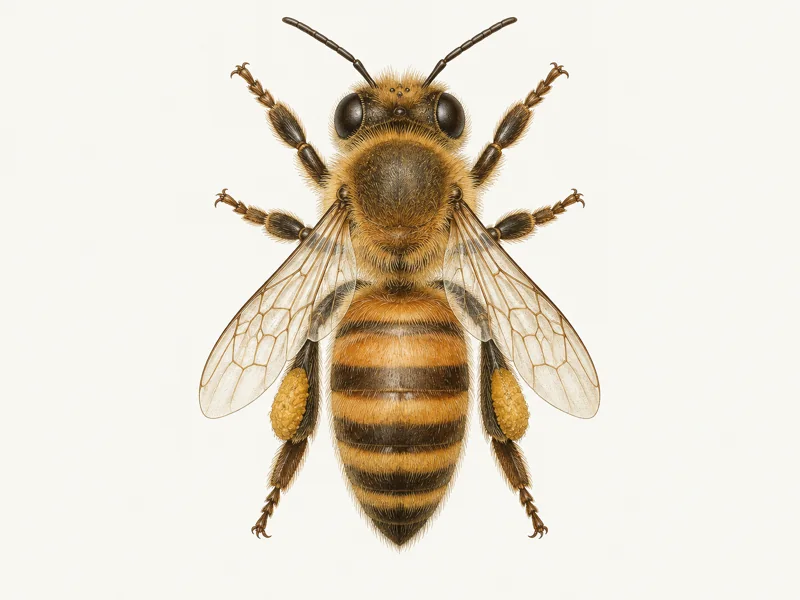
Annotated Anatomy Key (Honey Bee)
- Fuzzy golden thorax: Dense soft tawny-gold hairs trap pollen grains—wasps are smooth and hairless.
- Delicate clear wings: Two pairs of clear veined wings held flat over the back at rest.
- Pollen-basket legs: Broadened flattened hind legs carry golden pollen pellets back to the hive.
- Warm amber stripes: Lightly hairy honey-orange and dark brown bands—softer hue than neon yellow jackets.
Honey Bees Field Checklist
- Golden-amber to dark brown striped abdomen with fuzzy golden-tan thorax
- Pollen baskets on flattened hind legs
- Barbed stinger allows workers to sting only once
- Forms perennial wax-comb colonies and temporary spring swarms on tree branches
Honey Bees Size at True Relative Scale
Where Honey Bees Live in Arizona
Are there honey bees in Arizona? Yes, and they occur across very different climates. The state spans hot desert lowlands in the south, monsoon-influenced valleys, and cooler northern highlands, with USDA hardiness zones from 5a to 10a. GBIF records show honey bees thriving in all of these settings, especially near the Phoenix and Tucson metro areas.
Managed colonies sit in beekeepers' hives, but feral colonies nest in natural and man-made cavities. Common nesting sites include:
- Hollow trees and saguaro cavities
- Wall voids, eaves, and soffits
- Block-wall fences and utility boxes
- Irrigation meter boxes and water valve covers
- Sheds, stored equipment, and unused barbecues
Bees need water, especially in dry heat. Pools, drip lines, pet bowls, and leaking hose bibs often draw foragers into yards.
When Honey Bees Are Most Active in Arizona
The Arizona honey bee season follows desert bloom cycles rather than a simple summer pattern. Recorded sightings peak in March and April, when spring flowers, citrus blossoms, and desert wildflowers open. A second peak comes in September and October, after the monsoon rains trigger fall blooms.
Spring is also when colonies grow quickly and may divide, so swarms are most likely then. A swarm is a temporary cluster of bees resting while scouts look for a nest site. Swarming bees are usually focused on finding a home, but they should still be left alone.
Midsummer heat slows foraging to the cooler hours of the morning and evening. Bees visiting water sources are common in the hottest months.
Look-Alikes Frequently Mistaken for Honey Bees
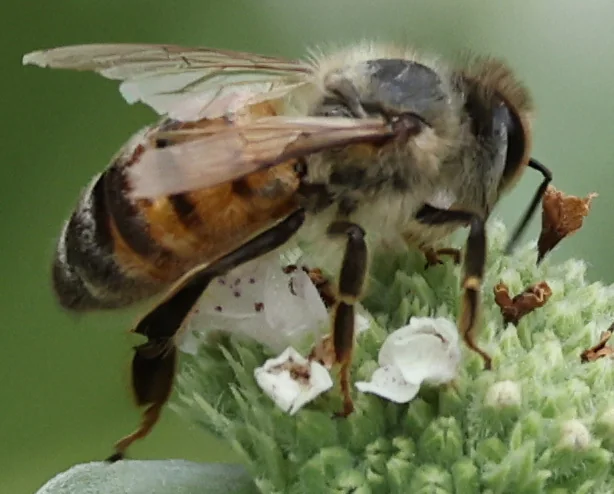
Arizona honey bee identification starts with body shape and behavior. Honey bees are about half an inch long, golden-brown to amber with faint darker banding, and covered in fine hair. They fly in a steady path between flowers and a nest or water source.
Several Arizona insects are often confused with them:
- Wasps: Slender and smooth with a narrow waist, little body hair, and long dangling legs in flight.
- Yellow jackets: Bright yellow and black with sharply defined markings. They are attracted to meat and sugary drinks and can be more defensive near nests.
- Bumble bees: Larger, rounder, and very fuzzy with a loud buzz. They are important native pollinators.
- Carpenter bees: Large and robust, often with a shiny, mostly hairless black abdomen. They bore neat round holes in unpainted or weathered wood.
Correct identification matters because the best response differs for each insect. Honey bees are valuable pollinators, and removal by a beekeeper is often preferable to extermination.
How to Keep Honey Bees Out of Your Arizona Home
For anyone wondering how to prevent honey bees in Arizona, non-chemical steps work best. Start with exclusion, since bees need only a gap about the size of a pencil to enter a cavity.
- Seal cracks in stucco, siding, and block walls with caulk or steel mesh.
- Screen vents, weep holes, and chimney openings with quarter-inch hardware cloth.
- Cover or fit tight lids on meter boxes and unused containers.
- Fix dripping faucets and irrigation leaks that provide water.
- Keep trash cans closed and clean up sugary spills and fallen fruit.
- Inspect yards in early spring and early fall, the peak months.
Do not seal an opening while a colony is active inside. The bees, wax, and honey can stay in the wall, attract other pests, and cause damage as the comb melts in the heat.
When to Call a Licensed Arizona Pest Professional
- Bees are entering or leaving a wall, roof, or ceiling void.
- A swarm or colony remains for more than a day or two.
- A nest sits near doors, play areas, or walkways.
- Anyone in the household is allergic to stings.
- Bees behave defensively or in large numbers.
Ask whether the company offers live bee removal or works with local beekeepers. If a pesticide is used, it must be applied by a licensed professional following the EPA-approved label. For a sting emergency, trouble breathing, or swelling beyond the sting site, seek medical care right away. For poison questions, contact US Poison Control at 1-800-222-1222.
IPM Prevention Checklist for Arizona Homes
- Seal exterior wall voids, fascia cracks, and unused chimney flues before spring swarming season
 EXCLUSION BLUEPRINT
Inspect eaves, screens, door sweeps, foundation cracks, and utility penetrations around Arizona homes before peak season.
Honey Bees in Arizona: Frequently Asked Questions
Are there honey bees in Arizona?
Yes. The western honey bee (Apis mellifera) is common statewide, with the most GBIF records in Maricopa, Pima, Pinal, Yavapai, and La Paz counties.
When is honey bee season in Arizona?
Sightings peak in March, April, September, and October, matching the spring and post-monsoon bloom periods. Bees also gather at water sources during hot summer months.
Are honey bees dangerous?
They are considered a nuisance and usually sting only when the nest or the bee itself is threatened. People with known allergies should avoid nests and seek professional help.
Should I spray a honey bee nest myself?
No. Do-it-yourself spraying is often ineffective and risky, and it leaves behind comb and honey. Contact a licensed professional or local beekeeper, and always follow EPA label directions for any product.
Sources & Verification
Data refreshed · Editorial & GBIF Methodology