Honey Bee vs Wasp: How to Tell Them Apart and Handle Each Safely
Quick ID Verdict: If the insect is fuzzy, with a golden-tan thorax and a stocky, amber-to-brown striped body, it's almost certainly a honey bee. If it's smooth, shiny, nearly hairless, and pinched at the waist like an hourglass, it's a wasp.
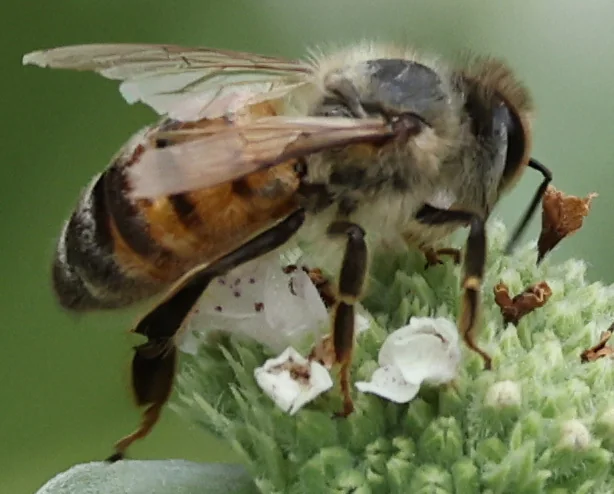
Honey Bee
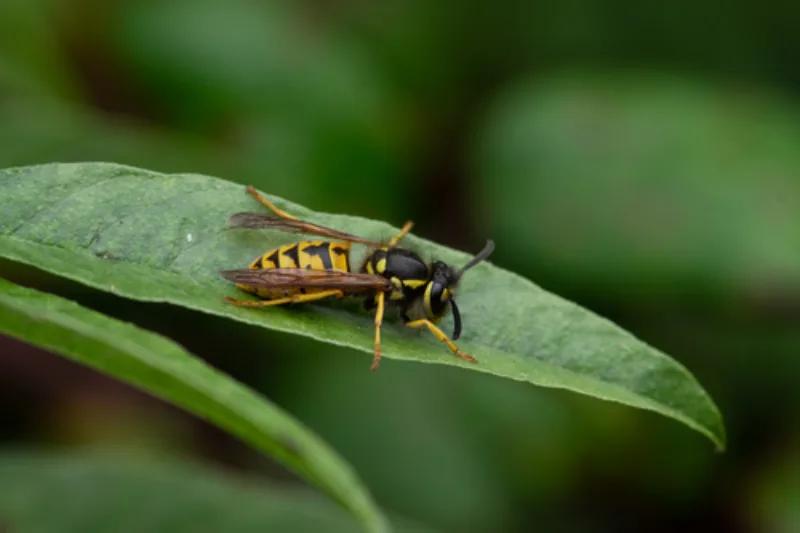
Wasp
Side-by-Side Comparison Table
| Trait | Honey Bee | Wasp |
|---|---|---|
| Scientific Group | Apis mellifera | Vespidae |
| Category | Insect | Insect |
| Typical Size | 12–16 mm | 12–28 mm |
| Danger Level | Nuisance | Medically Significant |
| Bites or Stings? | Yes | Yes |
| Peak US Months | April, July, August, September | July, August, September, October |
| Key ID Trait | Golden-amber to dark brown striped abdomen with fuzzy golden-tan thorax | Slender, smooth, nearly hairless body with a very narrow pinched waist |
Honey Bee vs. Wasp: True Size Comparison
Side-by-Side Anatomy Blueprint
Compare body segments, antennae, leg count, and key markings directly before treating or removing either species.
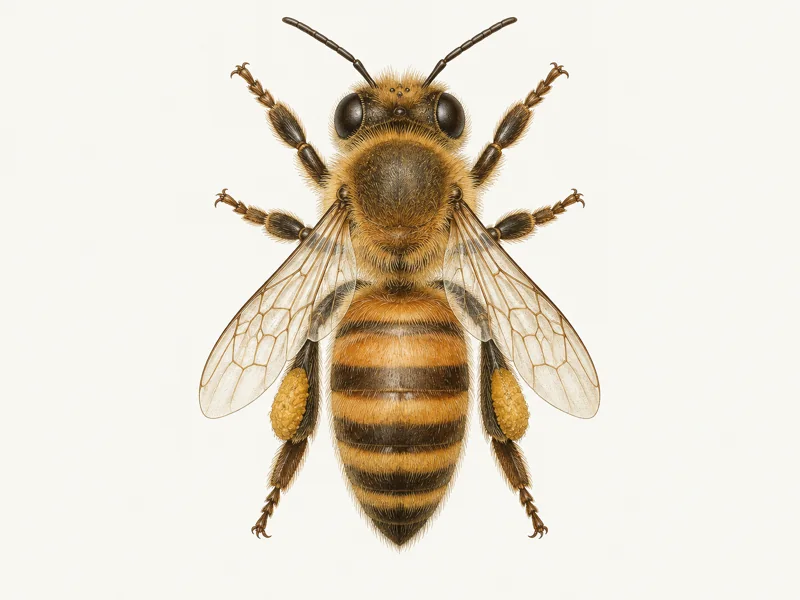
- Fuzzy golden thorax: Dense soft tawny-gold hairs trap pollen grains—wasps are smooth and hairless.
- Delicate clear wings: Two pairs of clear veined wings held flat over the back at rest.
- Pollen-basket legs: Broadened flattened hind legs carry golden pollen pellets back to the hive.
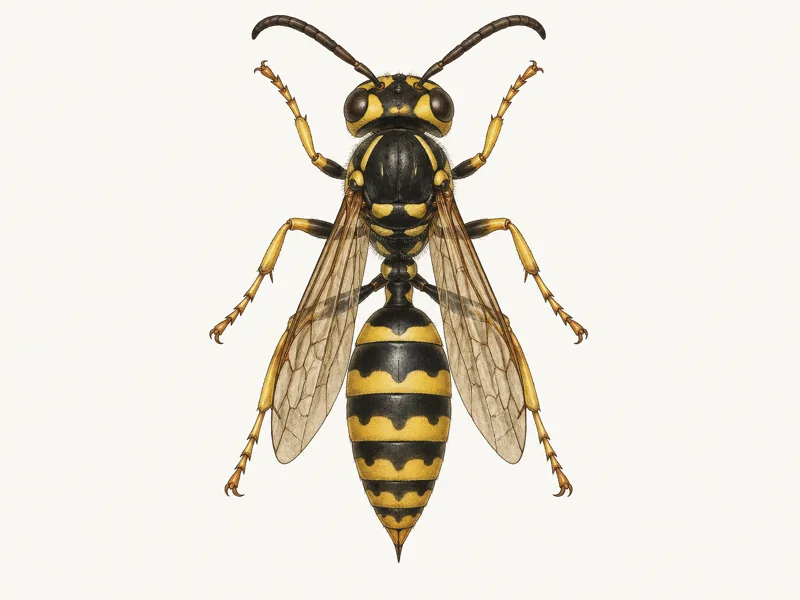
- Curved dark antennae: Segmented dark antennae and strong chewing mandibles for wood pulp nests.
- Smoky folded wings: Two pairs of narrow veined wings that fold lengthwise along the back at rest.
- Pinched waist: Sharp slender constriction separating the smooth hairless thorax from abdomen.
Quick ID verdict: If the insect is fuzzy, with a golden-tan thorax and a stocky, amber-to-brown striped body, it's almost certainly a honey bee. If it's smooth, shiny, nearly hairless, and pinched at the waist like an hourglass, it's a wasp.
That three-second check matters. In the honey bee vs wasp matchup, one is a valuable pollinator that rarely causes trouble, and the other can defend its nest aggressively. Here's how US homeowners can identify each one and respond safely.
Key Differences Between Honey Bees and Wasps at a Glance
Most honey bee vs wasp identification comes down to two things: how the body looks up close and how the insect behaves around people. Here's a side-by-side summary.
TraitHoney Bee (Apis mellifera)Wasps (Vespidae)Size12–16 mm12–28 mmBodyFuzzy, stockySmooth, slender, nearly hairlessWaistThick, less obviousVery narrow and pinchedDanger levelNuisanceMedically significant
Body Shape, Color, and Hair
Honey bees have a golden-amber to dark brown striped abdomen and a fuzzy, golden-tan thorax. That hair isn't decorative. It traps pollen, which is why foraging bees often look dusty.
Wasps look sleeker and more polished. Their bodies are smooth and nearly hairless, with a very narrow waist between the thorax and abdomen. Many common species, like yellowjackets, show sharp black-and-yellow bands, while paper wasps tend toward brown or reddish tones with long, dangling legs in flight. Size helps too: honey bees stay within a tight 12–16 mm range, but wasps run anywhere from 12 to 28 mm.
Behavior, Diet, and Aggression
The real difference between honey bee and wasp behavior shows up at a picnic table. Honey bees feed on nectar and pollen, so they stick to flowers and clover and mostly ignore people.
Wasps are hunters and scavengers. They feed insects to their young and chase sugars and proteins as adults, which draws them to soda cans, trash bins, and grilled meat. Wasps also defend nests more readily, especially late in the season.
Nests and Hives: Where Each Insect Lives
Nest material is one of the easiest clues for anyone unsure whether they're dealing with a honey bee or wasp.
- Honey bees build wax comb inside protected cavities: hollow trees, wall voids, chimneys, and attic spaces. A colony can hold tens of thousands of bees and survives the winter.
- Wasps build papery nests from chewed wood fiber. Paper wasps make open, umbrella-shaped combs under eaves and deck railings. Yellowjackets often nest underground or in wall voids, and hornets hang enclosed, football-shaped nests in trees and shrubs.
In spring, homeowners may also spot a honey bee swarm, a large cluster on a branch or fence post. It looks alarming, but swarming bees have no nest to defend and are usually calm while scouts search for a new home.
Stings, Seasonal Activity, and Risks to Your Family
Honey bees are classed as a nuisance-level pest. A worker's stinger is barbed, so it usually stings a person once and dies. They sting mainly when stepped on, swatted, or when someone disturbs the colony.
Wasps are medically significant. Their smooth stingers allow repeated stings, and a disturbed nest can send many defenders out at once. Activity peaks from late summer into fall, when colonies are largest and food is scarce. That's when yellowjackets get pushy around outdoor meals and garbage.
Across the US, both insects are active from spring through fall, with the season starting earlier and running longer in southern states. Honey bees may fly on warm winter days, while most wasp colonies die off with hard frost, leaving only mated queens to overwinter.
Anyone stung who has trouble breathing, swelling of the face or throat, or multiple stings should get emergency care right away. For any sting concern, contact US Poison Control at 1-800-222-1222 and follow up with a doctor.
Safe IPM Steps for Managing Honey Bees or Wasps
Integrated Pest Management (IPM) starts with prevention, not spray. These non-chemical steps reduce visits from both insects:
- Exclusion: Seal gaps around siding, soffits, vents, and utility lines. Screen chimney tops and attic vents.
- Sanitation: Keep trash cans lidded, rinse recycling, and cover food and drinks outdoors.
- Moisture control: Fix leaky spigots and drain standing water, since both insects need water nearby.
- Early inspection: Check eaves and decks in spring, when a wasp nest may be only golf-ball size.
If a pesticide is ever necessary, it should be used only on wasps, never on honey bees, and homeowners should always follow the EPA product label exactly.
When to Call a Beekeeper or Pest Professional
For honey bees, call a local beekeeper or bee removal service first. Many will collect swarms for little or no cost, and colonies inside walls require comb removal to prevent melting wax, rotting honey, and new pests.
For wasps, a licensed pest professional is the safer choice when a nest is large, underground, inside a wall, or near a doorway. The same goes for any household with someone who has a known sting allergy.
Frequently Asked Questions
What's the easiest way to tell a honey bee from a wasp?
Look at the body texture and waist. Honey bees are fuzzy with a stocky build and thick waist, while wasps are smooth, shiny, nearly hairless, and pinched at the waist like an hourglass. This three-second check helps you respond safely.
Why do honey bees have fuzzy bodies while wasps are smooth?
Honey bee hair traps pollen during foraging, which is why they often look dusty. Wasps don't need this adaptation since they're hunters and scavengers, not pollinators. Their smooth bodies help them move efficiently between nests and food sources.
Are honey bees more aggressive than wasps?
No. Honey bees are considered a nuisance-level pest and rarely sting unless stepped on or the colony is disturbed. Wasps are medically significant—they can sting repeatedly and defend nests aggressively, especially in late summer when colonies are largest.
What do honey bees and wasps eat, and why does it matter?
Honey bees feed on nectar and pollen from flowers, so they mostly ignore people. Wasps hunt insects and scavenge for sugars and proteins, which draws them to trash, soda cans, and grilled food at outdoor meals.
What should I do if I find a honey bee swarm on my property?
Don't panic—swarming bees have no nest to defend and are usually calm. Contact a local beekeeper or bee removal service, many of which collect swarms for free or low cost. Avoid disturbing the cluster.
When should I call a professional instead of handling a bee or wasp problem myself?
Always contact a beekeeper for honey bees, especially colonies in walls that require comb removal. For wasps, hire a licensed pest professional if the nest is large, underground, in walls, near doorways, or if anyone in your household has a sting allergy.