Honey Bee vs Yellow Jacket: How to Tell Them Apart and Handle Each Safely
Quick ID Verdict: A striped insect buzzing around a soda can isn't always a bee. In the honey bee vs yellow jacket matchup, the quickest clue is texture. Honey bees look fuzzy and golden-amber, while yellow jackets look smooth, shiny, and banded in vivid yellow and jet black. If it's hairy and busy at flowers, it's likely a bee. If it's sleek and circling your burger, it's almost certainly a yellow jacket.
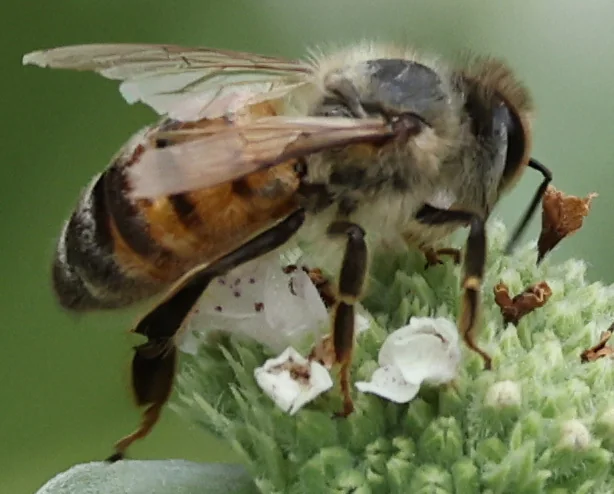
Honey Bee
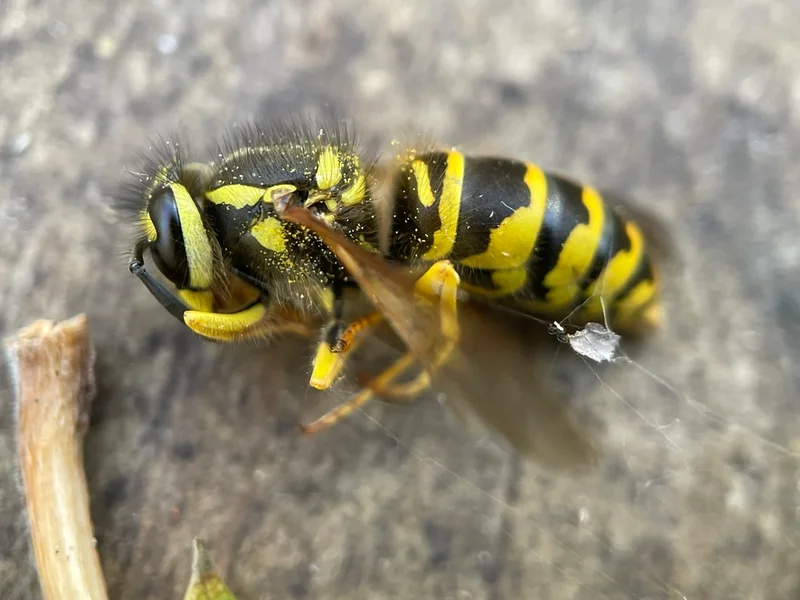
Yellow Jacket
Side-by-Side Comparison Table
| Trait | Honey Bee | Yellow Jacket |
|---|---|---|
| Scientific Group | Apis mellifera | Vespula |
| Category | Insect | Insect |
| Typical Size | 12–16 mm | 10–16 mm |
| Danger Level | Nuisance | Medically Significant |
| Bites or Stings? | Yes | Yes |
| Peak US Months | April, July, August, September | August, September, October |
| Key ID Trait | Golden-amber to dark brown striped abdomen with fuzzy golden-tan thorax | Compact, shiny wasp with vivid bright-yellow and jet-black abdominal bands |
Honey Bee vs. Yellow Jacket: True Size Comparison
Side-by-Side Anatomy Blueprint
Compare body segments, antennae, leg count, and key markings directly before treating or removing either species.
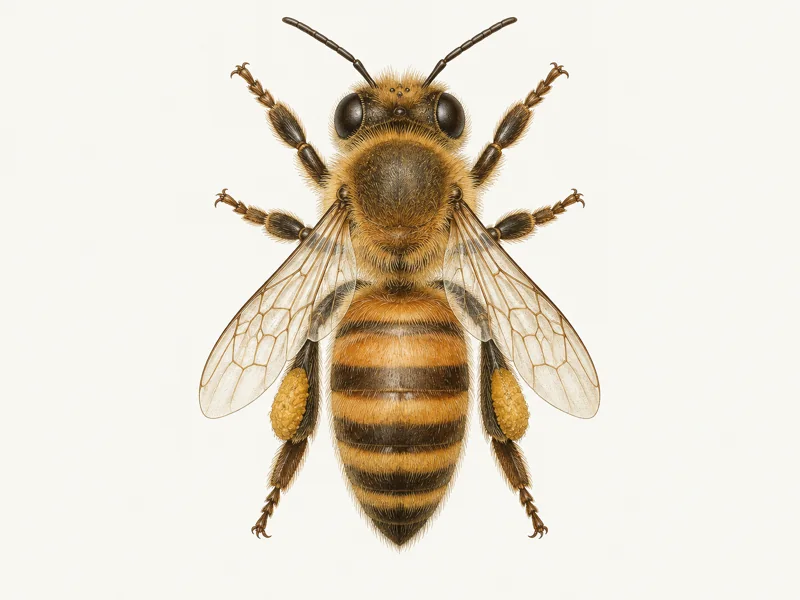
- Fuzzy golden thorax: Dense soft tawny-gold hairs trap pollen grains—wasps are smooth and hairless.
- Delicate clear wings: Two pairs of clear veined wings held flat over the back at rest.
- Pollen-basket legs: Broadened flattened hind legs carry golden pollen pellets back to the hive.
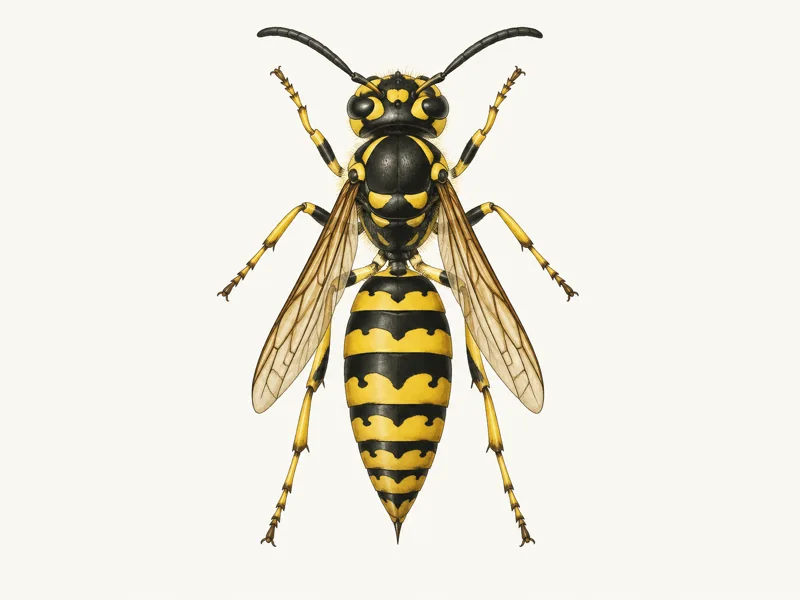
- Smooth hairless body: Compact shiny black-and-yellow thorax—lacks the fuzzy hair coat of honey bees and bumble bees.
- Folded wings: Two pairs of smoky translucent wings that fold lengthwise along the sides at rest.
- Pinched waist: Extremely narrow constriction separating thorax and abdomen; legs tuck tightly in flight.
Honey Bee or Yellow Jacket? Quick Identification Guide
Both insects fall in a similar size range, so size alone won't settle the question. Honey bee vs yellow jacket identification comes down to three things: hair, color, and where the insect lives.
Body Shape, Color, and Hair
FeatureHoney Bee (Apis mellifera)Yellow Jacket (Vespula)Length12–16 mm10–16 mmAbdomenGolden-amber to dark brown stripesVivid bright-yellow and jet-black bandsThoraxFuzzy, golden-tanSmooth, shinyBuildRounded, hairyCompact, sleek wasp shapeLegsOften carry pollen loadsThin, no pollen basketsThe biggest difference between honey bee and yellow jacket bodies is hair. Honey bees are covered in branched hairs built for collecting pollen, which gives them a soft, muted look. Yellow jackets are nearly hairless and almost glossy, with a sharply pinched waist and colors that look painted on.
Nests and Where You'll Find Them
Honey bees build waxy comb, usually in managed hives, hollow trees, or occasionally wall voids. A swarm hanging from a branch in spring is a temporary cluster looking for a new home, not a permanent nest.
Yellow jackets build gray, papery nests. Many species nest underground in old rodent burrows, while others choose attics, sheds, wall cavities, or dense shrubs. A steady stream of insects darting in and out of a hole in the lawn is a classic yellow jacket sign.
Key Differences in Behavior and Stinging Risk
Honey bees are foragers. They spend their days on flowers, gathering nectar and pollen, and rarely bother people away from the hive. A worker honey bee's barbed stinger usually lodges in skin, so she typically stings once and dies. That's why honey bees are classed as a nuisance rather than a serious threat for most people.
Yellow jackets are scavengers and predators. They hunt other insects but also crave sugar and protein, which draws them to trash cans, picnics, and pet food. Their smooth stinger lets them sting repeatedly, and they defend nests aggressively when disturbed by mowers or foot traffic. Yellow jackets are considered medically significant.
If someone has trouble breathing, swelling of the face or throat, or receives many stings, call 911. For other sting concerns, contact US Poison Control at 1-800-222-1222 and follow up with a doctor.
Seasonal Activity and Presence Across US States
Both insects occur across the continental United States. Honey bees are kept by beekeepers in all 50 states, and feral colonies live wherever there's shelter and forage. Several yellow jacket species split the map, including the eastern yellow jacket (Vespula maculifrons) and the western yellow jacket (Vespula pensylvanica).
Their calendars differ in important ways:
- Honey bees forage from early spring through fall and survive winter as a clustered colony inside the hive. Swarming peaks in spring.
- Yellow jackets start each year from a single queen. Colonies grow slowly in spring, then explode in size by late summer.
- Late summer and fall is peak yellow jacket conflict season, when natural food sources drop and workers turn to human food.
- Winter kills off yellow jacket workers in most states, leaving only mated queens to overwinter. In warm southern regions, some colonies can persist longer.
Safe IPM Strategies for Each Insect
Integrated Pest Management starts with prevention, not spray. Honey bees are valuable pollinators and should be relocated rather than killed whenever possible.
For yellow jackets:
- Keep trash cans tightly lidded and rinse out recyclables.
- Cover food and drinks outdoors, especially in late summer.
- Pick up fallen fruit and pet food promptly.
- Seal gaps around siding, eaves, and vents before spring to block nesting.
- Mark ground nests and keep kids, pets, and mowers away.
For honey bees:
- Seal openings in walls and soffits to prevent colonies from moving in.
- Leave spring swarms alone: most move on within a day or two.
- Fix leaks and reduce standing water near entryways.
If a product is ever used, follow the EPA product label exactly. Never pour gasoline or other improvised chemicals into a nest.
When to Call a Beekeeper or Pest Professional
Call a local beekeeper or swarm-removal service for honey bees, especially swarms or colonies in walls. Established wall colonies often require removing the comb, since leftover honey can attract pests and cause damage.
Call a licensed pest professional for yellow jacket nests in walls, attics, or high-traffic areas, or whenever anyone in the household has a known sting allergy. Professionals have protective gear and can treat nests in the evening, when activity is lowest. For homeowners, the yellow jacket is usually the bigger problem, while the honey bee is usually the one worth saving.
Frequently Asked Questions
What's the easiest way to tell a honey bee from a yellow jacket?
The quickest clue is texture: honey bees are fuzzy and golden-amber, while yellow jackets are smooth, shiny, and banded in vivid yellow and jet black. If it's hairy and busy at flowers, it's a bee; if it's sleek and circling food, it's a yellow jacket.
Why do honey bees only sting once while yellow jackets can sting multiple times?
Honey bees have barbed stingers that lodge in skin, causing the stinger to tear from their abdomen, resulting in death. Yellow jackets have smooth stingers that retract, allowing them to sting repeatedly without injury.
Where do yellow jackets build their nests?
Yellow jackets build gray, papery nests underground in old rodent burrows, or in attics, sheds, wall cavities, and dense shrubs. A steady stream of insects darting in and out of a lawn hole is a classic yellow jacket sign.
What should I do if I encounter a honey bee swarm in spring?
Leave spring swarms alone—most move on within a day or two. Contact a local beekeeper or swarm-removal service to relocate them safely. Honey bees are valuable pollinators and should never be killed when possible.
When is yellow jacket season, and why are they more aggressive in late summer?
Yellow jacket colonies grow slowly in spring but explode in size by late summer. Peak conflict occurs in fall when natural food sources drop, forcing workers to scavenge human food and trash, making them more aggressive.
What's the best way to prevent yellow jackets around my home?
Keep trash cans tightly lidded, cover food and drinks outdoors, pick up fallen fruit and pet food promptly, and seal gaps around siding and eaves before spring to block nesting sites.