Bumble Bee vs Honey Bee: How to Tell Them Apart (and What to Do About Each)
Quick ID Verdict: A fuzzy bee drifting over the clover gets most homeowners asking the same question: bumble bee or honey bee? The answer matters more than it seems. It changes how big the nest is likely to be, how long it'll stick around, and who should handle it if it's too close to the house.
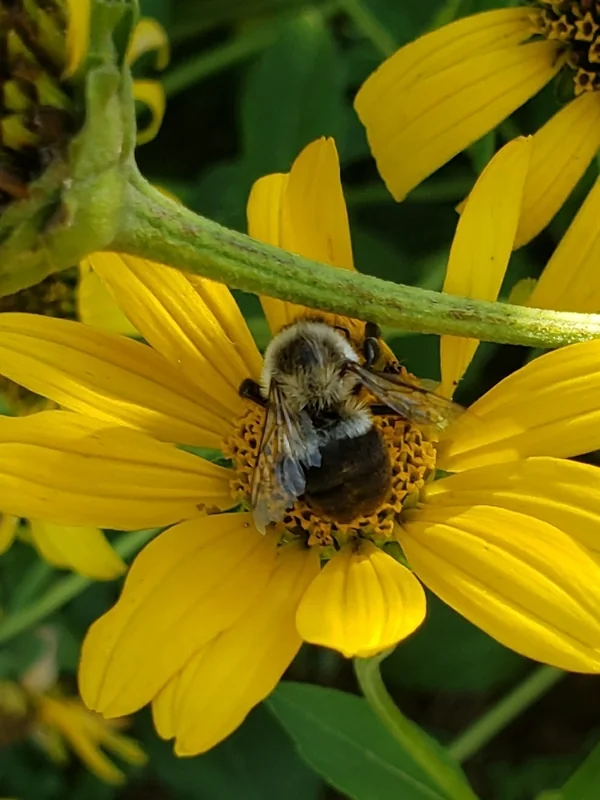
Bumble Bee
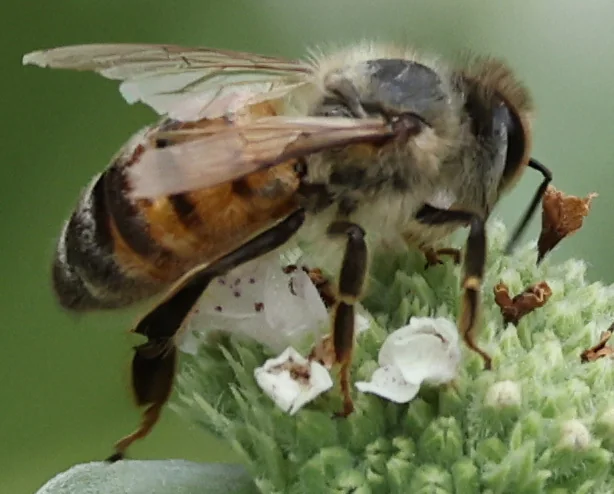
Honey Bee
Side-by-Side Comparison Table
| Trait | Bumble Bee | Honey Bee |
|---|---|---|
| Scientific Group | Bombus | Apis mellifera |
| Category | Insect | Insect |
| Typical Size | 15–25 mm | 12–16 mm |
| Danger Level | Nuisance | Nuisance |
| Bites or Stings? | Yes | Yes |
| Peak US Months | June, July, August | April, July, August, September |
| Key ID Trait | Plump, heavily fuzzy bee with dense yellow, black, or orange hairs covering BOTH thorax and abdomen | Golden-amber to dark brown striped abdomen with fuzzy golden-tan thorax |
Bumble Bee vs. Honey Bee: True Size Comparison
Side-by-Side Anatomy Blueprint
Compare body segments, antennae, leg count, and key markings directly before treating or removing either species.
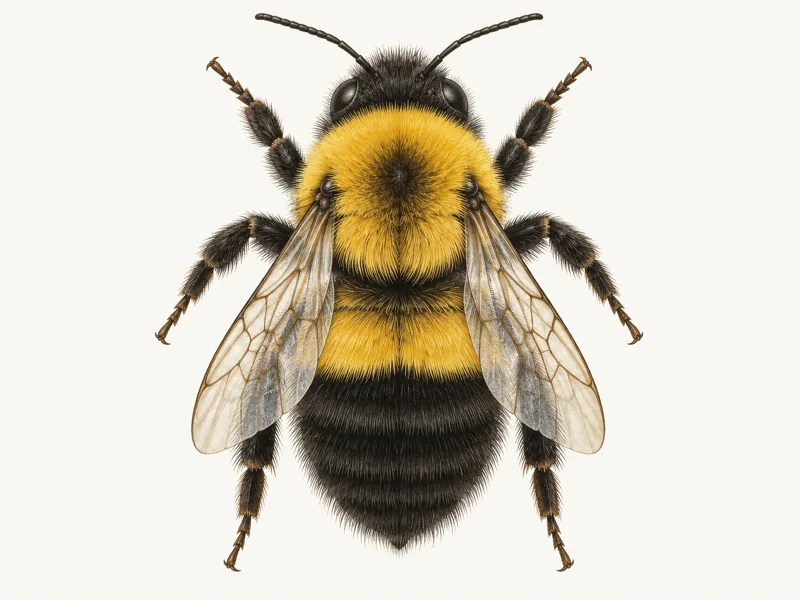
- Compact black head: Round fuzzy head with short elbowed antennae—vital native pollinator.
- Plush yellow thorax: Thick velvety golden-yellow hair coat covering the entire rounded thorax.
- Clear veined wings: Two pairs of translucent wings beating rapidly for buzz pollination.
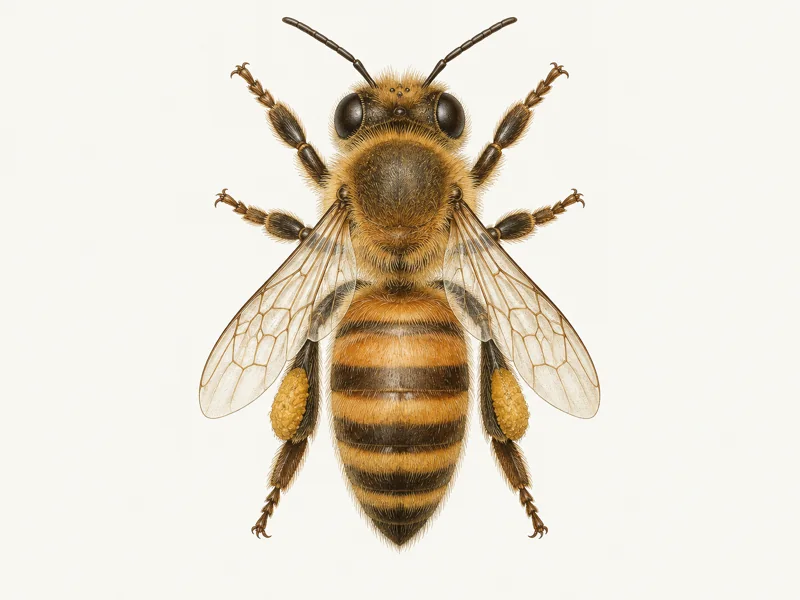
- Fuzzy golden thorax: Dense soft tawny-gold hairs trap pollen grains—wasps are smooth and hairless.
- Delicate clear wings: Two pairs of clear veined wings held flat over the back at rest.
- Pollen-basket legs: Broadened flattened hind legs carry golden pollen pellets back to the hive.
The 3-second verdict: If the bee is plump and covered in dense hair on both the thorax and abdomen, it's a bumble bee. If it's slimmer with a fuzzy golden-tan thorax but a mostly smooth, striped amber-to-brown abdomen, it's a honey bee.
Bumble Bee or Honey Bee? Quick Identification Guide
Bumble bee vs honey bee identification usually comes down to three things: build, hair coverage, and color. Once someone knows where to look, it's hard to mix them up again.
Size, Body Shape, and Hair
Bumble bees (genus Bombus) are the heavyweights, measuring roughly 15–25 mm long. They're round, stocky, and look like they're wearing a fur coat from head to tail.
Honey bees (Apis mellifera) are smaller at about 12–16 mm and built more like a slim wasp than a teddy bear. Their thorax is fuzzy, but the abdomen looks fairly smooth and shiny by comparison.
- Bumble bee: chunky, hair covers thorax and abdomen
- Honey bee: slender, hair mostly on the thorax
Color Patterns and Wing Appearance
Bumble bees show bold bands of dense yellow, black, or orange hair. The pattern varies by species, and some have a solid black rear end.
Honey bees have a golden-amber to dark brown striped abdomen with a golden-tan thorax. Their wings are clear and lie neatly over the back at rest. A bumble bee's wings often look darker or slightly smoky, and they seem almost too small for that big body.
Key Differences in Behavior and Nesting
The biggest difference between bumble bee and honey bee colonies is how long they last.
Bumble bee colonies are annual. A single queen starts a nest in spring, it grows to a few dozen or a few hundred workers, and the whole colony dies off by late fall. Only new queens survive winter, and they don't reuse the old nest.
Honey bee colonies are perennial and can hold tens of thousands of bees. They store honey to survive winter and can occupy the same spot for years.
Nesting sites differ too:
- Bumble bees: abandoned rodent burrows, compost piles, under decks or sheds, thick grass, old insulation
- Honey bees: managed hives, hollow trees, and sometimes wall voids, soffits, or chimneys
Honey bees also swarm. A cluster of thousands hanging from a branch looks alarming, but swarming bees are usually calm and moving on within hours or a few days.
Stinging Risk and Aggression Compared
Both species are rated a nuisance rather than a serious threat. Neither goes looking for trouble, and foraging bees on flowers rarely sting unless they're stepped on or grabbed.
That said, there are a few differences:
- Honey bees have barbed stingers. A worker stings once, then dies. A disturbed colony may defend the nest in numbers.
- Bumble bees have smooth stingers and can sting more than once, but they're generally docile and only defend a nest that's directly disturbed, like when someone mows over it.
Stings hurt, and some people are allergic. Anyone with trouble breathing, facial swelling, or dizziness after a sting needs emergency care right away by calling 911. For other questions about a sting, contact US Poison Control at 1-800-222-1222 and follow up with a doctor.
Where and When You'll See Them Across the US
Honey bees aren't native to North America. Settlers brought them from Europe, and today they're found in all 50 states, largely thanks to beekeeping.
Bumble bees are native, with dozens of species spread across the US, from the Southeast to alpine meadows in the Rockies and Alaska. Several species, like the rusty patched bumble bee, have declined sharply and are now federally protected.
Seasonal patterns:
- Early spring: big bumble bee queens appear first, often low to the ground, hunting for nest sites. They can fly in cooler weather than honey bees.
- Late spring–summer: both are at peak activity. Honey bee swarms are most common in spring.
- Fall: bumble bee colonies wind down. Honey bees stay active on warm days and cluster in the hive through winter.
Safe, Bee-Friendly Steps for Homeowners
So which one's worse for a homeowner? Usually the honey bee, but only when a colony moves into the structure itself. Comb, honey, and wax inside a wall can leak, stain drywall, and attract other pests if left behind. Bumble bees are a short-term inconvenience that solves itself by winter.
Integrated Pest Management starts with non-chemical steps:
For bumble bees
- Leave nests in low-traffic areas alone until late fall, when the colony dies off.
- Mark or fence off a nest near a walkway so nobody mows over it.
- In winter, fill old burrows and seal gaps under decks and sheds to discourage next year's queens.
For honey bees
- Call a local beekeeper or bee removal service for swarms. Many will collect them for free.
- For colonies in walls, hire a specialist who can remove the bees and the comb.
- Afterward, seal entry points with caulk and screen vents, soffits, and chimney openings.
General exclusion
- Repair gaps around siding, eaves, and utility lines.
- Keep sheds and crawl spaces closed and dry.
Spraying is rarely the right call. Killing a honey bee colony inside a wall leaves the comb to rot, and pollinators are protected under many state laws. If any product is used, it must be applied exactly as directed on the EPA product label, and never on blooming plants where bees forage.
Frequently Asked Questions
What's the easiest way to tell a bumble bee from a honey bee?
Look at body shape and hair coverage. Bumble bees are plump and stocky with dense hair covering both thorax and abdomen. Honey bees are slimmer with fuzzy thorax but mostly smooth, shiny, striped abdomens. Bumble bees measure 15–25 mm; honey bees are 12–16 mm.
How long do bumble bee vs honey bee colonies last?
Bumble bee colonies are annual—they form in spring, die off by late fall, with only new queens surviving winter. Honey bee colonies are perennial, lasting years or decades, holding tens of thousands of bees that store honey to survive winter.
Can bumble bees sting more than once?
Yes. Bumble bees have smooth stingers and can sting multiple times. Honey bees have barbed stingers, sting once, then die. However, bumble bees are generally docile and only defend nests directly disturbed, making them less aggressive overall.
Where do bumble bees and honey bees build their nests?
Bumble bees nest in abandoned rodent burrows, compost piles, under decks, thick grass, or old insulation. Honey bees live in managed hives, hollow trees, or structure voids like walls, soffits, and chimneys—which creates more problems for homeowners.
Are bumble bees native to North America?
Yes. Dozens of native bumble bee species live across the US, from the Southeast to alpine meadows. Honey bees are not native—European settlers brought them, and they're now found in all 50 states, primarily through beekeeping.
What should I do if a bee colony is in my house?
For honey bee swarms, call a local beekeeper or removal service—many collect them free. For colonies in walls, hire a specialist to remove bees and comb. Afterward, seal entry points with caulk and screen vents. Bumble bee nests usually die off naturally by late fall.