Honey Bees in Indiana: Identification, Season, and Prevention
Quick Answer: Honey bees in Indiana are common. The western honey bee (Apis mellifera) has 3,338 verified GBIF sightings statewide, with the most records in September. They are a nuisance-level insect and valuable pollinators, so removal by a beekeeper is usually better than extermination.
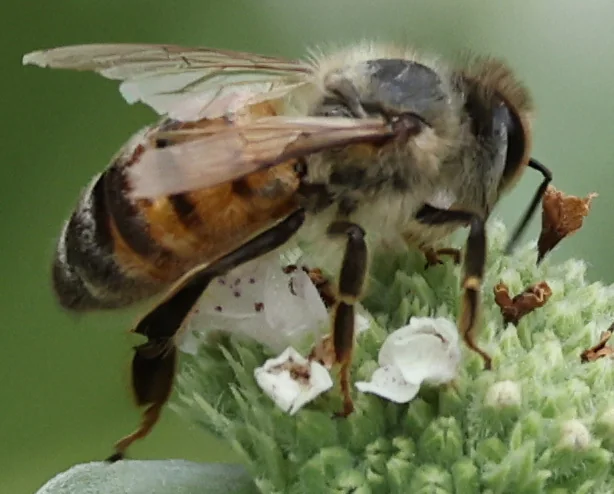
When Honey Bees Are Most Active in Indiana
Now (November): Lower Outdoor ActivityVerified Indiana Counties, Species & US Range
Counties with Verified Observations
- Elkhart
- Monroe
- Allen
- Tippecanoe
- Vanderburgh
- Hamilton
- Marion
- Wabash
- Harrison
- Clark
Species Recorded in Indiana
| Species | Scientific Name | GBIF Records |
|---|---|---|
| western honey bee | Apis mellifera | 3,338 |
How Indiana Compares to Neighboring States
Note: Wildlife does not follow state or county lines. GBIF totals reflect verified citizen and museum records, so low counts in a neighboring county do not guarantee absence.
How to Identify Honey Bees
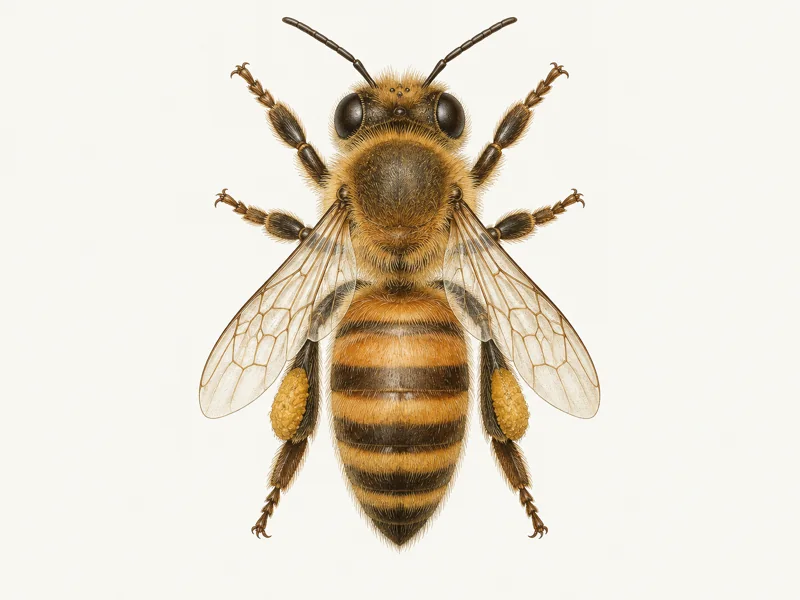
Annotated Anatomy Key (Honey Bee)
- Fuzzy golden thorax: Dense soft tawny-gold hairs trap pollen grains—wasps are smooth and hairless.
- Delicate clear wings: Two pairs of clear veined wings held flat over the back at rest.
- Pollen-basket legs: Broadened flattened hind legs carry golden pollen pellets back to the hive.
- Warm amber stripes: Lightly hairy honey-orange and dark brown bands—softer hue than neon yellow jackets.
Honey Bees Field Checklist
- Golden-amber to dark brown striped abdomen with fuzzy golden-tan thorax
- Pollen baskets on flattened hind legs
- Barbed stinger allows workers to sting only once
- Forms perennial wax-comb colonies and temporary spring swarms on tree branches
Honey Bees Size at True Relative Scale
Where Honey Bees Live in Indiana
If you are wondering whether there are honey bees in Indiana, the answer is yes, in every part of the state. GBIF records are densest in Elkhart, Monroe, Allen, Tippecanoe, and Vanderburgh counties. Those counties combine farmland, orchards, towns, and university areas with plenty of flowers.
Most colonies live in managed hives kept by beekeepers. Wild or escaped colonies nest in sheltered cavities, which is where homeowners tend to run into them.
- Hollow trees and fallen logs
- Wall voids, chimneys, and soffits
- Attics, sheds, and abandoned structures
- Old utility boxes and empty compost bins
Indiana has a humid continental climate with warm, muggy summers, chilly winters, and USDA zones 5b to 6b. Colonies cluster tightly through winter and rebuild in spring.
When Honey Bees Are Most Active in Indiana
The Indiana honey bee season runs from spring bloom through early fall. Foraging picks up as maples, fruit trees, and clover flower, and it continues through summer. GBIF records peak in September, when goldenrod and asters bloom and colonies are building winter stores.
Bees forage most on warm, calm days and stay in the hive in cold or rainy weather. In late summer and fall, forager traffic at water sources and hummingbird feeders often increases.
Swarming typically happens in spring and early summer. A swarm is a temporary cluster of bees resting while scouts look for a nest site, and it usually moves on within a few days.
Look-Alikes Frequently Mistaken for Honey Bees
Indiana honey bee identification starts with body shape. Honey bees are about half an inch long, golden-brown to amber with darker banding, and moderately fuzzy. They carry pollen in packed baskets on their hind legs.
Several Indiana insects are commonly confused with them:
- Bumble bees: Larger, rounder, and very fuzzy, often with bold black and yellow patches. They usually nest in the ground or in grass clumps.
- Carpenter bees: Large with a shiny, mostly hairless black abdomen. They bore round holes in bare wood.
- Yellow jackets: Smooth, brightly yellow and black, with a narrow waist. They scavenge at picnics and are more defensive near nests.
- Wasps: Slender, with a thin waist and little hair. Paper wasps build open, umbrella-shaped combs under eaves.
A fuzzy body, amber color, and a visible pollen load point toward a honey bee. A shiny, thin-waisted insect is more likely a wasp or yellow jacket, which are treated differently.
How to Keep Honey Bees Out of Your Indiana Home
Learning how to prevent honey bees in Indiana mostly comes down to exclusion. Bees need a dry, protected cavity with a small entrance. Close those off before a colony settles in.
- Seal gaps larger than about 1/8 inch in siding, soffits, rooflines, and around vents and utility lines.
- Screen chimneys, attic vents, and weep holes with fine mesh.
- Fill or cover empty voids, old boxes, and unused containers in yards and sheds.
- Fix leaks and keep standing water, such as dripping spigots and birdbaths, away from the house.
- Keep trash cans closed and clean up sugary spills, which attract foragers.
Seal entry points only after confirming no colony is inside. Closing up an active nest traps bees and can push them into living spaces. Old honey and wax can also draw new swarms or other pests.
When to Call a Professional
Contact a licensed Indiana pest professional or a local beekeeper if you see any of the following:
- Steady bee traffic entering a wall, roof, or chimney
- A swarm or cluster that stays more than a few days
- Buzzing or warm, damp spots on interior walls
- Anyone in the household with a known bee sting allergy
Many beekeepers will remove colonies live. Avoid DIY sprays on a hive, because they can harm pollinators and leave behind honeycomb that rots or attracts pests. If you use any pesticide, follow the EPA-registered product label exactly.
For a serious sting reaction, such as trouble breathing or facial swelling, call 911. For other sting questions, contact US Poison Control at 1-800-222-1222 and see a doctor.
IPM Prevention Checklist for Indiana Homes
- Seal exterior wall voids, fascia cracks, and unused chimney flues before spring swarming season
 EXCLUSION BLUEPRINT
Inspect eaves, screens, door sweeps, foundation cracks, and utility penetrations around Indiana homes before peak season.
Honey Bees in Indiana: Frequently Asked Questions
Are honey bees native to Indiana?
No. The western honey bee was introduced to North America from Europe. It is now widespread in Indiana, both in managed hives and as wild colonies, and it lives alongside many native bee species.
Do honey bees sting often?
Honey bees are generally docile while foraging and sting mainly when defending a nest or when handled or stepped on. Stay calm, walk away, and avoid swatting near a hive.
What month are honey bees most seen in Indiana?
GBIF records peak in September. Activity builds from spring through summer and stays high while fall flowers bloom.
Should I spray a honey bee swarm?
No. Swarms are temporary and usually docile, and honey bees are important pollinators. Call a local beekeeper or licensed pest professional for removal.
Sources & Verification
Data refreshed · Editorial & GBIF Methodology