Carpenter Bee vs Honey Bee: How to Tell Them Apart and Protect Your Home
Quick ID Verdict: A big black bee hovering by the porch rail and a smaller golden bee working the clover can look alike from a distance. But the difference between carpenter bee and honey bee matters, because one threatens wood and the other is mostly a nuisance.
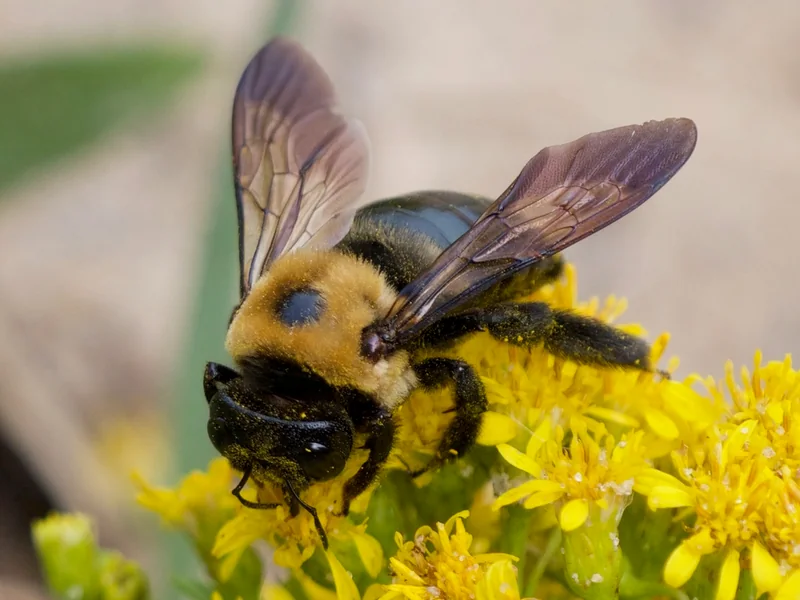
Carpenter Bee
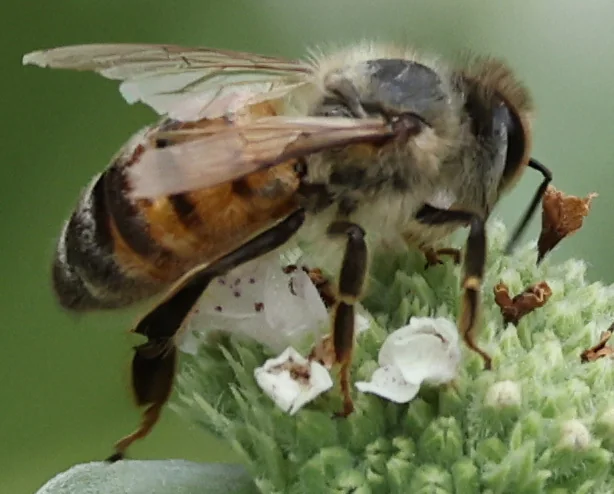
Honey Bee
Side-by-Side Comparison Table
| Trait | Carpenter Bee | Honey Bee |
|---|---|---|
| Scientific Group | Xylocopa | Apis mellifera |
| Category | Insect | Insect |
| Typical Size | 18–25 mm | 12–16 mm |
| Danger Level | Structural | Nuisance |
| Bites or Stings? | Yes | Yes |
| Peak US Months | April, May, August, September | April, July, August, September |
| Key ID Trait | Large robust bee resembling a bumble bee but with a shiny, mostly hairless black abdomen | Golden-amber to dark brown striped abdomen with fuzzy golden-tan thorax |
Carpenter Bee vs. Honey Bee: True Size Comparison
Side-by-Side Anatomy Blueprint
Compare body segments, antennae, leg count, and key markings directly before treating or removing either species.
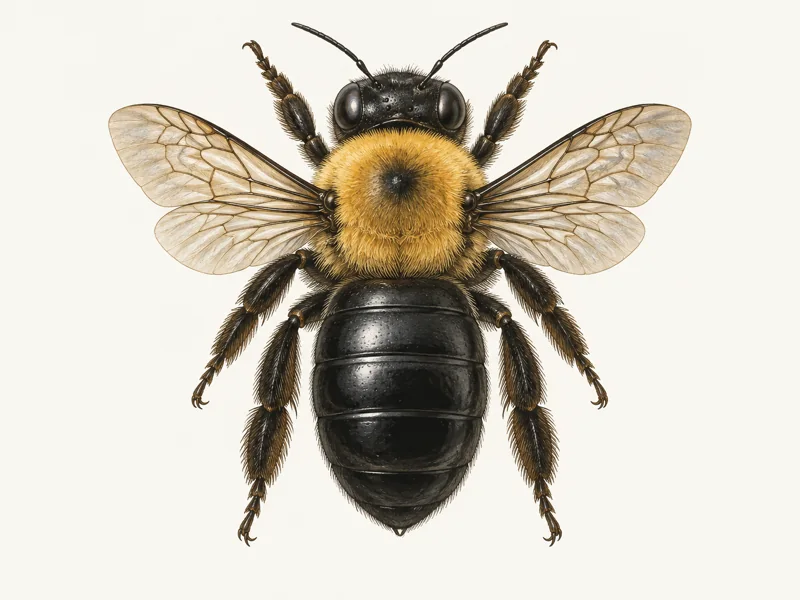
- Broad black head: Wide head with strong jaws for drilling perfectly round 1/2-inch wood tunnels.
- Fuzzy golden thorax: Plump thorax densely coated in bright yellow-gold hair with a small bald center dot.
- Smoky veined wings: Broad tinted wings supporting loud hovering patrols near eaves and decks.
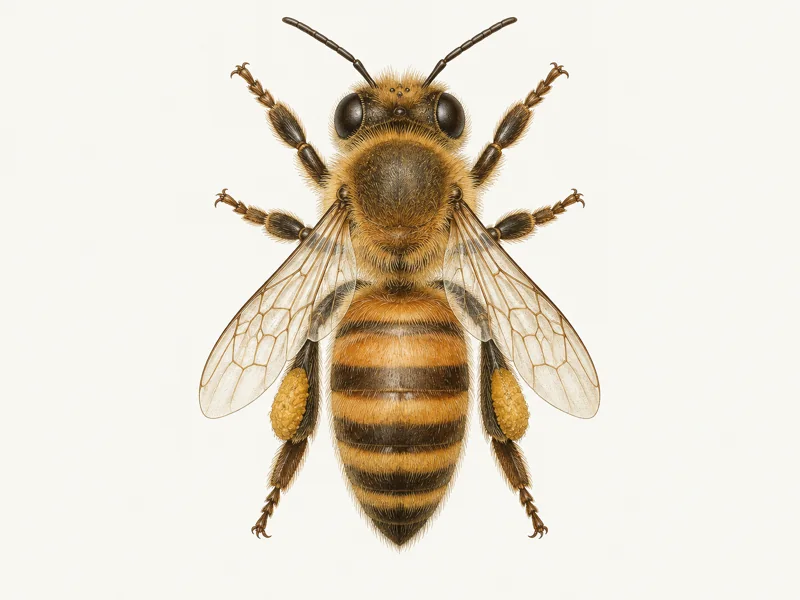
- Fuzzy golden thorax: Dense soft tawny-gold hairs trap pollen grains—wasps are smooth and hairless.
- Delicate clear wings: Two pairs of clear veined wings held flat over the back at rest.
- Pollen-basket legs: Broadened flattened hind legs carry golden pollen pellets back to the hive.
Quick ID verdict: If the abdomen is shiny, black, and nearly hairless, it's a carpenter bee. If the abdomen is striped golden-amber to brown and the bee is noticeably smaller and fuzzier, it's a honey bee.
Carpenter Bee vs Honey Bee Identification at a Glance
Accurate carpenter bee vs honey bee identification usually takes only a few seconds once someone knows the two features to check: body size and the surface of the abdomen.
Size, Color, and the Shiny Abdomen Test
FeatureCarpenter Bee (Xylocopa)Honey Bee (Apis mellifera)Length18–25 mm12–16 mmBuildLarge, robustSlender, compactAbdomenShiny, mostly hairless blackGolden-amber to dark brown stripesThoraxOften fuzzy yellow or blackFuzzy golden-tanThe shiny abdomen test is the fastest check. Carpenter bees are often mistaken for bumble bees, but a bumble bee's abdomen is hairy all over. A carpenter bee's looks polished, almost like black plastic.
Flight Patterns and Behavior Around People
Male carpenter bees hover near nest sites and dart at anyone who walks by. It looks aggressive, yet males have no stinger at all. Females stay busy drilling and rarely sting unless handled.
Honey bees fly with purpose, moving flower to flower and then straight back to the colony. They mostly ignore people away from the hive but will defend it if disturbed.
Nesting Habits: Drilled Wood Holes vs Hives and Colonies
Carpenter bees are solitary. A female chews a perfectly round entrance hole, about the width of a finger, into bare or weathered wood, then turns and tunnels along the grain to lay eggs. Common targets include:
- Fascia boards, eaves, and soffits
- Deck railings and pergolas
- Unpainted siding, fences, and outdoor furniture
Telltale signs are coarse sawdust piled below a hole and yellowish staining from waste.
Honey bees are social and live in colonies of thousands. Most are managed by beekeepers, but feral colonies sometimes move into wall voids, chimneys, or hollow trees. In spring, a colony may swarm, forming a temporary cluster on a branch while scouts search for a new home.
Stinging Risk and Property Damage Compared
Carpenter bees pose a structural threat rather than a stinging one. A single gallery does little harm, but tunnels reused and extended year after year weaken wood. Woodpeckers hunting the larvae can tear open boards and make the damage much worse.
Honey bees cause no wood damage and are generally a nuisance-level pest. The main risk is stings, especially near a colony. A worker's barbed stinger stays in the skin, and many stings at once can be serious.
People with known allergies or anyone showing a severe reaction should get medical help right away. For questions about stings, call US Poison Control at 1-800-222-1222 and contact a doctor.
Where and When You'll See Each Bee Across the US
Honey bees occur in all 50 states thanks to beekeeping, and feral colonies are common in warmer regions. They forage whenever temperatures allow, peaking from spring through early fall. Swarms are most often seen in spring.
Carpenter bees are widespread across the lower 48. The eastern carpenter bee covers much of the East, Midwest, and South, while other species, such as the valley carpenter bee, live in California and the Southwest.
- Early spring: adults emerge, males start hovering
- Late spring: females drill and lay eggs
- Late summer: new adults appear and feed
- Winter: adults shelter inside old galleries
Carpenter Bee or Honey Bee? Safe IPM Steps for Homeowners
Whether it's a carpenter bee or honey bee, Integrated Pest Management starts with non-chemical steps. Both are valuable pollinators, so the goal is protecting the home, not wiping out bees.
For Carpenter Bees
- Paint or stain exposed wood. Finished surfaces are far less attractive than bare wood.
- Seal old holes in fall with wood filler or dowels after bees leave, so galleries aren't reused.
- Replace badly damaged boards with sound, finished lumber.
- Use harder or composite materials for new trim and decking where practical.
If a treatment is needed for active holes, choose a product registered for that use and always follow the EPA product label exactly.
For Honey Bees
- Leave swarms alone. Most move on within a day or two.
- Call a local beekeeper for swarm removal: many relocate bees at low or no cost.
- Hire a professional for colonies inside walls, since the comb and honey must be removed to prevent odors and repeat infestations.
- Seal gaps in siding, vents, and soffits afterward.
Avoid spraying honey bee colonies. If any pesticide is used, follow the EPA label strictly.
Frequently Asked Questions
What's the easiest way to tell a carpenter bee from a honey bee?
The quickest identification method is checking the abdomen. Carpenter bees have shiny, mostly hairless black abdomens that look polished like plastic. Honey bees have fuzzy, golden-amber to brown striped abdomens and are noticeably smaller.
Do carpenter bees sting, and are they aggressive?
Male carpenter bees hover aggressively near nests but cannot sting—they have no stinger. Females rarely sting unless handled. Despite their appearance, they pose a structural threat to wood rather than a significant stinging risk.
Why are carpenter bees damaging to homes?
Female carpenter bees drill perfectly round holes into bare wood and tunnel along the grain to lay eggs. When tunnels are reused and extended yearly, they weaken wood structure. Woodpeckers hunting larvae can worsen damage significantly.
How should homeowners safely remove a honey bee swarm?
Most swarms move on within one to two days on their own. Contact a local beekeeper for free or low-cost removal—many relocate bees safely. Avoid pesticides and call professionals for colonies inside walls to prevent odors and reinfestation.
What's the best way to prevent carpenter bees from damaging wood?
Paint or stain exposed wood surfaces, as carpenter bees prefer bare, weathered wood. Seal old entrance holes in fall with wood filler or dowels after bees leave. Use finished lumber, harder materials, or composite decking for replacements when practical.
Where do honey bees and carpenter bees live, and what's the difference?
Carpenter bees are solitary and drill individual galleries into wood. Honey bees are social, living in colonies of thousands in hives, wall voids, or hollow trees. Most honey bees are managed by beekeepers, while carpenter bees work alone.