Wolf Spiders in New Mexico: Identification, Season and Prevention
Quick Answer: Yes, wolf spiders in New Mexico are common, with 1,419 verified GBIF sightings across the state, led by Sandoval, Bernalillo, Hidalgo, Dona Ana, and Lea counties. These ground-hunting spiders are considered a nuisance rather than a danger, and activity peaks in April and again from June through August. Simple exclusion and moisture control keep most of them outdoors.
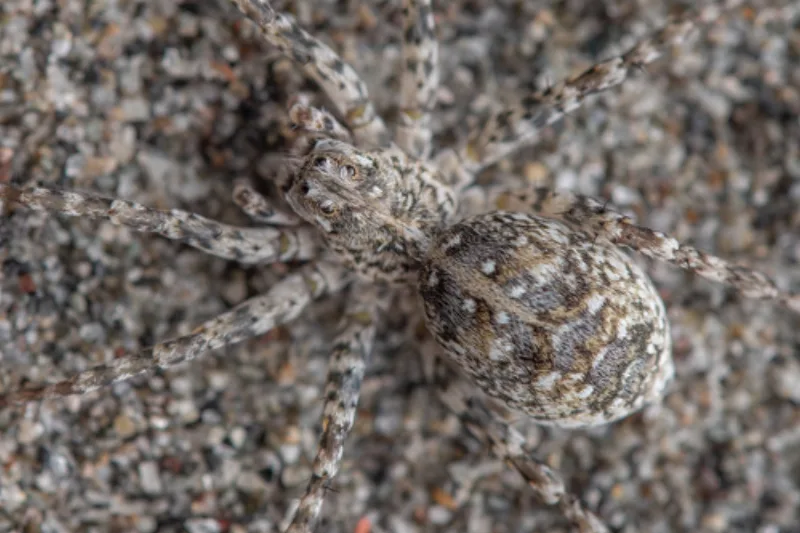
When Wolf Spiders Are Most Active in New Mexico
Now (November): Lower Outdoor ActivityVerified New Mexico Counties, Species & US Range
Counties with Verified Observations
- Sandoval
- Bernalillo
- Hidalgo
- Dona Ana
- Lea
- Valencia
- Eddy
- Otero
- Catron
- Santa Fe
Species Recorded in New Mexico
| Species | Scientific Name | GBIF Records |
|---|---|---|
| Carolina Wolf Spider | Hogna carolinensis | 139 |
| Hogna antelucana | Hogna antelucana | 114 |
| Geolycosa rafaelana | Geolycosa rafaelana | 86 |
How New Mexico Compares to Neighboring States
Note: Wildlife does not follow state or county lines. GBIF totals reflect verified citizen and museum records, so low counts in a neighboring county do not guarantee absence.
How to Identify Wolf Spiders
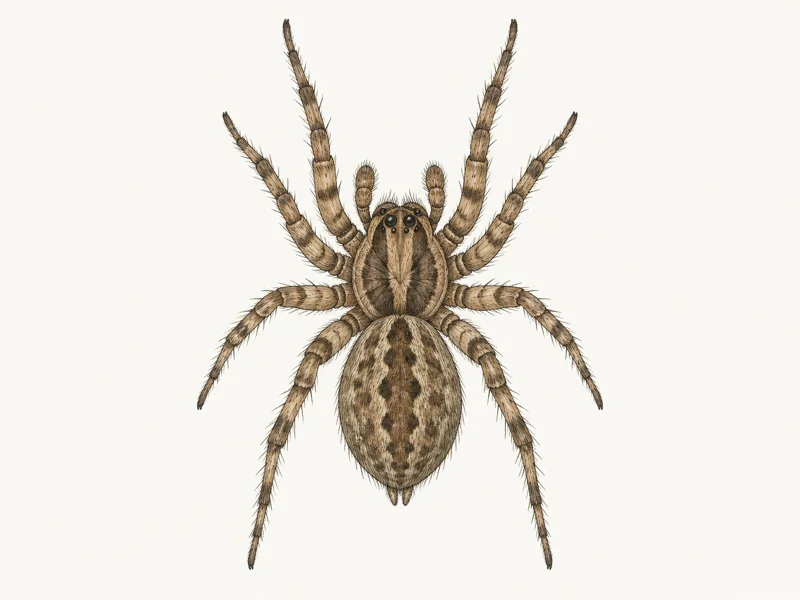
Annotated Anatomy Key (Wolf Spider)
- Large front eyes: Eight eyes in 3 distinct rows (two very large middle eyes reflect flashlight beams at night).
- Striped cephalothorax: Robust front carapace marked with twin dark lengthwise stripes—no recluse violin mark.
- Eight stout hairy legs: Four pairs of strong, spiny, mottled hunting legs built for chasing prey without webs.
- Mottled oval abdomen: Patterned brown-and-tan abdomen; females carry round egg sacs attached to spinnerets.
Wolf Spiders Field Checklist
- Stout, hairy brown-and-gray striped spider with prominent spiny legs
- Two notably large forward-facing eyes above a row of four tiny eyes (reflects flashlight beams at night)
- Hunts actively on the ground without spinning prey-catching webs
- Females uniquely carry round silk egg sacs on their spinnerets and piggyback spiderlings
Wolf Spiders Size at True Relative Scale
Where Wolf Spiders Live in New Mexico
Anyone asking whether there are wolf spiders in New Mexico can find them from the Rio Grande valley to the eastern plains. GBIF records cluster in Sandoval and Bernalillo counties around Albuquerque, Hidalgo and Dona Ana counties in the southwest desert, and Lea County on the Llano Estacado. The state's arid to semi-arid high desert, summer monsoons, and cool mountain winters (USDA zones 4b-8b) support several distinct species.
Species Recorded in the State
- Carolina wolf spider (Hogna carolinensis): One of the largest wolf spiders in North America, with a mottled brown-gray body and females that can exceed an inch in body length.
- **Hogna antelucana:** A sturdy brown wolf spider found in open, dry habitats and grasslands.
- **Geolycosa rafaelana:** A burrowing wolf spider that digs vertical tunnels in sandy or loose soil and waits near the entrance for prey.
Typical Habitat Around Homes
Wolf spiders do not build capture webs. They hunt at night under rocks, landscape timbers, woodpiles, and xeriscape gravel, and burrowing species leave small, round holes in bare ground. Irrigated yards draw the insects they eat, which in turn draws the spiders closer to foundations.
When Wolf Spiders Are Most Active in New Mexico
The New Mexico wolf spider season follows warmth and moisture. GBIF records peak in April, as spring temperatures rise, and again in June, July, and August, when monsoon rains trigger insect activity and male spiders roam in search of mates. Wandering males are the ones most often found indoors.
Activity slows sharply in cool mountain winters, especially at higher elevations. In the warmer southern desert, some spiders stay active on mild nights year-round.
Look-Alikes Frequently Mistaken for Wolf Spiders
Good New Mexico wolf spider identification starts with the eyes. Wolf spiders have three rows of eyes, with two large, forward-facing eyes in the middle row that reflect light as a bright greenish shine under a flashlight. Females carry their egg sac attached to their spinnerets, and later carry spiderlings on their backs.
- Tarantulas: New Mexico's desert tarantulas are much hairier, heavier-bodied, and slower-moving. Their eyes are clustered in a tight group on a small mound, and they lack the wolf spider's prominent eye shine.
- Other ground spiders: Various hunting and ground spiders share a brown color and fast movement. They lack the distinctive three-row eye pattern and usually have slimmer legs or a more uniform body color.
Wolf spiders may bite if pressed against skin, and the bite is usually compared to a bee sting. If someone has a bite with spreading redness, severe pain, or any allergic symptoms, contact US Poison Control at 1-800-222-1222 or see a doctor. Avoid home remedies for bites.
How to Keep Wolf Spiders Out of Your New Mexico Home
Knowing how to prevent wolf spiders in New Mexico comes down to Integrated Pest Management (IPM). University cooperative extension guidance emphasizes exclusion, habitat reduction, and moisture control before any pesticide.
Non-Chemical Steps First
- Seal entry points: Install door sweeps, repair window screens, and caulk gaps around pipes, vents, and stucco cracks.
- Reduce harborage: Move woodpiles, stones, and debris at least several feet from the foundation, and trim vegetation touching walls.
- Control moisture: Fix leaky drip lines and swamp coolers, and avoid overwatering beds near the house.
- Adjust lighting: Switch to yellow or warm LED bulbs to attract fewer night insects that spiders hunt.
- Capture and release: Trap stray spiders under a cup, slide paper beneath, and release them outdoors. Sticky traps along baseboards help monitor activity.
Chemical Options
If spiders keep appearing, a perimeter treatment may help reduce numbers. Always choose products registered for spiders and follow EPA product labels exactly, including rates, placement, and safety precautions for children and pets.
When to Call a Licensed Professional
- Spiders are found indoors daily or in multiple rooms.
- Spiderlings or egg sacs appear inside the home.
- A heavy insect problem is feeding a growing spider population.
- A household member has severe arachnophobia or allergy concerns.
In those cases, contact a licensed New Mexico pest management professional for an inspection.
IPM Prevention Checklist for New Mexico Homes
- Install tight door sweeps and seal foundation gaps
- Keep firewood and thick mulch pulled back from siding
 EXCLUSION BLUEPRINT
Inspect eaves, screens, door sweeps, foundation cracks, and utility penetrations around New Mexico homes before peak season.
Wolf Spiders in New Mexico: Frequently Asked Questions
Are wolf spiders in New Mexico dangerous?
No. They are rated a nuisance pest. Bites are uncommon and usually mild, but call Poison Control at 1-800-222-1222 for any concerning reaction.
What is the largest wolf spider in New Mexico?
The Carolina wolf spider (Hogna carolinensis) is the largest recorded species, with females sometimes topping an inch in body length.
Why do more wolf spiders show up after monsoon rains?
Summer rains boost insect prey and push spiders from flooded burrows, and males roam actively to find mates during June through August.
What are the small holes in my New Mexico yard?
Neat, round holes in sandy soil may belong to burrowing wolf spiders such as Geolycosa rafaelana. They are harmless and help control insects.
Sources & Verification
Data refreshed · Editorial & GBIF Methodology