Flying Ant vs Termite: How to Tell Them Apart Before It Costs You
Quick ID Verdict: A cloud of winged insects near a window can mean a minor annoyance or a serious structural threat. The 3-second verdict: termites have straight, bead-like antennae, a thick waist, and four equal-length wings, while flying ants have elbowed antennae, a pinched waist, and shorter hind wings. This guide covers the key differences, when swarms appear in the US, the damage signs to check, and the safe IPM steps to take next.
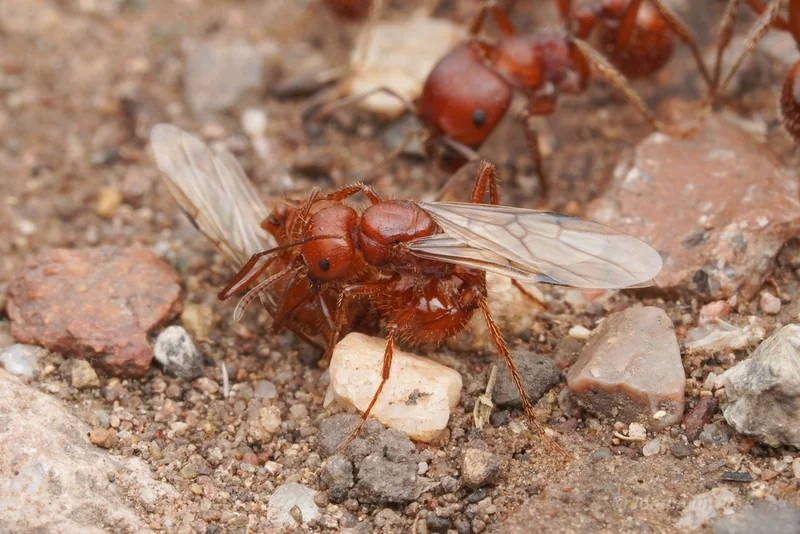
Flying Ant
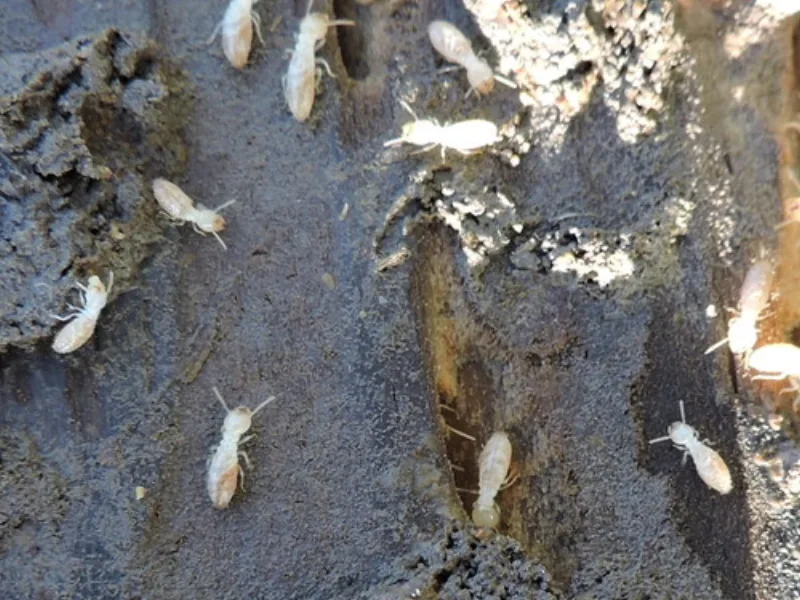
Termite
Side-by-Side Comparison Table
| Trait | Flying Ant | Termite |
|---|---|---|
| Scientific Group | Formicidae (Alates) | Blattodea (Isoptera) |
| Category | Insect | Insect |
| Typical Size | 4–18 mm | 4–12 mm |
| Danger Level | Nuisance | Structural |
| Bites or Stings? | No | No |
| Peak US Months | May, June, July, August | April, May |
| Key ID Trait | Winged reproductive ants (alates) emerging in warm humid swarms to establish new colonies | Straight, bead-like antennae (unlike the elbowed antennae of ants) |
Flying Ant vs. Termite: True Size Comparison
Side-by-Side Anatomy Blueprint
Compare body segments, antennae, leg count, and key markings directly before treating or removing either species.
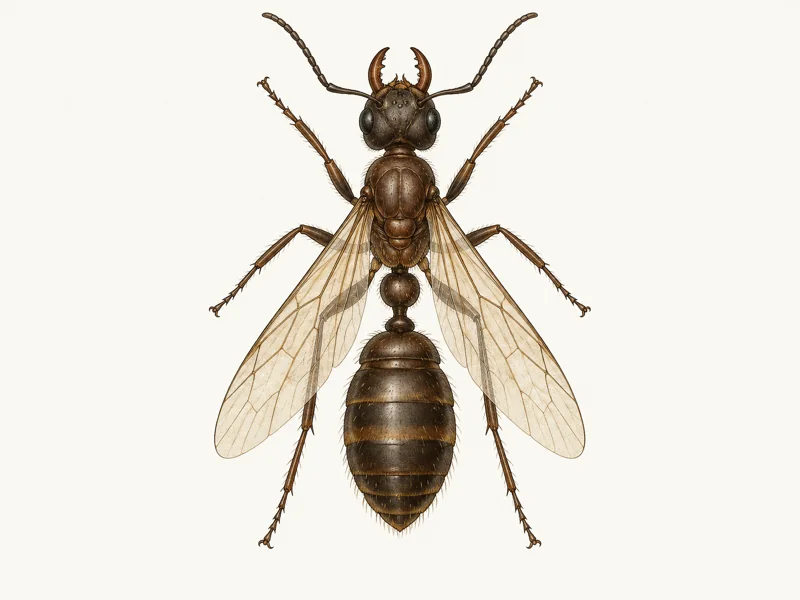
- Elbowed antennae: Sharply bent antennae on a distinct head with mandibles—termites always have straight antennae.
- Unequal wings: Front wings are noticeably longer and wider than hind wings (termites have 4 equal wings).
- Pinched waist: Sharp narrow constriction (1 or 2 tiny petiole nodes) separating thorax from abdomen.
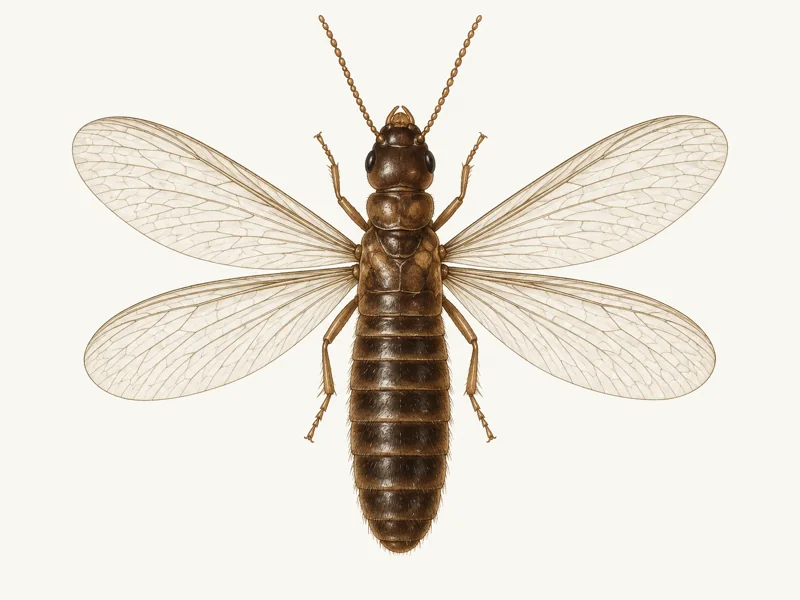
- Straight antennae: Straight, bead-like (moniliform) antennae—never sharply bent like ant antennae.
- Four equal wings: Two pairs of equal-length translucent veined wings extending far past the abdomen (shed easily).
- Six insect legs: Three pairs of slender crawling legs beneath the pale translucent wings.
Why Telling a Flying Ant From a Termite Matters
Both insects swarm for the same reason. Winged reproductives, called alates, leave a mature colony to mate and start new ones. That shared habit is why so many homeowners can't tell whether they're looking at a flying ant or termite.
The stakes aren't equal, though. Flying ants (family Formicidae) are mainly a nuisance. Termites (order Blattodea, formerly Isoptera) are a structural pest that eats the cellulose in wood, often for years before anyone notices. Calling a termite swarm "just ants" can let a colony keep feeding inside framing, subfloors, and trim.
Flying Ant vs Termite Identification: Key Physical Differences
Size won't settle it. Flying ants range from about 4 to 18 mm, while termite swarmers run roughly 4 to 12 mm, so the two overlap heavily. A magnifying glass or a zoomed-in phone photo works better. Check three features: antennae, waist, and wings.
Antennae, Waist, and Body Shape
The antennae are the most reliable tell.
- Termites: Straight, bead-like antennae that look like a tiny string of pearls.
- Flying ants: Elbowed antennae with a clear bend, a bit like a bent knee.
Next, look at the midsection. An ant has a narrow, pinched waist between the thorax and abdomen, which gives it a segmented, hourglass look. A termite is broad and thick from head to tail, with almost no visible waist. Termite swarmers are also usually dark brown to black, while ant colors vary widely by species.
Wing Size, Shape, and Shedding
Wings offer the second strong clue to the difference between flying ant and termite swarmers.
- Termites: Four wings of equal length, often extending well past the body and looking milky or slightly cloudy.
- Flying ants: Front wings noticeably longer than the hind wings, with darker veins.
Termites also drop their wings readily after a swarm. Small piles of identical, translucent wings on windowsills or near doors are a classic termite clue. Ants shed wings too, but stray ant wings are less common indoors.
When and Where Swarms Appear Across the US
Swarms are triggered by warm, humid conditions, often on the first warm day after rain. Timing depends on the species and the region:
- Eastern subterranean termites: Usually swarm in daylight from late winter through spring, from the Southeast up into New England and the Midwest.
- Formosan subterranean termites: Swarm at dusk in late spring and early summer along the Gulf Coast and in Hawaii. They're strongly drawn to lights.
- Drywood termites: Often swarm in late summer or fall in southern coastal states, Arizona, and California.
- Flying ants: Carpenter ants commonly swarm in spring. Many other ant species swarm through summer and into early fall nationwide.
A swarm inside the house, especially in late winter or early spring, deserves a closer look, since it suggests a colony is in or under the structure.
Signs of Damage Each Pest Leaves Behind
Swarmers are only the visible part of the colony. The clues they leave behind can confirm whether the problem is a flying ant or termite.
Termite signs:
- Pencil-width mud tubes on foundation walls, piers, or crawlspace joists
- Wood that sounds hollow when tapped or crumbles easily
- Tiny, six-sided fecal pellets (frass) under drywood termite infestations
- Blistered paint or sagging spots in flooring
Ant signs:
- Trails of wingless worker ants near food or moisture
- Fine, sawdust-like debris mixed with insect parts (carpenter ants)
- Smooth, clean galleries in damp or already-decayed wood
Carpenter ants excavate wood but don't eat it. Their presence usually points to an underlying moisture problem that's worth fixing.
Safe IPM Steps If You Find Swarmers Indoors
Integrated Pest Management (IPM) starts with identification, then moves to non-chemical fixes before considering any product.
- Collect a sample. Put a few swarmers and wings in a sealed bag or a small jar of rubbing alcohol for ID.
- Vacuum the rest. Swarmers die quickly indoors, and there's no need to spray them.
- Control moisture. Repair leaks, clean gutters, improve crawlspace ventilation, and direct downspouts away from the foundation.
- Exclude and remove. Seal gaps around utility lines, cut wood-to-soil contact, and keep mulch and firewood away from the siding.
- Sanitize. For ants, clean up crumbs, sweet spills, and pet food.
If termites are confirmed, a licensed pest management professional should inspect the home, because colonies are hidden and treatment is specialized. Whenever any insecticide or bait is used, it must be applied exactly as the EPA-registered product label directs.
Some ant species, such as fire ants, can sting. If someone has a severe reaction, call US Poison Control at 1-800-222-1222 and contact a doctor.
Frequently Asked Questions
What's the fastest way to tell a flying ant from a termite?
Check three key features: termites have straight, bead-like antennae and a thick waist, while flying ants have elbowed antennae and a pinched waist. Termites also have four equal-length wings, whereas flying ants have shorter hind wings. A magnifying glass or phone photo helps confirm identification.
Why is identifying flying ants vs termites so important?
Flying ants are mainly a nuisance, but termites are structural pests that eat wood cellulose for years before detection. Mistaking a termite swarm for ants can allow a hidden colony to cause thousands in damage to framing, subfloors, and trim.
What time of year do flying ant and termite swarms appear?
Eastern subterranean termites swarm in spring during daylight. Formosan termites swarm at dusk in late spring and early summer along the Gulf Coast. Carpenter ants typically swarm in spring, while many ant species swarm through summer and fall. Swarms occur after warm, humid conditions or the first warm day after rain.
What are the signs of a termite infestation in my home?
Look for pencil-width mud tubes on foundations or crawlspaces, wood that sounds hollow or crumbles easily, six-sided fecal pellets under drywood termite areas, and blistered paint or sagging floors. Small piles of identical, translucent wings on windowsills are also classic termite indicators.
What should I do if I find flying insects swarming indoors?
Collect a sample in a sealed bag or rubbing alcohol for identification, then vacuum the rest—swarmers die quickly indoors. Control moisture by repairing leaks and improving ventilation. If termites are confirmed, hire a licensed pest management professional, as hidden colonies require specialized treatment.
Can flying ants cause structural damage like termites?
No. Carpenter ants excavate wood to nest but don't eat it, and their galleries are smooth and clean. Unlike termites, carpenter ants don't consume wood cellulose. Their presence usually signals an underlying moisture problem worth addressing to prevent further issues.