Termite vs Silverfish: How to Tell Them Apart Fast
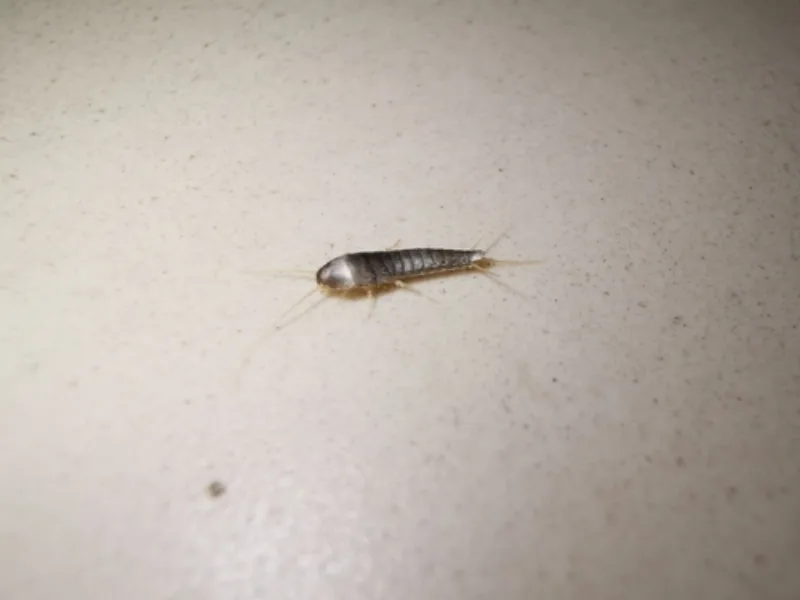
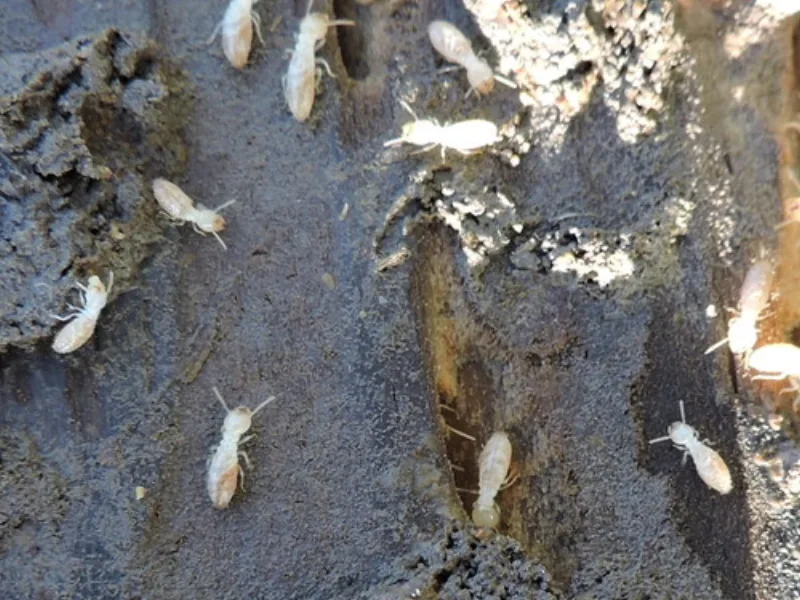
Quick ID Verdict: A silverfish is a wingless, carrot-shaped insect with a metallic silver-gray body covered in fine scales. A termite has a soft, pale or dark body and straight, bead-like antennae, unlike the elbowed antennae of ants. If the insect shines like a fish and darts across the floor, it is a silverfish.
Silverfish
Termite
Side-by-Side Comparison Table
| Trait | Silverfish | Termite |
|---|---|---|
| Scientific Group | Lepisma saccharinum | Blattodea (Isoptera) |
| Category | Insect | Insect |
| Typical Size | 10–19 mm | 4–12 mm |
| Danger Level | Nuisance | Structural |
| Bites or Stings? | No | No |
| Peak US Months | March, April, May, July | April, May |
| Key ID Trait | Wingless, carrot-shaped metallic silver-gray body covered in fine scales | Straight, bead-like antennae (unlike the elbowed antennae of ants) |
Silverfish vs. Termite: True Size Comparison
Side-by-Side Anatomy Blueprint
Compare body segments, antennae, leg count, and key markings directly before treating or removing either species.
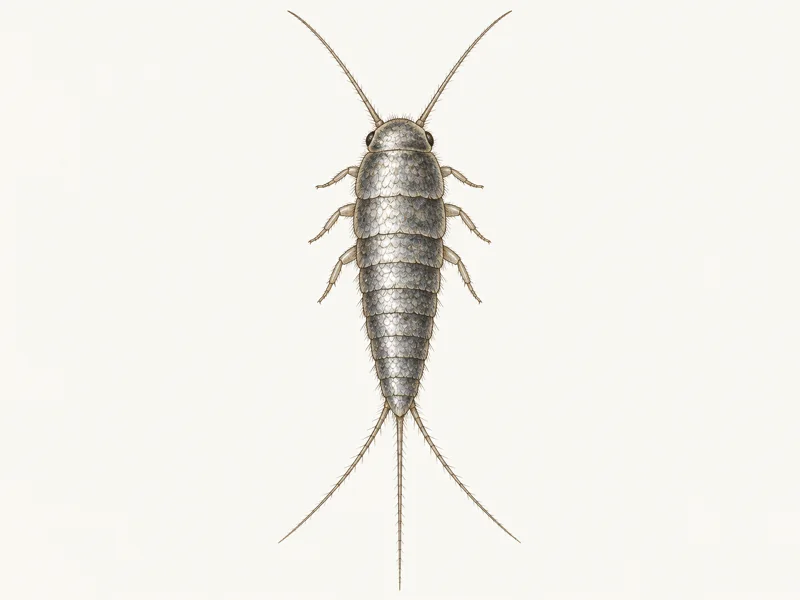
- Long thin antennae: Sweeping thread-like feelers guiding nocturnal foraging in damp paper and baths.
- Carrot-shaped body: Flat, wingless teardrop profile broad at the head and tapering smoothly backward.
- Metallic silver scales: Shimmering pewter-silver scales give a fluid, fish-like wriggling crawl.
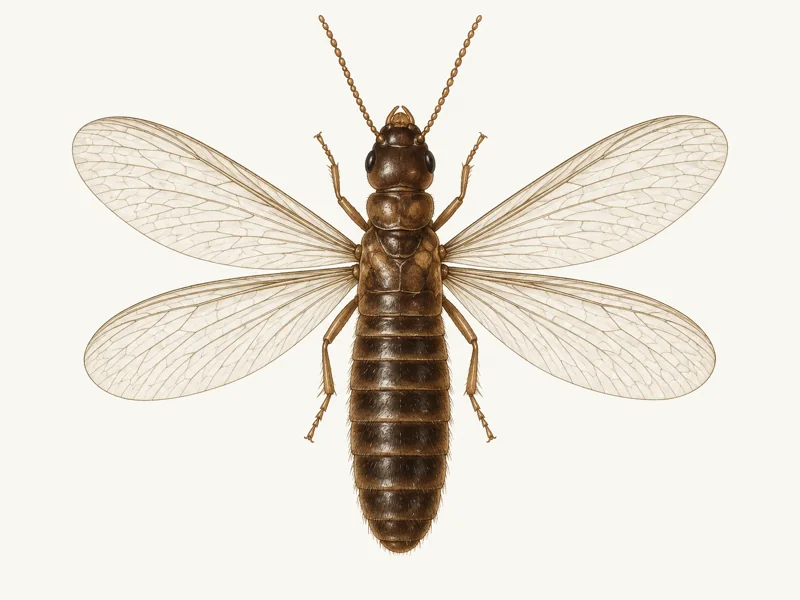
- Straight antennae: Straight, bead-like (moniliform) antennae—never sharply bent like ant antennae.
- Four equal wings: Two pairs of equal-length translucent veined wings extending far past the abdomen (shed easily).
- Six insect legs: Three pairs of slender crawling legs beneath the pale translucent wings.
Quick Answer: A silverfish is a wingless, carrot-shaped insect with a metallic silver-gray body covered in fine scales. A termite has a soft, pale or dark body and straight, bead-like antennae, unlike the elbowed antennae of ants. If the insect shines like a fish and darts across the floor, it is a silverfish. If it is dull, soft-bodied, and found near wood or mud tubes, suspect termites.
Telling a termite from a silverfish matters because the two pests carry very different risks. Silverfish (Lepisma saccharinum) are a household nuisance, while termites (order Blattodea, formerly Isoptera) can cause serious structural damage. The sections below explain how to identify each one, where they live, and how to respond.
Key Visual & Physical Differences
The difference between silverfish and termites is easy to see once a homeowner knows what to look for. Body shape, surface texture, and antennae are the most reliable clues.
Silverfish at a Glance
- Size: 10-19 mm long, usually larger than a typical termite.
- Body: Wingless and carrot-shaped, wide at the head and tapering toward the tail.
- Surface: Metallic silver-gray, covered in fine scales that give a shimmering look.
- Tail: Three long, bristle-like filaments at the rear end.
- Movement: Quick, wiggling, fish-like dashes when disturbed.
Termites at a Glance
- Size: 4-12 mm long, depending on species and caste.
- Body: Soft and straight-sided, with no pinched "waist."
- Antennae: Straight and bead-like, unlike the elbowed antennae of ants.
- Color: Workers are creamy white; winged swarmers are often darker brown or black.
- Wings: Only reproductive swarmers have wings, two equal-length pairs that shed easily.
For quick silverfish vs termite identification, look at the surface of the body. Silverfish are shiny and scaly, while termites are dull and soft. A silverfish also has visible tail bristles, and a termite has none.
Behavior, Habitat & Danger Comparison
Where the insect turns up often answers the question of whether it is a silverfish or a termite. The two pests prefer different places inside the home and feed in different ways.
Silverfish Behavior and Habitat
Silverfish favor humid, dark spaces such as bathrooms, basements, laundry rooms, and attics. They are nocturnal and feed on starches and sugars found in paper, book bindings, wallpaper paste, glue, cereal, and some fabrics. Damage usually looks like irregular holes, surface grazing, or yellowish stains on stored items.
Termite Behavior and Habitat
Termites live in colonies and feed on cellulose, mainly wood. Subterranean species build pencil-width mud tubes along foundations to travel between soil and wood. Homeowners are most likely to see them during swarms, when winged reproductives leave the colony and drop wings near windows and doors.
Danger Level Compared
- Silverfish: Rated a nuisance. They do not bite people, spread disease, or harm a home's structure.
- Termites: Rated a structural threat. Colonies can hollow out framing, flooring, and trim, often unseen for years.
Which One Is Worse for Homeowners?
In the termite vs silverfish comparison, termites are clearly the bigger problem. Silverfish can ruin a box of old papers or a favorite book, but termites can weaken the wood that holds a house together. Repairs from termite damage can be costly, and standard homeowner insurance policies often do not cover them.
Controlling Silverfish with IPM
- Run a dehumidifier and fix leaky pipes to reduce indoor humidity.
- Store papers, photos, and fabrics in sealed plastic bins.
- Vacuum cracks, baseboards, and closets regularly.
- Seal gaps around pipes, baseboards, and windows with caulk.
Controlling Termites with IPM
- Keep firewood, mulch, and lumber away from the foundation.
- Remove wood-to-soil contact around decks, porches, and siding.
- Direct gutters and downspouts away from the house to keep soil dry.
- Schedule an annual inspection by a licensed pest professional.
If chemical control becomes necessary, always read and follow the EPA-registered product label exactly. Termite treatments such as soil barriers and bait systems are usually best handled by licensed professionals. Suspected termite activity should be inspected promptly, while silverfish problems can often be solved with moisture control alone.
Frequently Asked Questions
Can silverfish damage wood like termites?
No. Silverfish feed on starchy materials such as paper, glue, and fabric, not structural wood. Damaged wood points to termites, carpenter ants, or wood-decay fungi instead.
Do silverfish mean a home has termites?
Not directly. Both pests like moisture, so excess humidity can attract either one, but finding silverfish does not confirm termites. Look for mud tubes, discarded wings, or hollow-sounding wood before assuming termites are present.
Do silverfish or termites bite people?
Silverfish do not bite people, and termites do not pose a bite risk to humans in normal circumstances. Neither insect is considered medically significant.
What is the fastest way to tell a silverfish from a termite?
Check the body surface and tail. A shiny, scaly, silver-gray insect with tail bristles is a silverfish. A dull, soft-bodied insect with straight, bead-like antennae is a termite.