Termite vs Flea: How to Tell Them Apart and Which Is Worse
Quick ID Verdict: A flea is a tiny (1-3 mm), wingless, dark reddish-brown insect flattened side to side that jumps on pets and people. A termite is larger (4-12 mm), pale or dark-bodied, with straight, bead-like antennae, and it eats wood rather than blood. If it jumps and bites, it's a flea. If it crawls, swarms, or tunnels through wood, it's a termite.
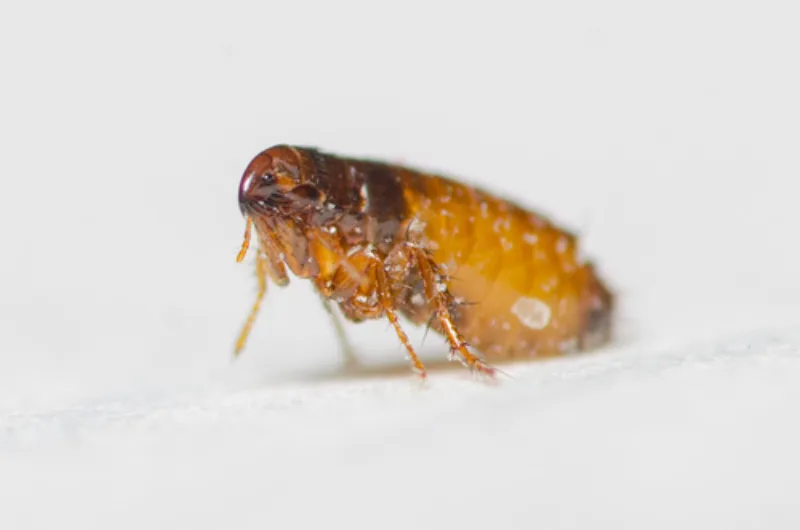
Flea
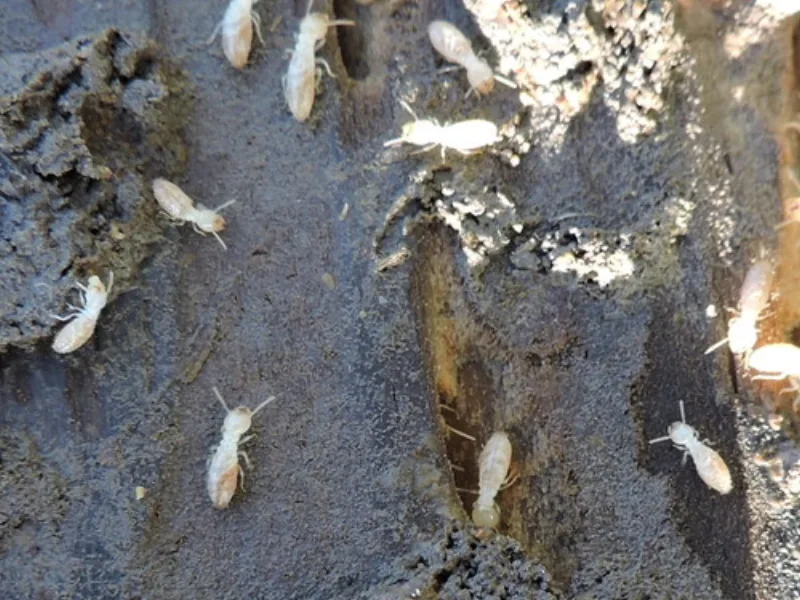
Termite
Side-by-Side Comparison Table
| Trait | Flea | Termite |
|---|---|---|
| Scientific Group | Siphonaptera | Blattodea (Isoptera) |
| Category | Insect | Insect |
| Typical Size | 1–3 mm | 4–12 mm |
| Danger Level | Nuisance | Structural |
| Bites or Stings? | Yes | No |
| Peak US Months | June, July, August, September | April, May |
| Key ID Trait | Tiny, wingless, dark reddish-brown insect compressed side-to-side | Straight, bead-like antennae (unlike the elbowed antennae of ants) |
Flea vs. Termite: True Size Comparison
Side-by-Side Anatomy Blueprint
Compare body segments, antennae, leg count, and key markings directly before treating or removing either species.
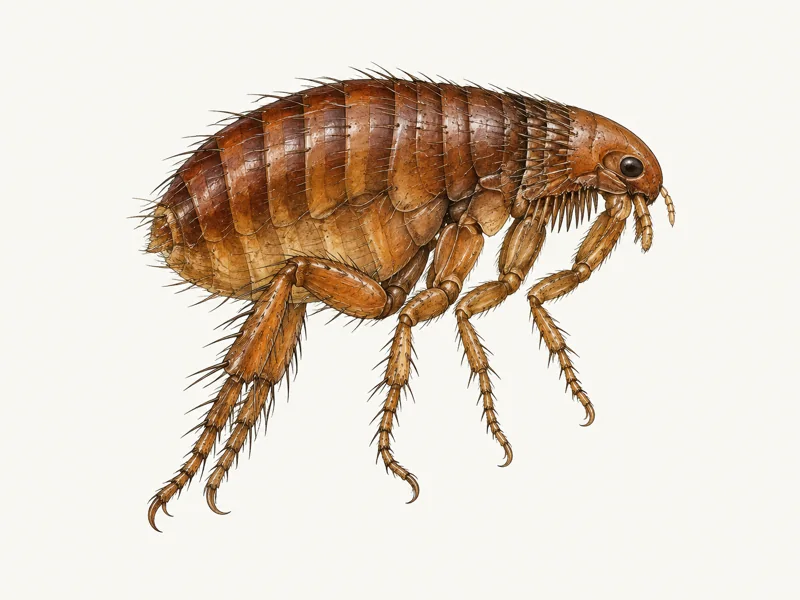
- Flattened armored plates: Laterally compressed wingless 1.5–3 mm glossy mahogany body glides effortlessly through fur.
- Head comb (ctenidia): Tiny eye, tucked antennae, and backward-pointing bristle comb anchor tightly in pet hair.
- Massive hind jumping legs: Powerfully enlarged muscular hind legs launch fleas up to 150× their body length.
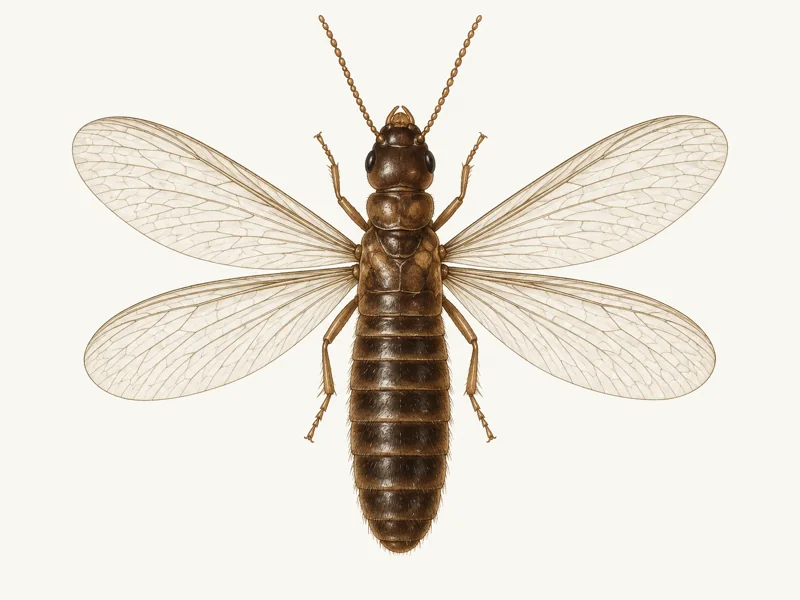
- Straight antennae: Straight, bead-like (moniliform) antennae—never sharply bent like ant antennae.
- Four equal wings: Two pairs of equal-length translucent veined wings extending far past the abdomen (shed easily).
- Six insect legs: Three pairs of slender crawling legs beneath the pale translucent wings.
Quick Answer: A flea is a tiny (1-3 mm), wingless, dark reddish-brown insect flattened side to side that jumps on pets and people. A termite is larger (4-12 mm), pale or dark-bodied, with straight, bead-like antennae, and it eats wood rather than blood. If it jumps and bites, it's a flea. If it crawls, swarms, or tunnels through wood, it's a termite.
Key Visual & Physical Differences
Telling a flea from a termite takes only a few seconds once you know what to look for. Size, body shape, and antennae give each one away right away.
Fleas (Order Siphonaptera)
- Size: 1-3 mm, about the size of a sesame seed or smaller.
- Color: Dark reddish-brown and shiny.
- Body shape: Compressed side to side, so they look thin from above and slip easily through pet fur.
- Wings: None at any life stage.
- Legs: Long, powerful hind legs built for jumping.
- Antennae: Short and tucked into grooves on the head, so they are hard to see.
Termites (Order Blattodea, formerly Isoptera)
- Size: 4-12 mm, depending on species and caste.
- Color: Workers are creamy white to pale tan. Winged swarmers are often dark brown or black.
- Body shape: Soft and straight-sided, with a broad waist and no pinch between thorax and abdomen.
- Wings: Only swarmers have wings, two pairs of equal length that break off easily.
- Antennae: Straight and bead-like, unlike the elbowed antennae of ants.
For flea vs termite identification, the simplest test is movement. Fleas jump suddenly and vanish, while termites crawl slowly and avoid light. If you find discarded wings near windowsills, you are dealing with termite swarmers, not fleas.
Behavior, Habitat & Danger Comparison
The biggest difference between flea and termite pests is what they eat. Fleas are blood-feeding parasites, while termites feed on cellulose found in wood, paper, and other plant material.
Where Fleas Live
Adult fleas live on dogs, cats, wildlife, and occasionally people. Eggs, larvae, and pupae develop in carpets, pet bedding, upholstery, and shaded yard areas. Infestations usually show up as itchy pets, small bites on ankles, and "flea dirt" (dark specks of digested blood) in pet fur.
Where Termites Live
Subterranean termites nest in soil and travel to wood through mud tubes on foundations. Drywood termites live entirely inside wooden structures and furniture. Signs include mud tubes, hollow-sounding wood, buckling paint, small piles of pellets, and spring swarms indoors.
Danger Level
- Fleas: Nuisance. Bites cause itching and irritation, and heavy infestations stress pets. Anyone with a severe reaction or signs of infection should see a doctor, and pet concerns should go to a veterinarian.
- Termites: Structural. Termites don't bite people in any meaningful way, but colonies can quietly damage framing, subfloors, and trim over months or years.
Which One Is Worse for Homeowners?
For the house itself, termites are clearly worse. Fleas make life uncomfortable, but termites can cause costly structural repairs that homeowners insurance often doesn't cover. Fleas are a faster, louder problem, and termites are a slower, more expensive one.
Non-Chemical Flea Control First
- Vacuum carpets, furniture, and cracks daily during an infestation, then empty the canister outdoors.
- Wash pet bedding and throw blankets in hot water weekly.
- Talk to a veterinarian about flea prevention for every pet in the home.
- Keep lawns mowed and limit wildlife access under decks and crawlspaces.
Non-Chemical Termite Prevention First
- Fix leaks and keep gutters and downspouts directing water away from the foundation.
- Remove wood-to-soil contact, including stored firewood and wooden debris near the house.
- Keep mulch a few inches away from the foundation and ventilate crawlspaces.
- Schedule annual termite inspections, especially in warm, humid regions.
If treatment becomes necessary, choose registered products and always follow the EPA product label exactly. Active termite infestations usually call for a licensed pest management professional, since baits and soil treatments require specialized equipment and training.
Frequently Asked Questions
Can termites bite people like fleas do?
No. Termites feed on wood and other cellulose, not blood. Soldier termites can pinch if handled, but they don't seek out people or pets.
Is a tiny jumping bug a flea or termite?
A tiny bug that jumps is almost certainly a flea. Termites cannot jump. They crawl, and only swarmers fly.
Do fleas damage wood or furniture?
No. Fleas don't eat wood or fabric. Their larvae may hide in carpet and upholstery, but they cause no structural damage.
Should a homeowner call a professional for fleas or termites?
Many flea problems clear up with vacuuming, laundering, and vet-recommended pet treatments. Termites should always be confirmed and treated by a licensed professional because hidden colony damage is hard to assess on your own.