Termite vs Earwig: How to Tell Them Apart and Which Is Worse
Quick ID Verdict: Earwigs are larger (12-22 mm), with a slender, flattened, dark reddish-brown body and pincers on the rear. Termites are smaller (4-12 mm), pale and soft-bodied, with straight, bead-like antennae and no pincers. If you see forceps on the tail, it's an earwig. If you see a small, soft insect near damaged wood or mud tubes, suspect termites.
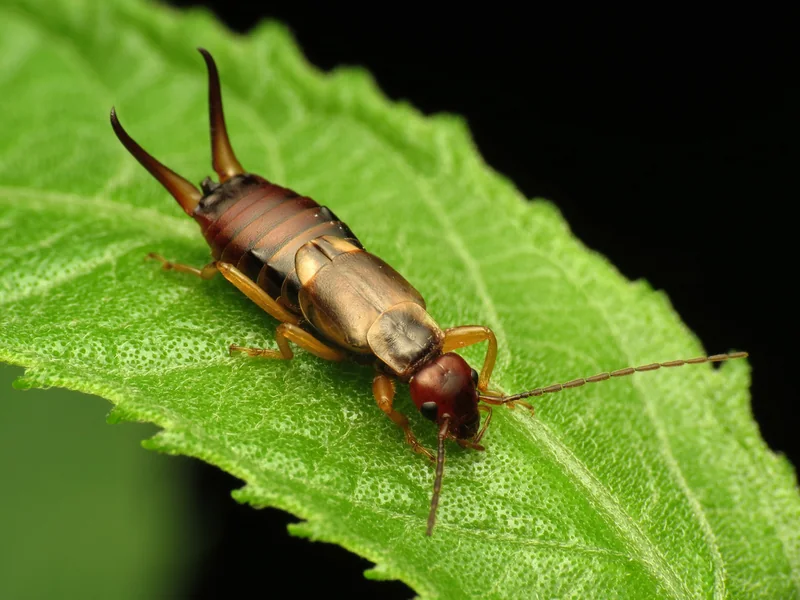
Earwig
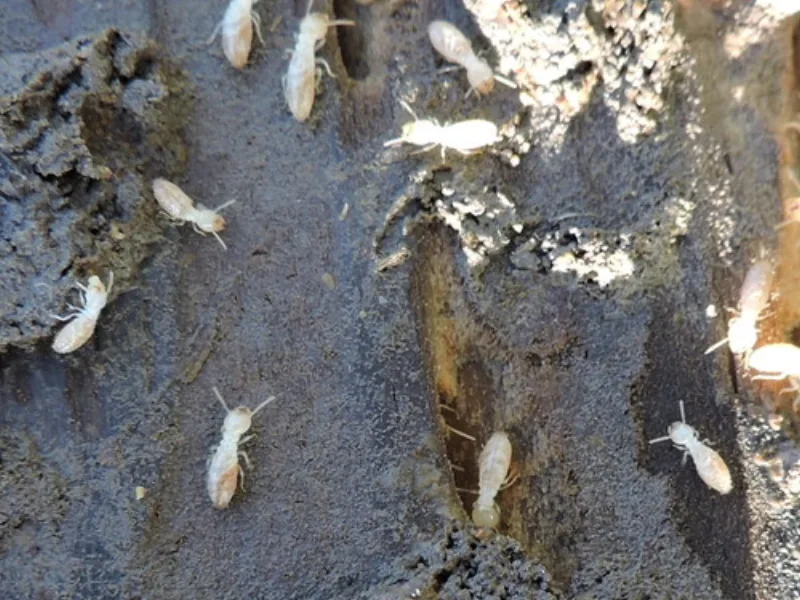
Termite
Side-by-Side Comparison Table
| Trait | Earwig | Termite |
|---|---|---|
| Scientific Group | Dermaptera | Blattodea (Isoptera) |
| Category | Insect | Insect |
| Typical Size | 12–22 mm | 4–12 mm |
| Danger Level | Nuisance | Structural |
| Bites or Stings? | No | No |
| Peak US Months | June, July, August, September | April, May |
| Key ID Trait | Slender, flattened dark reddish-brown body | Straight, bead-like antennae (unlike the elbowed antennae of ants) |
Earwig vs. Termite: True Size Comparison
Side-by-Side Anatomy Blueprint
Compare body segments, antennae, leg count, and key markings directly before treating or removing either species.
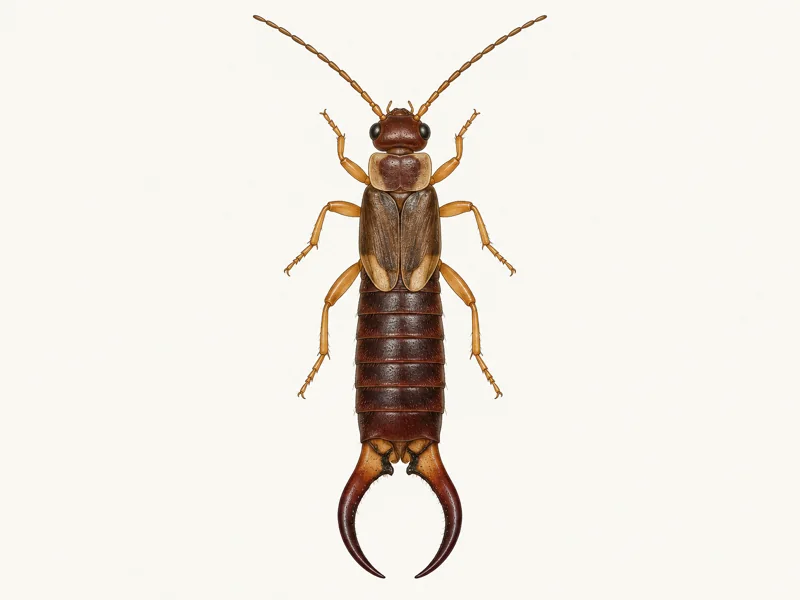
- Thread-like antennae: Segmented medium-length antennae on a flat chestnut-brown head.
- Short wing covers: Compact leathery forewings (tegmina) leave most of the flexible abdomen exposed.
- Six amber legs: Three pairs of slender pale tan legs suited for damp mulch and baseboard crevices.
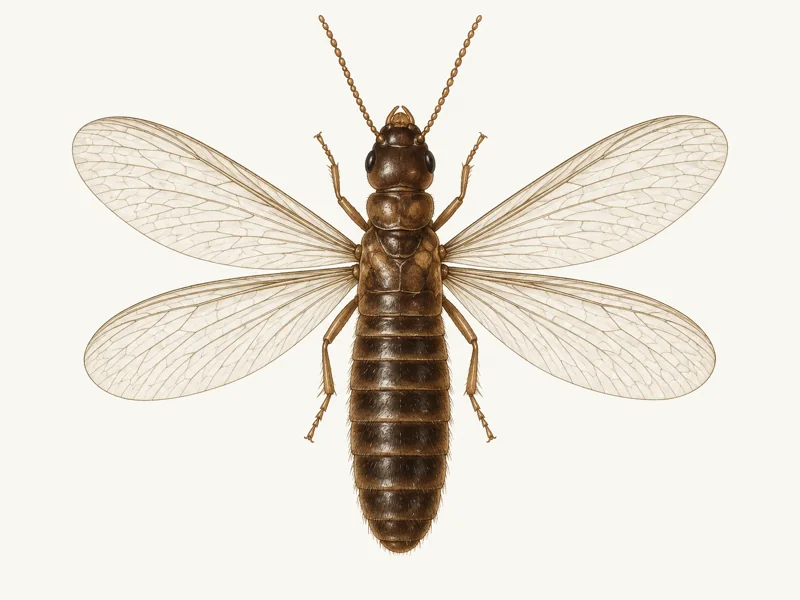
- Straight antennae: Straight, bead-like (moniliform) antennae—never sharply bent like ant antennae.
- Four equal wings: Two pairs of equal-length translucent veined wings extending far past the abdomen (shed easily).
- Six insect legs: Three pairs of slender crawling legs beneath the pale translucent wings.
Quick Answer: Earwigs are larger (12-22 mm), with a slender, flattened, dark reddish-brown body and pincers on the rear. Termites are smaller (4-12 mm), pale and soft-bodied, with straight, bead-like antennae and no pincers. If you see forceps on the tail, it's an earwig. If you see a small, soft insect near damaged wood or mud tubes, suspect termites.
Homeowners often confuse these two insects because both turn up in damp spots around foundations, mulch, and basements. The difference between earwig and termite matters, though. One is a harmless nuisance, and the other can cause serious structural damage.
Key Visual & Physical Differences
The fastest earwig vs termite identification comes down to three features: body shape, color, and the rear end. Earwigs belong to the order Dermaptera, while termites belong to Blattodea (formerly classified as Isoptera). They are not closely related, and up close they look quite different.
Earwigs (Dermaptera)
- Size: 12-22 mm long
- Body: Slender, flattened, and dark reddish-brown with a shiny, hard look
- Rear: Prominent pincers (cerci), curved in males and straighter in females
- Wings: Short, leathery wing covers; most species rarely fly
- Antennae: Long, thread-like, and segmented
Termites (Blattodea/Isoptera)
- Size: 4-12 mm long
- Body: Soft, pale cream to light tan in workers; swarmers are darker
- Waist: Thick and uniform, with no pinched waist like an ant
- Antennae: Straight and bead-like, unlike the elbowed antennae of ants
- Wings: Swarmers have two pairs of equal-length wings that shed easily
A simple rule works for most sightings. Pincers mean earwig. A pale, soft body with beaded antennae means termite.
Behavior, Habitat & Danger Comparison
Where They Live
Earwigs are nocturnal scavengers that hide by day under mulch, stones, boards, and leaf litter. They feed on decaying plant matter, small insects, and sometimes tender seedlings or soft fruit. Indoors, they usually wander in by accident and stay near moisture such as basements, bathrooms, and laundry rooms.
Termites live in organized colonies and feed on cellulose, mainly wood. Subterranean termites nest in soil and build pencil-width mud tubes up foundations to reach structural timber. Workers avoid light and open air, so homeowners rarely see them unless they break open damaged wood or spot a spring swarm.
Signs You'll Notice
- Earwigs: Live insects under objects, chewed leaves in gardens, a few individuals near doors or drains
- Termites: Mud tubes, discarded wings on windowsills, hollow-sounding or blistered wood, and swarms near lights
Danger Level
Earwigs are rated a nuisance. Their pincers can give a mild pinch if handled, but they are not venomous and do not damage homes. Termites are rated structural pests. They don't threaten people directly, but colonies can quietly weaken framing, subfloors, and sills over months or years.
Which One Is Worse for Homeowners?
Termites are clearly the bigger problem. Earwigs may be unsettling, but they cause no structural harm and usually disappear once moisture and hiding spots are reduced. Termite damage, by contrast, is often hidden, costly to repair, and typically not covered by standard homeowner's insurance.
Managing Earwigs (Non-Chemical First)
- Pull mulch and leaf litter 6-12 inches back from the foundation
- Fix leaky spigots, gutters, and downspouts to dry out soil near the house
- Seal gaps around doors, windows, and utility penetrations
- Use rolled damp newspaper traps overnight and discard them in the morning
- Run a dehumidifier in damp basements
Managing Termites
- Eliminate wood-to-soil contact around decks, porches, and siding
- Store firewood and lumber away from the home and off the ground
- Correct drainage and plumbing leaks that keep soil wet
- Schedule annual inspections, especially in older homes
- For active infestations, hire a licensed pest professional for baiting or soil treatments
If any pesticide is used for either pest, always read and follow the EPA-registered product label. The label is the law, and it covers application rates, safety gear, and where the product can be applied.
Frequently Asked Questions
Can an earwig be mistaken for a termite swarmer?
Rarely up close. Earwigs have pincers and a hard, reddish-brown body. Termite swarmers have long, equal-sized wings and straight, bead-like antennae with no rear forceps.
Do earwigs eat wood like termites?
No. Earwigs eat decaying plant material, small insects, and some soft plants. They do not consume structural wood, though they may hide in wood that is already rotting.
Is it an earwig or termite if I find it in a damp basement?
Both like moisture, so check the body. A pincered, dark insect roaming in the open is an earwig. Termites stay hidden inside wood or mud tubes and are rarely seen wandering.
Are earwig pinches dangerous?
Earwigs are not venomous, and a pinch is usually minor. Wash the area with soap and water. If you're concerned about any reaction, contact a doctor or US Poison Control at 1-800-222-1222.